

We may earn a commission when you buy through links on this page, at no extra cost to you. Learn more.
The chimney rock wine price typically ranges from about $80 to $170 for a 750 ml bottle of current-release Cabernet Sauvignon, with older collectible vintages and prestige bottlings sometimes costing considerably more. The Stags Leap District Cabernet Sauvignon generally sits below the winery’s more specialized Ganymede and Tomahawk selections. The final cost depends on the bottling, vintage, retailer, and availability, so comparing the wine’s identity rather than its label alone is the best way to judge its value.
Chimney Rock is a Napa Valley winery associated with the Stags Leap District, an appellation known for Cabernet Sauvignon. Its wines occupy the premium end of the market, but the range includes several distinct choices rather than one standard bottle at one fixed price. Understanding the differences between estate Cabernet, vineyard-designated wines, and prestige selections makes it easier to choose a bottle that matches your budget and the occasion. Buyers researching Chimney Rock wine can use this guide to understand the range before comparing individual releases.
Who Should Consider Chimney Rock Wine?
Chimney Rock is worth considering for buyers who enjoy structured Napa Valley Cabernet Sauvignon and want to explore wines from a specific estate. Its selection includes a broadly representative Stags Leap District bottling alongside more focused vineyard expressions, giving buyers several ways to experience the winery’s approach.
The winery’s history helps explain its position in the market. Hack and Stella Wilson purchased the original 180-acre property in 1980, and the first estate wine vintage followed in 1984. The Terlato family joined as partners in 2000 and assumed sole ownership in 2004. The winery now describes its estate as comprising 119 vineyard acres divided into 28 blocks. These details provide useful context for understanding why Chimney Rock emphasizes individual vineyard sites rather than treating every Cabernet Sauvignon as interchangeable. The producer’s official estate history explains how that development unfolded.
These bottles are particularly relevant to Cabernet drinkers who appreciate full-bodied reds, firm tannins, and dark-fruit flavors. Chimney Rock describes cassis and blackberry as characteristic elements of its estate wines. A retailer’s description of the 2023 Napa Cabernet Sauvignon also identifies black currant, cherry, plum, mocha, and vanilla, offering an indication of the flavor profile buyers may encounter.
However, Chimney Rock is not necessarily the right purchase for someone seeking an inexpensive everyday red. Its entry-level estate Cabernet is still a premium Napa Valley wine, and specialized vineyard bottlings can command a substantial increase. Buyers who usually drink lighter reds or prefer softer tannins may also find a young Cabernet more structured than expected.
The most useful starting point is the standard Stags Leap District Cabernet Sauvignon. It provides an introduction to the winery’s regional identity without requiring the buyer to pay for a more specialized vineyard selection. Once that style is familiar, the single-vineyard wines offer a more targeted comparison.
Key Factors That Determine Chimney Rock Wine Price
Four factors explain most price differences: the bottling, vintage, bottle size, and seller. The producer’s current Cabernet collection provides a useful reference point, while independent retail listings help show how actual US market prices can differ.
| Wine or category | Typical observed price range | What affects the price |
|---|---|---|
| Standard Stags Leap District Cabernet | About $80–$135 | Vintage and retailer |
| Single-vineyard Cabernet | About $115–$170 | Vineyard selection and vintage |
| Ganymede Cabernet | About $150–$260 | Vintage and prestige positioning |
| Tomahawk Cabernet | About $130–$180 | Vintage and seller availability |
| Older or collectible bottles | About $150–$350 or more | Age, condition, format, and provenance |
These are indicative US retail ranges, not guaranteed prices or fixed winery tiers. Vino Alert’s tracked Cabernet Sauvignon listings show a 2023 bottle beginning around $80, while the winery’s own collection lists its 2023 Stags Leap District Cabernet at $110 and several specialized bottlings at $130 to $170. The older 2016 Ganymede appears at $260 in the same official collection. Prices vary by state and retailer, and availability can change.
1. The bottling and vineyard designation
The standard Stags Leap District Cabernet is the most straightforward reference for the brand. It represents the winery’s regional Cabernet style without asking buyers to select a particular vineyard expression. More specialized wines, including Ganymede and Tomahawk, offer a narrower view of the estate’s individual sites.
Chimney Rock identifies Tomahawk, Alpine, Clone 7, and Ganymede as distinctive vineyard sites located within a quarter mile of one another. Despite their proximity, the winery describes them as having different and consistent individual characteristics. This helps explain why the producer maintains separate bottlings and why buyers may encounter different prices among wines made by the same winery.
2. Vintage and availability
Vintage matters because each year’s growing conditions influence the resulting wine. It also affects how many bottles remain available and whether a retailer is selling a recent release or an older bottle. A 2023 Cabernet and a 2019 Cabernet should therefore be evaluated as separate purchases rather than assumed to be equivalent simply because they carry the same producer name.
Older vintages can be more expensive because of limited remaining stock or collector demand, but age does not automatically make a wine more desirable. Storage history and bottle condition matter just as much. A properly stored younger bottle can be a more sensible purchase than an older bottle with uncertain provenance.
3. Bottle size and seller
Most buyers will encounter 750 ml bottles, the standard size for comparing retail prices. Larger formats such as 1.5-liter bottles appear in Chimney Rock’s Kesu range and should be evaluated separately. A larger bottle is not directly comparable to a standard bottle simply by looking at its shelf price.
Retailers can also differ significantly in their asking prices for the same wine and vintage. Some sellers specialize in current releases, while others focus on older bottles. Shipping, local alcohol taxes, state distribution rules, and stock levels can all affect the final amount paid.
For a useful comparison, match the exact wine name, vintage, bottle size, and condition before deciding that one listing offers better value.
Step-by-Step: How to Choose a Chimney Rock Bottle
A sensible purchase begins with a budget and a clear idea of the wine’s intended use. Following a consistent comparison process prevents buyers from paying more simply because a particular vineyard name or older vintage looks impressive.

- Set a realistic budget. Start by deciding how much you want to spend on a 750 ml bottle. An allowance of about $80 to $135 covers many standard Stags Leap District Cabernet listings, while specialized selections may require a higher budget.
- Choose the wine category. Decide whether you want the standard regional Cabernet Sauvignon, a single-vineyard expression, or a more distinctive prestige bottling. The standard Cabernet is the simplest starting point for someone new to the producer.
- Compare exact vintages. Look at the vintage on every listing. Do not compare a 2019 bottle directly with a 2023 bottle without considering their different availability, storage history, and development.
- Check the bottle format. Confirm that the listing is for 750 ml rather than 375 ml or 1.5 liters. Larger formats may make sense for sharing or cellaring, but the cost per standard bottle should be considered.
- Compare at least three retailers. Look at independent wine merchants and the winery’s own store. Check whether shipping, taxes, and handling charges change the final purchase cost.
- Review provenance for older wines. Ask how the bottle was stored, whether its fill level is appropriate, and whether the seller can explain its acquisition history. This is particularly important for bottles that have been held for several years.
- Match the wine to the occasion. Choose a standard estate Cabernet for a familiar dinner pairing or a specialized vineyard bottling when the wine itself is the focus of the occasion.
This process is useful because the Chimney Rock range includes wines with different purposes and price positions. A more expensive bottle is not automatically the better choice for every meal or buyer. The best purchase is the one whose style, vintage, and condition justify its asking price.
Tip: Compare identical vintages and bottle sizes first. A 750 ml standard Cabernet should not be judged against a 1.5-liter prestige bottle using the total shelf price alone.
Buyers can also use the winery’s official collection to identify the current names and categories before searching retailer inventories. This helps avoid confusion between the standard regional wine and similarly named vineyard selections.
Chimney Rock Wine Types and Styles Explained
Chimney Rock’s portfolio extends beyond its standard Cabernet Sauvignon. The winery offers regional Cabernet, individual vineyard bottlings, prestige selections, and other wines, making it useful to understand the basic differences before comparing prices.
Stags Leap District Cabernet Sauvignon
This is the natural starting point for most buyers. It provides a broader expression of the winery’s estate and appellation rather than focusing on one named vineyard block. Its price position is generally below the winery’s most specialized Cabernet selections.
For a buyer who wants to understand what Chimney Rock does before spending more on a particular vineyard expression, this is the sensible choice. The 2023 release appears at $110 in the official collection, illustrating its position as an accessible entry into the winery’s Cabernet lineup.
Ganymede Cabernet Sauvignon
Ganymede is one of the winery’s named vineyard selections. It is suited to buyers interested in exploring differences between individual estate sites rather than simply purchasing another bottle of Napa Cabernet.
The official collection lists its 2023 bottling at $170 and its 2016 bottling at $260. Those figures illustrate how both selection and vintage can influence the price. A buyer should consider whether the additional vineyard specificity and particular vintage justify the extra expenditure.
Tomahawk Cabernet Sauvignon
Tomahawk is another distinctive vineyard selection identified by the winery. It is part of the estate’s effort to showcase the character of individual growing areas, and it is generally positioned above the standard regional Cabernet.
The official collection lists the 2023 Tomahawk at $170. Independent retail listings also show that vintage-specific offers can differ from winery pricing. For example, Vino Alert displays multiple Tomahawk listings from different retailers and vintages. Its Tomahawk retail comparison demonstrates why checking the exact vintage and seller is important.
Other single-vineyard Cabernet selections
Arrowhead, Clone 4, Clone 7, South Hill, White Pebble, and Arete are other names buyers may encounter in the official Cabernet collection. These bottlings provide additional ways to explore the winery’s estate rather than representing completely unrelated wine brands.
Several 2022 and 2023 selections are listed at $130 by the winery. The individual names are useful when comparing bottles, but buyers should not assume that every wine has the same blend, production quantity, or aging potential. The specific vintage and producer description should guide the purchase.
Other Chimney Rock wines
The wider collection includes additional reds, white wines, and rosé selections. These provide alternatives for people who enjoy the winery but do not necessarily want a full-bodied Cabernet Sauvignon for every occasion.
For instance, Elevage appears in the winery’s broader portfolio, while Cabernet Franc and Sauvignon Gris are also represented. These wines occupy different stylistic positions and should not be evaluated using Cabernet Sauvignon expectations. Someone looking for a lighter white wine or a different red grape may find these alternatives more suitable.
Common Mistakes When Comparing Chimney Rock Prices
Most pricing mistakes come from comparing bottles that are not actually equivalent. The producer name may be identical, but the vineyard designation, vintage, format, and seller can make a substantial difference.
Assuming every Chimney Rock Cabernet costs the same
The standard Stags Leap District Cabernet and the Ganymede or Tomahawk selections occupy different positions in the range. Treating them as interchangeable can create unrealistic expectations about what a particular budget should buy.
Instead, identify the complete wine name before checking the price. A buyer interested in the standard regional Cabernet should not assume that a specialized vineyard bottle is necessary to experience the producer’s style.
Ignoring the vintage
A wine’s vintage is an important part of its identity. Comparing two listings without accounting for the harvest year can lead to poor value judgments. This is especially relevant when one bottle is a recent release and the other has spent several years in storage.
Older wines may command higher prices, but buyers should evaluate their condition and storage history rather than paying a premium simply for the date on the label.
Confusing retailer prices with winery prices
The winery’s official collection and independent retailer listings serve different purposes. The winery provides its own advertised prices and portfolio details, while retailers reflect their individual inventory and pricing decisions.
Neither should be treated as a universal national price. Distribution arrangements and shipping restrictions can also make a particular retailer’s listing unavailable to buyers in some states.
Overpaying for an older bottle without checking provenance
Older Cabernet Sauvignon can be appealing to collectors and experienced wine drinkers, but a bottle’s history matters. Poor storage can damage wine regardless of its original quality or reputation.
Ask about storage temperature, exposure to light, bottle fill level, and the seller’s source. If the retailer cannot provide reasonable information about a collectible bottle, a newer release with clearer provenance may be a better purchase.
Choosing a prestige label without considering drinking preferences
Chimney Rock Cabernet Sauvignon is a structured red wine, and its tannins can feel firm, particularly in a young bottle. A buyer who prefers light-bodied Pinot Noir or soft, fruit-forward reds may not enjoy the style as much as someone who regularly drinks Napa Cabernet.
Price should not replace personal preference. A more expensive vineyard selection is useful only if the buyer appreciates the style and wants to explore the differences between the estate’s sites.
Buyers comparing premium Napa bottles with more accessible everyday options can also read about Barefoot wine to understand how different brands serve different budgets and drinking occasions. These wines occupy very different market positions, so they should not be treated as direct substitutes.
Care, Storage, and Serving Tips for Chimney Rock Wine
Proper storage and serving help preserve the wine’s character and make a premium Cabernet more enjoyable. Temperature, bottle position, and opening time all matter, especially when the wine is being saved for a special meal.
Store bottles consistently
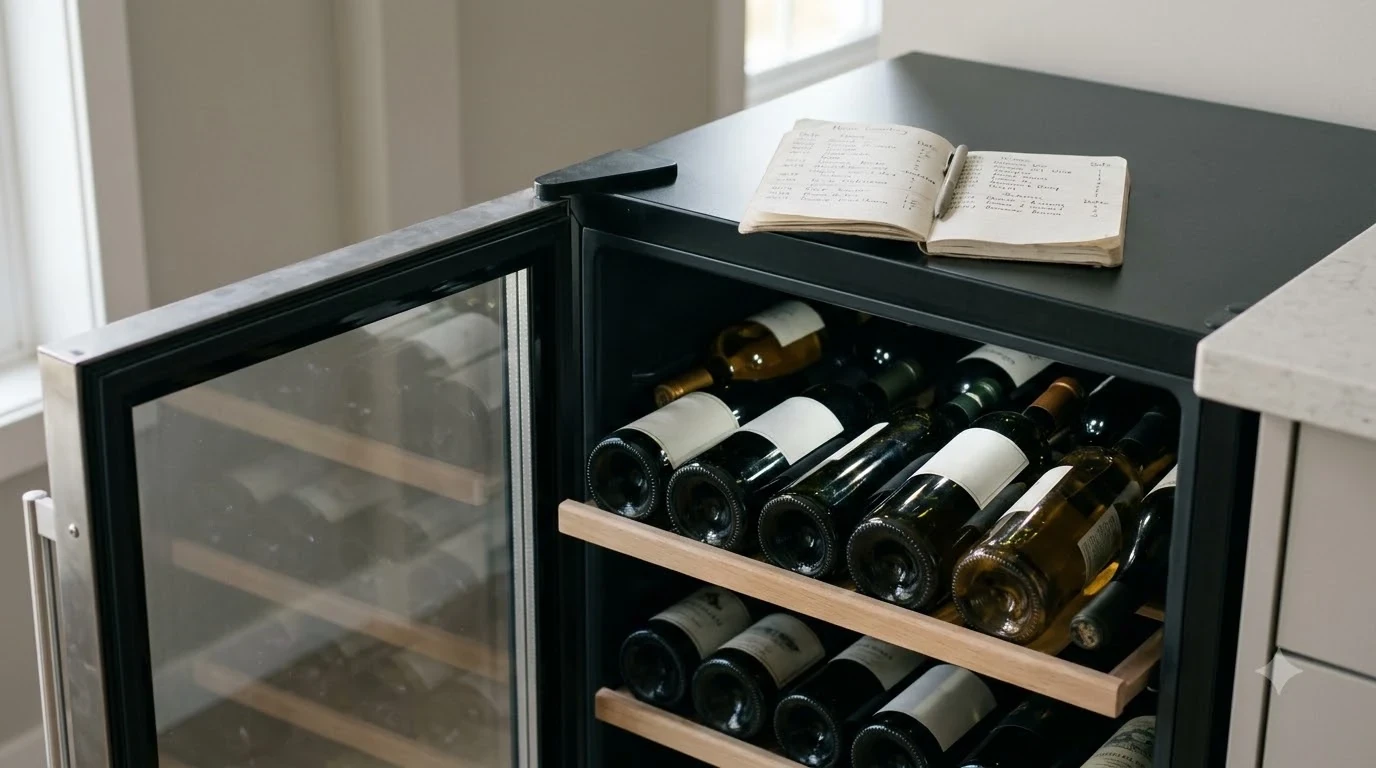
Store unopened Chimney Rock Cabernet Sauvignon in a cool, dark place near 55°F. Keep cork-finished bottles on their sides so the cork remains in contact with the wine. Avoid frequent temperature changes, direct sunlight, and locations near ovens or heating equipment.
A dedicated wine refrigerator is useful if the bottle will be stored for an extended period. A stable environment is generally more important than attempting to make frequent temperature adjustments. For older bottles, consistent storage is particularly important because condition can influence both drinking quality and resale or collector value.
Serve Cabernet at the right temperature
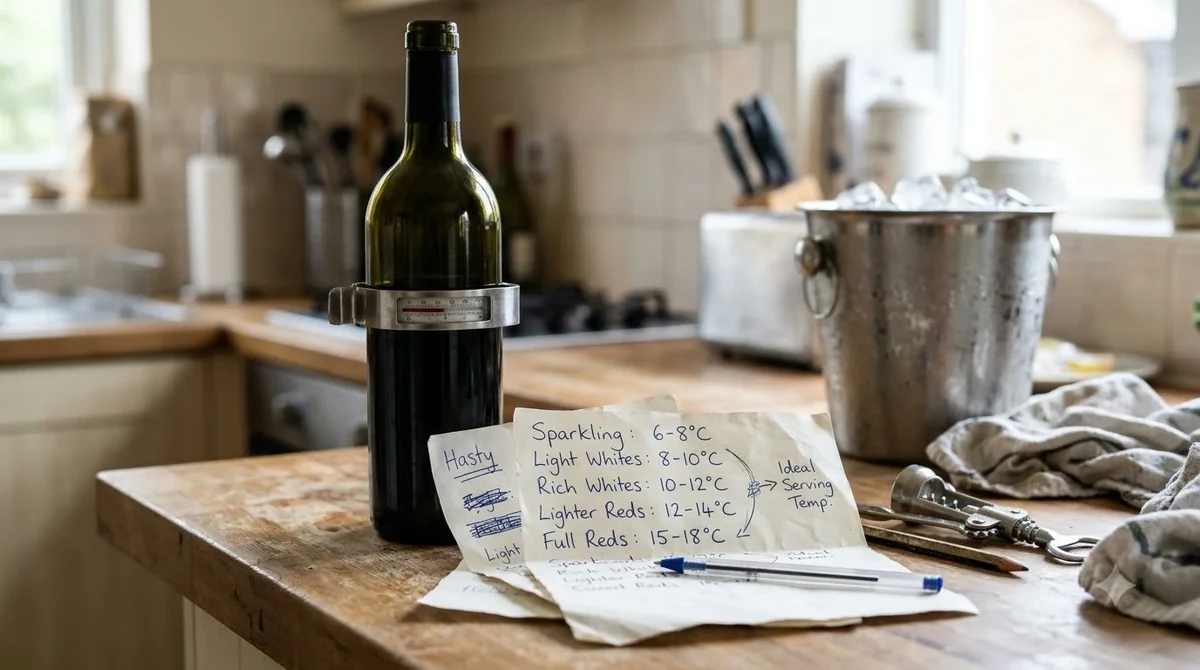
Full-bodied red wines such as Cabernet Sauvignon are generally best served around 60°F to 65°F. Serving a bottle too warm can make the alcohol seem more prominent, while excessive chilling can make the tannins feel firmer and the aromas less expressive.
If the bottle has been kept in a warm room, a short period of cooling can help bring it closer to the preferred serving range. Avoid leaving it in a household freezer for an extended period, as rapid temperature changes are not a suitable substitute for controlled storage.
Allow young Cabernet time to breathe
A young full-bodied Cabernet Sauvignon can benefit from approximately 30 to 60 minutes in a decanter. This gives the wine time to interact with air and allows its aromas to become more apparent. The appropriate amount of time depends on the bottle’s age and structure.
Older wines require more caution. They may benefit from careful opening and separation from sediment, but extended aeration can cause delicate aromas to fade. For a collectible older Chimney Rock bottle, a gradual approach is preferable to automatically applying the same decanting time used for a young wine.
Pair it with suitable food
Cabernet Sauvignon works particularly well with foods that can balance its tannins. Grilled steak, roasted beef, lamb, and dishes containing savory herbs are familiar pairings. Salt and fat can soften the perception of tannin, helping the wine feel more balanced with a substantial meal.
For example, a grilled ribeye with rosemary, roasted mushrooms, or a beef short rib preparation can complement a structured Napa Cabernet. Highly spicy dishes are less suitable because chili heat can become more pronounced alongside the wine’s alcohol and tannins.
Once opened, still wine generally keeps for about three to five days in the refrigerator when properly resealed. Allow a serving to warm slightly before drinking if it has been refrigerated after opening.
Frequently Asked Questions
Is Chimney Rock considered a luxury Napa Valley wine?
Chimney Rock occupies the premium Napa Valley category, with its Stags Leap District estate and specialized Cabernet selections positioned above ordinary everyday wines. Its history, vineyard-specific bottlings, and limited-production approach contribute to that positioning. The winery’s estate architecture also includes a Cape Dutch-style building featuring a large frieze depicting Ganymede.
Where exactly is Chimney Rock Winery located?
The winery is at 5350 Silverado Trail in Napa, California, within the Stags Leap District. Its location places it in the southern part of the district, where the estate’s vineyards are concentrated. The winery offers tasting and tour experiences by reservation.
How many vineyard blocks does Chimney Rock have?
Chimney Rock describes its estate as having 28 distinct vineyard blocks across 119 acres of vineyards. Managing separate blocks allows the winery to work with differences in growing conditions and vineyard characteristics. This approach also supports the production of distinct vineyard-designated Cabernet bottlings.
Does Chimney Rock make wines other than Cabernet Sauvignon?
Yes. Its broader portfolio includes Merlot, Cabernet Franc, Sauvignon Gris, and white and rosé wines. The Elevage range also includes wines outside the standard Cabernet lineup. These alternatives give buyers options beyond the winery’s best-known red wines.
Is an unopened Chimney Rock bottle suitable for long-term cellaring?
Many structured Napa Valley Cabernet Sauvignons are suitable for cellaring, although the ideal period depends on the specific wine and vintage. Store the bottle in a dark, stable environment near 55°F with minimal temperature fluctuation. For long-term storage, maintaining consistent humidity and avoiding vibration are also useful precautions.
Chimney Rock offers several ways to explore Stags Leap District Cabernet Sauvignon, from its regional bottling to more specialized vineyard selections. For most buyers, the standard Cabernet is the logical starting point, while Ganymede and Tomahawk provide interesting alternatives for those seeking a more specific estate expression. Compare the exact vintage, bottle size, and retailer before purchasing so that the final price reflects the wine you actually want. Readers exploring other producers can find additional comparisons in our Wine Brands collection.
More in Wine Brands
 Underwood Wine Price: Compare Bottles, Cans, and Pack SizesUpdated Nov 21, 2026
 Zenato Wine Price: Compare Styles and Choose the Right BottleUpdated Nov 21, 2026
 Zuccardi Wine Price: Compare Bottles and Find the Right RangeUpdated Nov 21, 2026
 Yellow Tail Moscato Review: Taste, Sweetness and Serving TipsUpdated Nov 21, 2026
 Wolf Blass Yellow Label Review: Choose Your Best StyleUpdated Nov 21, 2026
 Wolffer Estate Rose Review: Choose the Right Bottle for Your TableUpdated Nov 21, 2026