

We may earn a commission when you buy through links on this page, at no extra cost to you. Learn more.
The charlottesville wine region is a Virginia wine destination centered on the Monticello American Viticultural Area (AVA), known for its Blue Ridge foothill vineyards, historic winemaking heritage, and distinctive Cabernet Franc, Viognier, and Chardonnay. Located in Central Virginia’s Piedmont, the area combines rolling agricultural landscapes, varied elevations, and a growing season that supports a diverse range of wine grapes. Its modern wine industry builds on Thomas Jefferson’s early ambitions while establishing an identity through contemporary vineyards and independent producers.
Charlottesville offers more than a collection of tasting rooms. Its surrounding countryside connects historic estates, mountain views, working farms, and wineries producing both familiar international varieties and distinctive Virginia wines. Understanding the Monticello AVA, its growing conditions, and its principal grape varieties makes it easier to appreciate what distinguishes this part of the American wine industry.
Where the Charlottesville Wine Region Is Located
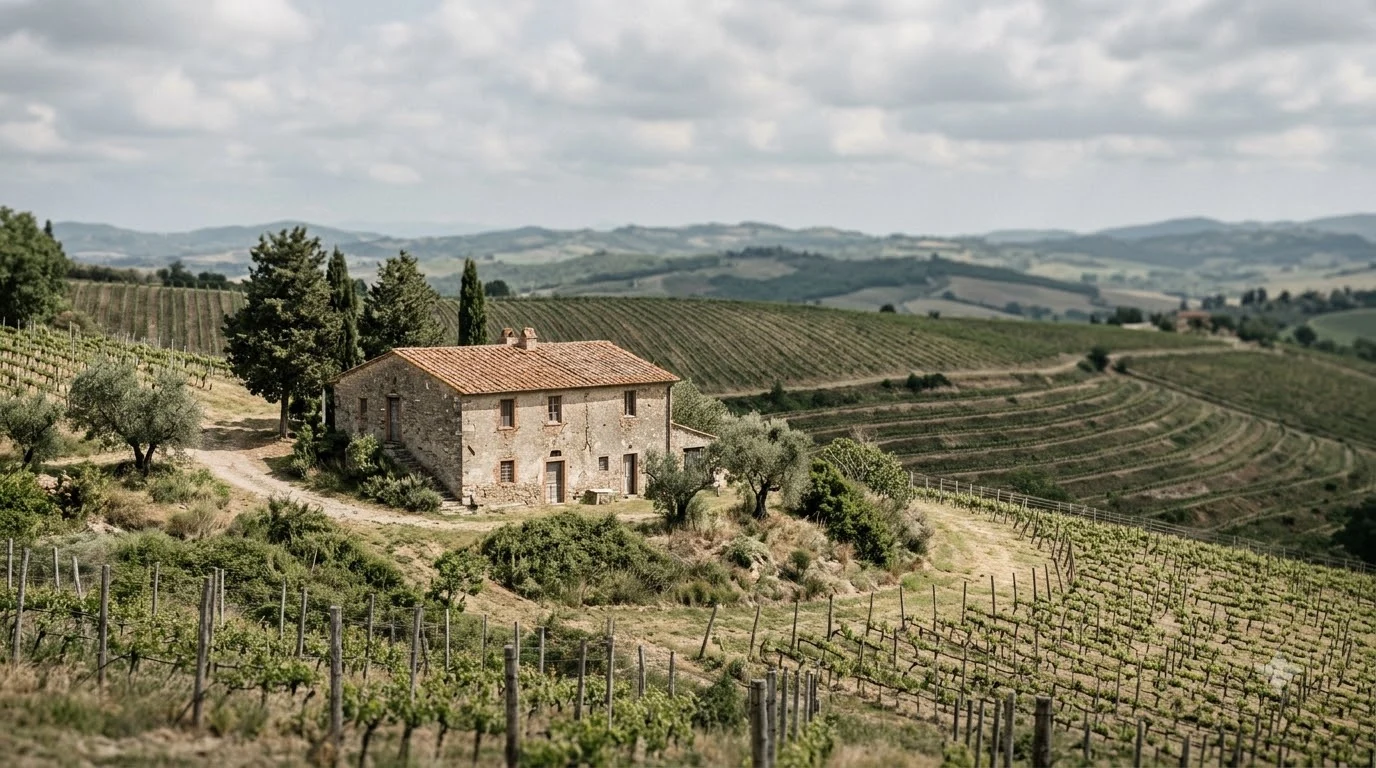
The Charlottesville wine region is centered on the Monticello AVA, a federally recognized grape-growing area in Virginia’s central Piedmont. Its vineyards extend across countryside influenced by the eastern slopes of the Blue Ridge Mountains, with Charlottesville serving as the principal nearby city for visitors and wine producers.

The Monticello AVA takes its name from Monticello, Thomas Jefferson’s historic estate outside Charlottesville. Its geographical character includes the Blue Ridge foothills, rolling farmland, and Southwest Mountain. These features distinguish the appellation from Virginia’s other wine-growing areas, including the Shenandoah Valley and Northern Virginia.
It is useful to distinguish the Monticello AVA from the broader Central Virginia wine region. Central Virginia is a larger geographical and wine-industry designation containing several wine trails and winery clusters. The Monticello AVA is a more specifically defined grape-growing appellation within that broader region.
According to the Virginia Wine organization, Central Virginia has numerous wineries clustered around Charlottesville and to its north, with additional producers farther south toward Lynchburg and east toward Richmond. This distribution makes Charlottesville a convenient base for exploring different vineyard landscapes without assuming that every Central Virginia winery belongs to the Monticello AVA.
The Monticello Wine Trail brings together more than 40 wineries, with participating properties located within approximately 25 miles of Charlottesville. This concentration gives the area a substantial wine tourism identity while allowing individual vineyards to express differences in elevation, soil, exposure, and winemaking approach.
For readers comparing American and international appellations, the distinction between a broad wine-producing region and a formally delimited AVA is important. The same geographical precision helps when exploring other destinations through our Wine Regions collection.
Thomas Jefferson and the History of Virginia Winemaking
The Charlottesville area’s wine history stretches back to the late eighteenth century, when Thomas Jefferson attempted to establish vineyards capable of producing wines comparable to those of Europe. Although his own agricultural experiments were unsuccessful, his advocacy helped create a lasting connection between the region and American viticulture.
Jefferson worked with Italian viticulturist Filippo Mazzei, who researched local growing conditions and planted thousands of vines around Monticello and neighboring properties. These efforts faced considerable difficulties, including unsuitable growing conditions, disease, and phylloxera, a destructive insect that attacks grapevine roots.
Jefferson established two vineyards in the south orchard at Monticello. Their recorded dimensions were approximately 9,000 square feet and 16,000 square feet. His ambitious 1807 planting included 287 rooted vines and cuttings representing 24 European grape varieties, organized across 17 narrow terraces.
These experiments were important historically, but they should not be mistaken for evidence of a successful commercial wine operation. The Thomas Jefferson Foundation explains that repeated replanting and cultivation difficulties made European grape production extremely challenging. Jefferson’s interest in American alternatives, including native fox grapes and Scuppernong muscadine, reflected the practical limitations of early American viticulture.
Another important development came in 1835, when Dr. D.N. Norton propagated the grape that would eventually bear his name. Norton proved better adapted to Virginia conditions than many European varieties and became an important foundation for the state’s nineteenth-century wine industry.
The Monticello Wine Company subsequently achieved international recognition, earning a gold medal in Vienna in 1873 and a silver medal in Paris in 1878. Virginia’s statewide Prohibition in 1914, followed by national Prohibition in 1920, interrupted this progress, and the Great Depression and World War II further delayed the industry’s recovery.
Modern Virginia winemaking gained momentum again in 1976, when Barboursville Vineyards began operations under the direction of Italy’s Zonin wine company. The establishment of the Monticello AVA followed in 1984, after the Jeffersonian Wine Grape Growers Society proposed the designation in 1982.
The Thomas Jefferson Foundation also restored the northeast vineyard at Monticello in 1985, using European varieties grafted onto pest-resistant native rootstock. Its 1988 harvest produced 300 bottles of blended white wine. The southwest vineyard was replanted entirely with Sangiovese in 1993, continuing the property’s experimental relationship with European grape varieties.
The history is therefore not simply a story of Jefferson’s unsuccessful vineyard experiments. It is a progression from early agricultural challenges through nineteenth-century recognition and twentieth-century disruption to the modern industry represented by today’s Monticello Wine Trail.
Climate, Elevation, and Soil in the Monticello AVA
The Monticello AVA benefits from a combination of mountain-influenced geography, rolling Piedmont terrain, and a relatively long growing season. These conditions allow producers to cultivate several grape varieties while making vineyard location and canopy management important decisions.

The eastern slopes of the Blue Ridge Mountains are among the area’s defining geographical features. Mountain foothills create changes in elevation and exposure, allowing vineyards to occupy different positions across the landscape. A vineyard on an exposed hillside can experience different sunlight, drainage, and temperature patterns from one on flatter agricultural land.
Southwest Mountain also contributes to the physical character of the appellation. Rather than representing one uniform vineyard environment, the Monticello AVA contains a collection of growing sites whose individual conditions influence grape development and the eventual character of the wine.
According to the Virginia Wine organization, Central Virginia has fertile granite-based clay soils and a growing season exceeding 200 days. The combination supports a broad selection of wine grapes, although individual vineyard conditions still influence which varieties perform best.
Soil composition matters because it affects drainage, water availability, and vine growth. Clay-containing soils can retain moisture, while differences in slope and soil structure create variations in how vines experience wet and dry periods. Granite-derived materials contribute to the region’s geological diversity.
Elevation and vineyard exposure also influence ripening. Sunlight encourages grape maturation, while cooler conditions can help preserve acidity. Producers must balance these factors to achieve suitable ripeness without sacrificing freshness, particularly for varieties intended to produce aromatic white wines.
Virginia’s humid growing environment presents challenges as well. Vineyard teams must manage vine canopies, monitor disease pressure, and maintain healthy fruit throughout the growing season. Good air circulation and careful vineyard management are particularly important where moisture can encourage fungal diseases.
These conditions help explain why Charlottesville wines do not all share one uniform style. A cooler or more exposed site may produce grapes with different acidity and ripeness characteristics from a warmer, sheltered vineyard. The producer’s grape selection, harvest decisions, and cellar techniques further influence the finished wine.
Signature Grapes and Wines of Charlottesville
Cabernet Franc, Viognier, and Chardonnay are among the most recognizable varieties associated with the Monticello AVA. The region also produces other international grapes, blends, and locally significant varieties, giving visitors a broad selection of red, white, and occasionally sparkling wines.
Cabernet Franc
Cabernet Franc is one of the most important red grapes to explore in Charlottesville. It can produce medium-bodied wines with red cherry, raspberry, plum, herbal notes, and savory characteristics. Depending on ripeness and winemaking decisions, the wine may emphasize fresh red fruit or develop darker fruit flavors and more pronounced structure.
Its tannins are generally more moderate than those of Cabernet Sauvignon, making Cabernet Franc useful both as a single-variety wine and as a blending component. It can also express differences between vineyards through variations in acidity, fruit concentration, and herbal character.
Viognier
Viognier is a particularly distinctive white grape in Virginia. Its aromatic profile can include peach, apricot, citrus blossom, and floral notes, often supported by a rounded texture. Unlike Sauvignon Blanc or Riesling, which are generally associated with higher acidity, Viognier typically has medium acidity.
This makes serving temperature and food selection important. A lightly chilled Viognier can complement poultry, seafood with moderate richness, and dishes featuring aromatic herbs. Producers may make it in a fresh, fruit-driven style or use fermentation and aging techniques to create a fuller texture.
Chardonnay
Chardonnay offers another important point of comparison. Depending on fermentation and aging, Charlottesville-area examples can range from fresh and citrus-driven to fuller wines with apple, pear, cream, and subtle oak characteristics.
Stainless-steel fermentation generally emphasizes freshness and fruit clarity. Oak fermentation or aging can introduce additional texture and flavors such as toast, vanilla, and baking spice. Chardonnay’s medium acidity makes it adaptable to several food pairings.
Other Red and White Varieties
Cabernet Sauvignon, Merlot, Petit Verdot, and Norton broaden the region’s red wine selection. Cabernet Sauvignon generally produces more tannic wines, while Merlot often has softer tannins and a rounder texture. Petit Verdot can contribute color, structure, and dark fruit in blends.
Norton is especially interesting for visitors who want to understand Virginia’s indigenous grape-growing heritage. Its darker fruit profile and distinctive character make it different from the familiar European varieties that dominate many international wine lists.
Other white varieties include Sauvignon Blanc, Riesling, and Petit Manseng. These grapes provide alternatives to Chardonnay and Viognier, with differences in acidity, aromatic intensity, and sweetness depending on the producer’s style.
| Grape variety | Wine style | Typical characteristics | Food pairing |
|---|---|---|---|
| Cabernet Franc | Red | Medium tannin, red fruit, herbal notes | Roast pork, duck, mushrooms |
| Viognier | White | Medium acidity, peach, apricot, floral aromas | Roast chicken, seafood, aromatic herbs |
| Chardonnay | White | Medium acidity, apple, citrus, possible oak | Grilled fish, poultry, creamy sauces |
| Cabernet Sauvignon | Red | High tannin, dark fruit, firm structure | Beef, lamb, aged hard cheese |
| Merlot | Red | Medium tannin, softer texture, plum | Roast pork, burgers, grilled vegetables |
| Norton | Red | Distinctive dark fruit and firm character | Barbecue, smoked meats, hearty stews |
| Petit Manseng | White | Aromatic, often rich, with fresh acidity | Spiced poultry, fruit-based dishes |
These descriptions represent general grape characteristics rather than guaranteed tasting notes for every local bottle. Ripeness, fermentation, oak treatment, blending, and vineyard conditions all affect the final wine.
Visitors interested in the region’s range should compare the same variety from two different producers. A Cabernet Franc from one vineyard may emphasize fresh herbs and red berries, while another may show darker fruit, greater body, and more noticeable oak influence.
Wine Styles and Tasting Experiences Around Charlottesville
Charlottesville’s wineries offer a combination of traditional varietal wines, regional blends, and experimental bottlings. The most rewarding tasting experiences often involve comparing different grapes and winemaking techniques rather than concentrating on a single category.
Red wine enthusiasts should begin with Cabernet Franc, then compare it with Merlot and Cabernet Sauvignon. Cabernet Franc typically offers a balance of fruit and herbal character, while Cabernet Sauvignon provides greater tannin and structure. Merlot can provide a softer alternative, particularly when the wine is made in a fruit-forward style.
For white wine drinkers, Viognier and Chardonnay are useful starting points. Their differences are relatively easy to identify: Viognier is often more floral and stone-fruit driven, whereas Chardonnay can range from crisp citrus and apple to richer, oak-influenced styles.
Blended wines deserve attention too. Producers can combine grapes to balance acidity, tannin, body, color, and aromatic complexity. Cabernet Franc, Merlot, Cabernet Sauvignon, and Petit Verdot can contribute different elements to a red blend.
Rosé and sparkling wines may also appear on local tasting lists. Rosé is generally served chilled and can offer a refreshing alternative to structured reds. Sparkling wine provides another style to explore, particularly when comparing traditional-method wines with those made using other production techniques.
How to Approach a Winery Tasting
A sensible tasting sequence starts with lighter wines and progresses toward fuller, more structured selections. Begin with sparkling wine or fresh whites, continue with Viognier and Chardonnay, and finish with lighter reds before moving to Cabernet Sauvignon or more concentrated blends.
Ask about the grape varieties, vineyard location, fermentation vessels, and aging methods behind each wine. These details can help explain why two bottles made from the same grape taste different. Questions about harvest timing and oak treatment are particularly useful when comparing Chardonnay and Cabernet Franc.
It is also helpful to distinguish sweetness from fruitiness. A wine with ripe peach or cherry aromas is not necessarily sweet. Residual sugar, acidity, alcohol, and tannin all influence how a wine tastes and feels.
Tip: During a Charlottesville tasting, compare Cabernet Franc and Viognier from different producers before moving to other grapes. These two varieties provide an especially useful introduction to the area’s regional identity, aromatic character, and differences in winemaking style.
Planning a Charlottesville Winery Visit
The Monticello Wine Trail provides a practical way to organize a visit because its wineries are distributed across several areas surrounding Charlottesville. Planning around a particular geographical cluster makes it easier to spend time at each property instead of rushing between distant tasting rooms.
The trail includes western, eastern, southern, and northern routes. The western area includes producers such as Afton Mountain Vineyards, Cardinal Point Vineyard & Winery, Pollak Vineyards, and Veritas Vineyard & Winery. These names provide useful starting points for exploring the countryside toward the Blue Ridge Mountains.
On the eastern side, Barboursville Vineyards is a historically important destination, while other listed properties include Burnley Vineyards, Horton Vineyards, and Keswick Vineyards. These wineries offer opportunities to compare different producers within the broader Monticello area.
The southern route includes Jefferson Vineyards, Blenheim Vineyards, First Colony Winery, Pippin Hill Farm & Vineyards, and Michael Shaps Wineworks. The northern route includes Glass House Winery, Grace Estate Winery, King Family Vineyards, White Hall Vineyards, and Stinson Vineyards.
These are examples from the trail’s winery listings rather than a recommendation to visit every property in one day. Each winery has its own tasting format, atmosphere, and selection. Visitors should confirm appointment requirements, opening hours, tasting availability, and transportation arrangements before setting out.
Charlottesville itself also offers attractions beyond vineyards. Monticello provides an opportunity to understand Jefferson’s agricultural interests and the historical background of the appellation. The University of Virginia and the city’s Downtown Mall add cultural and dining options to a longer stay.
For a first visit, a manageable itinerary might include two wineries in one geographical area, a relaxed lunch, and a third tasting if time allows. This leaves room to compare wines and enjoy the landscape without spending most of the day driving.
Spring and fall are particularly appealing seasons for vineyard visits. Spring brings renewed growth and green landscapes, while autumn offers harvest activity and changing foliage. Summer visits can provide a closer look at active vineyard management, although warm weather makes hydration and shaded breaks important practical considerations.
Harvest timing varies with grape variety, vineyard elevation, weather, and growing conditions. A producer harvesting an early-ripening white grape may have a different schedule from one waiting for Cabernet Sauvignon or Petit Verdot to reach the desired maturity.
Visitors who want to explore another geographically distinctive wine destination can also compare the Savoie wine region, where Alpine geography plays a major role in the character of local wines.
Food Pairings and Serving Charlottesville Wines
Virginia wines work well with the area’s food culture, particularly dishes featuring poultry, pork, grilled vegetables, seafood, and regional produce. Choosing a pairing based on acidity, tannin, body, and sweetness helps bring out the best characteristics of both wine and food.
Cabernet Franc is a versatile option for roast pork, duck, grilled mushrooms, and herb-seasoned dishes. Its medium tannin and red-fruit character can complement savory food without overwhelming more delicate ingredients. A moderately structured example can also work with roasted vegetables and dishes featuring earthy flavors.
Cabernet Sauvignon is better suited to richer dishes such as grilled beef, lamb, and aged hard cheese. Its high tannin benefits from the proteins and fat in these foods, which can make the wine seem smoother and less drying.
Merlot offers a softer alternative for roast pork, burgers, and grilled vegetables. Its generally medium tannin makes it adaptable to meals that do not require the intensity of a heavily structured Cabernet Sauvignon.
Viognier pairs well with roast chicken, seafood, and dishes containing aromatic herbs. Its peach and floral aromas can complement lightly spiced poultry, while its medium acidity and rounded texture work with dishes that have moderate richness.
Chardonnay is especially adaptable. Fresh, unoaked styles can accompany grilled fish, shellfish, and salads, while fuller oak-influenced versions can complement roast chicken, creamy sauces, and richer seafood preparations.
For local food pairings, Charlottesville’s restaurants and farm-oriented dining establishments provide plenty of opportunities to combine regional wine with seasonal ingredients. The most useful approach is to match the wine’s weight to the dish: lighter whites with delicate seafood, structured reds with richer meats, and aromatic whites with herb-driven preparations.
Serving Temperatures
Serving temperature can make a noticeable difference in how a wine expresses its aromas and structure. White wines served too cold can seem muted, while reds served too warm can appear more alcoholic and heavy.
Use these general serving temperatures when enjoying Charlottesville wines:
- Sparkling wines: 40–50°F.
- Light-bodied white wines and rosé: 45–50°F.
- Fuller-bodied white wines: 50–55°F.
- Light-bodied red wines: 55–60°F.
- Full-bodied red wines: 60–65°F.
- Sweet white wines: 43–50°F.
Cabernet Franc can benefit from a slightly cool serving temperature, particularly when it has fresh fruit and moderate tannin. Fuller Cabernet Sauvignon blends are generally more expressive when served closer to 60–65°F rather than at a warm room temperature.
Young, full-bodied reds may benefit from 30–60 minutes of decanting to allow them to open up. Older bottles require more care because excessive exposure to oxygen can diminish delicate aromas. For ordinary tasting portions, a standard 5-ounce pour is sufficient for assessing a wine’s color, aroma, and finish.
Once opened, still wines generally keep for approximately 3–5 days in the refrigerator when properly resealed. Sparkling wines usually retain their best character for around 1–3 days with a suitable sparkling-wine stopper. Store unopened bottles on their sides in a cool, stable environment near 55°F when appropriate for the closure and bottle format.
Another useful comparison for wine enthusiasts is the Tasmania wine region, where cooler growing conditions contribute to a different balance of acidity and fruit in many wines.
Frequently Asked Questions
Is Charlottesville an official American Viticultural Area?
Charlottesville itself is not the formal name of the AVA; the surrounding appellation is called Monticello. Its federal designation is governed by 27 CFR §9.48, which identifies the legally defined grape-growing area. A wine bearing the Monticello AVA designation must meet federal appellation-of-origin requirements.
What is the difference between Monticello and Charlottesville?
Charlottesville is an incorporated city in Albemarle County, while Monticello is the historic estate that gave the wine appellation its name. The Monticello AVA is a geographical grape-growing designation surrounding the area, not simply another name for the city. This distinction matters when identifying the origin printed on a wine label.
Did Thomas Jefferson actually produce wine at Monticello?
Historical records do not establish that Jefferson successfully produced wine from grapes grown at Monticello during his lifetime. His extensive vineyard experiments repeatedly encountered cultivation problems. The Thomas Jefferson Foundation’s later restoration of the northeast vineyard did produce 300 bottles of blended white wine from the 1988 harvest.
What is the Norton grape’s historical significance in Virginia?
Norton is a native American wine grape propagated by Dr. D.N. Norton in 1835. Its relative resistance to phylloxera helped it succeed where European grape varieties struggled. It subsequently became associated with Virginia Claret, an important historical wine style in the state’s nineteenth-century wine industry.
Has the Charlottesville wine region received international recognition?
Yes. The Monticello AVA received Wine Region of the Year recognition in Wine Enthusiast’s 2023 Wine Star Awards. The region has also developed a history of wine competition recognition extending back to the Monticello Wine Company’s nineteenth-century medals in Vienna and Paris.
The Charlottesville wine region combines a remarkable agricultural history with a growing modern wine industry shaped by the Blue Ridge foothills and the Monticello AVA. Cabernet Franc, Viognier, and Chardonnay offer excellent starting points for understanding its distinctive wines, while the Monticello Wine Trail makes exploring local producers straightforward. Whether visiting the vineyards or discovering Virginia bottles elsewhere, the region rewards attention to its grape varieties, geography, and long connection with American winemaking.
More in Wine Regions
 Willcox Wine Trail: Discover Arizona’s High-Elevation Wine CountryUpdated Nov 20, 2026
 Yakima Valley Wine Region: Find the Best Styles to TryUpdated Nov 20, 2026
 Vosne Romanee Wine Tasting: Identify Aromas and Choose Better PairingsUpdated Nov 20, 2026
 Yakima Valley Wine Festival: Find the Best Seasonal Wine EventsUpdated Nov 20, 2026
 Wales Vineyards: Discover Cool-Climate Wines and Where to VisitUpdated Nov 20, 2026
 Yountville Wine Festival: Discover Napa Wines and Local FoodUpdated Nov 20, 2026