

We may earn a commission when you buy through links on this page, at no extra cost to you. Learn more.
Chapoutier white wine ranges from fresh, aromatic Rhône blends to rich, age-worthy Hermitage Marsanne, offering distinctive French whites for different tastes, meals, and occasions. The producer’s portfolio includes wines from appellations such as Hermitage, Crozes-Hermitage, Saint-Péray, Saint-Joseph, and Côtes-du-Rhône. Marsanne, Roussanne, Viognier, and Grenache Blanc are among the principal grapes to understand when choosing a bottle. The best selection depends on whether you prefer floral fruit, refreshing balance, or a fuller, textured white wine.
Maison M. Chapoutier has deep roots in France’s Rhône Valley, where differences in vineyard location, soil, grape variety, and winemaking produce a broad range of white wine styles. Its wines can suit everything from a casual seafood dinner to a more elaborate meal featuring lobster, roasted poultry, or aged cheese. Understanding the appellation and grape composition is more useful than relying on the producer name alone because two Chapoutier whites can have substantially different structures and flavor profiles.
Understanding the Chapoutier White Wine Collection
Chapoutier’s white wine collection is not a single recognizable style but a portfolio spanning approachable regional blends and concentrated single-vineyard wines. The most useful starting point is the distinction between regional bottlings, appellation-focused wines, and more ambitious vineyard expressions.
Maison M. Chapoutier traces its origins to 1808 in the Rhône Valley. Its philosophy places considerable importance on expressing the character of individual vineyards rather than making every wine conform to one house flavor. The company’s approach to biodynamic agriculture has been central to its philosophy since 1991, reflecting an interest in soil health, vineyard ecosystems, and the relationship between agricultural practices and wine character.
The portfolio includes wines from several important Northern Rhône appellations. Hermitage is particularly associated with concentrated, structured white wines, while Crozes-Hermitage offers a broader range of expressions. Saint-Péray is another important source of Marsanne-based whites, and Condrieu is especially associated with aromatic Viognier. Southern Rhône appellations contribute additional blends that can offer more immediate fruit appeal.
Three broad categories help explain the differences:
- Regional and approachable wines: These are generally intended for relatively early drinking and straightforward food pairing. Côtes-du-Rhône Bio Blanc is an example, combining Grenache Blanc, Viognier, and Roussanne.
- Appellation-focused wines: These express the character of places such as Crozes-Hermitage and Saint-Péray. They can offer more recognizable varietal character and additional texture.
- Single-vineyard and prestige wines: These emphasize specific vineyard sites and more detailed winemaking. Hermitage bottlings such as Le Méal, L’Ermite, and De l’Orée demonstrate the range possible within one appellation.
The distinction matters because a regional Rhône white should not automatically be compared with a mature Hermitage Blanc. One might emphasize immediate fruit and freshness, while the other could have substantial body, oak influence, mineral character, and aging potential. Neither style is inherently better; they serve different drinking occasions.
For readers comparing the producer’s other wines, Chapoutier red wine provides a useful introduction to the house’s Syrah and other red Rhône expressions. The white collection, however, deserves to be considered on its own terms, particularly because Marsanne and Viognier behave quite differently from the region’s familiar red varieties.
The Main Grapes Behind Chapoutier White Wines
Marsanne, Roussanne, Viognier, and Grenache Blanc explain much of the diversity in Chapoutier’s white wine range. Each grape contributes a different balance of aroma, acidity, body, and texture, so identifying the variety or blend is one of the quickest ways to anticipate what is in the glass.
Marsanne: Richness and Structure
Marsanne is particularly important in the Northern Rhône and is the principal grape associated with Chapoutier’s Hermitage Blanc expressions. It generally produces fuller-bodied wines with relatively soft acidity, a rounded texture, and flavors that can include pear, yellow apple, quince, nuts, and subtle herbs.
Young Marsanne may show green almond characteristics and a restrained aromatic profile rather than the immediate perfume associated with Sauvignon Blanc or Viognier. With bottle age, some examples develop greater complexity, including roasted nuts, honeyed impressions, and smoky or spicy characteristics. Wine Enthusiast’s Rhône white wine overview explains how Marsanne’s texture and savory structure distinguish it from more sharply acidic white grapes.
Its structure also differs from highly acidic white grapes. Marsanne can provide a substantial mouthfeel and a degree of savory bitterness, helping the wine maintain interest without relying on sharp acidity. This makes it particularly effective alongside rich dishes, although freshness and balance remain important considerations.
Roussanne: Floral Detail and Complexity
Roussanne contributes floral aromas, subtle fruit, and additional complexity to Rhône white blends. Its youthful character can be more expressive than Marsanne’s, with floral and orchard-fruit impressions that make a blend seem more aromatic.
It is also a relatively delicate grape in terms of oxidation. Its handling during winemaking and storage can influence the final style, and its presence in a blend can contribute aromatic lift rather than simply adding weight. Marsanne and Roussanne frequently appear together in Northern Rhône white wines, including expressions associated with Crozes-Hermitage, Saint-Joseph, and Saint-Péray.
Viognier: Perfume and Stone Fruit
Viognier is the grape to look for if aromatic intensity is your priority. Its recognizable characteristics include peach, apricot, floral notes, and sometimes ripe tropical-fruit impressions. It typically produces a generous palate and does not depend on high acidity for its appeal.
Condrieu is the Northern Rhône appellation most closely associated with Viognier. The grape’s expression can be particularly distinctive there, although Viognier is also used in wines from other areas. Its aromatic intensity makes it appealing as an aperitif, with seafood, and alongside dishes featuring fragrant herbs.
Grenache Blanc: A Versatile Blending Grape
Grenache Blanc contributes body, ripe fruit, and a rounded character to Southern Rhône whites. It is frequently blended with varieties such as Viognier and Roussanne to create wines with both aromatic appeal and a generous palate.
Chapoutier’s Côtes-du-Rhône Bio Blanc is a useful example of this approach. Its official technical information identifies Grenache Blanc, Viognier, and Roussanne as the three varieties in the blend. The combination provides a different experience from a 100% Marsanne Hermitage because the emphasis shifts toward a mixture of fruit, floral character, and approachable texture.
Important Appellations and Signature Bottlings
The appellation on a Chapoutier bottle offers important clues about grape varieties, vineyard conditions, and expected wine structure. Hermitage, Crozes-Hermitage, Saint-Péray, Condrieu, and Côtes-du-Rhône are particularly useful names to recognize when comparing the producer’s white wines.
Hermitage Blanc
Hermitage is among the Rhône Valley’s most recognized appellations for serious white wine. The permitted white grapes are Marsanne and Roussanne, although Chapoutier’s Hermitage whites are distinctive for their single-varietal Marsanne approach.
The wines can be powerful, full-bodied, and complex. Their flavors may develop from restrained almond and pear notes toward roasted fruit, nuts, spice, and mineral characteristics. Oak can play an important role in certain bottlings, contributing additional texture and complexity.
Several named wines illustrate the range within Hermitage:
- Le Méal: Decanter describes this wine as pure Marsanne from vines more than 50 years old, with roasted pineapple, lemon verbena, smoky notes, and a salty mineral finish.
- L’Ermite: This expression demonstrates that Marsanne need not be low in acidity. Decanter identifies a particularly bright acidic structure and a reported pH of 3.2-3.3 in its reviewed wine.
- De l’Orée: Associated with the Les Murets vineyard site, this wine is described by Decanter as rich and broad, with mango, pineapple, and a surprisingly bright acidic line.
These wines demonstrate why Hermitage Blanc should not be reduced to a simple description such as rich or buttery. Vineyard location, vintage conditions, maturation, and winemaking can produce significant differences even among wines made from the same grape in the same appellation.
Crozes-Hermitage
Crozes-Hermitage is another important Northern Rhône appellation. Its white wines can include Marsanne and Roussanne, with styles ranging from approachable and fruit-driven to more structured and concentrated expressions.
Chapoutier’s Petite Ruche Blanc is a notable example of the Marsanne-led approach, while Sicamor represents a more ambitious expression. The official Sicamor technical sheet identifies it as 100% Marsanne from old vines, with parcels on steep northern slopes at higher elevations. Tournon granite and white-earth loess contribute to the site’s distinctive conditions.
Crozes-Hermitage can be a useful choice for someone interested in Northern Rhône whites but not necessarily seeking the most concentrated style associated with prestigious Hermitage bottlings. The appellation offers room to explore different levels of richness and complexity.
Saint-Péray
Saint-Péray is known for both still and sparkling wines, and its still white wines can offer a distinctive expression of Marsanne and Roussanne. Chapoutier’s Haut Chamblard is a 100% Marsanne wine that emphasizes texture and the character of its granite-influenced vineyard environment.
Its technical sheet describes partially decomposed porphyroid granite soils with a sandy character and a high proportion of quartz. The wine undergoes fermentation in demi-muids, with 15% of those vessels being new, followed by 10 to 11 months of aging on the lees. The resulting style is more layered than a simple stainless-steel regional white.
Condrieu and Côtes-du-Rhône
Condrieu is the appellation to investigate for expressive Viognier. Its wines generally emphasize floral aromas, stone fruit, and a generous palate. They can be especially appealing to drinkers who prefer aromatic whites over restrained mineral styles.
Côtes-du-Rhône offers a different experience. Chapoutier’s Bio Blanc combines three grape varieties and uses stainless-steel fermentation and maturation. It is a practical introduction to the producer’s white wines because it brings together several Southern Rhône characteristics without requiring a commitment to a highly concentrated single-vineyard bottling.
Flavor Profiles, Dryness, and Winemaking Techniques
Most Chapoutier still white wines are best approached as dry wines, although their ripe fruit and rounded textures can sometimes create an impression of sweetness. Their actual character depends on grape composition, ripeness, fermentation, lees contact, and maturation rather than fruit aromas alone.
For example, an apricot-scented Viognier can smell sweet without containing significant residual sugar. Likewise, a Marsanne with honeyed or ripe pear characteristics can still finish dry. The distinction between aromatic sweetness and actual sugar content is important when choosing wine for a meal.
Chapoutier’s winemaking methods vary according to the intended style. Its Côtes-du-Rhône Bio Blanc technical sheet provides a detailed example of a freshness-focused approach. The grapes are mechanically harvested at night to reduce oxidation and protect aromatic compounds. After destemming and gentle pressing, the must undergoes cold settling and low-temperature fermentation in stainless-steel tanks.
The wine then spends four months on fine lees in stainless steel. Lees are the natural deposits of yeast cells and other particles remaining after fermentation. Contact with fine lees can contribute texture and a more rounded palate without requiring the use of new oak barrels. The official Chapoutier Côtes-du-Rhône Bio Blanc technical sheet provides the producer’s details on its grape blend, harvest, fermentation, and maturation.
More concentrated bottlings can follow a different route. Haut Chamblard, for example, undergoes fermentation in demi-muids, which are larger oak vessels. Aging on lees for 10 to 11 months contributes texture and complexity, while the limited proportion of new oak helps prevent the wood from becoming the only noticeable feature.
How to Interpret the Main Flavor Characteristics
| Grape or style | Typical flavor characteristics | Body and structure | Good starting point |
|---|---|---|---|
| Marsanne | Green almond, pear, quince, roasted nuts | Medium-full to full; softer acidity | Hermitage Blanc |
| Roussanne | Floral notes, orchard fruit, subtle herbs | Medium to full; textured | Northern Rhône blends |
| Viognier | Peach, apricot, flowers, ripe fruit | Medium-full to full; aromatic | Condrieu |
| Grenache Blanc blend | White fruit, citrus, apricot | Medium to full; rounded | Côtes-du-Rhône Bio Blanc |
These are general grape and regional characteristics rather than guarantees for every bottle. A producer’s blending choices and vineyard conditions can change the balance considerably. A Marsanne from a cool or particularly well-exposed site may show more freshness than expected, while a ripe Viognier can have a broad, almost creamy impression.
For a useful comparison, consider the contrast with Black Box Pinot Grigio alcohol content. Pinot Grigio is often associated with a lighter, crisp, uncomplicated drinking style, whereas many Rhône whites have more weight, texture, and savory complexity. That difference makes them useful choices for different meals.
How to Serve and Pair Chapoutier White Wine
Serving temperature and food pairing can make a significant difference to the enjoyment of Rhône white wines. Lighter blends generally benefit from cooler service, while richer Marsanne and oak-influenced whites show more detail when they are allowed to warm slightly in the glass.
For a general starting point, serve lighter whites at 45-50°F and fuller-bodied whites at 50-55°F. Chapoutier specifically recommends 54-57°F for Haut Chamblard, equivalent to approximately 12-14°C. This warmer range helps reveal the wine’s texture, aromatic complexity, and oak-related characteristics.
Temperature by Style
- Fresh regional blends: 45-50°F. This range helps preserve freshness and keeps fruit aromas lively.
- Viognier: 45-50°F for a fresh, aromatic presentation. Allow it to warm slightly if the wine seems restrained.
- Richer Marsanne: 50-55°F. The additional warmth allows the wine’s fuller texture and secondary aromas to become more apparent.
- Oak-aged Saint-Péray: Approximately 50-55°F, with Haut Chamblard’s recommended 54-57°F serving range providing a more specific producer reference.
Very cold white wine can hide delicate aromas and make a full-bodied wine seem unnecessarily firm. If a bottle comes directly from a refrigerator, let it sit briefly before pouring. If the glass becomes warm during dinner, a short return to the refrigerator can restore its balance.
Seafood and Fish
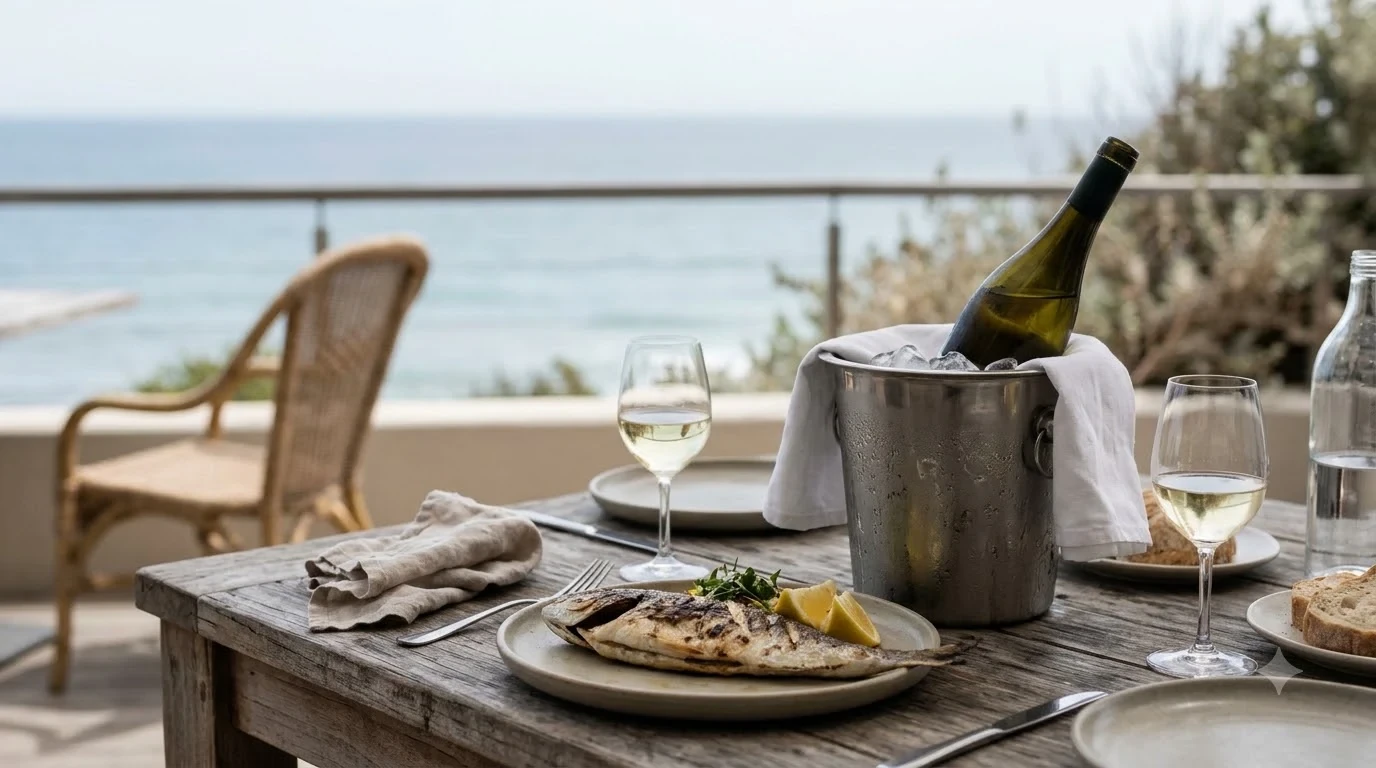
Seafood is a natural partner for many Chapoutier whites, particularly when the preparation emphasizes freshness, herbs, or a creamy sauce. A lighter Côtes-du-Rhône Blanc can work well with grilled shrimp, white fish, and simple seafood pasta. Viognier can be a good choice for richer preparations featuring aromatic herbs or lightly spiced sauces.
For richer Marsanne, consider lobster, scallops, or fish served with butter-based sauces. Its fuller body can stand up to richer cooking methods without disappearing beside the food. A dish featuring roasted vegetables and a creamy seafood sauce can also work well with a structured Northern Rhône white.
Chicken and Other Poultry
Roasted chicken, turkey, and poultry with creamy sauces are particularly useful pairings for fuller-bodied Marsanne. The wine’s texture complements the richness of the meat, while its savory and nutty characteristics can work alongside roasted skin and herbs.
For a simple preparation, serve roast chicken with thyme, lemon, and potatoes alongside a medium-full Rhône white. More elaborate dishes featuring mushrooms, cream, or browned butter can justify a richer Hermitage or Saint-Péray bottling.
Cheese, Vegetables, and Spices
Goat cheese is a practical pairing for aromatic and moderately textured whites, especially when served with fresh herbs or roasted vegetables. Mild washed-rind cheeses and selected semi-hard cheeses can also complement fuller Marsanne expressions.
For vegetable dishes, try roasted squash, cauliflower, fennel, or mushrooms. The savory character of these ingredients can connect with Marsanne’s nutty and earthy notes. Viognier is often more effective with fragrant vegetables and fruit-based sauces because its aromatic intensity can match the food.
Spice requires a little more attention. Highly alcoholic wines can amplify chili heat, and tannin can make spicy food seem harsher. For dishes containing strong chili, choose a moderate-alcohol, fruit-focused white and avoid preparations that overwhelm the wine’s more delicate aromas.
Tip: If you are unsure which Chapoutier white to serve, match the wine’s body to the dish. Choose a fresh regional blend for simple grilled seafood, a floral Viognier for aromatic dishes, and a fuller Marsanne for lobster, roast poultry, or creamy sauces.
Choosing a Bottle and Understanding Aging Potential
The best Chapoutier white wine for a particular occasion depends on how much body, aromatic intensity, and complexity you want. A regional Côtes-du-Rhône blend is a sensible starting point for everyday meals, while a named Hermitage or Saint-Péray bottling makes more sense when the wine itself is intended to be a central part of the occasion.
Start by reading the appellation and grape information rather than relying entirely on the name of the producer. If you enjoy floral aromas and ripe peach, look toward Viognier. If you prefer a more substantial wine with savory depth, investigate Marsanne. For a combination of aromatic detail and texture, a Marsanne-Roussanne blend can be a useful middle ground.
Matching the Wine to Your Preferences
These simple guidelines can help narrow the choices:
- For someone new to Rhône whites: Begin with a Côtes-du-Rhône Blanc. Its blend of Grenache Blanc, Viognier, and Roussanne introduces several characteristic grapes in one bottle.
- For aromatic white wine drinkers: Explore Viognier and Condrieu. Peach, apricot, and floral notes are the main attractions.
- For Chardonnay drinkers: Try a richer Marsanne or Saint-Péray. The rounded texture and possible oak influence may appeal to those who enjoy fuller-bodied Chardonnay.
- For collectors: Investigate the single-vineyard Hermitage bottlings. Their concentration and structural character can make them more suitable for extended cellaring.
- For a versatile dinner wine: Consider a regional blend with enough body for poultry and seafood but not so much concentration that it overwhelms simpler dishes.
Can Chapoutier White Wine Age?
Yes, some Chapoutier whites can develop for many years, but aging potential varies considerably. A fresh regional blend intended for early enjoyment should not be treated like a concentrated Hermitage Blanc. The latter can have the structure, concentration, and complexity to develop over an extended period.
Decanter’s assessment of Chapoutier’s Le Méal Hermitage Blanc illustrates this difference. Its reviewed wine was associated with a drinking window extending from 2025 to 2050. The same assessment described L’Ermite with a window extending from 2025 to 2055. These are specific assessments of particular wines and vintages, not universal aging promises for every Chapoutier white.
As Marsanne matures, its flavors can move beyond fresh fruit and almond toward more developed roasted, smoky, and savory notes. The texture may also become more complex. However, bottle development depends on the vintage, the wine’s structure, and how carefully it has been stored.
Proper Storage
Store unopened bottles in a cool, dark location with a relatively stable temperature. Around 55°F is a useful general target for wine storage. Avoid direct sunlight, strong temperature fluctuations, and locations close to heating appliances.
For cork-finished bottles, horizontal storage helps keep the cork in contact with the wine. This is particularly relevant for bottles intended for longer cellaring. Keep the storage environment free from unnecessary vibration and strong odors.
After opening, reseal the bottle and refrigerate it. Most opened still wines are best consumed within three to five days. Use a clean stopper to limit exposure to air, and bring the wine back toward its appropriate serving temperature before drinking.
For more background on the producer’s broader portfolio and other French wine houses, explore our wine brands information. Comparing regional styles can make it easier to recognize what makes Rhône whites different from Bordeaux, Burgundy, or wines from other French regions.
Frequently Asked Questions
Is Chapoutier white wine vegan?
Vegan suitability depends on the individual wine and its production methods. Some wines use animal-derived fining agents, while others use mineral, plant-based, or no fining agents. Check the producer’s specific product information for the bottle you are considering rather than assuming every wine in the portfolio has the same certification or processing method.
What does Fac et Spera mean on a Chapoutier wine label?
Fac et Spera is Latin for “do and hope.” It is the family motto associated with Maison M. Chapoutier and expresses the company’s philosophy of action, commitment, and respect for nature. The phrase is a recognizable part of the producer’s identity and appears on its wine presentation.
Does Chapoutier produce sparkling white wine?
Yes, the wider Chapoutier portfolio includes sparkling wine alongside still white wines. One example is Clairette de Die, a regional specialty associated with the Die area of the Rhône. Its traditional production methods and aromatic character make it a different proposition from the producer’s still Marsanne and Viognier bottlings.
What is the difference between Marsanne and Chardonnay?
Marsanne is a Rhône variety known for its fuller texture, softer acidity, and nutty or savory development with age. Chardonnay is considerably more stylistically flexible and can range from lean, mineral expressions to rich, oak-influenced wines. Their similarities are most apparent in fuller-bodied examples, but Marsanne often has a distinctive almond-like character.
Where is Maison M. Chapoutier based?
Maison M. Chapoutier is based in Tain-l’Hermitage in the Northern Rhône Valley of southeastern France. The location is closely associated with the Hermitage vineyards overlooking the Rhône River. The producer’s broader activities extend beyond this area into other French regions and international wine territories.
Chapoutier white wine offers a rewarding introduction to the diversity of Rhône whites, from aromatic Viognier and approachable regional blends to concentrated, age-worthy Marsanne. Start with the grape variety and appellation that best match your preferred flavor and body, then explore more specific vineyard expressions as your preferences develop. Whether the occasion calls for seafood, roast chicken, or a special bottle for the cellar, the collection offers several distinct styles worth discovering.
More in Wine Brands
 Underwood Wine Price: Compare Bottles, Cans, and Pack SizesUpdated Nov 21, 2026
 Zenato Wine Price: Compare Styles and Choose the Right BottleUpdated Nov 21, 2026
 Zuccardi Wine Price: Compare Bottles and Find the Right RangeUpdated Nov 21, 2026
 Yellow Tail Moscato Review: Taste, Sweetness and Serving TipsUpdated Nov 21, 2026
 Wolf Blass Yellow Label Review: Choose Your Best StyleUpdated Nov 21, 2026
 Wolffer Estate Rose Review: Choose the Right Bottle for Your TableUpdated Nov 21, 2026