

We may earn a commission when you buy through links on this page, at no extra cost to you. Learn more.
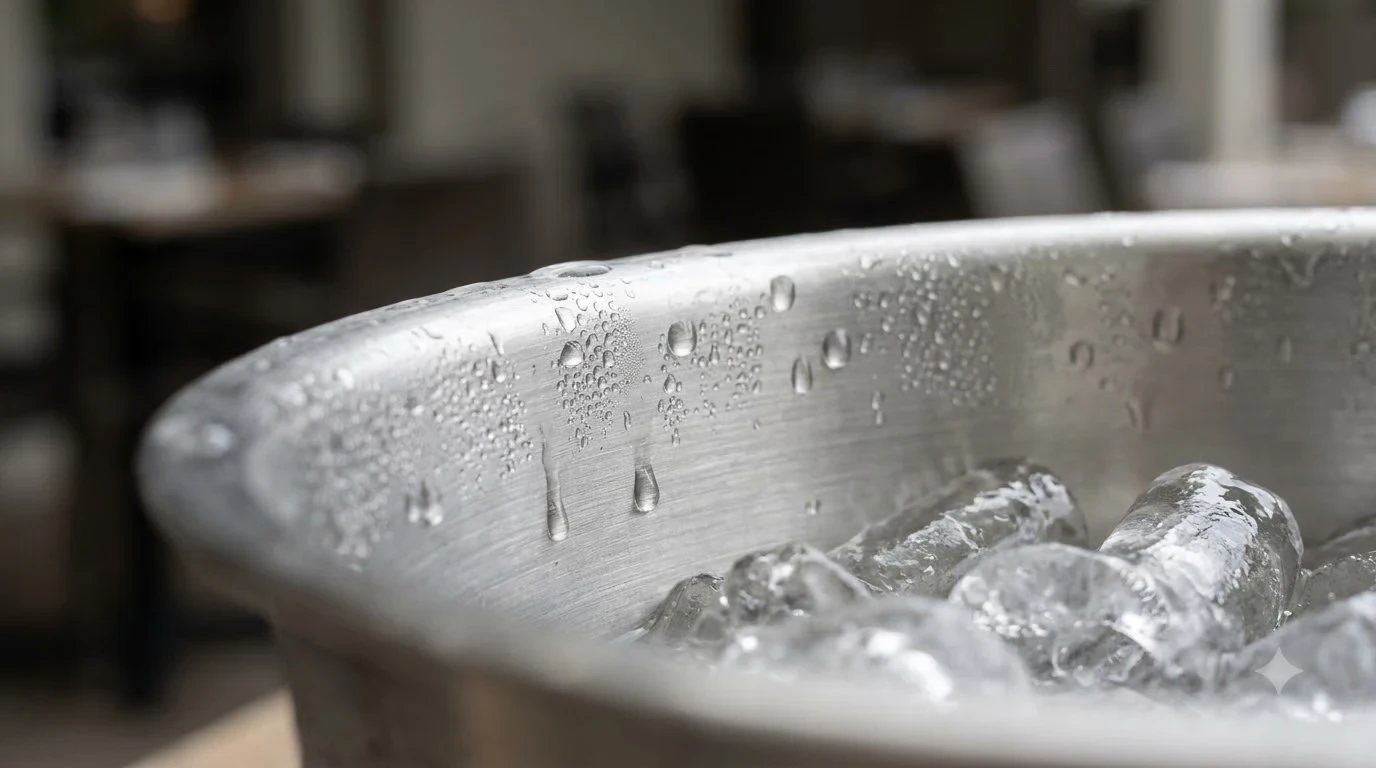
Can you put ice in wine? Yes, and it will not spoil the bottle, but the ice melts and dilutes the drink. The cold is welcome on a hot afternoon, while the meltwater makes the flavor thinner and softer. How well it works depends on the style of wine and how many cubes go into the glass.
This guide explains when ice is a reasonable choice, which wines handle it best, and how to cool a bottle without losing the flavor you wanted. It uses serving temperature ranges from wine references so you can judge what a cold glass will do.
Is it okay to put ice in wine?
Yes. It is a common choice at barbecues, outdoor parties, and casual dinners where nobody is counting on a precise tasting experience. Ice does two things at once. It lowers the temperature quickly, and it adds water as it melts. Those two effects are what make a glass with ice feel different from one served straight from the bottle.
What ice does to the taste
Cold slows down how much aroma a wine releases, so a very cold glass tastes crisper and less fruity than the same wine at a cool temperature. Melting ice also adds water, which lowers the alcohol strength of each sip and pulls back body and texture at the same time. A cube or two in a glass of light white may taste refreshing. Several cubes in a full-bodied red can make the wine taste watery, with its tannins and fruit pushed into the background.
It helps to think of ice as a dial. A small amount chills and softens the drink. A large amount turns the wine into something closer to a spritzer, which may be exactly what you want on a hot day but is a different drink from the one the winemaker intended.
Timing matters too. The first sip after a cube drops in is the coldest and most aromatic, and each minute after that the drink gets a little more diluted. People who sip slowly over a long evening often end up with a glass that tastes very different at the end than it did at the start. If you know the drink will sit for an hour, it makes sense to add the ice later, in small amounts, or to pour a fresh glass instead of topping up a melting one.
Glassware also changes the outcome. A wide-bowl glass lets more of the wine meet the air and the ice at the same time, which speeds up both the cooling and the dilution. A narrow flute or a tumbler with a thick base behaves differently, so a cube that looks harmless in one glass can water down a drink much faster in another.
Which wines handle ice best
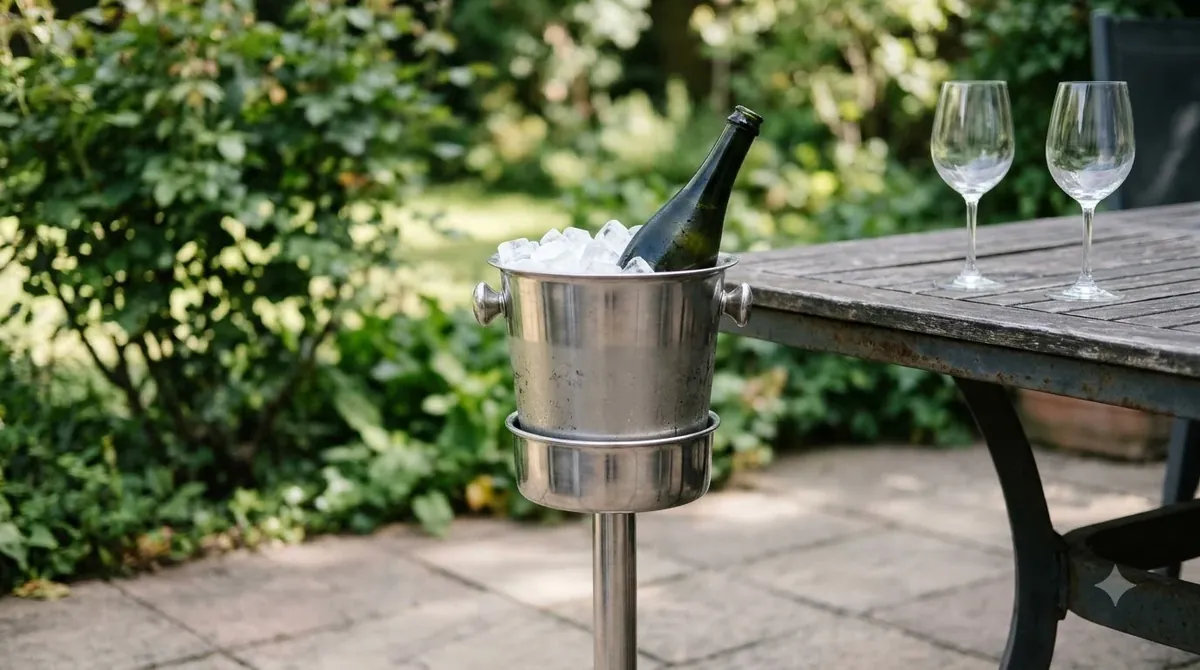
Wine references describe ideal serving ranges by style, and those ranges explain which bottles can take a cube or two. According to Wine Folly’s serving temperature guide, sparkling wines and light-bodied whites taste good at 38–45°F (3–7°C), which is already ice cold. Rosé and full-bodied whites sit at a slightly warmer 44–55°F (7–12°C). Those styles are built to be served cold, so a little melting ice rarely hurts them.
Sparkling wine is the easiest case. Inexpensive sparkling wines are usually served very cold, and a couple of cubes will not change their character much. Vintage Champagne is different, because higher-quality bottles are often served a little warmer so their aromas can open up. The same guide notes that cheaper wines can be served cooler, which tends to mute their flaws. Ice can do that job for an everyday bottle, but it is a poor fit for a bottle you bought to savor.
| Wine style | Serving range (Wine Folly) | Fit with ice |
|---|---|---|
| Sparkling and light-bodied whites | 38–45°F (3–7°C) | Good, already very cold |
| Rosé and full-bodied whites | 44–55°F (7–12°C) | Fine with a cube or two |
| Light and medium-bodied reds | 55–60°F (12–15°C) | Use one cube at most |
| Bold reds | 60–68°F (15–20°C) | Better without ice |
Why bold reds usually do better without ice
Bold reds such as Syrah, Cabernet Sauvignon, and Malbec are meant to be served slightly cool, in the 60–68°F (15–20°C) range. Ice pushes them well below that. When a red is too cold, the fruit goes quiet and the wine can taste flat, which is one reason reds stored in the refrigerator often disappoint. Chilled too hard, the tannins also feel sharper on the palate.
If a red seems too warm, the fix is a short stay in the refrigerator rather than a glass full of ice. A wine that smells sharply of alcohol is usually a sign it is too warm, and a little more chilling can help. Once the temperature is right, the wine keeps its flavor, and no water is added.
Ways to cool wine without diluting it
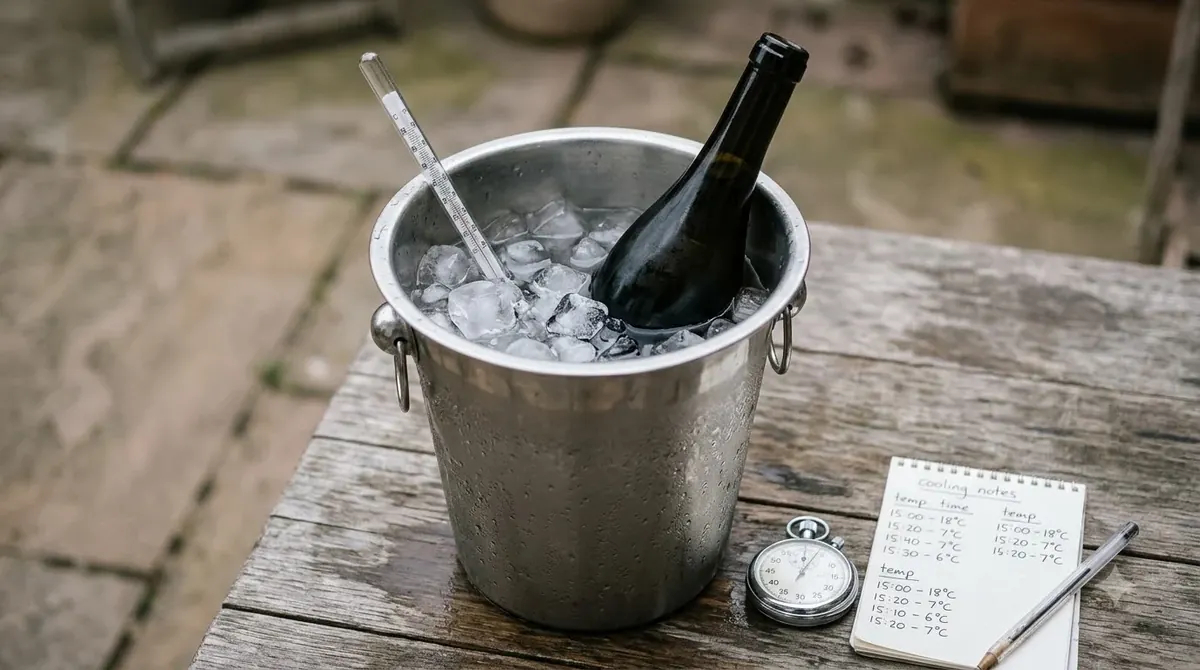
If you want a cold glass that still tastes like the wine, start with the bottle. A short stay in the refrigerator cools wine without adding any water. If you are in a hurry, an ice bucket filled with a mix of water and ice chills a bottle far faster than ice dropped into the glass, because the bottle is in contact with the cold rather than being diluted by it. Pull the bottle out a little before pouring so it does not get too cold.
Chilling the glass is another option. Glasses kept in the freezer or rinsed with cold water keep the first pour cool without changing the liquid. Wine sleeves and gel-filled chillers work in a similar way, holding the temperature steady while the wine stays undiluted. These tools are useful for a picnic or a long dinner where the bottle will sit out for a while.
If you do want ice, keep it simple. Use one or two cubes, drink the wine within a short time, and avoid letting it sit in the glass until the ice has melted into the wine. A wine key or a good opener makes opening the bottle quick enough that it does not sit warm on the table while you hunt for tools, and the guide on what is a wine key covers the basics.
Frequently Asked Questions
Does ice ruin wine?
No, ice does not spoil wine in the sense of making it unsafe. It dilutes the flavor and mutes aromas, so the drink tastes thinner than the winemaker intended. For most casual occasions that trade-off is acceptable.
Is it okay to put ice in white wine?
Yes, especially with crisp, light-bodied whites and rosé, which are already served cool. A cube or two keeps them refreshing. Richer, oak-aged whites usually taste better with less ice or none.
Can you put ice in red wine?
Light and medium-bodied reds can take a single cube if the room is hot. Bold reds generally do better cool rather than iced, because cold dulls the fruit and makes the tannins feel harsher.
Does ice make wine stronger?
No. Melting ice adds water, so each sip has a lower alcohol strength than the bottle does. The drink feels lighter and less intense as the ice melts into it.
Ice is a sensible tool when the wine is already cold and the setting is relaxed. For a bottle you want to taste at its best, chill it gently and skip the cubes. For more background on everyday wine questions, the wine basics Q&A section covers other common topics that come up at the table.
More in Wine Basics
 Which Rose Is Best for Your Taste, Budget, and Food PairingsUpdated Nov 21, 2026
 Is Cheap Wine Bad? How to Find Bottles Worth DrinkingUpdated Nov 21, 2026
 What To Write On A Wine Gift Tag: Thoughtful Messages For Every OccasionUpdated Nov 21, 2026
 Which Wine Is Best For Weight Loss? Compare Lower-Calorie ChoicesUpdated Nov 21, 2026
 What Is The Best Wine For Mimosas? Choose Bubbly That Balances Orange JuiceUpdated Nov 20, 2026
 Which Prosecco Is Best for Your Taste and OccasionUpdated Nov 20, 2026