

We may earn a commission when you buy through links on this page, at no extra cost to you. Learn more.
Brazil wine is produced mainly in Rio Grande do Sul, and the Serra Gaúcha region there is the country’s oldest and most important wine area, best known for sparkling wine. Winemakers also grow European vinifera vines for still reds and whites, along with hybrid and American grapes that are easier to grow in Brazil’s conditions. According to Wikipedia’s overview, Brazil is the third-largest wine producer in Latin America, behind Argentina and Chile.
If you have spotted a bottle from Brazil on a shop shelf and wondered what it tastes like, you are not alone. Brazilian wine is still a small player on the global stage, but it has a long history and a clear regional identity. This guide covers where the wines come from, which grapes are used, and how to serve and pair them.
A Short History of Brazilian Wine
Winemaking in Brazil goes back to the colonial period. According to Wikipedia’s article on wine in Brazil, the Portuguese planted the first vines in São Paulo in 1532, but several later attempts with European vines were less successful. Jesuits brought Spanish vines to Rio Grande do Sul in 1626, and 18th-century settlers from the Azores brought cuttings from Madeira and the Azores.
The first successful vineyards are usually dated to plantings of Isabella grapes in 1840. By the late 1870s, winemaking had taken hold in Serra Gaúcha, where Italian immigrants did much of the vine-growing. For a long time the industry was built on grapes that were easy to grow rather than on fine wine. Quality production began to change in the 1970s, when international companies such as Moët & Chandon invested and brought modern equipment and know-how.
Where Brazilian Wine Grows
Rio Grande do Sul is the centre of the country’s wine industry. The source describes it as producing about 90 percent of Brazil’s wine, and the state has four wine regions. Each one has its own character, so it helps to know the names before you shop.

Serra Gaúcha is the oldest and most important of these regions, and it is the area most people mean when they talk about Brazilian wine. Campanha lies in the pampas along the borders with Uruguay and Argentina. Serra do Sudeste and Campos de Cima da Serra complete the state’s four regions. Smaller-scale viticulture also takes place in neighbouring Santa Catarina.
Far to the north, the São Francisco Valley in Pernambuco makes wine in a hot, semi-arid climate. Growers there can harvest two crops a year, which sets their style apart from the cooler southern vineyards. If you enjoy comparing a newer wine region with a long-established one, our guide to Douro wine offers a useful contrast, and for a broader look at how regions differ, start with the Wine Regions guide.
Grapes and Styles You Will Find
Brazilian producers work with a mix of grape families, and that mix shapes what ends up in the glass. European vinifera vines are generally associated with the country’s better-quality wines, which Brazilians call vinho fino. Hybrid and American vines remain common because they are easier to grow in the local climate.
| Grape group | What to know | Where you may see it |
|---|---|---|
| European vinifera (vinho fino) | Associated with higher-quality still wines | Serra Gaúcha and other Rio Grande do Sul regions |
| Hybrid and American vines | Easier to grow in Brazilian conditions, widely planted | Across the main wine regions |
| Isabella (Vitis labrusca) | One of the earliest successful plantings in the country | Traditional and table-style wines |
| Tannat and Italian varieties | Added to the country’s vineyards later | Several regions, depending on the producer |
The Italian influence on the region is easy to notice once you start tasting. Many of the families who settled Serra Gaúcha came from northern Italy and brought vine-growing traditions with them. That history shows up in the names of many local producers and in the way some of the region’s wines are made, even when the grapes themselves have changed over the decades. Reading the producer’s story on its website is a good way to understand why a particular bottle tastes the way it does.
Tannat is worth a special mention. It is a grape better known in Uruguay than in Brazil, but Brazilian producers have planted it too. Wines made from Tannat are typically firm and structured, and they pair well with the rich grilled dishes common in the region. If you see Tannat on a Brazilian label, it is a good signal that the producer is working with a grape that has deep roots across the southern part of South America.
Because the grape mix is so varied, two Brazilian wines labelled with the same region can taste quite different. Read the grape name on the label first. A bottle that lists a European vinifera variety will usually give you a more familiar profile than one made from an American or hybrid grape.
Tip: If you are new to Brazilian wine, look for a clear grape name and a regional name on the label. Together they tell you more than the brand alone.
Sparkling Wine from Serra Gaúcha
Sparkling wine is the style most closely linked with Serra Gaúcha. The region is known especially for it, and it is the first thing many visitors and buyers look for when they explore Brazilian bottles. Sparkling wines from this area are often served as aperitifs or alongside lighter dishes, though the best match always depends on the specific bottle.
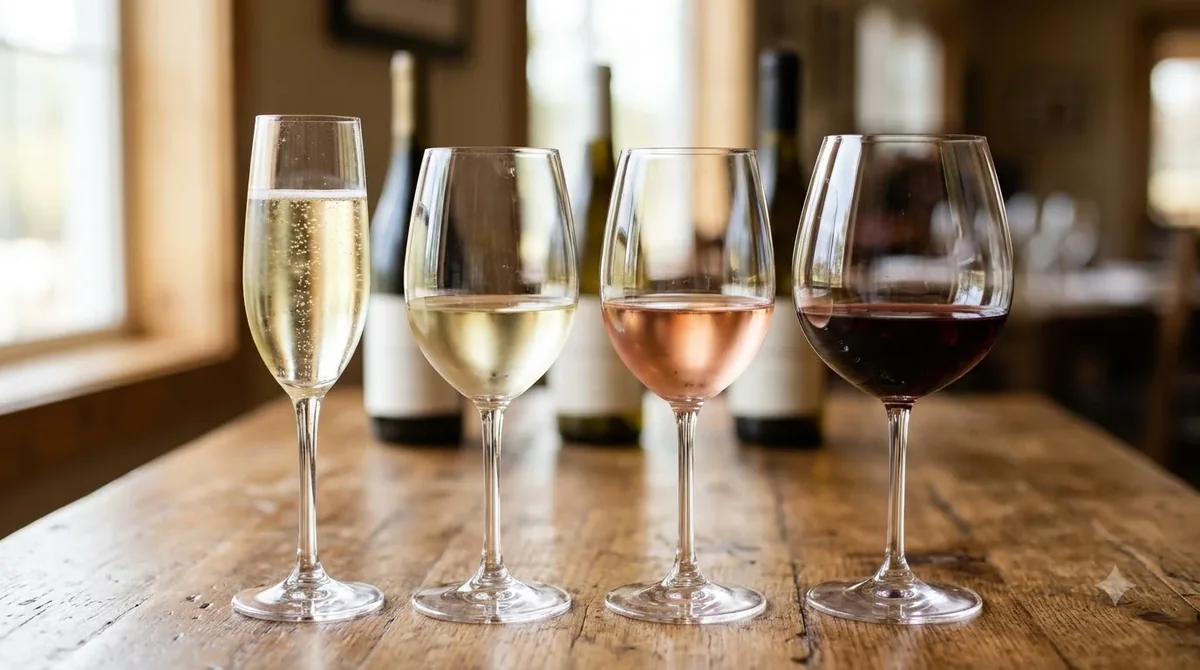
Still wines from the same region are also worth trying. Some producers work with European grapes, while others rely on hybrids and American varieties. Tasting a sparkling wine and a still wine from the same producer is a simple way to see how the region expresses itself across styles.
How to Serve and Pair Brazilian Wine
Serve sparkling Brazilian wine well chilled, in a flute or a tulip-shaped glass that keeps the bubbles lively. Still whites are best cool rather than cold, which lets the fruit and acidity show. Reds usually come out best slightly below room temperature, especially lighter styles, so a short stay in the fridge before pouring can help.
Food pairing follows the same logic as with any wine. Sparkling wines work well with fried or salty snacks, soft cheeses, and seafood. Lighter whites suit grilled fish and chicken. Heartier reds go well with grilled meats, which is a natural fit in a country where barbecue is a central part of the table. Pair by weight and texture first, then adjust for the wine’s acidity and tannin.
When you are choosing bottles for a group, it helps to plan one sparkling wine, one light white, and one red. That range covers most menus and gives guests a clear comparison between styles. Ask the shop staff which grape is in each bottle, since the label alone may not explain the style.
Always drink responsibly and plan your evening around that. A glass or two with a meal is the normal way most people enjoy wine.
Frequently Asked Questions
Does Brazil really make wine?
Yes. Brazil has a long winemaking history that began with colonial-era plantings, and it is the third-largest wine producer in Latin America, behind Argentina and Chile, according to Wikipedia.
What is Brazil best known for in wine?
Sparkling wine from Serra Gaúcha in Rio Grande do Sul is the style the region is best known for. It is the oldest and most important wine area in the country.
Are Brazilian wines made from European grapes?
Some are. European vinifera vines are used for higher-quality wines, but hybrid and American grapes are also common because they are easier to grow in Brazil’s climate.
How can I find Brazilian wine in a shop?
Look for Rio Grande do Sul or Serra Gaúcha on the label, and check the grape name. Specialist wine shops and importers that carry South American bottles are the most likely places to find them.
Brazil’s wine story is still developing, but the regions are clear enough to follow. Start with Serra Gaúcha for sparkling wine, then try a still wine from a different area to see how the style changes. For more ideas on comparing regions, browse our Hunter Valley wine guide or the Hermann wine trail overview.
More in Wine Regions
 Willcox Wine Trail: Discover Arizona’s High-Elevation Wine CountryUpdated Nov 20, 2026
 Yakima Valley Wine Region: Find the Best Styles to TryUpdated Nov 20, 2026
 Vosne Romanee Wine Tasting: Identify Aromas and Choose Better PairingsUpdated Nov 20, 2026
 Yakima Valley Wine Festival: Find the Best Seasonal Wine EventsUpdated Nov 20, 2026
 Wales Vineyards: Discover Cool-Climate Wines and Where to VisitUpdated Nov 20, 2026
 Yountville Wine Festival: Discover Napa Wines and Local FoodUpdated Nov 20, 2026