

We may earn a commission when you buy through links on this page, at no extra cost to you. Learn more.
The Bosch under counter wine fridge is a strong choice for homeowners who want integrated wine storage, quiet operation, UV-filtered glass, and precise temperature adjustment without sacrificing much kitchen space. The compact Series 6 KUW20VHF0G holds up to 21 standard bottles in a 30 cm-wide cabinet, while the larger KUW21AHG0G offers two temperature zones and room for up to 44 bottles. The main decision is whether you prefer a narrow, space-saving single-zone cooler or a wider cabinet that can keep different wine styles at separate temperatures.
A dedicated wine refrigerator can make a kitchen more practical for people who regularly serve Cabernet Sauvignon, Pinot Noir, Chardonnay, Champagne, and other wines that benefit from controlled storage. Bosch approaches this category with built-in appliances designed to sit beneath a worktop, combining dark finishes, glass doors, wooden shelves, and electronic temperature controls. However, model dimensions, cooling arrangements, and electrical specifications deserve careful attention before ordering, particularly for American homeowners considering an imported European appliance.
Specs and Key Features
Bosch’s Series 6 under-counter wine coolers combine compact cabinetry with adjustable temperature settings, interior lighting, and glass doors designed to limit ultraviolet exposure. The KUW20VHF0G is the smaller single-zone option, while the KUW21AHG0G is the more spacious dual-zone alternative.
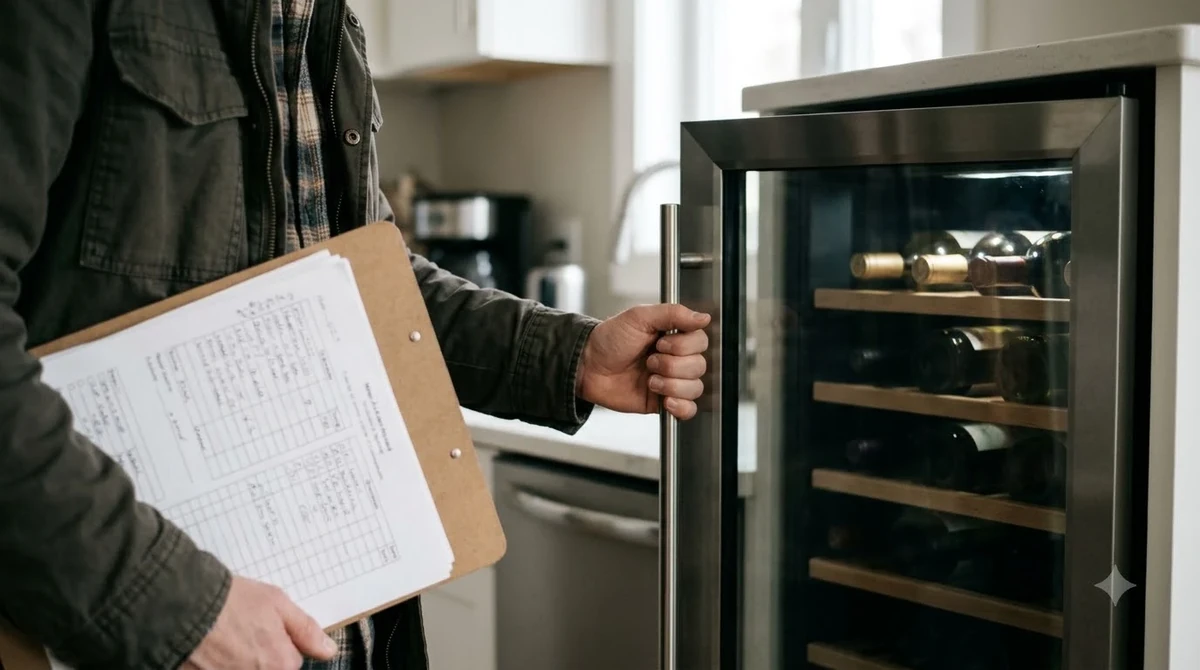
The KUW20VHF0G is particularly interesting for kitchens with a narrow 30 cm appliance opening. Bosch specifies a capacity of 21 standard 750 ml Bordeaux bottles, three wooden shelves, one temperature zone, and a temperature adjustment range of 5°C to 20°C. Its triple-glazed door incorporates a UV filter, and its reversible hinge gives homeowners additional flexibility when planning the surrounding cabinetry.
The larger KUW21AHG0G occupies a 60 cm format and offers substantially more storage. Bosch’s product brochure specifies room for up to 44 standard bottles, two independently controlled temperature zones, and five shelves, including three oak-wood shelves. This configuration is more practical for households that regularly keep red and white wines available simultaneously.
| Specification | KUW20VHF0G | KUW21AHG0G |
|---|---|---|
| Series | Series 6 | Series 6 |
| Appliance width | 298 mm | 598 mm |
| Appliance height | 818 mm | 818 mm |
| Appliance depth | 567 mm | 581 mm |
| Maximum bottle capacity | 21 bottles | 44 bottles |
| Temperature zones | 1 | 2 |
| Temperature range | 5–20°C | 5–20°C per zone |
| Usable capacity | 58 liters | 120 liters |
| Annual energy consumption | 100 kWh | 130 kWh |
| Noise rating | 38 dB(A) | 38 dB(A) |
| Energy efficiency class | F | G |
| Door | Triple-glazed, UV-filtered | UV-filtered glass |
| Shelves | 3 wooden shelves | 5 shelves |
These figures come from Bosch’s technical documentation and product brochures. The KUW20VHF0G specifications are available in the official Bosch technical specification, while the larger cabinet’s details appear in Bosch’s product literature. The two models should not be treated as identical appliances with different capacities: their cooling arrangements and installation dimensions serve different requirements.
One particularly important distinction is that the smaller cabinet has a single temperature zone. Its wide adjustment range does not mean it can simultaneously maintain two separate serving temperatures. The larger model provides that flexibility through independent controls.
For buyers, the 38 dB(A) specification is another useful detail. It places both appliances in a relatively quiet operating category on paper, although actual perceived noise depends on installation, surrounding cabinetry, ventilation, and the room’s background sound.
What Owners Like
The strongest attractions of Bosch’s wine cabinets are their integrated appearance, controlled storage environment, and practical details. The compact model is particularly appealing for smaller kitchens, while the larger dual-zone cabinet offers greater flexibility for households with varied wine collections.
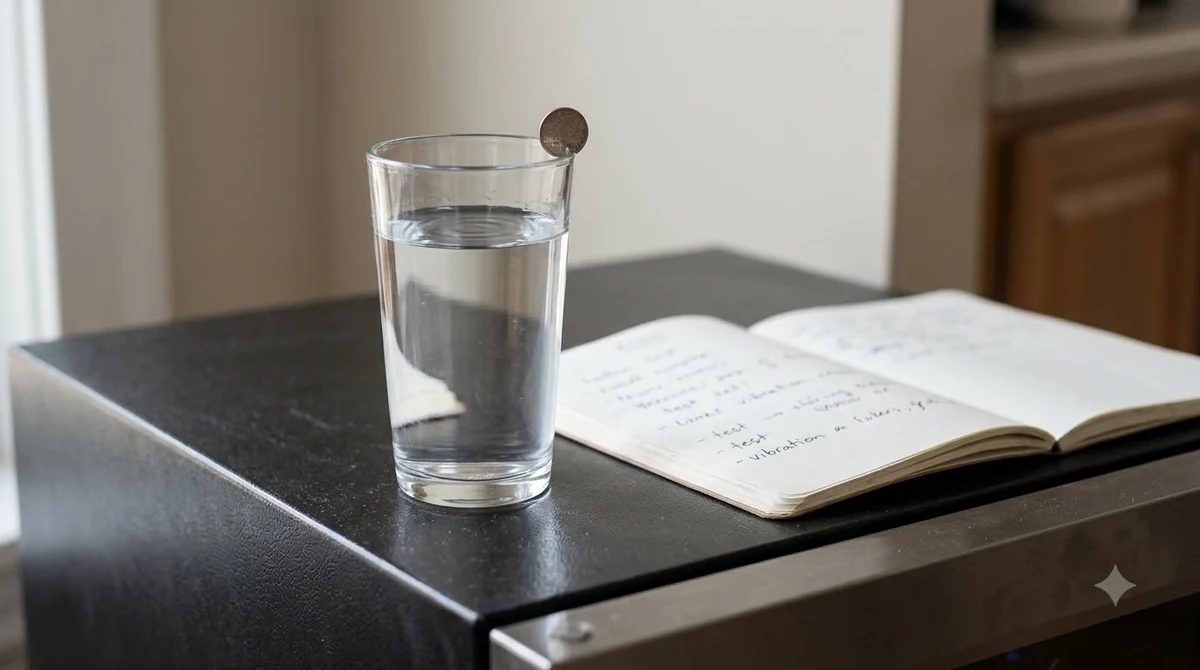
Integrated kitchen appearance is one of the main advantages. Rather than placing a freestanding refrigerator beside a counter or dining area, the Bosch appliance fits into a dedicated cabinet opening. Its black finish and glass front create a restrained appearance that works well alongside contemporary kitchen appliances.
The KUW20VHF0G’s 30 cm width makes it especially useful when a standard refrigerator-sized installation would be impractical. A homeowner can reserve a relatively narrow section of cabinetry for wine storage while retaining the surrounding space for drawers, cupboards, or other appliances. The 60 cm KUW21AHG0G is a more substantial commitment, but its capacity makes better use of a larger dedicated opening.
UV-filtered glass is another worthwhile feature. Wine can be affected by prolonged exposure to ultraviolet light, particularly when stored in transparent bottles or displayed in bright rooms. Bosch specifies a triple-glazed glass construction with UV filtering on the compact model. This offers an additional protective layer while retaining the visual appeal of a glass-fronted cabinet.
Wooden bottle shelves also contribute to the traditional wine-cellar appearance. The compact model has three wooden shelves, while the larger cabinet has five shelves, including three made from oak. Horizontal bottle storage keeps cork closures in contact with the wine, which is a familiar arrangement for long-term bottle storage.
There is also an everyday convenience benefit. LED presentation lighting makes bottles easier to identify without relying on strong external kitchen lighting. Bosch describes a presentation mode for the compact model, which can help make the collection more visible when entertaining.
Independent product testing provides another useful perspective on the larger Series 6 appliance. Good Housekeeping evaluated the KUW21AHG0G and reported favorable temperature stability, including a 0.2-degree rise in its lower zone over a 24-hour observation period. Its testing also found that the appliance recovered temperature quickly after the door was left open for two minutes.
Those findings relate to the larger dual-zone model, not automatically to every Bosch wine refrigerator. Nevertheless, they offer useful independent evidence that the larger cabinet’s temperature management deserves consideration alongside its manufacturer specifications.
For households that enjoy wine with dinner, dedicated storage can also make entertaining more organized. A chilled bottle of Sauvignon Blanc can be ready for seafood, while a bottle of Merlot can be prepared for a richer meal such as chicken Marsala. The advantage is having an appropriate bottle available at a controlled temperature rather than relying on last-minute chilling.
Common Complaints
The main limitations of Bosch’s under-counter wine cabinets involve capacity, temperature-zone flexibility, installation requirements, and regional availability. These are important considerations because a premium built-in appliance needs to fit the kitchen and the owner’s collection for many years.
Limited capacity in the compact model is the first potential drawback. A maximum of 21 standard bottles sounds reasonable for occasional entertaining, but the available space can disappear quickly. Someone who buys several bottles of Burgundy, Bordeaux, and sparkling wine at a time may find that the cabinet becomes restrictive.
It is also important to understand that the manufacturer’s maximum capacity uses standard 750 ml Bordeaux-style bottles. Burgundy bottles, Champagne bottles, sparkling wine bottles, and unusually shaped bottles can take up more shelf space. A collection containing several large-format bottles will not necessarily fit the advertised maximum.
Single-zone cooling is another limitation of the KUW20VHF0G. Red and white wines have different serving-temperature preferences. A single compartment can be set to a compromise temperature, but it cannot maintain two independent climates at the same time.
For example, a light Pinot Noir is generally served cooler than a full-bodied Cabernet Sauvignon, while Sauvignon Blanc and Chardonnay also have different ideal serving conditions. Someone who wants several wine categories ready to pour may prefer the larger dual-zone model.
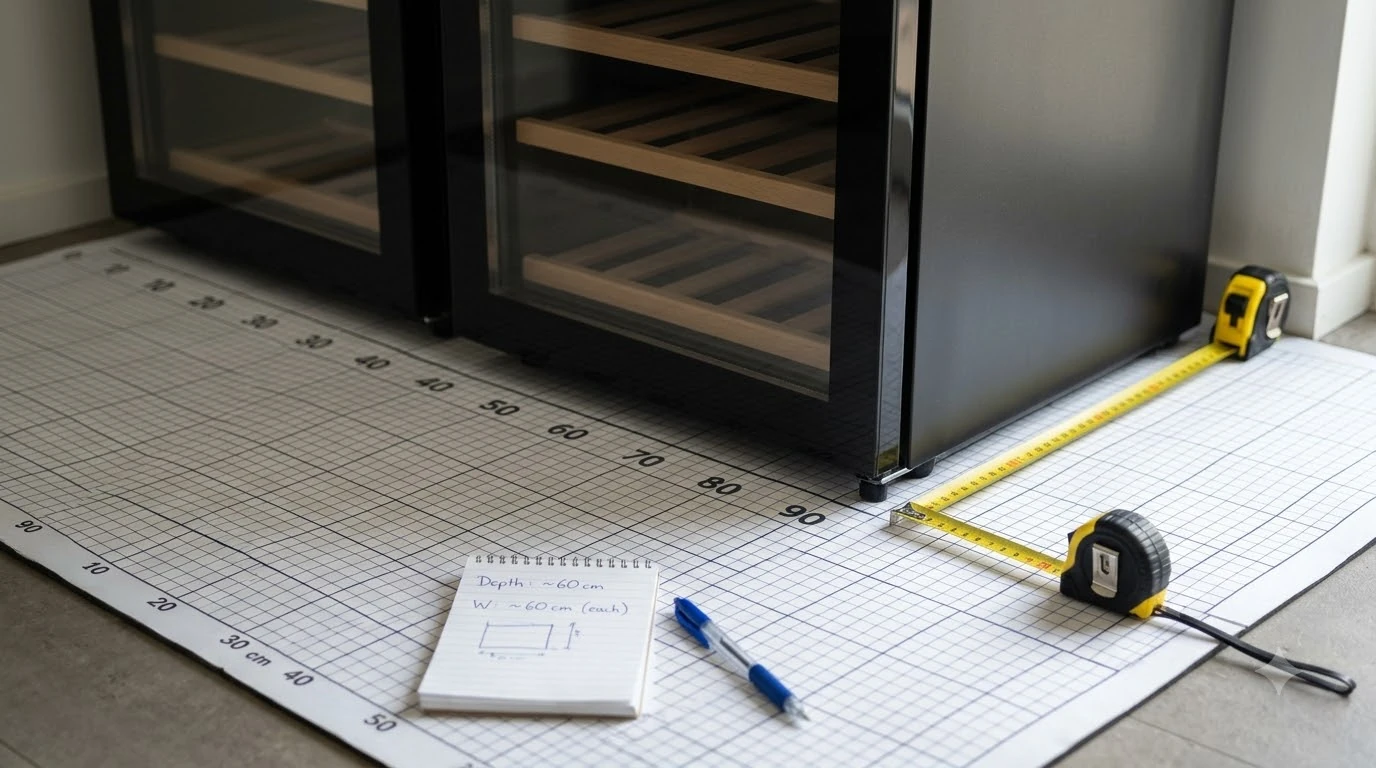
Installation is less forgiving than with a freestanding cooler. Bosch specifies a 300 mm-wide installation niche for the KUW20VHF0G, with a required installation depth of 550 mm. The actual appliance is 567 mm deep and 818 mm tall. These measurements need to be considered together rather than assuming that an appliance will fit simply because its nominal width matches the cabinet opening.
Ventilation is equally important. A built-in cooling appliance needs the airflow arrangement specified by its manufacturer. Blocking the intended ventilation path with cabinetry, decorative panels, or stored kitchen items can interfere with normal operation. The installation diagram should therefore be reviewed before the cabinetry is finalized.
Energy efficiency is not a standout feature on the published labels. The smaller model carries an F rating, while the larger model carries a G rating under the applicable A-to-G scale shown in Bosch’s documentation. The smaller unit’s stated annual consumption is 100 kWh, compared with 130 kWh for the larger cabinet.
These figures should be considered in context. The larger appliance has more than twice the bottle capacity, two cooling zones, and substantially greater usable volume. Comparing annual consumption without considering capacity can produce a misleading impression of overall efficiency.
Finally, American buyers should pay particular attention to the model designation. The KUW20VHF0G documentation specifies a 220–240 V electrical supply and a GB plug. This is not a straightforward US plug-in purchase for a standard American 120 V household. Confirm the exact regional model, electrical compatibility, warranty coverage, and availability of authorized service before committing to an imported unit.
Who Should Buy and Who Should Skip
The compact Bosch cabinet is best suited to homeowners who value built-in appearance and organized storage more than maximum capacity. The larger dual-zone version is better for serious wine drinkers who want separate temperature settings and more room for different bottle styles.
Who should consider the compact KUW20VHF0G?
This model makes sense for a household with a modest collection of approximately 10 to 20 standard bottles. It is particularly suitable for a kitchen renovation where a 30 cm appliance opening has already been planned.
It is also a sensible choice for people who mostly drink one broad category of wine. Someone who regularly buys Chardonnay, Sauvignon Blanc, and sparkling wine, for example, may prefer a single storage temperature rather than maintaining separate red and white compartments.
The reversible door hinge adds flexibility when coordinating the appliance with nearby cabinets and kitchen traffic. This can be helpful in smaller kitchens where door clearance and access to drawers matter.
Who should consider the larger KUW21AHG0G?
The 60 cm model is more suitable for people who keep a varied collection. Its 44-bottle capacity and two temperature zones allow different wine categories to remain available without requiring a separate refrigerator.
A household that regularly buys both red and white wine, hosts dinner parties, or keeps several sparkling wines on hand will probably appreciate the additional space. The separate zones can also make serving preparation easier because bottles can be maintained at different target temperatures.
For example, a homeowner might dedicate one zone to white wine at approximately 48°F and another to lighter reds at approximately 57°F. These are practical serving-oriented settings rather than universal storage requirements. The correct selection depends on the wines being stored and how quickly they will be consumed.
Who should skip both models?
Buyers who need a large cellar-style appliance should consider a larger wine cabinet rather than expecting a compact under-counter model to accommodate an expanding collection. Someone who regularly stores 80 to 100 bottles will probably outgrow either Bosch cabinet.
People who prefer a freestanding appliance should also consider alternatives. A built-in cooler is designed around a particular installation environment, whereas a freestanding model may offer more flexibility for renters, existing kitchens, or rooms without dedicated appliance openings.
American homeowners who cannot verify electrical compatibility or regional manufacturer support should avoid ordering the European KUW20VHF0G or KUW21AHG0G without further confirmation. A familiar brand name does not guarantee that every regional appliance version is suitable for the US market.
Tip: Before purchasing a built-in wine cabinet, measure the complete installation opening, including height, width, depth, ventilation clearances, door swing, and access to the electrical connection. Ask the installer to confirm the manufacturer’s exact installation diagram rather than relying on a nominal 30-inch or 24-inch cabinet measurement.
How It Compares to Alternatives
Bosch’s two Series 6 wine cabinets address different storage needs, while other wine refrigerator formats offer different balances of capacity, flexibility, and installation convenience. The most useful comparison is not simply which appliance holds more bottles, but which arrangement suits the kitchen and the collection.
The KUW20VHF0G is a compact single-zone appliance. Its 21-bottle capacity and 30 cm width make it a space-conscious option for smaller kitchens. However, the single-zone arrangement is less versatile than a larger dual-zone cooler when the collection includes both reds and whites.
The KUW21AHG0G offers a considerably more flexible arrangement. Its 44-bottle capacity, two independently controlled zones, and 120-liter usable volume make it more suitable for regular wine drinkers who want greater storage flexibility.
For buyers comparing Bosch with other premium kitchen appliances, it is useful to look at the broader built-in category. Good Housekeeping also includes the Neff N70 KU9202HF0G among its wine cooler recommendations, identifying it as an option for smaller spaces. This provides another manufacturer family to investigate when planning an integrated kitchen.
There is an important distinction between a wine cooler’s bottle capacity and its practical usefulness. A cabinet advertised for 44 bottles may be less convenient for a collection containing many Champagne or Burgundy bottles than a smaller cabinet organized around standard Bordeaux bottles. Shelf spacing and access to individual bottles deserve attention alongside the headline capacity.
| Comparison point | Compact Bosch | Larger Bosch |
|---|---|---|
| Cabinet width | 30 cm format | 60 cm format |
| Maximum capacity | 21 bottles | 44 bottles |
| Cooling arrangement | Single zone | Dual zone |
| Usable volume | 58 liters | 120 liters |
| Annual consumption | 100 kWh | 130 kWh |
| Best application | Smaller collections | Mixed wine collections |
Another consideration is whether the appliance is intended for long-term collection storage or simply keeping frequently consumed bottles ready to serve. A dedicated wine cabinet can provide controlled conditions, but it does not replace a properly planned cellar for someone accumulating valuable bottles over many years.
For everyday entertaining, a dedicated cabinet may be enough. A bottle of Prosecco can be chilled before a gathering, while a refreshing Aperol Spritz recipe offers a simple alternative for guests who prefer a mixed drink. The storage arrangement should reflect the owner’s actual drinking habits rather than an assumed need to collect as many bottles as possible.
Readers comparing several appliance categories can also consult the broader wine and appliance model reviews section for additional purchasing considerations.
Overall, Bosch’s compact cabinet is more attractive to buyers with restricted space, while the larger model is a more capable option for households that need separate wine temperatures. Neither should be selected without checking installation and electrical compatibility.
Frequently Asked Questions
Can a Bosch under-counter wine fridge be used for Champagne?
Yes, both still and sparkling wines can be stored in a suitable wine cabinet. Champagne bottles are often wider and heavier than standard Bordeaux bottles, however, so the advertised maximum capacity may not apply to a collection containing many sparkling bottles. Allow additional space when planning shelf arrangements.
Does a Bosch wine cooler need to be defrosted manually?
The published Bosch specifications identify these appliances as wine storage cabinets rather than conventional frost-free food refrigerators. Owners should follow the model-specific care instructions for cleaning and any moisture or ice accumulation. Avoid using sharp objects to remove ice from internal surfaces.
Can wine be stored in a Bosch cabinet for several years?
A controlled wine cabinet can support longer storage, but temperature is only one part of proper bottle aging. Stable conditions, protection from strong light, suitable humidity, and minimal disturbance also matter. Wines intended for extended aging should be stored according to their individual requirements rather than assuming every bottle will improve with time.
Can the Bosch glass door be replaced with a custom cabinet panel?
The KUW20VHF0G specification identifies its door panel options as unavailable. It is therefore not a model to select if a fully concealed, matching cabinet-front appearance is essential. Ask Bosch about the precise regional model before assuming that another appliance in the range supports custom panel installation.
Should a wine fridge remain switched on when it is empty?
An empty wine cabinet does not need to operate simply because it is installed. If it will remain unused for an extended period, consult the manufacturer’s instructions about switching off, cleaning, drying, and leaving the door appropriately positioned. This helps prevent unwanted odors and moisture problems during storage.
The Bosch under-counter wine fridge range offers a well-considered solution for homeowners who want integrated wine storage rather than a freestanding appliance taking up valuable kitchen space. The 21-bottle KUW20VHF0G suits compact collections, while the 44-bottle KUW21AHG0G is the more versatile choice for households that need two temperature zones. For American buyers, the final purchasing decision should depend on verified regional availability, electrical compatibility, installation requirements, and service support as much as the appliance’s attractive specifications.
More in Model Reviews
 Magic Chef 44 Bottle Wine Cooler Review for Flexible StorageUpdated Nov 21, 2026
 Whynter 164 Bottle Wine Cooler Review: Capacity, Features, and FitUpdated Nov 21, 2026
 Insignia NS WC16BK6 Review: Compact 16-Bottle Wine StorageUpdated Nov 21, 2026
 Wine Enthusiast Electric Blue Omega Review: Opening, Pouring, and Preserving Made EasierUpdated Nov 21, 2026
 Koolatron 20 Bottle Wine Cooler Review: Features, Fit, and PerformanceUpdated Nov 21, 2026
 NewAir AWC 330E Review for Home Wine StorageUpdated Nov 21, 2026