

We may earn a commission when you buy through links on this page, at no extra cost to you. Learn more.
Bolgheri vineyards are located along Tuscany’s Tyrrhenian coast in the province of Livorno, where sea breezes, varied soils, and Bordeaux grape varieties produce some of Italy’s most celebrated wines. The region is particularly famous for Cabernet Sauvignon, Merlot, and Cabernet Franc, which form the foundation of its distinctive red blends. Historic estates such as Tenuta San Guido and Ornellaia helped establish Bolgheri’s international reputation, while Vermentino and other white grapes demonstrate that the area’s wine production extends beyond powerful reds.
Located between the hills of inland Tuscany and the Mediterranean coastline, Bolgheri combines a relatively compact growing area with considerable differences in elevation, soil composition, and vineyard exposure. Its modern wine identity developed largely during the second half of the 20th century, when producers recognized that international grape varieties could thrive in this coastal environment. Understanding the landscape, appellation rules, grape varieties, and historic estates makes it easier to appreciate what distinguishes Bolgheri from other Tuscan wine regions.
Where Bolgheri Vineyards Are Located Along the Tuscan Coast
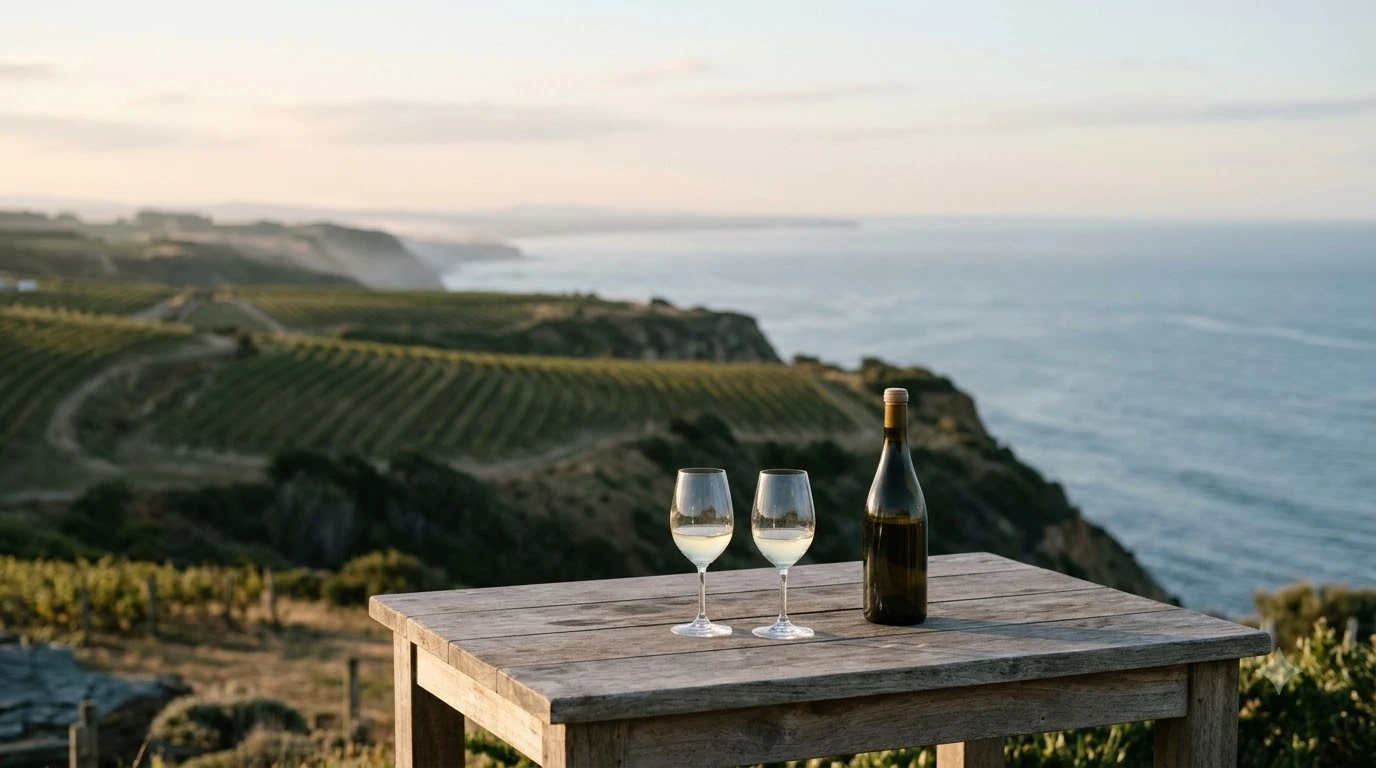
Bolgheri lies within the municipality of Castagneto Carducci, in the province of Livorno, southwestern Tuscany. Its vineyards occupy a coastal landscape between the Tyrrhenian Sea and the hills to the east, with the famous village of Bolgheri serving as an important geographic and cultural reference point.
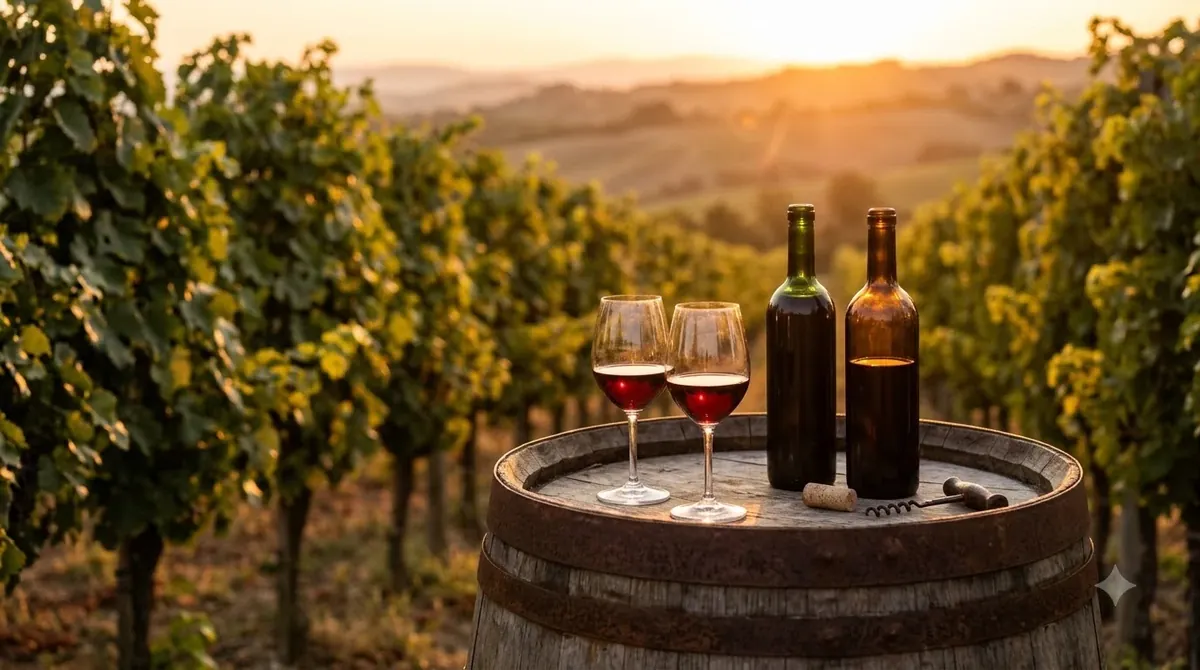
According to the Bolgheri DOC consortium, the appellation extends approximately 13 kilometers from north to south and 7 kilometers from east to west. Vineyard elevations range from approximately 10 to 380 meters above sea level. This relatively small area contains both flatter agricultural land and higher hillside sites, giving producers opportunities to work with different growing conditions.
The surrounding hills form a natural amphitheater that opens toward the sea. The Colline Metallifere and other inland elevations help shape the landscape, while the Tyrrhenian coastline influences temperatures and air movement. Corsica and the Tuscan archipelago are visible from parts of the region, emphasizing the close relationship between the vineyards and the Mediterranean environment.
Most vineyards are concentrated on the central plains and gently sloping terrain rather than directly beside the beaches. The land west of Via Aurelia, an ancient Roman road, includes stretches of pine forest and sandy coastline that are generally unsuitable for commercial grape growing.
The village itself is recognizable for its medieval character and the famous Viale dei Cipressi, a long avenue lined with cypress trees connecting Bolgheri with the San Guido area. This landscape is closely associated with the region’s wine identity, particularly because Tenuta San Guido played such an important role in the development of modern Bolgheri reds.
Bolgheri belongs to the broader Tuscan wine landscape, but its coastal position gives it a different identity from inland areas such as Chianti Classico and Montalcino. Those regions have stronger associations with Sangiovese, whereas Bolgheri is particularly recognized for international varieties associated with Bordeaux.
Climate and Soil Conditions That Shape the Vineyards
Bolgheri’s coastal climate combines substantial sunshine with regular maritime ventilation and relatively moderate average temperatures. Its soils are equally important: differences in clay, sand, gravel, and limestone create distinct growing conditions across a compact territory.
According to the Bolgheri DOC consortium, the area has an average annual temperature of approximately 15.5 degrees Celsius, or 59.9 degrees Fahrenheit. Sea breezes help moderate summer temperatures, while the surrounding hills provide some protection from colder inland conditions. The consortium also reports windy conditions on at least 250 days per year.
These breezes help circulate air through the vineyards, reducing humidity and limiting conditions that encourage fungal diseases. They also influence grape development by helping maintain freshness during warm periods. This balance between sunlight and ventilation is particularly useful for varieties such as Cabernet Sauvignon and Merlot, which require sufficient warmth to develop ripe fruit.
Annual precipitation is approximately 600 millimeters, distributed across the year. Rainfall is more frequent during vegetative growth and generally less frequent during grape maturation. Deep soils allow vine roots to access underground water reserves, which can be useful during drier growing seasons.
Soil diversity is one of the most interesting features of the area. A detailed zonation study led by Professor Attilio Scienza and completed in 2006 identified 27 different soil units. These reflect the region’s marine geological history and the alluvial deposits carried down from the surrounding hillsides.
Common soil characteristics include sandy clay loam, alkaline conditions, fine gravel, and varying amounts of limestone. Some sites also contain fossilized shell fragments, visible evidence of the area’s former marine environment.
Clay-rich soils can help retain moisture and support steady vine development, while sandy and gravelly areas offer different drainage and heat-retention characteristics. Limestone contributes another element of soil variation. Because these conditions differ across individual vineyard sites, producers cannot assume that one grape variety will perform equally well everywhere.
This diversity helps explain why Bolgheri developed a range of red blends, single-variety wines, whites, and rosés instead of relying on a single traditional grape.
For a closer look at the area’s geography, climate, and soil classification, the Bolgheri DOC consortium’s terroir overview provides additional regional detail.
The History of Bolgheri’s Modern Wine Revolution
Bolgheri has an older agricultural history than its modern reputation might suggest, but its international recognition came relatively recently. The decisive development was the planting of Cabernet vines by Marchese Mario Incisa della Rocchetta during the 1940s.
The Bolgheri DOC consortium traces agricultural and viticultural activity in the wider territory back to ancient times, including Etruscan influences. However, much of the flat land remained marshy for centuries. Major agricultural improvements began toward the end of the 17th century, when the Della Gherardesca family developed land and planted vineyards around estates including San Guido and Belvedere.
During the 19th century, Guidalberto Della Gherardesca helped improve vineyard management and expand agricultural production. The region’s progress was interrupted by powdery mildew, downy mildew, and phylloxera, which damaged European vineyards and severely disrupted local viticulture.
The modern chapter began when Mario Incisa della Rocchetta experimented with Cabernet vines. He planted Cabernet cuttings at Castiglioncello di Bolgheri in 1942 and 1944, drawing inspiration from the Bordeaux wines he admired. At the time, the conventional assumption was that the proximity of the sea made the area unsuitable for high-quality red wine production.
His experiment eventually produced Sassicaia, initially made for family consumption rather than commercial sale. The first commercial vintage was 1968, released in 1971. Its reception helped challenge established ideas about Tuscan wine and encouraged other producers to investigate the area’s potential.
International recognition followed in 1978, when Sassicaia won a celebrated blind tasting of international Cabernet wines in London. This achievement helped establish Bolgheri as a serious destination for fine red wine production.
Ornellaia followed with its first vintage in 1985. Other producers, including Grattamacco, Michele Satta, and Le Macchiole, contributed to the area’s growing reputation. Their work transformed what had been a relatively little-known coastal agricultural district into one of Italy’s most recognizable fine-wine destinations.
Regulations also evolved. The original Bolgheri DOC rules, approved in 1983, permitted white and rosé wines but did not accommodate the emerging red wines. A major revision in 1994 formally recognized Bolgheri Rosso and Bolgheri Superiore and established the Sassicaia subzone. Bolgheri Sassicaia became an independent appellation in 2013.
For further context on Italy’s diverse wine-producing territories, the site’s guide to Wine Regions provides a useful starting point for comparing Bolgheri with other established appellations.
Important Grape Varieties Grown in Bolgheri Vineyards
Cabernet Sauvignon, Merlot, and Cabernet Franc form the foundation of Bolgheri’s international reputation. Syrah, Petit Verdot, and Sangiovese also contribute to some blends, while Vermentino is the principal variety associated with the region’s white wines.
The Bolgheri DOC consortium’s vineyard statistics identify Cabernet Sauvignon as the leading planted variety, followed by Merlot and Cabernet Franc. These three grapes together account for a substantial majority of the area’s plantings.
| Grape variety | Share of plantings | Typical wine contribution |
|---|---|---|
| Cabernet Sauvignon | 31.98% | Firm tannins, dark fruit, and structure |
| Merlot | 21.85% | Plush fruit and softer tannins |
| Cabernet Franc | 19.45% | Freshness, herbal character, and aromatic complexity |
| Vermentino | 10.60% | Fresh citrus, floral notes, and coastal character |
| Syrah | 4.47% | Dark fruit, spice, and additional structure |
| Petit Verdot | 3.94% | Color, tannin, and concentrated fruit |
| Viognier | 1.69% | Floral aromas and texture |
| Sangiovese | 1.30% | Acidity, red fruit, and Tuscan character |
Planting percentages are reported by the Bolgheri DOC consortium. Figures describe vineyard plantings, not the proportions used in an individual wine.
Cabernet Sauvignon and Cabernet Franc
Cabernet Sauvignon is particularly important because it thrives in Bolgheri’s sunny growing conditions. It contributes concentrated blackcurrant, dark cherry, and sometimes cedar-like aromas. Its naturally high tannin levels provide structure and aging potential, especially in wines made from carefully selected vineyard parcels.
Cabernet Franc contributes a different dimension. Its aromatic profile can include red fruit, herbs, floral notes, and fresh green accents when harvested at appropriate maturity. It is frequently used alongside Cabernet Sauvignon to add aromatic detail and complexity.
Merlot and Supporting Red Varieties
Merlot offers a softer counterpoint to Cabernet’s firmer tannins. Its flavors commonly include ripe plum, blackberry, and cherry, with a rounded texture that can make a blend approachable earlier. In Bolgheri, Merlot can be a significant component rather than simply a supporting grape.
Syrah and Petit Verdot add further blending possibilities. Syrah can contribute peppery spice and dark fruit, while Petit Verdot can strengthen color and tannic structure. Sangiovese is less widely planted than the international varieties, but it provides an alternative expression of Tuscan grape-growing traditions.
Vermentino and White Wine Production
Vermentino is the leading white grape in Bolgheri. It produces wines with citrus, orchard-fruit, and floral aromas, often accompanied by refreshing acidity. Sauvignon Blanc and Viognier can also be used, either independently where regulations permit or in blends.
White wines from the region are generally made to emphasize freshness and fruit rather than extensive oak aging. However, producers also make more structured examples that offer additional texture and complexity.
Bolgheri DOC, Bolgheri Superiore, and Sassicaia Explained
The three principal red-wine categories have different production requirements, grape allowances, and aging periods. Understanding these distinctions helps explain why two bottles from the same coastal area can have different structures, release schedules, and aging potential.
Bolgheri Rosso is generally the more accessible category. It can be made from Cabernet Sauvignon, Merlot, Cabernet Franc, Syrah, Sangiovese, and permitted complementary varieties. The consortium specifies a minimum aging period of one year, with release permitted from September 1 of the year following harvest.
Bolgheri Superiore has stricter production requirements. Its wines must age for at least two years, including a minimum of one year in oak barrels. The category is associated with more structured, concentrated wines and a longer development period before release.
Bolgheri Sassicaia has its own independent denomination, reserved for production on the Tenuta San Guido estate. Its regulations require at least 80% Cabernet Sauvignon, with other permitted red varieties making up the balance. The minimum aging requirement is two years, including at least 18 months in 225-liter barriques.
| Wine category | Minimum aging | Additional requirement |
|---|---|---|
| Bolgheri Rosso | 1 year | Release from September 1 following harvest |
| Bolgheri Superiore | 2 years | At least 1 year in oak barrels |
| Bolgheri Sassicaia | 2 years | At least 18 months in 225-liter barriques |
These requirements come from the Bolgheri DOC consortium’s published wine-production information. The regulations also specify different maximum vineyard yields: 90 tonnes per hectare for Bolgheri Rosso, 80 quintals per hectare for Bolgheri Superiore, and 70 tonnes per hectare for Sassicaia, as expressed in the consortium’s published figures.
It is important to distinguish these official DOC categories from the broader term Super Tuscan. Super Tuscan is an informal description associated with innovative Tuscan wines, particularly those that historically used international varieties or production methods outside traditional appellation rules. Some famous Bolgheri wines have been marketed under different classifications during their histories.
For example, Masseto is closely associated with Bolgheri but is a Merlot-focused wine rather than a conventional Cabernet-based blend. Sassicaia, by contrast, has its own dedicated DOC designation.
Tip: When comparing Bolgheri wines, start with the appellation name and grape composition. Bolgheri Rosso is a useful introduction to the regional style, while Bolgheri Superiore and Sassicaia generally offer more structured expressions with longer required aging periods.
The consortium’s official Bolgheri wine regulations and category descriptions provide further details about grape allowances, production limits, and minimum aging requirements.
Notable Bolgheri Vineyards and Historic Wine Estates
Bolgheri’s reputation rests on a group of influential estates whose vineyards helped establish the area’s modern style. Tenuta San Guido, Ornellaia, Guado al Tasso, Grattamacco, and Le Macchiole are particularly important names to recognize.
Tenuta San Guido and Sassicaia
Tenuta San Guido is central to Bolgheri’s wine history because it was the home of Mario Incisa della Rocchetta’s original Cabernet experiments. Sassicaia became one of Italy’s most internationally recognized wines, demonstrating that a coastal Tuscan property could produce Cabernet-based wines with considerable refinement and aging potential.
The estate’s vineyards and the wine’s dedicated appellation are closely connected. Unlike a general Bolgheri DOC wine that may come from different estates within the permitted area, Bolgheri Sassicaia DOC is exclusively associated with Tenuta San Guido.
Ornellaia
Founded by Marchese Lodovico Antinori in 1981, Ornellaia became another major force in the area’s development. Its first vintage was 1985, and the original blend consisted of 80% Cabernet Sauvignon, 15% Merlot, and 5% Cabernet Franc.
Ornellaia helped reinforce Bolgheri’s reputation for structured Bordeaux-style blends. The estate’s wines combine international grape varieties with the local coastal environment, producing reds associated with concentrated fruit, layered aromas, and polished tannins.
Guado al Tasso
Guado al Tasso is associated with the Antinori family and is located within the Bolgheri appellation. Its vineyards occupy an area characterized by alluvial soils and a landscape of plains surrounded by rolling hills.
The estate’s flagship red, Guado al Tasso Bolgheri Superiore, uses Cabernet Sauvignon, Merlot, and Cabernet Franc, with Petit Verdot sometimes included. The style reflects the region’s emphasis on structured blends and the interaction between different vineyard parcels.
Grattamacco and Le Macchiole
Grattamacco was established by Piermario Meletti Cavallari, who arrived in the area during the late 1970s. Its contribution helped demonstrate that Bolgheri’s potential extended beyond Sassicaia and that other producers could develop individual interpretations of the local landscape.
Le Macchiole is another important name. Founded by Eugenio Campolmi, a native of Bolgheri, the estate became known for wines that explored the potential of international grape varieties. Its work contributed to the region’s growing reputation for both blends and distinctive single-variety bottlings.
These estates illustrate an important feature of Bolgheri: regional identity does not depend on one uniform winemaking approach. Producers may emphasize Cabernet Sauvignon, Merlot, Cabernet Franc, or other permitted varieties, depending on their vineyard sites and stylistic goals.
What Bolgheri Wines Taste Like and How to Serve Them
Bolgheri reds generally combine ripe dark fruit, Mediterranean herbal notes, fresh acidity, and substantial but balanced tannins. White wines, particularly those made from Vermentino, offer a fresher and lighter alternative.
Cabernet Sauvignon-based wines commonly show blackcurrant, blackberry, dark cherry, and cedar-like notes. Merlot can bring plum, softer fruit, and a rounder mouthfeel. Cabernet Franc may contribute aromatic herbs, red berries, and additional freshness.
Some wines also show balsamic impressions associated with Mediterranean vegetation, often described using terms such as Mediterranean scrub or herbal balsamic character. These savory elements can complement the concentrated fruit and oak influence found in more ambitious reds.
Bolgheri’s red wines can vary significantly in structure. A younger Bolgheri Rosso may be approachable with a few years of bottle age, while a structured Bolgheri Superiore or Sassicaia can develop greater complexity over a longer period. Vintage conditions, grape composition, vineyard selection, and cellar decisions all influence how a particular bottle evolves.
For serving, lighter Bolgheri reds generally benefit from temperatures around 55 to 60 degrees Fahrenheit, while fuller-bodied examples are better served at approximately 60 to 65 degrees Fahrenheit. Serving an especially structured red too warm can make the alcohol seem more prominent and reduce its freshness.
Young, full-bodied reds may benefit from 30 to 60 minutes of decanting. This can help expose their aromas and soften the initial impression of firm tannins. Older bottles require more careful handling because excessive aeration can diminish delicate aromas.
Vermentino is generally best served chilled at approximately 45 to 50 degrees Fahrenheit. Its citrus and herbal characteristics make it a natural partner for seafood, grilled vegetables, and lighter Mediterranean dishes.
Food Pairings for Bolgheri Reds
Cabernet-based blends pair well with grilled beef, roasted lamb, and dishes featuring rosemary, thyme, and other Mediterranean herbs. Their tannins and concentrated fruit can stand up to the richness and savory flavors of these foods.
Merlot-forward wines are useful with roast pork, mushroom dishes, and grilled poultry. Their softer tannins make them versatile with foods that do not require the firmer structure of Cabernet Sauvignon.
Vermentino is a good match for grilled fish, shellfish, lemon-seasoned vegetables, and seafood pasta. Its acidity helps balance olive oil and other rich ingredients without overwhelming delicate flavors.
For more ideas on experiencing the region’s wines in context, Bolgheri wine tasting offers a useful next step for exploring local styles and producers.
Visiting Bolgheri Vineyards and Planning a Wine Trip
Visiting Bolgheri provides an opportunity to understand how its coastal landscape, historic estates, and small village communities contribute to the wines. A successful visit combines winery appointments with time to explore the countryside and the historic center.
The village of Bolgheri is a natural starting point. Its medieval streets, restaurants, and traditional architecture provide a sense of the region’s agricultural history. The Cypress Avenue is another recognizable attraction, connecting the village with the San Guido area through a scenic stretch of Tuscan countryside.
Wine estates are distributed across the surrounding countryside, and not every producer offers the same visitor experience. Some organize guided vineyard visits, cellar tours, and structured tastings, while others require advance arrangements or work primarily through scheduled appointments.
Planning ahead is particularly important for visits to well-known properties such as Tenuta San Guido and Ornellaia. Availability, tasting formats, and access conditions can vary, so visitors should contact individual estates before traveling rather than assuming that every winery accepts walk-in guests.
A useful itinerary can begin with the village, continue to a scheduled winery visit, and include a second appointment if travel times allow. The distances within the appellation are relatively short, but rural roads, estate access points, and appointment schedules should be considered when organizing the day.
Spring and autumn are attractive periods for vineyard visits because temperatures are generally more comfortable than during the hottest summer months. September and October are particularly interesting for visitors who want to see the grape harvest and understand the activity involved in picking and processing grapes.
Harvest dates vary according to grape variety, vineyard exposure, and growing-season conditions. Merlot generally ripens earlier than Cabernet Sauvignon, while individual producers may harvest different parcels at different times to achieve their preferred balance of ripeness and freshness.
Visitors interested in comparing coastal wine regions can also explore Tasmania vineyards and Uruguay vineyards. These destinations offer useful contrasts in climate, grape varieties, and regional wine styles, although neither shares Bolgheri’s particular combination of Tuscan history and Bordeaux-inspired red blends.
Beyond the wineries, the surrounding countryside offers opportunities to explore Mediterranean vegetation, historic architecture, and the coastal environment. Combining wine visits with local food and sightseeing gives a fuller understanding of why Bolgheri has become such an important part of Tuscany’s wine culture.
Frequently Asked Questions
How many vineyards are there in Bolgheri?
The Bolgheri DOC consortium reports 1,379 hectares of vineyard area and 78 consortium producers. These figures describe the wider production community rather than the number of individual vineyard parcels, since a single estate may cultivate several separate plots.
Is Bolgheri part of the Maremma wine region?
Bolgheri is located within the wider coastal area of the Tuscan Maremma, but it has its own distinct appellation. Its DOC boundaries are defined within the municipality of Castagneto Carducci, rather than covering the entire Maremma territory.
What is the famous Cypress Avenue in Bolgheri?
Viale dei Cipressi is a historic avenue lined with cypress trees that connects the village of Bolgheri with the San Guido area. Its landscape is strongly associated with the Della Gherardesca family’s agricultural history and the region’s modern wine identity.
Is Bolgheri Sassicaia the same as ordinary Bolgheri DOC?
No. Bolgheri Sassicaia is a separate appellation with its own production regulations and territorial restrictions. It is dedicated exclusively to wine produced at Tenuta San Guido, unlike the broader Bolgheri DOC, which includes wines from multiple estates.
Can Bolgheri vineyards produce sparkling wine?
The region is principally recognized for its still red, white, and rosé wines rather than sparkling wine. Its reputation developed around Cabernet-based reds and Mediterranean-style whites, although individual producers may explore wine styles beyond the appellation’s principal identity.
Bolgheri’s appeal comes from the combination of a distinctive coastal environment, varied vineyard soils, and producers who demonstrated the potential of international grape varieties in Tuscany. From Sassicaia and Ornellaia to Vermentino-based whites and contemporary red blends, the region offers a broad expression of its landscape. Exploring its vineyards and estates provides a deeper understanding of one of Italy’s most influential modern wine destinations.
More in Wine Regions
 Willcox Wine Trail: Discover Arizona’s High-Elevation Wine CountryUpdated Nov 20, 2026
 Yakima Valley Wine Region: Find the Best Styles to TryUpdated Nov 20, 2026
 Vosne Romanee Wine Tasting: Identify Aromas and Choose Better PairingsUpdated Nov 20, 2026
 Yakima Valley Wine Festival: Find the Best Seasonal Wine EventsUpdated Nov 20, 2026
 Wales Vineyards: Discover Cool-Climate Wines and Where to VisitUpdated Nov 20, 2026
 Yountville Wine Festival: Discover Napa Wines and Local FoodUpdated Nov 20, 2026