

We may earn a commission when you buy through links on this page, at no extra cost to you. Learn more.
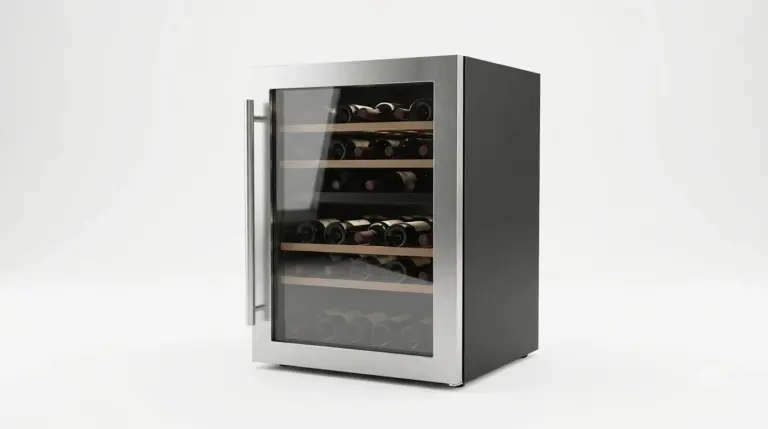
A Bodega wine cooler is a practical option for home wine storage, particularly if you want a choice of compact single-zone refrigerators, larger cabinets, or dual-zone models. The BODEGA range includes 15-inch and 24-inch wine refrigerators with features such as compressor cooling, adjustable temperature controls, wooden shelves, and glass doors. Its main advantages are flexible configurations and useful storage features, while potential drawbacks include differences between advertised and usable bottle capacity and the need to verify installation and warranty details before purchasing.
BODEGA offers several types of wine and beverage refrigerators aimed at homeowners who want dedicated drink storage without committing to a large traditional wine cellar. Its lineup includes smaller cabinets for modest collections, wider refrigerators for larger bottle counts, and combination units that store wine alongside cans. Understanding the differences between these product families makes it easier to determine whether the brand fits your kitchen, home bar, or entertainment area.
Brand Overview: What BODEGA Offers Wine Collectors
BODEGA’s wine refrigeration range focuses on practical home storage, with different cabinet widths, temperature configurations, and bottle capacities. The manufacturer maintains a dedicated manual library that identifies multiple wine refrigerator models and their corresponding installation and operating documents.
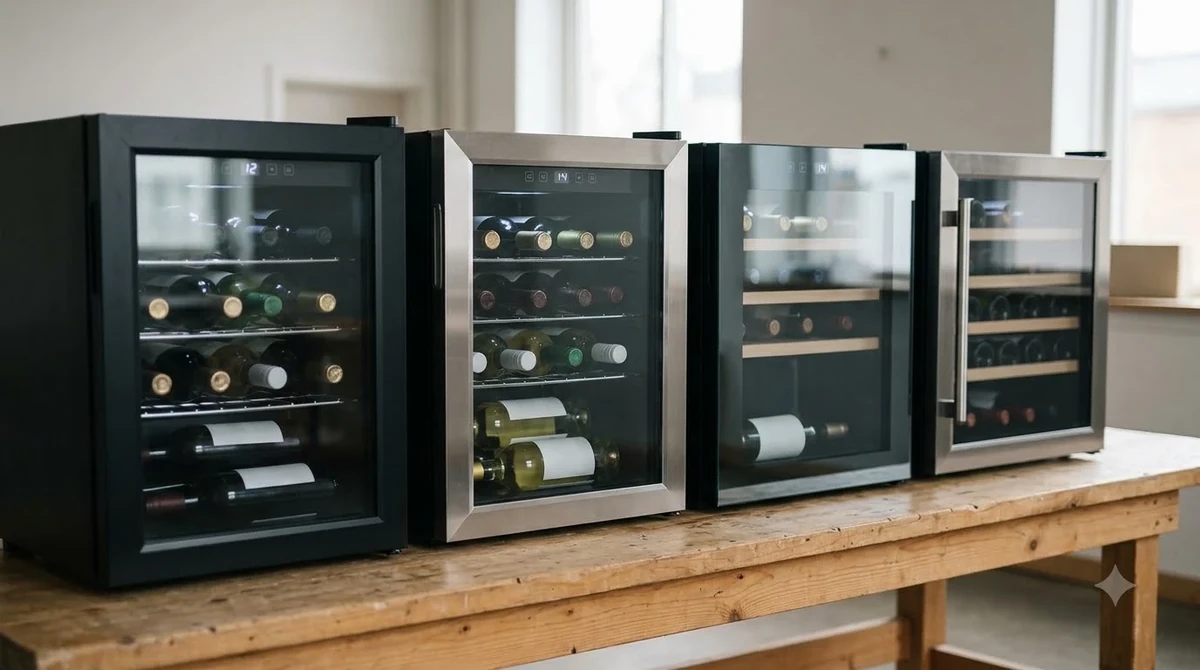
One useful feature of the BODEGA catalog is its distinction between single-zone wine refrigerators, dual-zone wine refrigerators, and combination wine-and-beverage appliances. These categories serve different purposes. A household that primarily stores red wine may have different requirements from someone who regularly serves sparkling wine, chilled Sauvignon Blanc, and canned beverages at the same gathering.
The manufacturer’s published lineup includes the JC-85A and JC-70 in the 15-inch single-zone category. For households wanting two temperature sections in a relatively narrow cabinet, the CWC-90B provides a 15-inch dual-zone option. Larger collections have additional choices, including the 24-inch JC-145A single-zone refrigerator and JC-165B dual-zone refrigerator.
This selection makes BODEGA interesting for buyers who want to compare different storage arrangements within one product family. However, the existence of several models does not automatically mean that every model shares the same specifications, warranty, or installation requirements. Buyers should compare the exact model number rather than relying exclusively on a general brand description.
Another important distinction is between a wine-only refrigerator and a wine-and-beverage combination. A wine refrigerator is organized around bottle storage, while a combination appliance divides its interior between wine and other drinks. The latter can be convenient in a kitchen or entertainment area, but it may sacrifice some bottle capacity to accommodate cans.
BODEGA’s official website also provides access to downloadable product manuals. That is useful because installation clearances, control-panel operation, shelf arrangements, and temperature settings can differ between refrigerator models. A manual associated with the exact model is a better source for technical decisions than a general product-category description.
There is a difference between being a brand with a broad selection and being a premium specialist with a long-established reputation among collectors. BODEGA’s published product information demonstrates a substantial range of refrigeration configurations, but the available owner feedback is more useful for judging individual products than making sweeping claims about the entire brand.
For shoppers researching several manufacturers, comparing BODEGA with other compact-appliance brands can help clarify priorities. Our guides on whether Black and Decker is a good brand and whether ROVSUN is a good brand provide additional brand comparisons to consider before choosing a refrigerator.
Product Lines Explained: Single-Zone, Dual-Zone, and Combination Refrigerators
BODEGA’s product range includes compact 15-inch refrigerators, larger 24-inch cabinets, and combination wine-and-beverage appliances. The most important distinction is whether the refrigerator uses one shared temperature setting or two independently controlled storage zones.
The manufacturer’s manual library identifies several models and their stated bottle capacities. The following comparison uses the published model descriptions rather than assuming that every BODEGA refrigerator has identical interior dimensions or features.
| Product category | Model | Width | Zones | Stated capacity |
|---|---|---|---|---|
| Compact wine cooler | JC-85A | 15 inches | Single | 26 bottles |
| Compact wine cooler | JC-70 | 15 inches | Single | 28 bottles |
| Compact dual-zone cooler | CWC-90B | 15 inches | Dual | 30 bottles |
| Large wine cooler | JC-145A | 24 inches | Single | 46 bottles |
| Large dual-zone cooler | JC-165B | 24 inches | Dual | 56 bottles |
These capacities come from the manufacturer’s manual directory. They are useful for narrowing down the product family, but they should not be interpreted as guarantees that every bottle shape will fit. Standard Bordeaux bottles are narrower than many Champagne, Burgundy, and specialty wine bottles, so the practical number of bottles can be lower.
The 15-inch category is particularly relevant for kitchens with narrow cabinet openings or limited floor space. A compact refrigerator can provide dedicated storage without requiring a full-width appliance. The CWC-90B is especially interesting because it combines a narrow exterior with two temperature zones.
Its advertised 30-bottle capacity and five beechwood shelves provide a useful starting point for comparing it with other compact refrigerators. The manufacturer’s CWC-90B product specifications and owner feedback also provide details about its temperature ranges, dimensions, and storage features. Buyers should examine these alongside the downloadable manual.
The 24-inch category is better suited to households with larger collections. The JC-145A provides a single-zone configuration, while the JC-165B is listed as a dual-zone alternative. A wider cabinet can make bottle organization easier and may provide more flexibility for households that regularly purchase wine by the case.
Combination wine-and-beverage refrigerators are another part of the catalog. BODEGA’s manual directory includes models such as the JC-115DR, listed for 19 wine bottles and 57 cans, and the YC-408D, listed for 77 wine bottles and 180 cans. These products are intended for mixed drink storage rather than exclusively for wine collectors.
The combination format can be attractive for a home bar because it keeps wine and everyday beverages in one appliance. However, it is important to understand the division between compartments before buying. A large total beverage capacity does not necessarily translate into a large wine-bottle capacity.
One separate BODEGA model listed by Wayfair offers 17 standard wine bottles and 41 beverage cans. Its product information identifies independent cooling zones, front ventilation, adjustable shelving, and a glass door. That illustrates how the brand’s combination appliances differ from its dedicated wine refrigerators.
What the BODEGA Brand Does Well: Storage Flexibility and Practical Features
BODEGA’s strongest selling points are its range of cabinet configurations, independently adjustable zones on selected models, and features designed for everyday home use. The 15-inch CWC-90B, for example, combines a compressor system, five wooden shelves, a digital control panel, and a stated 90-liter interior capacity.
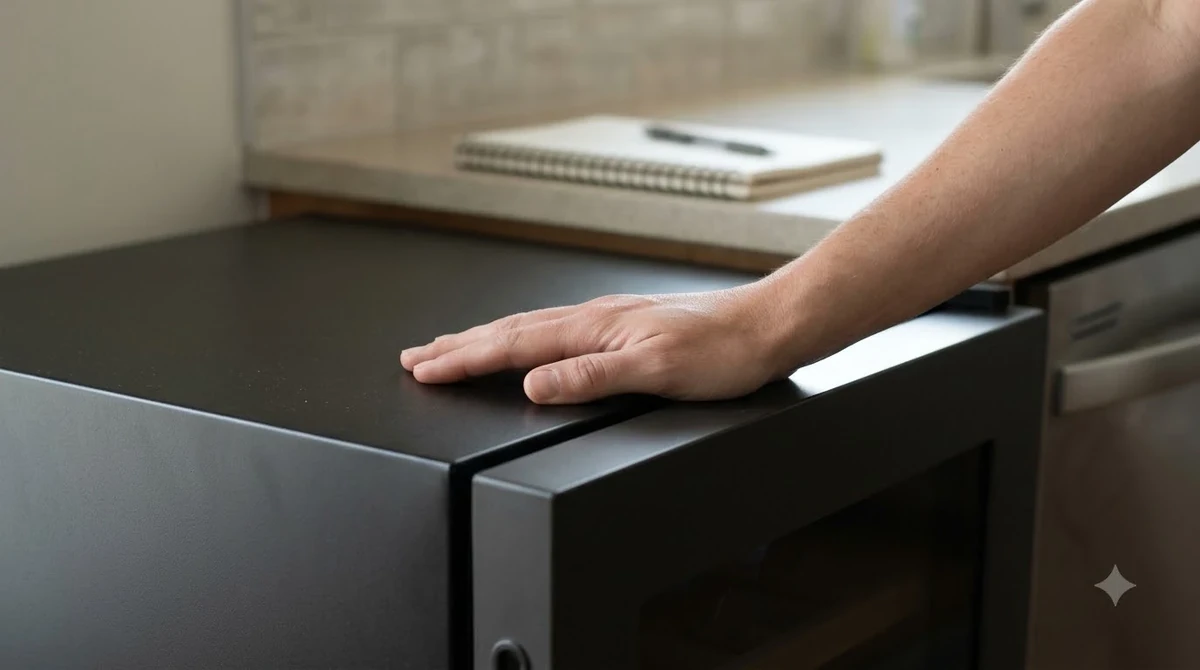
Temperature flexibility is an important advantage of a dual-zone refrigerator. The CWC-90B product page specifies an upper compartment ranging from 41°F to 53.6°F and a lower compartment ranging from 53.6°F to 68°F. This arrangement allows owners to organize wines that benefit from different storage or serving temperatures rather than forcing every bottle into one shared setting.
For example, Sauvignon Blanc and sparkling wine generally benefit from cooler serving temperatures than full-bodied red wines. A household that keeps both styles available may appreciate having separate sections instead of repeatedly adjusting one refrigerator setting. The precise arrangement of the zones should still be checked for the particular model because temperature ranges vary across the BODEGA lineup.
Another useful feature is compressor cooling. The CWC-90B listing identifies a compressor-based system rather than a thermoelectric design. Compressor refrigerators are a familiar choice for larger wine-storage appliances because they provide active cooling and can support broader temperature ranges.
BODEGA also advertises a low-noise design for the CWC-90B, specifying noise as low as 42 dB. This is relevant when placing a refrigerator in a kitchen, dining area, or home bar where regular compressor sounds may be noticeable. Actual operating noise can depend on installation, leveling, room conditions, and the individual appliance.
The brand’s use of wooden shelving is another appealing feature. The CWC-90B includes five beechwood shelves, giving the interior a more traditional wine-cellar appearance than a refrigerator fitted entirely with metal racks. Wooden shelves can also make bottles easier to organize and remove, although the actual usable space depends on shelf dimensions and bottle shape.
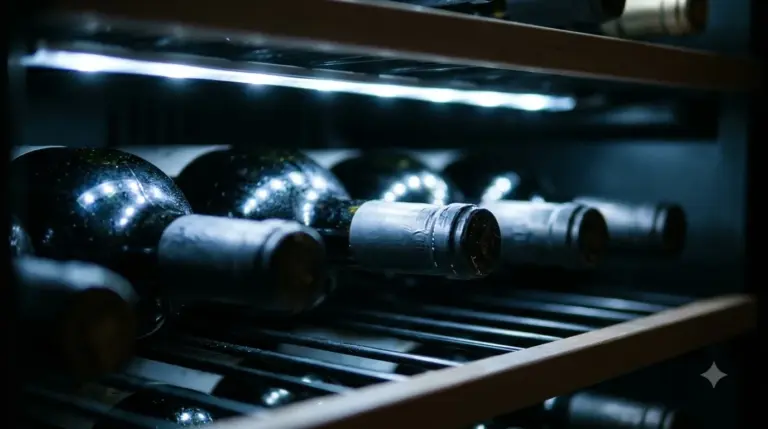
Glass doors and interior lighting are useful for households that want to display a wine collection. They allow owners to see available bottles without repeatedly opening the cabinet. Selected BODEGA models also advertise double-tempered glass and UV-protection features, although the precise glass construction should be verified for the chosen refrigerator.
Another practical feature is temperature memory. The CWC-90B listing describes a memory function that restores the previous temperature settings after a power interruption. This is convenient because an owner does not necessarily need to reprogram the refrigerator after every temporary loss of electricity.
Automatic defrost is another feature identified in the CWC-90B specifications. It reduces the need for manual defrosting as part of ordinary ownership, although regular interior cleaning and attention to door seals remain necessary.
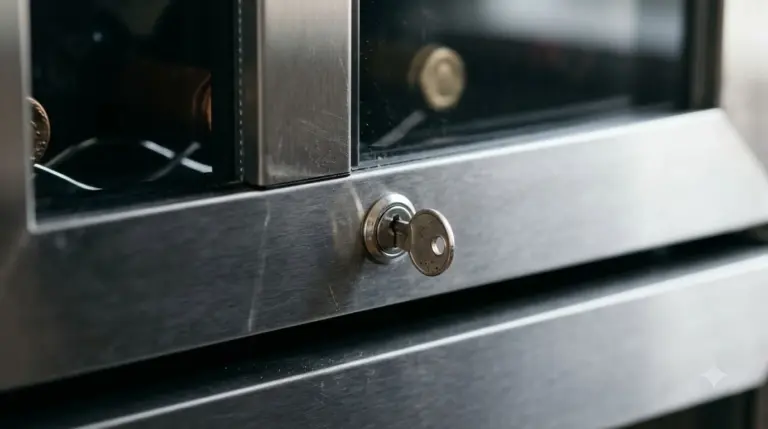
Selected models also include a lock and key. This can be helpful in households with children, shared entertainment areas, or rooms where access to stored beverages needs to be controlled. The usefulness of the feature depends on whether the particular model includes it as standard equipment.
Installation flexibility is a further advantage. The CWC-90B is described as suitable for built-in or freestanding use, with front ventilation. This gives homeowners more placement choices than a refrigerator designed exclusively for freestanding operation.
Front ventilation is particularly important for under-counter installation. A refrigerator that expels heat through the front can be designed to operate inside an appropriately prepared cabinet opening. However, front ventilation does not eliminate the need to follow the manufacturer’s required clearances, leveling instructions, and electrical requirements.
These features make BODEGA worth considering for buyers who prioritize practical storage arrangements, visible bottle displays, and flexible installation. They are not proof of superior long-term durability, but they provide a useful basis for comparing the brand with other home wine refrigerator options.
Common Complaints: Bottle Capacity, Noise, and Owner Experiences
BODEGA wine cooler reviews reveal several issues worth considering, particularly the difference between advertised bottle capacity and real-world storage, restrictions on larger bottles, and occasional concerns about operating noise. Owner experiences are not uniform, so individual feedback should be treated as useful evidence rather than a guarantee of what every buyer will experience.
Capacity is one of the clearest concerns in the manufacturer’s own CWC-90B review section. The product is advertised as holding 30 bottles, but one owner reports fitting approximately 26 bottles in the refrigerator. The same reviewer describes good temperature maintenance and quiet operation, making the capacity limitation a more specific complaint than a general dissatisfaction with the appliance.
This difference is understandable because published bottle capacities typically rely on standardized bottle dimensions and carefully arranged shelves. A collection containing wider Burgundy bottles, Champagne bottles, or unusual bottle shapes may not fit as efficiently as a collection of standard Bordeaux bottles.
Another owner of the CWC-90B says the interior was smaller than expected and that larger wine bottles were difficult to accommodate. This is an important point for collectors who frequently purchase sparkling wines or premium bottles with wider bodies.
For those buyers, the advertised bottle count should be treated as a maximum reference rather than a practical storage promise. Looking at shelf spacing, removable shelves, and the interior width is often more useful than comparing two refrigerators solely by their advertised capacities.
Operating noise is another issue to investigate. Although BODEGA advertises low-noise compressor operation on selected models, a Home Depot owner reviewing a 23.4-inch dual-zone BODEGA refrigerator describes a whining sound during operation. The reviewer says the cooling performance is satisfactory but finds the noise somewhat annoying.
This does not establish that every BODEGA refrigerator is noisy. Compressor operation naturally produces some sound, and the placement of an appliance can influence how noticeable that sound becomes. A refrigerator installed next to a bedroom or in a quiet dining area may attract more attention than one located in a utility room.
Installation and fit are additional considerations. A refrigerator may have a suitable advertised width but still fail to fit a particular opening because of its height, depth, door clearance, or ventilation requirements. These measurements matter especially when replacing an existing under-counter appliance.
Combination models also deserve careful inspection. A dual-zone appliance that stores both wine and cans can be useful, but its shelving and compartment layout may not be ideal for someone whose collection consists mostly of large wine bottles. Some owners may prefer a dedicated wine refrigerator instead.
Feedback about BODEGA’s appearance is generally encouraging on the Wayfair listing for its 17-bottle and 41-can combination refrigerator. Its customer-feedback summary identifies attractive styling, wooden shelves, and the convenience of separate storage areas as recurring positive points.
The same summary mentions complaints involving handle appearance and minor assembly difficulties. These are relatively specific concerns, but they matter for buyers who prioritize the finish and installation experience of an appliance that will remain visible in a kitchen or bar.
Warranty experiences also vary. A CWC-90B owner reports a cooling failure shortly before the one-year warranty period ended and describes receiving an offer of either a replacement power board or an updated refrigerator. That owner selected the replacement unit and reported that it arrived promptly.
This is a positive individual support experience, but it should not be treated as a promise that every future service case will receive the same resolution. Buyers should review the warranty terms attached to their exact model and retailer, particularly if they are purchasing a refrigerator for a built-in installation.
How to Choose a BODEGA Wine Cooler Model
The best BODEGA refrigerator depends on collection size, available cabinet space, preferred wine styles, and whether you need a dedicated wine cabinet or a mixed beverage refrigerator. Start with the physical installation requirements, then compare temperature zones and usable interior capacity.
1. Decide how much wine you actually store
A small collection does not automatically require a large refrigerator. If you generally keep a few bottles of Cabernet Sauvignon, Pinot Noir, Chardonnay, and sparkling wine available, a compact model may provide enough space without occupying a large section of the kitchen.
For a growing collection, a larger cabinet can be more convenient. The manufacturer’s catalog lists 26- and 28-bottle 15-inch single-zone models, a 30-bottle 15-inch dual-zone model, and 46- and 56-bottle 24-inch alternatives. These figures provide useful starting points, but allow extra room if your collection includes wider bottles.
2. Choose between single-zone and dual-zone storage
A single-zone refrigerator is suitable when most bottles are stored at a similar temperature. It can work well for someone who mainly collects one wine style or prefers to use the refrigerator for general wine storage rather than immediate serving.
A dual-zone refrigerator is more flexible for mixed collections. For instance, a household that regularly drinks chilled Sauvignon Blanc and room-temperature-style Cabernet Sauvignon may benefit from keeping the two styles in separate compartments.
Remember that storage temperature and serving temperature are not always identical. A refrigerator’s temperature range should support the way you intend to use it, rather than simply offering the largest possible number of settings.
3. Measure the installation area
Measure the opening’s width, height, and depth before selecting a refrigerator. Also consider the door swing, handle projection, electrical outlet location, and space needed to access shelves.
The CWC-90B product listing specifies dimensions of 14.8 inches wide, 22.4 inches deep, and 33.9 inches high. Those measurements are useful for preliminary planning, but the installation opening must account for any additional clearance specified in the product manual.
For built-in use, ventilation deserves particular attention. A front-vented design can be suitable for under-counter placement, but a freestanding refrigerator should not automatically be assumed to be suitable for full cabinet enclosure.
4. Compare shelf flexibility
Look closely at the number of shelves and whether they can be removed or repositioned. A five-shelf arrangement may work well for standard bottles, but a collection containing larger Champagne bottles or Burgundy formats may need additional vertical clearance.
Consider how often you purchase wine in different bottle shapes. If larger bottles are common in your collection, the interior arrangement matters more than the advertised maximum bottle count.
5. Evaluate the door and display features
A glass door can make a wine refrigerator an attractive part of a kitchen or entertainment area. Interior lighting also makes it easier to identify bottles without leaving the door open for long periods.
However, buyers should compare the glass construction and UV-protection claims for the exact model. These features are particularly relevant if the refrigerator will sit in a bright room or near a window.
6. Check the controls and additional features
Digital temperature controls make it easier to set and monitor individual zones. Temperature memory, automatic defrost, adjustable feet, and a security lock can also improve convenience.
Not every feature appears on every BODEGA model. Review the specifications and the matching manual rather than assuming that a feature advertised for the CWC-90B is included with the JC-145A or JC-165B.
Tip: Before purchasing, measure your actual bottles and compare them with the interior shelf spacing. A refrigerator advertised for 30 standard bottles may accommodate fewer bottles if your collection includes Champagne, Burgundy, or other wider formats. Leave room for future purchases instead of planning around the maximum advertised capacity.
Warranty and Support: What Buyers Should Verify
BODEGA provides product documentation and support information, but warranty coverage should be checked against the exact refrigerator model and purchase channel. The manufacturer’s manual for the JC-85C and JC-145C specifies a 12-month warranty against manufacturing defects from the purchase date.
The manual also provides an email contact for customer support and describes a process involving warranty information and photographs or videos of the product. It states that the support team aims to respond within 24 hours. These details offer a useful starting point for understanding the service process, although they should not be assumed to apply identically to every BODEGA refrigerator.
The distinction between product manuals is important. A manual for a single-zone beverage cooler may not contain the same warranty language or technical information as a manual for a dual-zone wine refrigerator. Buyers should obtain the documentation associated with their exact model number.
Before ordering, verify the warranty duration, what components are covered, whether labor or replacement shipping is included, and what happens if the refrigerator cannot be repaired. These questions are particularly important for built-in refrigerators because replacing an installed appliance can involve additional work.
Keep the purchase receipt, model number, serial information, and any installation documentation. If a temperature problem occurs, photographs of the display and a description of the operating conditions may also help customer support identify the issue.
Retailer return policies are separate from manufacturer warranties. A retailer may offer a different return period, delivery arrangement, or replacement procedure. Buyers should review those conditions before arranging a built-in installation, especially if the refrigerator needs to be removed from its packaging and tested before the return period expires.
Customer experiences suggest that support can be helpful in individual cases. The CWC-90B owner who reported a failure near the end of the first year describes receiving a replacement option after communicating with the manufacturer. That is encouraging feedback, but a single experience cannot establish the typical outcome for all customers.
It is also useful to understand the difference between a manufacturing defect and an installation problem. Poor ventilation, an unlevel cabinet, blocked airflow, or an unsuitable electrical connection can affect refrigerator performance. Following the model-specific installation instructions helps avoid problems that may complicate a warranty claim.
For broader comparisons, our guide to whether Galanz is a good brand offers another reference point for evaluating compact refrigeration appliances. You can also explore our brand hubs for additional manufacturer information before making a final decision.
Overall, BODEGA’s support documentation is a useful starting point, but the warranty should be treated as a model-specific purchase consideration rather than a blanket promise covering the entire range. Confirming the details before installation is a sensible way to reduce potential problems later.
Frequently Asked Questions
Where are BODEGA wine coolers manufactured?
A BODEGA JC-165B instruction manual identifies China as the country of manufacture. This information applies to that documented model and should not automatically be generalized to every product sold under the brand.
Do BODEGA wine coolers require a special electrical connection?
The CWC-90B listing specifies a 115-volt electrical supply and a North American Type A plug. The appropriate grounded outlet and electrical requirements should be confirmed using the exact model’s manual before installation.
Can Champagne bottles fit inside a BODEGA wine refrigerator?
Some BODEGA product descriptions mention adjustable shelves intended to accommodate larger or irregular bottles. However, Champagne bottles have different dimensions from standard Bordeaux bottles, so compatibility depends on the individual model’s shelf spacing and interior width.
Should a BODEGA wine cooler be transported on its side?
Keeping a wine refrigerator upright during transportation is the safer approach unless the specific manufacturer’s instructions state otherwise. The JC-85C and JC-145C manual recommends allowing the appliance to stand upright for approximately 24 hours before connecting it to electricity after transportation.
Can a BODEGA wine cooler operate in a garage?
Suitability depends on the refrigerator’s climate classification and the garage’s ambient temperature. The documented JC-85C and JC-145C manual identifies different operating classes with ambient ranges extending from 50°F to 109.4°F, depending on the classification, so the rating plate and exact model instructions are important.
BODEGA is worth considering if you want a choice of compact and larger wine refrigerators, especially models with dual-zone controls, adjustable shelving, and flexible installation options. Its main limitations are the potential gap between advertised and practical bottle capacity and the importance of checking model-specific installation and warranty details. Compare the actual interior dimensions, temperature ranges, and service terms before choosing the refrigerator that best fits your collection.
More in Brand Hubs
 Icyglee Wine Fridge: Compare Capacities, Features and ModelsUpdated Nov 20, 2026
 Fomup Wine Fridge: Explore Models, Features, and Buying TipsUpdated Nov 20, 2026
 Aaobosi Wine Fridge: Compare Models and Choose the Right CoolerUpdated Nov 20, 2026
 Orymuse Wine Fridge Reviews: Compare Capacities, Features and WarrantyUpdated Nov 20, 2026
 Tylza Wine Fridge: Find the Right Cooler for Your CollectionUpdated Nov 20, 2026
 Vintec Wine Fridge: Features, Warranty, and Buying AdviceUpdated Nov 20, 2026