

We may earn a commission when you buy through links on this page, at no extra cost to you. Learn more.
The best wine table for most homes is a sturdy, freestanding unit with bottle storage sized to the room and to the number of bottles you actually drink. A good wine table keeps bottles off the floor, keeps them out of direct light and heat, and gives you a stable place to set glasses when you pour. The right style depends on how much floor space you have, whether the piece needs to look good in a dining room, and whether the kitchen runs humid enough to affect the material.
This guide walks through the main kinds of wine tables and racks, what each one does well, and how to choose one without buying more storage than your collection needs. The sections below are grouped by use, so you can match the style to your room first and then compare options. If you are still deciding whether a table or a rack fits your home, the overview at wine table covers the basic differences.
Quick Comparison
The table below compares the main types of wine storage furniture by the factors that usually decide the purchase. Capacity is shown qualitatively because bottle counts depend on the shape and size of each design, and most racks are built around the standard 750 mL bottle.
| Type | Common material | Floor footprint | Good fit for |
|---|---|---|---|
| Freestanding wood wine table | Wood, often cedar or fir | Medium | Dining rooms and living areas |
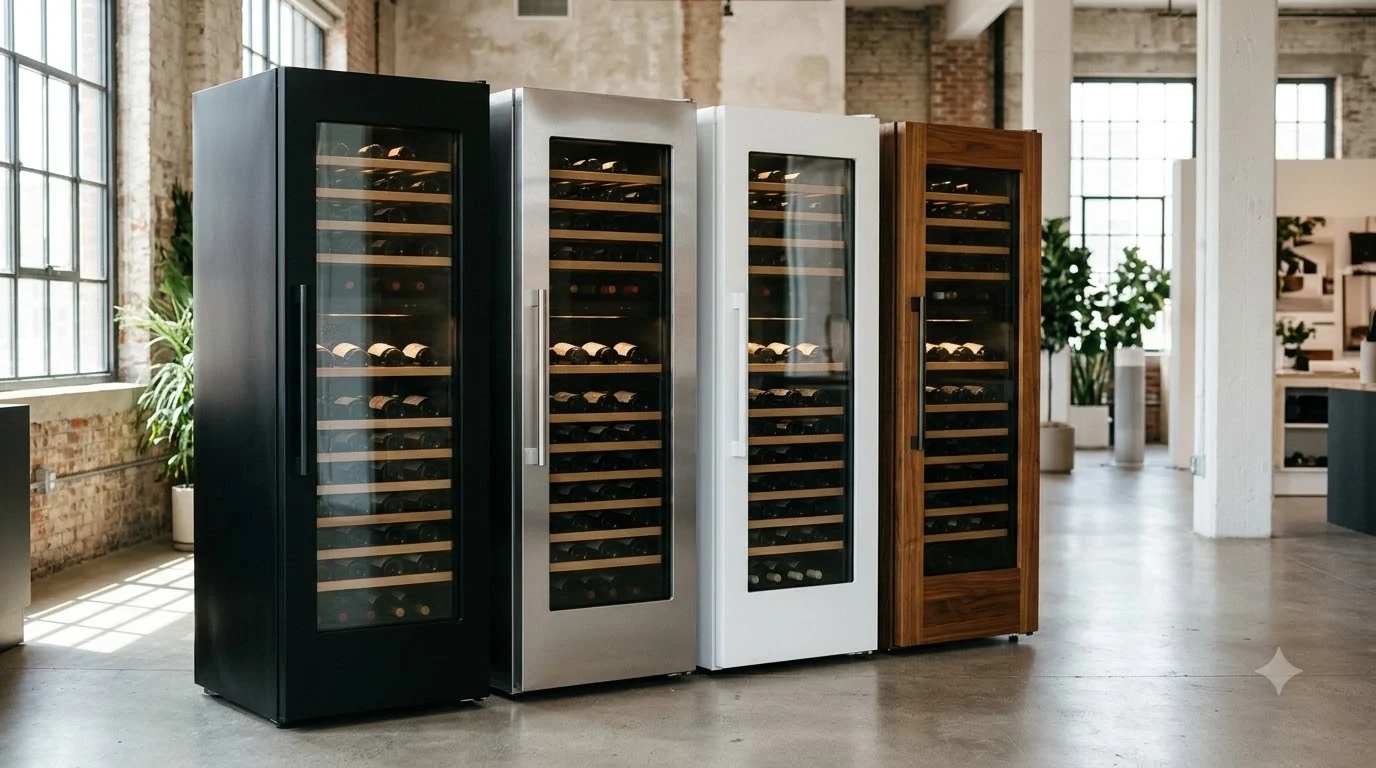
| Stainless steel rack or cooler-style unit | Stainless steel | Compact to medium | Humid kitchens and rooms that need easy cleaning |
| Wrought iron or painted metal stand | Metal | Small | Decorative corners and display pieces |
| Wall-mounted rack | Wood or metal | Minimal | Small apartments and bar nooks |
| Stacked wine cube | Wood, plastic, or metal | Flexible | Mixed bottle shapes and growing collections |
Best for Small Apartments and Tight Kitchens
When floor space is limited, a wall-mounted rack or a narrow stacked unit can hold bottles without taking over the room. These designs trade capacity for footprint, so they work best when you drink a small number of bottles and want the most-used ones within reach.
Wall-mounted racks are mainly decorative and usually hold one or a few bottles. That makes them a good choice for a bottle you open often, or for a corner of a kitchen where a full cabinet would not fit. For a larger collection, a stacked unit gives you more room. Wine cubes are stacked units that hold bottles of any shape, so they handle bottles with wide shoulders or unusual profiles that a standard slot would reject.
Before buying, measure the wall or the corner and leave clearance above the rack so you can lift bottles out without hitting the ceiling or a cabinet. Check that the mounting hardware suits the wall you have, and confirm whether the unit is meant for a plaster, drywall, or masonry surface. A narrow unit that is secure and easy to reach is more useful than a larger one that sits crooked or is hard to load.
Best for Humid Kitchens and Easy Cleaning
Kitchens are often humid, and stainless steel handles moisture better than many other materials. For a unit that will sit next to a sink, a dishwasher, or a cooktop, stainless steel is the most practical starting point.
Stainless steel resists rust and staining and can be wiped clean without special treatment. Wood is the most popular material for wine racks and is easy to shape, but it needs more care around moisture. Metal racks can be painted and formed into shapes that wood cannot, so a coated or stainless design is a sensible choice when the room gets steamy.
Some stainless steel units double as coolers, with temperature-controlled interiors and vacuum-sealed glass doors. Those doors are meant to block unnecessary light, which matters because light can affect wine over time. If you want bottles held at a steady cool temperature, a cooler-style unit is a better fit than an open rack. The trade-off is that these units usually take up more space and need a power outlet, so check the dimensions and the cord location before you commit.
Best for Displaying a Collection
Open wood and metal racks suit people who want their bottles visible and easy to reach. A display piece also works as part of the room’s décor, so the finish and shape matter as much as the number of slots.
Wood is the most common material for display racks, and it can be cut into many layouts, from simple shelves to angled bins. Cedar is widely used, but its aroma can pass through the cork into the wine. If a bottle will sit in the rack for a long time, that is a reason to choose a different wood or to store the long-term bottles somewhere else and keep the display for everyday drinking.
Metal allows flowing shapes that wood cannot, and wrought iron is durable and mostly ornamental. Many wrought iron pieces hold only one bottle, so they work as accents rather than real storage. If you want a larger display, look for a wood or metal rack built for several bottles, and check that the base is stable enough to hold the weight of full bottles.

Best for Hosting and Serving
When guests are around, a wine table should hold bottles and still leave room for glasses, a corkscrew, and a serving tray. A flat, stable top is more useful than extra shelves that nobody can reach comfortably.
Wine glass racks let you store glasses alongside bottles, which keeps the dining area clear and makes it easier to set up for a meal. Glass racks suit a dining room or a sideboard where glasses are used often. If you already keep a bar cart for drinks, a table with a flat top and a bottle rack underneath can share the same role without crowding the room.
Check the height before buying. A table at about the height of a dining surface is easier to use than a tall rack that makes you reach up for every bottle. Confirm that the top can hold the bottle you open most often, usually a standard 750 mL bottle, since most racks are built for that size. Larger formats need more room, and a rack that is too narrow can make a magnum difficult to set down.
Best for Mixed Bottle Sizes and Growing Collections
A stacked cube or a modular unit adapts as your collection changes. It is the most flexible option when you buy sparkling wine, magnums, or half bottles alongside standard still wine.
Standard wine bottles are 750 mL, half bottles are 375 mL, and magnums hold 1.5 L. Sparkling wine bottles are thicker-walled than still wine bottles, so the rack should be able to carry their weight. Bottle shapes also vary by region: Bordeaux bottles are straight-sided with high shoulders, Burgundy bottles are taller with sloping shoulders, and Champagne bottles are wider and thick-walled. A cube with open cells handles those differences better than a fixed slot.
Modular designs let you add units as the collection grows. Start with one section, learn which bottles you drink most often, and then add more capacity where it is needed. That keeps the floor space under control while you find the layout that suits your habits.
How to Choose
Use the criteria below to narrow the field before you compare specific products. Work through them in order, because the room and the humidity usually decide the material before the style does.
- Floor space: measure the area and the height available, and leave room to lift bottles out.
- Bottle count: count the bottles you own and the ones you buy each season, then leave room for growth.
- Humidity: choose stainless steel or coated metal for kitchens and bathrooms, and keep wood away from steam and sinks.
- Light and temperature: if you plan to keep bottles for a long time, look for a cooler-style unit with tinted glass and a stable temperature.
- Bottle shapes: confirm that the openings fit sparkling wine, magnums, and any wide-shouldered bottles you buy.
- Use: decide whether the piece is for storage, display, or serving, since that choice changes the height and top design.
Frequently Asked Questions
What is the best wine table for a small apartment?
A wall-mounted rack or a narrow stacked unit usually works best in a small apartment. Wall-mounted racks are mostly decorative and hold one or a few bottles, while stacked cubes give more capacity without a large footprint. Measure the wall or corner before buying and check the mounting hardware.
Is wood or metal better for a wine table?
Neither material is better for every home. Wood is the most popular choice and is easy to shape, but it needs care around moisture. Stainless steel resists rust and staining and suits humid kitchens. Wrought iron is durable and usually ornamental, often holding only one bottle.
How many bottles should a wine table hold?
The right number depends on how much you drink and how often you buy. Most racks are built for standard 750 mL bottles, so check the bottle count against your collection and leave space for growth. A modular unit lets you add capacity later without replacing the whole piece.
Does the material of a wine rack affect the wine?
The material can have an effect in some cases. Cedar is common in wine racks, but its aroma can pass through the cork into the wine when bottles sit for long periods. For bottles you plan to keep for years, a material with no strong aroma and a stable storage environment is the safer choice.
A wine table does not need to be expensive or large to be useful. Start with the room, the humidity, and the number of bottles you keep, then choose a style that fits those limits. For more on how much a bottle pours, see how many glasses are in a bottle of wine, which helps with planning how many bottles to store for a gathering. For general background on wine racks and the materials used to make them, the wine rack entry is a useful starting point.
More in Wine Accessories
 Coravin Vs Vacu Vin: Choose the Right Wine Saver for Your BottlesUpdated Nov 21, 2026
 Zwilling Wine Stopper Review: Preserve Open Bottles LongerUpdated Nov 21, 2026
 Wine Enthusiast Wine Preserver Review: Features, Benefits and LimitationsUpdated Nov 21, 2026
 Wine Enthusiast Wine Stopper: An Easier Way to Reseal Open BottlesUpdated Nov 21, 2026
 Vintorio Wine Opener: Two-Step Cork RemovalUpdated Nov 21, 2026
 Zwilling Wine Aerator Review: Aerate, Pour, and Seal With One ToolUpdated Nov 21, 2026