

We may earn a commission when you buy through links on this page, at no extra cost to you. Learn more.
The best wine glass drying rack is one that holds stemware upside down with the bowls clear of the surface, so water drains out and the glasses dry without spots. Choose a rack by the height of your glasses, the space on your counter, and how many glasses you wash at one time. A rack with individual stem slots or a padded base protects thin stems better than a flat tray.
Wine glasses are delicate, and drying them is where many of them get damaged or streaked. A drying rack keeps each glass steady while water runs off, and it lets air reach the inside of the bowl. This guide sorts the main rack types by use, so you can match one to your stemware and your kitchen.
Quick Comparison of Drying Rack Types
The table below compares the common rack styles by how they hold stemware, how much counter space they take, and where they work best. Use it to narrow your choice before you compare specific products.
| Rack type | How it holds glasses | Works best for | Keep in mind |
|---|---|---|---|
| Stem-slot rack | Glasses hang by the stem or rest in individual slots | Stemware of many heights | Needs enough height above the counter |
| Padded drying mat | Flat surface with a soft layer under each glass | Small counters and delicate stems | Wet mats need airflow to dry fully |
| Tiered rack | Two or more levels for more glasses | Large hand-washing batches | Takes up more vertical and counter space |
| Collapsible rack | Folds flat when not in use | Compact kitchens and bars | Less rigid, so check stability with tall glasses |
Best for Tall Stemware and Flutes
Tall glasses and flutes need enough clearance to sit upright without tipping. A rack with deep slots or stem holders keeps the bowl above the surface, which lets water drain from the rim and the inside of the glass. Measure your tallest glass before you buy, because a rack that is too shallow will let the bowls rest on the base.
Flutes are narrow and easy to trap water in, so an angled or inverted position works better than a flat tray. Look for a rack where the stem can slide into a holder rather than pressing against a wire, which can leave marks on thin glass.
Best for a Small Kitchen Counter
A compact rack is the right choice when counter space is limited. Folding and collapsible styles store flat, while a single-tier rack with a small footprint fits beside a sink without blocking the faucet. The goal is to dry the glasses without giving up the space you need for cooking.
Check the stability of any folding design before you rely on it. A rack that wobbles with a full row of glasses can tip them, so test it with a few glasses first and keep the heaviest pieces at the back.
Set the rack near the sink so the glasses can be moved from the rinse to the rack without dripping across the floor or counter. A short carry, with the glass held by the bowl rather than the stem, is the safest route and reduces the chance of a chip at the rim.
Best for Hand Washing Many Glasses at Once
After a party, a single rack can fill up quickly. A tiered or wide rack that holds a full row of glasses on each level lets you wash in batches and move the finished glasses out of the way. Plan the washing order so the largest glasses dry first, which frees up space for smaller ones.
Leave enough room between glasses so air can move across each bowl. Crowding causes water to pool at the base, and that is where spots and streaks tend to form.
Rinse glasses in warm water rather than very hot water, because sudden temperature changes can stress thin glass. Dry each glass as soon as it comes out of the rinse, since water left to sit for long is what leaves spots behind.
Best for Protecting Delicate Stems
Stems are the most fragile part of a wine glass. The Wikipedia entry on wine glasses describes stemware as having three main parts, the bowl, the stem, and the foot, and the stem is where most breakage happens during handling. A rack that supports the glass at the bowl or foot, rather than leaning it on the stem, reduces that stress.
Padded surfaces help too. A soft layer under the foot absorbs small knocks when you set a glass down, and it stops the base from scratching the counter or the rack itself.
Keep the rack away from the edge of the counter and away from heavy pots, which can knock glasses off. If the rack has a drip tray, empty it often, since standing water can splash back onto the bowls during the next load.
Best for a Compact Bar Setup
A bar cart or small home bar needs a rack that is tidy enough to leave out between uses. Choose a finish that matches your other glassware and a size that fits the shelf or cabinet it sits on. A slim rack with a shallow footprint keeps the area clear for pouring and garnishing.
If the rack will stay out all the time, check that it is easy to wipe down. Dust and water spots build up on open wire, so a smooth surface is easier to keep clean than a finish with many joints.
If the rack holds a display of clean glasses, keep the top shelf for the glasses you use most often. This avoids reaching across the bar and knocking other pieces, and it makes it easier to see when a glass needs washing again.
How to Choose the Right Drying Rack
Three factors decide most of the choice: the height of your glasses, the space you have, and how many glasses you wash at a time. A rack that fits all three will last longer and dry more evenly.
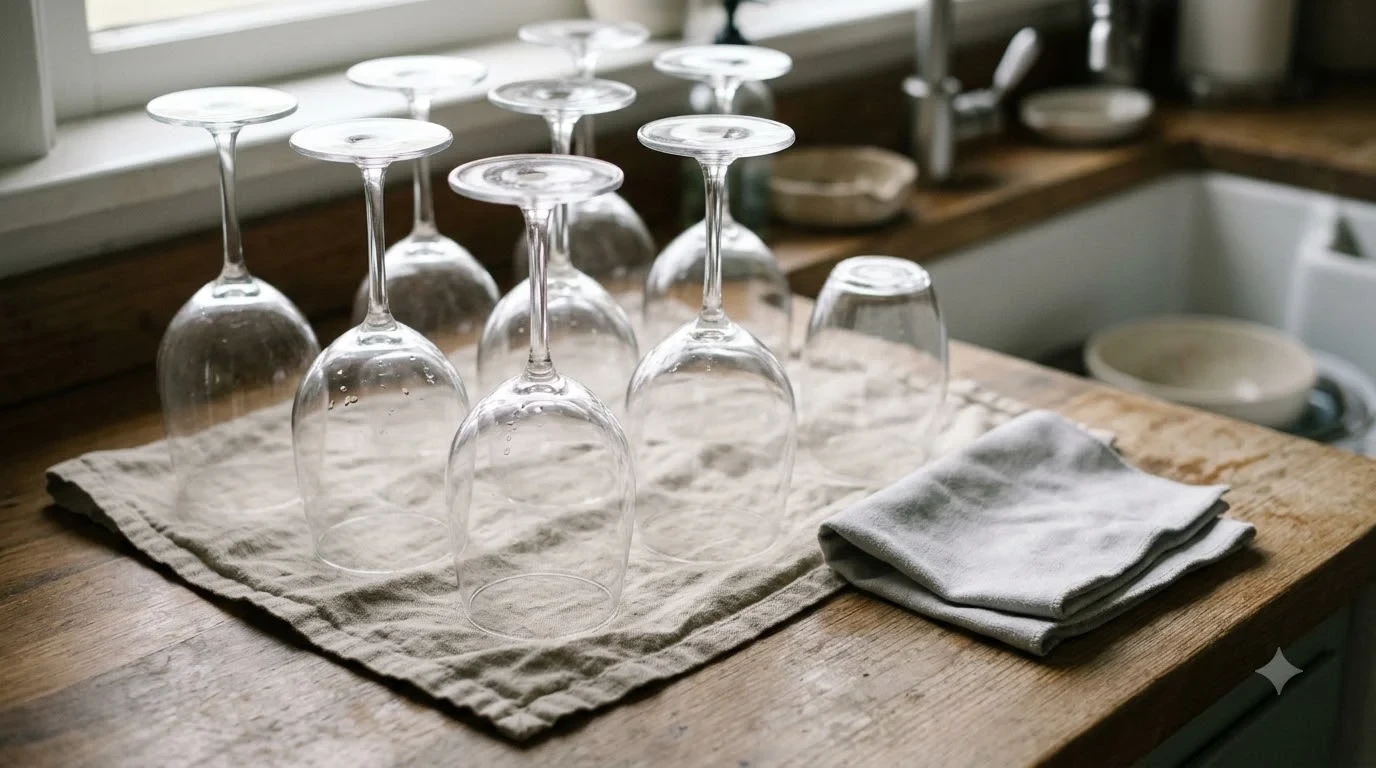
Tip: Dry the glasses upside down on a towel-lined rack, then polish them lightly with a clean, lint-free cloth once they are fully dry. This prevents streaks and keeps the rim clear.
- Measure the glasses: Make sure the stem clears the rack and the bowl sits above the surface.
- Check the space: Measure the counter or shelf before you buy, including the height needed under cabinets.
- Consider the stems: Choose slots or padded supports that hold the glass without pressing on thin stems.
- Plan for airflow: Leave room between glasses so water drains and air can circulate.
For a fuller picture of how many glasses you may need to wash, the guide to glasses per bottle gives a useful estimate, and the wine glass rack guide covers storage options if you want to keep glasses on display.
Frequently Asked Questions
Should wine glasses air dry or be towel dried?
Air drying upside down on a rack is common and reduces handling, which lowers the risk of chips. Some people prefer a quick polish with a lint-free cloth once the glass is dry, which removes water spots and streaks.
What is the best wine glass drying rack for tall stems?
A rack with deep stem slots or individual holders keeps tall glasses and flutes upright. Measure the glasses first, because a shallow rack can let the bowls rest on the base.
Can a wine glass drying rack go in the dishwasher?
Many racks are made of plastic-coated wire or stainless steel and are sold as dishwasher safe, but the care label is the best guide. Hand washing the rack with warm soapy water is a safe option for any style.
Why do wine glasses get spots after drying?
Spots form when water evaporates and leaves minerals behind. Drying upside down with good airflow, and polishing once dry, helps keep the glass clear.
A good drying rack protects your glassware and keeps the kitchen organized after a meal or a party. Match the rack to your stemware height, leave room for airflow, and choose supports that never press on a thin stem. A rack that is easy to reach also encourages people to wash glasses right after use, which keeps stains from setting. Many hosts find that a rack placed near the sink and the glass cabinet saves steps every time the table is cleared, which adds up over a busy season. For storage ideas once the glasses are dry, the wine glass drying rack guide is a useful next step.
More in Wine Accessories
 Coravin Vs Vacu Vin: Choose the Right Wine Saver for Your BottlesUpdated Nov 21, 2026
 Zwilling Wine Stopper Review: Preserve Open Bottles LongerUpdated Nov 21, 2026
 Wine Enthusiast Wine Preserver Review: Features, Benefits and LimitationsUpdated Nov 21, 2026
 Wine Enthusiast Wine Stopper: An Easier Way to Reseal Open BottlesUpdated Nov 21, 2026
 Vintorio Wine Opener: Two-Step Cork RemovalUpdated Nov 21, 2026
 Zwilling Wine Aerator Review: Aerate, Pour, and Seal With One ToolUpdated Nov 21, 2026