

We may earn a commission when you buy through links on this page, at no extra cost to you. Learn more.
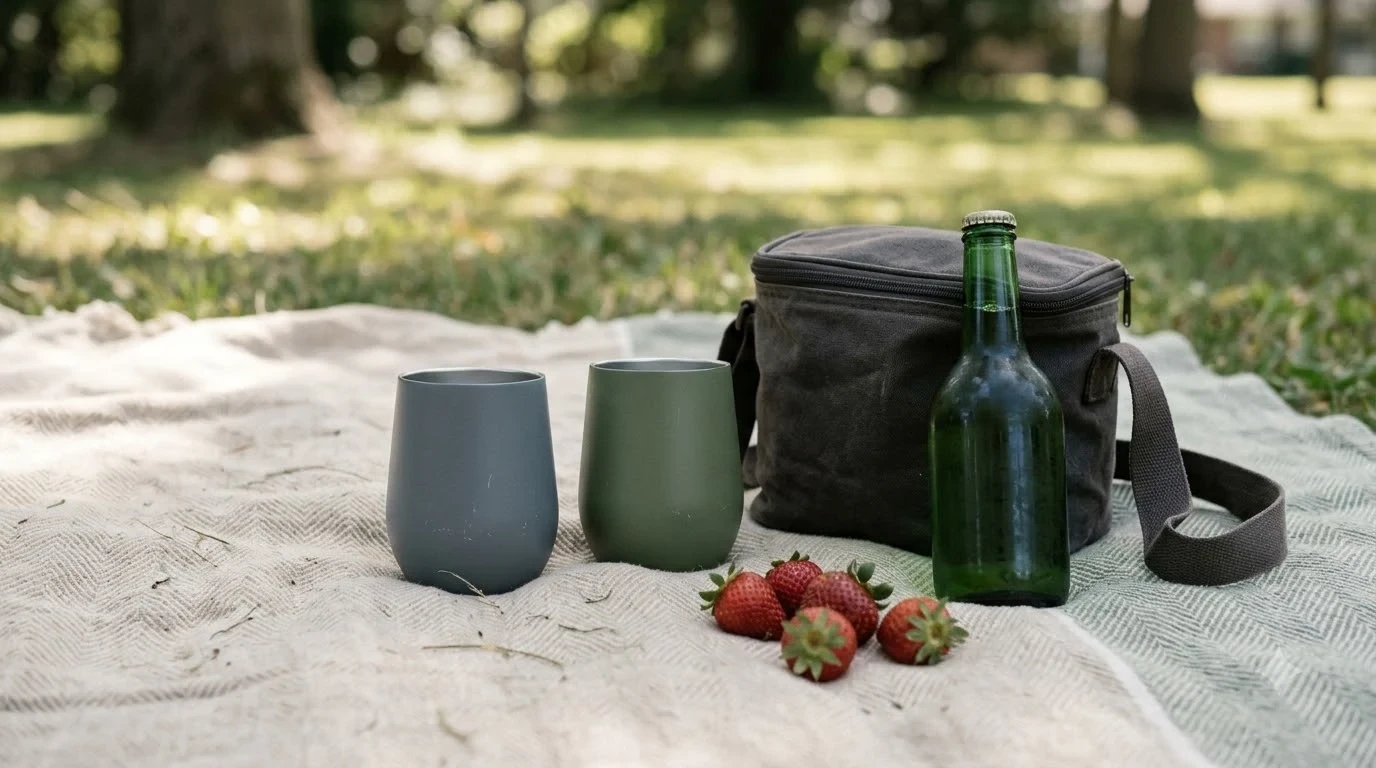
The best wine cooler bag for most people is a soft-sided insulated tote that fits two standard 750 mL bottles, has a leak-resistant liner, and can carry a reusable gel pack. Soft bags are light enough to carry to a park, a beach, or a dinner party, and they keep bottles cool for the length of a typical outing when the wine is chilled before packing. Hard-sided coolers hold cold longer, but they weigh more, so the best wine cooler bag for you depends on how far you carry it and how long the bottle needs to stay cold.
Choosing a wine cooler bag is less about brand names and more about how the insulation, the coolant, and the carrying style fit the trip. This guide explains the main bag types, what each one does well, and how to pick one for picnics, dinners, tailgates, and travel. If you are still deciding how much wine to bring, the guide on how many glasses are in a bottle of wine gives a useful starting point for counting servings.
Quick Comparison of Wine Cooler Bag Types
Most wine cooler bags fall into four groups: soft-sided insulated totes, hard-shell coolers with a bottle compartment, single-bottle insulated sleeves, and vacuum-insulated carriers. Each group trades weight against how long it keeps a bottle cold, so the table below compares them on the criteria that matter most when you carry wine outdoors.

| Bag type | Insulation | Weight when carried | Best for |
|---|---|---|---|
| Soft-sided insulated tote | Thin foam or thermal liner | Light | Picnics and short walks |
| Hard-shell cooler with bottle space | Molded foam between rigid shells | Heavy | Long outings and tailgates |
| Single-bottle insulated sleeve | Foam or padded wrap | Very light | Dinner invitations and gifts |
| Vacuum-insulated carrier | Vacuum or panel insulation | Medium | Travel and hot weather |
Best for Weekend Picnics and Park Visits
A soft-sided insulated tote is the most common choice for a picnic because it fits on a shoulder and folds flat when empty. Most people carry one or two bottles, a few glasses, and a snack or two, which suits a bag built around a modest interior.
Why it stands out: A soft bag is easy to lift in and out of a car trunk and can slide under a picnic table without taking up much room. Because it is not rigid, it can be squeezed into a crowded backseat or packed beside a blanket.
Keep in mind: The Wikipedia article on coolers describes soft-sided thermal and cool bags as typically smaller and not rigid, which is why they suit short trips better than all-day use. Pre-chill the bottle and add a gel pack before leaving home to get the most time out of the bag.
Best for: Picnics, park visits, and short walks where the bottle needs to stay cool for an afternoon.
Best for Carrying a Bottle to a Dinner Party
When you bring wine to someone else’s home, a single-bottle sleeve or a small insulated tote keeps the gift cool without looking like a cooler box. The bag should be compact enough to carry in one hand and tidy enough to set on a hallway table.
Why it stands out: A single-bottle sleeve is the lightest option in the comparison above. It holds one standard 750 mL bottle, which is 0.75 litres, and it can be slipped into a larger bag when you need to carry more.
Keep in mind: Magnums are 1.5 litres, twice the size of a standard bottle, so a sleeve sized for 750 mL will not fit them. Check the inside dimensions against the bottle height before buying.
Best for: Dinner invitations, hostess gifts, and short trips by car or on foot.
Best for Longer Outings and Tailgates
A hard-shell cooler with a bottle compartment suits long days outdoors, when the bottle has to stay cold for hours rather than an afternoon. The thicker walls and sealed lid slow heat transfer, and the extra space leaves room for ice or gel packs around the wine.
Why it stands out: The Cooler article on Wikipedia explains that reusable coolers usually have plastic inner and outer shells with hard foam in between, and that the insulation effectiveness determines how well the box holds its temperature. Thicker foam generally means a longer cold period.
Keep in mind: A hard cooler is heavy once it is packed with ice and bottles, so it is better suited to a car trunk or a cart than to a long walk. Many people use a hard cooler for the group’s food and keep a small soft tote for the wine.
Best for: Tailgates, lake days, and outings where the cooler stays in one spot.

Best for Budget-Minded Everyday Carry
A basic insulated tote with a zippered top and a simple liner covers most everyday needs. It is a practical choice for commuting, gym bags, or a quick trip to a friend’s house, where the wine only needs to stay cool for a short ride.
Why it stands out: A budget tote is easy to clean, folds small, and can double as a grocery bag. For occasional use, a simple bag often works as well as a premium model because the length of the trip is short.
Keep in mind: Thin insulation loses cold faster in a hot car. Pack the bottle with a gel pack, and keep the bag out of direct sun while you wait.
Best for: Occasional use, commuting, and short trips where price matters more than long cold periods.
Best for Hot-Weather Travel and Tailgates
Vacuum-insulated carriers and panel-lined bags are designed for conditions where heat builds up quickly, such as a summer drive, a stadium parking lot, or a flight with checked luggage. Their insulation is built to slow heat transfer for longer than a simple foam tote.
Why it stands out: The Insulated shipping container article on Wikipedia lists vacuum insulated panels and molded foams among the common insulation types. Combining an insulator with a coolant is what sets the expected duration, and the article notes that multi-component systems need testing to confirm how long they hold temperature.
Keep in mind: The same article does not give set durations for a given bag, so treat any bag claim as a starting point and test it on a warm day before a long trip. Vacuum-insulated carriers also tend to cost more than soft totes.
Best for: Summer travel, hot-weather tailgates, and anyone who needs a bottle to stay cool through several hours of heat.
How to Choose the Best Wine Cooler Bag
Four criteria decide most purchases: insulation, bottle fit, weight, and coolant capacity. Start by deciding how many bottles you carry and how long they need to stay cold, then match the bag to those two facts before you look at features like pockets or straps.
- Bottle fit: A standard wine bottle is 750 mL, or 0.75 litres. Measure the bag’s interior height and width, and allow extra room for a gel pack beside the bottle.
- Insulation: Thicker foam or a vacuum panel slows heat transfer. The Cooler article notes that a cooler’s performance depends on how effective its insulation is.
- Coolant: Gel packs stay cold longer than plain ice, according to the same Cooler article, and they avoid carrying loose water.
- Weight: A soft tote is easiest to carry, while a hard cooler is better for vehicles and fixed spots.
The Insulated shipping container article on Wikipedia makes a related point: the insulator and the coolant work together, so a bag is only as good as the pairing you pack in it. Pre-chilling the wine and keeping the bag out of direct sun usually matters as much as the bag itself.
Frequently Asked Questions
Can a soft wine cooler bag keep wine cold all day?
Soft bags are typically smaller and not rigid, so they usually hold cold for a shorter period than a hard cooler with thick foam. For a full day, pack a larger coolant supply and choose a model with a thermal liner. Test the setup on a warm day before relying on it for a long event.
How many bottles fit in a wine cooler bag?
Most soft totes are sized for two standard 750 mL bottles, with room for a gel pack. Magnums hold 1.5 litres and take up roughly twice the space, so a bag designed for standard bottles may not fit them. Measure the interior height before buying.
Is a gel pack better than ice for keeping wine cold?
The Cooler article on Wikipedia states that gel packs stay cold longer than plain ice. Gel packs also stay in place inside the bag instead of melting into loose water, which keeps labels dry and the bag easier to clean.
Should wine be chilled before it goes into the bag?
Yes. A bottle that starts warm has to shed heat before it can cool down, which uses up part of the coolant. Chilling the wine in a refrigerator first gives the bag more time to hold the bottle at a comfortable serving temperature.
A good wine cooler bag is one that matches your trip, your bottle count, and your carry distance. Start with a soft tote for most outings, step up to a hard cooler for long days, and browse the Accessories Library to compare related carriers and holders before you buy.
More in Wine Accessories
 Coravin Vs Vacu Vin: Choose the Right Wine Saver for Your BottlesUpdated Nov 21, 2026
 Zwilling Wine Stopper Review: Preserve Open Bottles LongerUpdated Nov 21, 2026
 Wine Enthusiast Wine Preserver Review: Features, Benefits and LimitationsUpdated Nov 21, 2026
 Wine Enthusiast Wine Stopper: An Easier Way to Reseal Open BottlesUpdated Nov 21, 2026
 Vintorio Wine Opener: Two-Step Cork RemovalUpdated Nov 21, 2026
 Zwilling Wine Aerator Review: Aerate, Pour, and Seal With One ToolUpdated Nov 21, 2026