

We may earn a commission when you buy through links on this page, at no extra cost to you. Learn more.
The best quiet wine fridge is usually a compact unit with a thermoelectric or well-insulated compressor design, set on a stable surface and placed away from where you sleep or sit. Noise depends on the cooling system, the fan, and how the unit is installed, so the quietest option is rarely the largest one. Match the unit to the room first, then compare noise and temperature control.
Many wine owners buy a wine fridge for a kitchen corner or living room and then notice a hum at night. A quiet model keeps bottles at a steady temperature without making the space feel like a utility room. This guide explains how to judge noise, which cooling types suit different spaces, and which features matter most when silence is a priority.
Quick Comparison of Wine Fridge Types
Cooling design is the biggest factor in how loud a wine fridge sounds. Compressor units can hold a steadier temperature across a wide range of room conditions, while thermoelectric units tend to run more quietly but work best in cooler rooms. The table below compares the main types on the criteria that matter most when noise is the concern.
| Type | Typical noise | Temperature control | Best fit |
|---|---|---|---|
| Thermoelectric | Low, mostly a fan sound | Good in cool, stable rooms | Bedrooms, small apartments |
| Single-zone compressor | Moderate, a steady hum when cycling | Steady across varied rooms | Kitchens, dining areas |
| Dual-zone compressor | Moderate, similar to single-zone | Separate reds and whites | Larger collections |
| Built-in under-counter | Varies with venting and install | Steady when vents are clear | Kitchen islands, bars |
Noise is not only about the unit, and it helps to listen before you buy. If a store has a display model running, stand near it for a minute and note whether the sound is a soft fan or a repeating click. A sound that feels fine in a showroom can change once it is in a quiet home at night, so treat the test as a rough guide rather than a final answer.
Noise is not only about the unit. Placement on a hard floor, a loose panel, or a cabinet that vibrates can make a quiet fridge sound louder. Reviewers and manufacturers often describe noise in general terms rather than in decibels, so use the table as a starting point and check the product specifications before you buy.
Best for Bedrooms and Sleep Spaces
A bedroom is the hardest place to live with any appliance that cycles on and off. Look for a compact unit with a fan-based or thermoelectric system and a clear note on its operating sound level. Keep the fridge away from the headboard and on a level, solid surface.
Why it stands out: Low-noise designs suit a room where you sleep, and their small footprint fits a dresser or nightstand corner.
Keep in mind: Thermoelectric units work best when the room stays cool. In a warm bedroom the bottles may drift upward in temperature.
Best for: Light collectors who keep a few bottles for near-term drinking.
Best for Open-Plan Living Rooms
In an open-plan layout, a wine fridge shares the same air and sound as the sofa and television. Choose a model with a front-venting or well-spaced design and a steady compressor that does not start with a loud click. Aim for a finish that matches the room.
Think about the traffic pattern too. A fridge placed in the path between the kitchen and the living area gets opened often, and each opening lets warm air in. A spot near a wall that is not used for conversation keeps both the temperature and the sound steadier, and it leaves the room feeling calm.
Why it stands out: A compressor-based unit holds temperature through daily changes in room heat, which matters in a space with open windows and sunlight.
Keep in mind: Compressor units produce a steady hum while running. Place them on a rug-free floor so the sound does not carry.
Best for: Households that entertain and want bottles visible without a loud appliance.
Best for Under-Counter Kitchen Installs
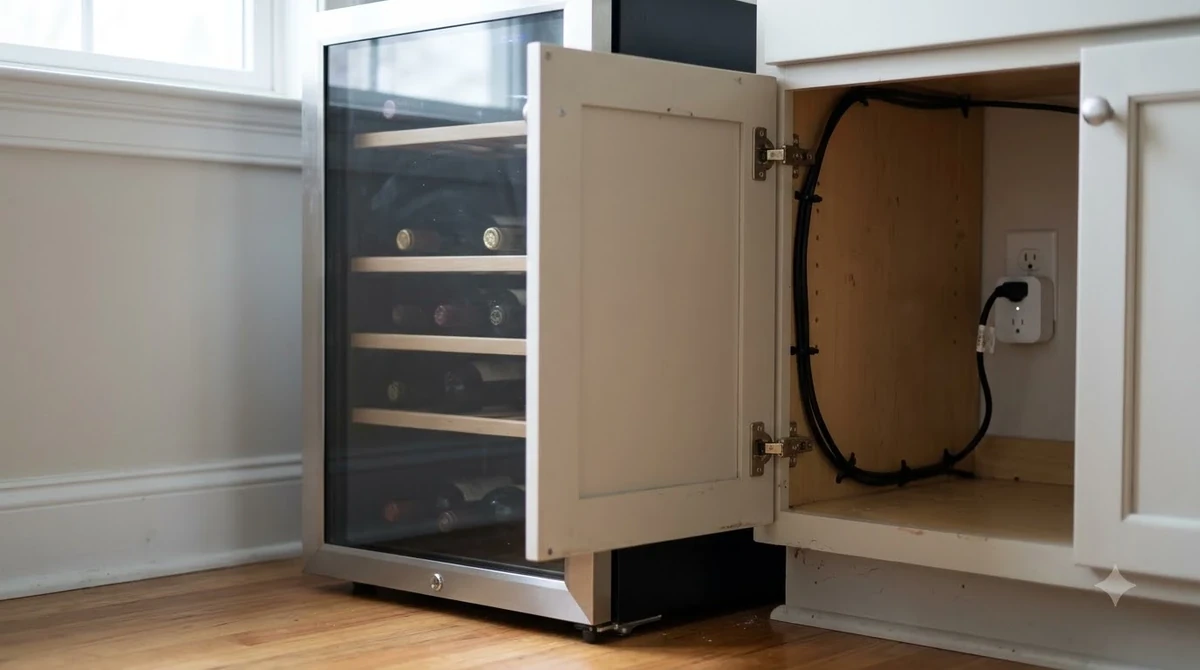
A built-in under-counter unit sits inside the cabinet line, so its noise is partly muffled by the surrounding wood. Make sure the vents have clear airflow, because blocked vents are a common reason a quiet unit becomes loud and runs too hard.
Why it stands out: Built-in models keep the sound low in the room and offer a clean look next to other appliances.
Keep in mind: Installation details, such as the venting path and the cabinet depth, affect both noise and cooling. Check the manufacturer’s clearance guidance before you order.
Best for: Kitchens and bars where the wine fridge should disappear into the cabinetry.
Best for Small Apartments
In a small apartment, the wine fridge is often in the same room as the bed or the desk. A compact thermoelectric unit with a fan-only sound profile is usually the easiest fit. Keep the capacity modest so the unit does not need to run harder than it should.
Why it stands out: A small footprint and a gentle fan sound make it easy to tuck into a corner without crowding the room.
Keep in mind: The smaller the unit, the fewer bottles it holds, and the more often you may need to restock. Plan around your typical drinking habits.
Best for: Renters and single-room living who want a few bottles on hand without much noise.
Best for Storing Wine Longer Term
If you plan to keep bottles for months or years, temperature stability matters more than the fan sound. A wine cellar overview on Wikipedia notes that wines age normally between about 10 and 14 °C (50 and 57 °F), and that large swings in temperature can speed aging by pushing air through the cork. Choose a unit that holds a narrow range and place it in a room with a steady temperature.
Why it stands out: A compressor unit with separate zones can keep red and white wines at different settings, which suits long-term storage.
Keep in mind: Long-term storage in a quiet unit still depends on the room. A cool, dark corner away from heat sources helps the fridge work less.
Best for: Collectors who buy by the case and want a steady environment for aging.
How to Choose a Quiet Wine Fridge
Shoppers often start with the wine they plan to keep, but the room decides most of the outcome. A fridge that is perfect on a spec sheet can still disappoint if it sits next to a bed or a home office desk where every cycle is heard. Run through the checklist below before you compare brands, and you will narrow the field quickly.
Use a short checklist before you buy. Start with the room, then the cooling type, then the features that affect comfort and convenience.
- Room location: Bedrooms and open-plan living areas need the quietest cooling designs.
- Cooling type: Thermoelectric is quieter in cool rooms, and compressor units hold temperature more steadily.
- Venting: Clear airflow keeps the unit from working harder and getting louder.
- Capacity: A smaller unit runs less often, but it holds fewer bottles.
- Controls: Simple temperature settings and a soft-light option help in shared spaces.
For a wider look at sizes and layouts, the mini wine fridge and small wine fridge guides explain how capacity changes the size of the unit you need.
Frequently Asked Questions
Are thermoelectric wine fridges quieter than compressor models?
Usually, yes. Thermoelectric units rely on a small fan and make less noise than a compressor cycling on and off. They work best in cooler rooms, so check the room temperature before you choose one.
Where should a quiet wine fridge be placed?
Place it on a level, solid surface away from the bed and the main seating area. Leave space around the vents, and avoid placing it against a wall that carries sound into a bedroom.
Does a larger wine fridge make more noise?
Not always. Noise depends more on the cooling design, the fan, and the installation than on size. A larger compressor unit can be quieter than a small one with a weak fan, so compare specifications rather than capacity alone.
How long can wine stay in a wine fridge after opening?
A wine fridge keeps an opened bottle cooler, but it does not stop oxidation. Most people reseal and finish an opened bottle within a few days. For storage timing, the guide on how long wine lasts after opening covers the details.
Once you know which room the fridge will live in, the choice becomes much simpler. Keep the space, the cooling type, and the venting in mind together, and set aside a few minutes to check the product details rather than relying on a single rating. A quiet wine fridge is a practical choice for any room where sound matters. Start with the space, pick the cooling type that fits it, and check the venting before you buy. For a full list of styles, browse the wine fridges by type section.
More in Wine Fridges by Type
 Best White Wine Fridge for Reliable Chilling and StorageUpdated Nov 20, 2026
 Best Smart Wine Fridge for Steady Temperatures and Remote ChecksUpdated Nov 18, 2026
 Best Black Under Counter Wine Fridge Options for Kitchens and IslandsUpdated Nov 18, 2026
 Best Black Slim Wine Fridge for Narrow Gaps and Dark KitchensUpdated Nov 18, 2026
 Best Built In Dual Zone Wine Fridge Options by Kitchen LayoutUpdated Nov 18, 2026
 Best Slim Built in Wine Cooler: 5 Space-Saving Styles for Tight KitchensUpdated Nov 18, 2026