

We may earn a commission when you buy through links on this page, at no extra cost to you. Learn more.
avaline wine alcohol content ranges from 11% to 14.5% ABV across the brand’s current listed wines, depending on the bottle and style. Avaline’s Prosecco is at the lower end, while its Syrah is at the higher end. The core White, Rosé, and Red blends sit between those figures, so there is no single alcohol percentage for every Avaline wine.
For a useful comparison, start with the exact bottle rather than assuming that all white wines, rosés, or reds share one strength. Avaline publishes alcohol by volume and serving facts on its individual product pages, making it possible to compare the range by style and understand what the number means in a standard pour.
Avaline wine alcohol content by bottle
Avaline’s current online product information spans 11% to 14.5% ABV, with several familiar bottles clustered around 12% to 13.5%. The table below uses the figures listed on individual Avaline product pages, not a single brand-wide average.
The current core White is listed at 11.8% ABV, Rosé at 12.5%, and Red at 13.5%. Other styles widen the range: Prosecco is 11%, the sparkling wine is 12%, Cabernet Sauvignon is 12.8%, Pinot Noir is 13%, and Syrah is 14.5%. Those numbers make the name of the wine important. A white blend, Sauvignon Blanc, Pinot Grigio, and Chardonnay do not necessarily share the same alcohol level just because all are white wines.
| Avaline wine | Listed ABV | Approx. pure alcohol in a 5 oz pour |
|---|---|---|
| Prosecco | 11% | 0.55 fl oz |
| White blend | 11.8% | 0.59 fl oz |
| Sauvignon Blanc | 12% | 0.60 fl oz |
| Pinot Grigio | 12% | 0.60 fl oz |
| Sparkling | 12% | 0.60 fl oz |
| Rosé | 12.5% | 0.63 fl oz |
| Cabernet Sauvignon | 12.8% | 0.64 fl oz |
| Chardonnay | 13% | 0.65 fl oz |
| Pinot Noir | 13% | 0.65 fl oz |
| Red blend | 13.5% | 0.68 fl oz |
| Syrah | 14.5% | 0.73 fl oz |
The pure-alcohol column is a calculation, not a separate Avaline serving claim: multiply the pour size by the ABV expressed as a decimal. For example, a 5-ounce pour at 12% ABV contains about 0.60 fluid ounces of pure alcohol, while the same pour at 14.5% contains about 0.73 fluid ounces. The rounded values are intended to make bottle-to-bottle comparisons easier, not to imply that a home pour is always exactly 5 ounces.
What ABV means in a glass of wine
ABV means alcohol by volume: the percentage of a wine’s total liquid volume that is alcohol. It is the standard way to compare the strength of two bottles, and it explains why a five-ounce serving of a 14.5% wine contains more alcohol than the same-size serving of an 11% wine.
The difference is easiest to see with simple arithmetic. At 11% ABV, a 5-ounce pour contains approximately 0.55 ounces of pure alcohol; at 12.5%, it contains approximately 0.63 ounces; at 13.5%, it contains approximately 0.68 ounces. A 14.5% Syrah therefore delivers about one-third more pure alcohol by volume than an 11% Prosecco in an equal-size pour. The wine still occupies the same space in the glass, but the alcohol concentration is different.
Pour size matters just as much as the printed percentage. Wine Enthusiast describes 5 ounces as the standard wine pour and notes that a 750-milliliter bottle yields almost five such glasses. A generous home pour of 7 or 8 ounces is not equivalent to the 5-ounce serving used in Avaline’s online nutrition panels, so the alcohol in the glass increases as the pour grows.
For further context on how label percentages are regulated and why a number printed on a label is not a laboratory reading of every bottle, read Wine Enthusiast’s explanation of wine ABV labeling. The practical takeaway is straightforward: use the stated percentage to compare products, keep pour sizes consistent when comparing them, and avoid treating a brand’s lowest-ABV wine as representative of its entire range.
How Avaline’s wine styles compare
The range is not divided neatly into low-alcohol whites and high-alcohol reds: Avaline’s Prosecco is 11%, its White is 11.8%, and its Syrah reaches 14.5%. Style can offer a rough clue, but the listed ABV for the specific wine is the dependable comparison.
White wines: the White blend is 11.8%, while Sauvignon Blanc and Pinot Grigio are each listed at 12%. Chardonnay is listed at 13%, putting it a full percentage point above the two lighter white options. That makes “white wine” too broad a category for estimating alcohol. If you are choosing between the White blend and Chardonnay, the published figures give you a more useful comparison than color alone.
Rosé and sparkling wines: Avaline Rosé is 12.5%, while the still sparkling wine is 12% and Prosecco is 11%. The two sparkling choices are close, but they are not identical; Prosecco is one percentage point lower than Rosé and one point below the 12% sparkling bottle. A celebratory style does not automatically mean a lower or higher alcohol level, so compare the product names rather than relying on the bubbles.
Red wines: Avaline’s Red blend is 13.5%, Cabernet Sauvignon is 12.8%, Pinot Noir is 13%, and Syrah is 14.5%. This lineup shows why a red-versus-white shortcut can mislead: Cabernet is lower in listed ABV than the Red blend, while Syrah sits above both. For someone choosing between two reds, the difference between 12.8% and 14.5% is meaningful even though both wines belong to the same broad color category.
These comparisons describe alcohol strength, not weight, flavor intensity, sweetness, or quality. A full-bodied Chardonnay at 13% may feel richer than a crisp white at 11.8%, but body is a sensory feature rather than a direct measurement of alcohol. Likewise, a wine with ripe fruit aromas can still be fermented dry. Look at style notes and ABV as separate pieces of information instead of assuming that one predicts the other.
Does organic or dry wine mean lower alcohol?
No: organic farming and dry fermentation describe different things from ABV. Avaline emphasizes organically grown grapes and dry styles, but neither description guarantees a lower alcohol percentage; its current product pages range from 11% Prosecco to 14.5% Syrah.
“Made with Organic Grapes” refers to how the grapes are grown and certified, not to the amount of alcohol produced during fermentation. Fermentation converts grape sugar into alcohol, and the resulting strength depends on the wine and its production choices. That is why two Avaline wines can both be made with organic grapes yet have different listed ABVs, such as 11.8% for White and 14.5% for Syrah.
“Dry” is about the wine’s residual sugar and perceived sweetness, not its alcohol percentage. Avaline says its still wines are fermented dry and list 0 grams of sugar per serving, while its Prosecco contains 1.18 grams per serving. That small sugar difference does not make Prosecco the strongest wine in the lineup: its listed ABV is 11%, the lowest figure among the current products in the table.
For more detail on what the brand means by its ingredient and production language, consult Avaline’s FAQ on organic grapes, sugar, and sulfites. It is useful to keep the terms separate: organic concerns grape growing and certification, dry concerns sweetness, and ABV concerns alcohol concentration. A bottle can meet all three descriptions at once without any one of them defining the other two.
Comparing Avaline with other wine brands
Avaline’s numbers are easiest to interpret when compared with the exact wine style and product, not just another brand’s name. Its Pinot Grigio is listed at 12% ABV, its White blend at 11.8%, and its Sauvignon Blanc at 12%, so comparing like-for-like varieties gives a clearer starting point than comparing a white blend with a red blend.
For a direct Pinot Grigio comparison, see our page on Black Box Pinot Grigio alcohol content and the separate overview of Cavit Pinot Grigio alcohol content. Both links are useful because Avaline’s Pinot Grigio is listed at 12%, but a grape variety does not impose one fixed ABV across all producers. Growing conditions, harvest decisions, ripeness, and fermentation choices can all lead to different results in wines made from the same grape.
The same approach works for Sauvignon Blanc. Avaline’s bottle is listed at 12%, and our guide to Kim Crawford Sauvignon Blanc alcohol content provides a second producer to compare. Check the specific product rather than making assumptions from the Sauvignon Blanc name alone; the label percentage is more precise than a general category estimate.
Readers comparing more than one producer can also browse the wider Wine Brands section for additional bottle-specific explainers. Keep the comparison fair by putting equal serving sizes side by side and separating alcohol content from price, tasting notes, organic claims, and sweetness. An 11.8% white is not automatically a better match than a 13% Chardonnay; the right choice depends on the style you want and the level of alcohol you are comparing.
Serving, pouring, and storing Avaline
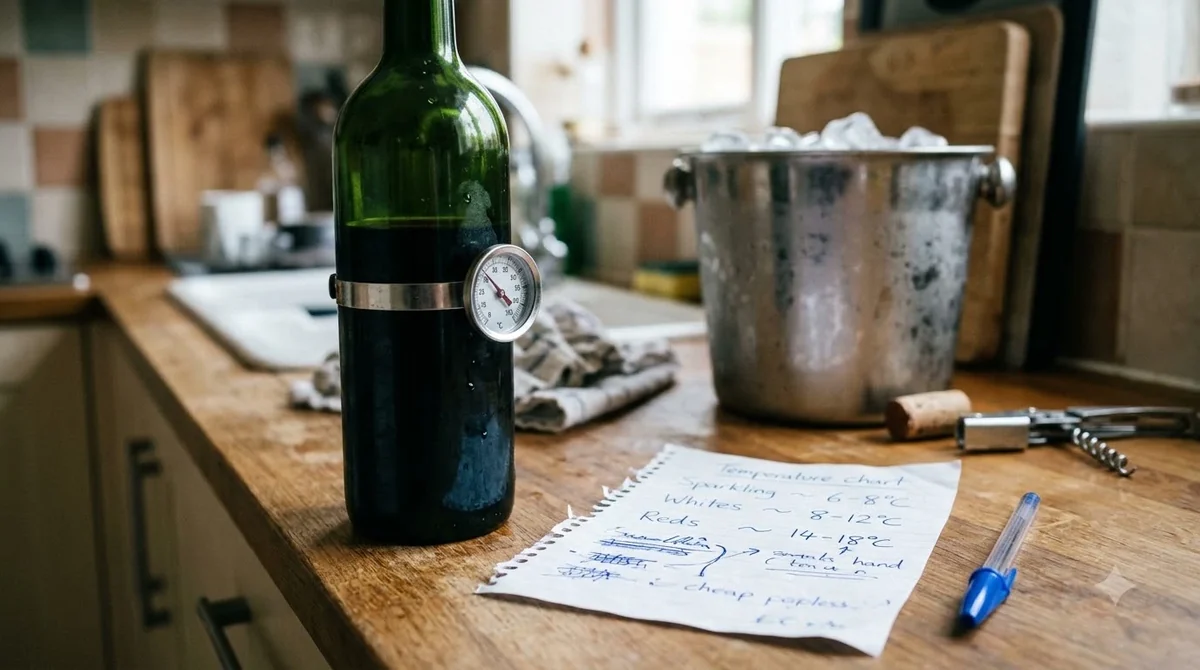
A consistent pour makes ABV comparisons more useful, and serving temperature helps each style show its intended character. A 750-milliliter bottle holds about five standard 5-ounce servings; for temperature, light whites and rosé generally suit 45–50°F, while sparkling wine is best served colder at 40–50°F.
For Avaline’s crisp White, Sauvignon Blanc, and Pinot Grigio, aim for 45–50°F rather than serving them refrigerator-cold. Rosé fits the same 45–50°F range. The richer Chardonnay is better slightly warmer at 50–55°F, while red selections benefit from a cooler-than-room-temperature approach: light reds around 55–60°F and fuller reds around 60–65°F. These ranges are more specific than the common habit of serving every white very cold and every red warm.
Use a measuring cup or marked glass once or twice if you are unsure what 5 ounces looks like in your usual stemware. Glass shapes and bowl sizes vary, so the visual fill line can be misleading. When comparing an 11% Prosecco with a 14.5% Syrah, a consistent 5-ounce pour keeps the calculation meaningful; a larger serving changes the alcohol amount even though the ABV printed for the wine stays the same.
Tip: For a quick at-home comparison, pour 5 ounces of each wine into the same style of glass and compare the ABV figures side by side. Avaline lists five 5-ounce servings per 750-milliliter bottle on its product pages, which gives you a practical reference for portion size.
After opening, keep still Avaline wines sealed and refrigerated rather than leaving the bottle on the counter. As a general wine-handling guide, opened still wines are usually best within 3–5 days; sparkling wines tend to lose their fizz sooner, often within 1–3 days. Store unopened bottles on their sides in a cool, dark place near 55°F when the closure and bottle format suit that position. These storage details do not change ABV, but they help preserve the wine’s condition after purchase.
Frequently Asked Questions
These answers cover a few practical details beyond the alcohol percentages, including ingredients, nutrition information, and the meaning of Avaline’s production claims. They can help clarify what the brand publishes about an individual bottle.
Are Avaline wines vegan?
Yes. Avaline says it uses animal-free fining, meaning it does not use egg whites, fish bladders, or casein during that process. This is a separate production detail from the wine’s ABV and does not determine how much alcohol is in a bottle.
Does Avaline publish calorie information?
Yes, its online serving facts include calories for individual wines. The listed figures per 5-ounce serving include 102 calories for White, 109 for Rosé, and 120 for the Red blend. The numbers are product-specific rather than one calorie figure for the whole brand.
Do Avaline wines contain sulfites?
Yes. Avaline explains that sulfites occur naturally during fermentation and are also used to help stabilize wine; the brand says its wines remain below 100 parts per million. “Made with Organic Grapes” does not mean a wine contains no sulfites.
What does “Made with Organic Grapes” mean?
Avaline says 100% of the grapes must come from certified organic vineyards to use that claim. The company also explains that additional ingredients must meet the relevant National Organic Program rules, including restrictions on which substances may be used.
Can Avaline packaging be recycled?
Avaline says its packaging, including the screw cap, is recyclable. Local recycling rules vary, so the brand advises rinsing bottles before placing them in a recycling stream that accepts glass and the relevant closure materials.
The simplest way to compare Avaline bottles is to use each wine’s own ABV rather than relying on a general estimate for white, rosé, red, or sparkling wine. Across the current listed range, the numbers run from 11% for Prosecco to 14.5% for Syrah, with many familiar bottles close to 12%–13.5%.
More in Wine Brands
 Underwood Wine Price: Compare Bottles, Cans, and Pack SizesUpdated Nov 21, 2026
 Zenato Wine Price: Compare Styles and Choose the Right BottleUpdated Nov 21, 2026
 Zuccardi Wine Price: Compare Bottles and Find the Right RangeUpdated Nov 21, 2026
 Yellow Tail Moscato Review: Taste, Sweetness and Serving TipsUpdated Nov 21, 2026
 Wolf Blass Yellow Label Review: Choose Your Best StyleUpdated Nov 21, 2026
 Wolffer Estate Rose Review: Choose the Right Bottle for Your TableUpdated Nov 21, 2026