

We may earn a commission when you buy through links on this page, at no extra cost to you. Learn more.
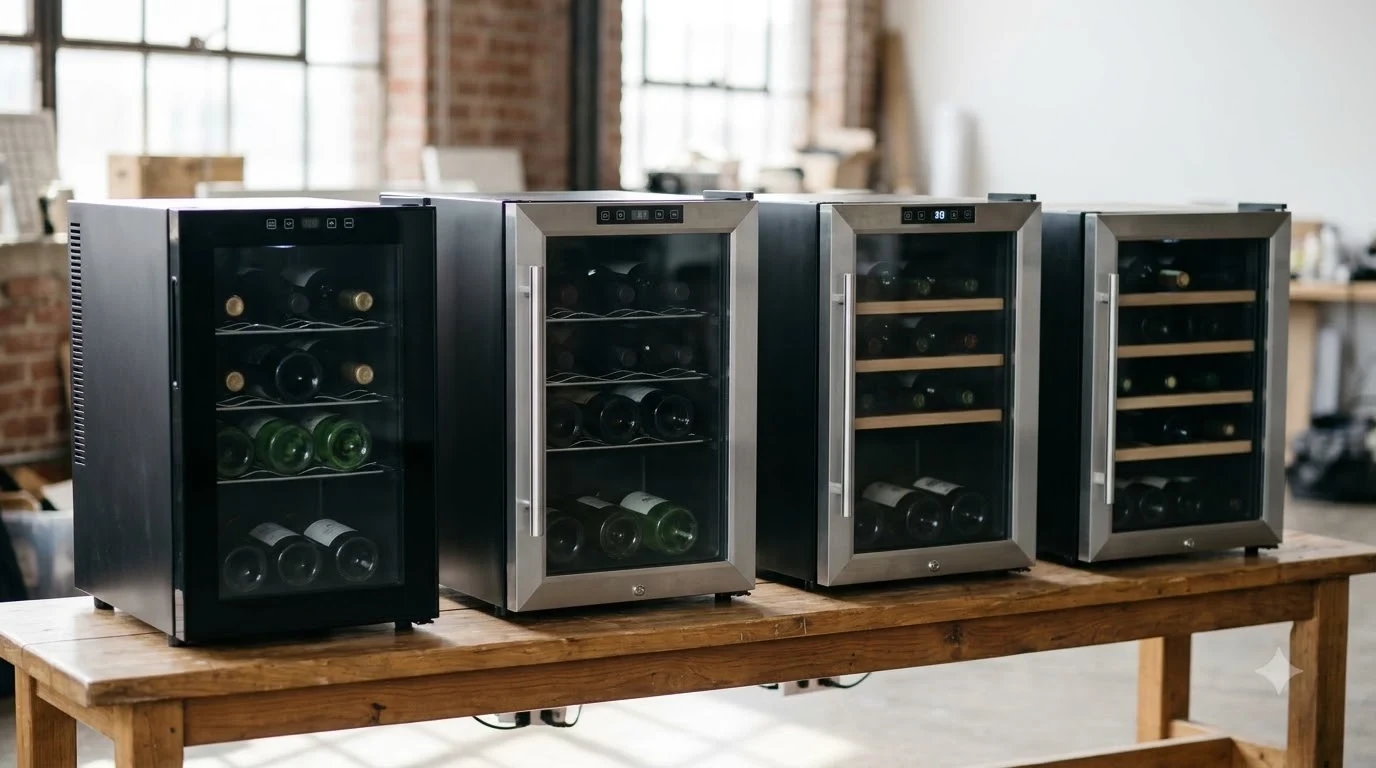
An Antarctic Star wine cooler is a budget-oriented option for households that want dedicated wine and beverage storage, with compact single-zone refrigerators and larger dual-zone models available. The brand offers features such as glass doors, adjustable shelves, LED lighting, and digital temperature controls across several refrigerator sizes. Its main advantages are practical storage options and flexible configurations, while potential buyers should pay particular attention to actual bottle capacity, installation requirements, and warranty coverage before choosing a model.
Antarctic Star makes wine refrigerators for different household needs, from small countertop beverage coolers to larger undercounter-style cabinets. However, the product range includes meaningful differences in temperature control, capacity, and installation design. Understanding those differences is more useful than choosing a refrigerator based on its advertised bottle count alone. This brand overview examines the available product families, customer feedback, operating considerations, and support policies to help determine whether an Antarctic Star refrigerator belongs in your home.
Antarctic Star Brand Overview
Antarctic Star is a home-appliance brand with a product catalog that includes beverage refrigerators, wine coolers, mini fridges, freezers, and other compact cooling appliances. Its wine refrigerator lineup emphasizes accessible beverage storage, glass-front displays, and space-conscious designs rather than the specialized features associated with high-end wine cellars.
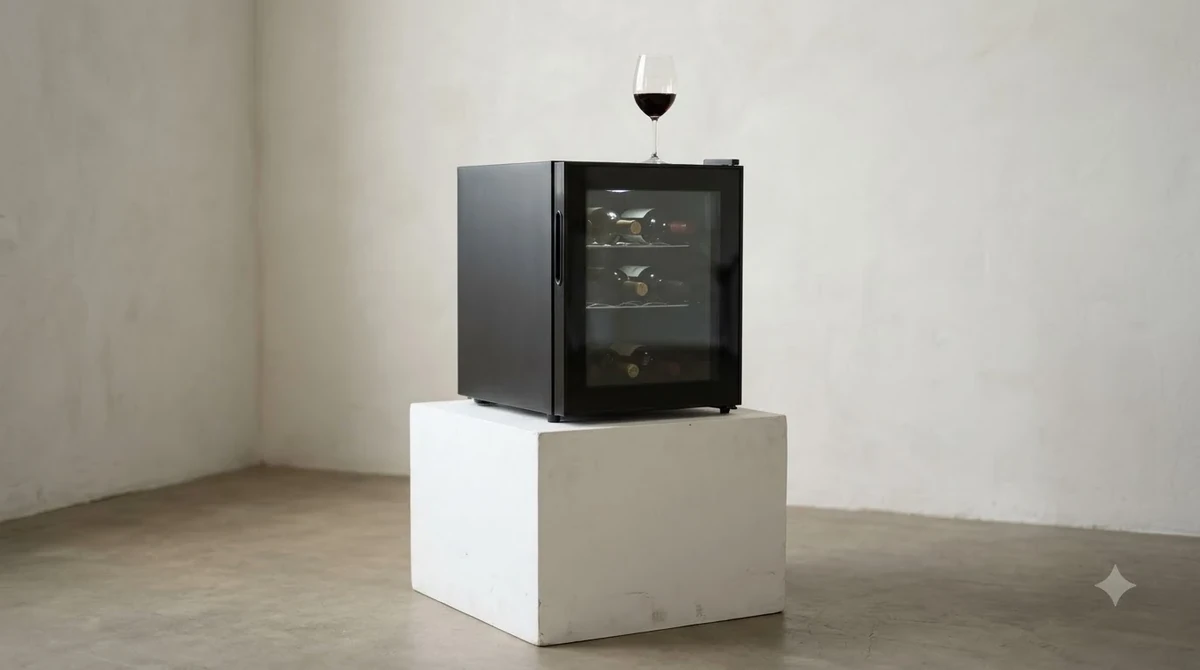
The manufacturer’s product descriptions emphasize temperature adjustment, horizontal bottle storage, adjustable shelving, and illuminated interiors. These features address common household requirements: keeping wine away from a regular refrigerator’s frequent temperature fluctuations, organizing bottles in a dedicated location, and making drinks easy to identify without opening the door repeatedly.
There are several distinct types of Antarctic Star wine fridge. Smaller single-zone appliances are designed for limited collections or mixed beverage storage, while larger cabinets offer more room and, on selected models, separate temperature zones. The differences matter because a refrigerator designed primarily for cans and everyday wine is not necessarily the right appliance for a collection containing Champagne, Burgundy, and larger-format bottles.
The company does not provide enough detailed corporate history or ownership information on the product pages reviewed to establish a meaningful manufacturing-history comparison with established premium wine-cellar specialists. Buyers should therefore assess Antarctic Star primarily through its documented product specifications, available support arrangements, and model-specific owner feedback.
Is Antarctic Star a good brand? It can be a reasonable candidate for everyday home beverage storage, particularly for buyers who value compact dimensions and straightforward features. However, the available information does not establish that every model delivers the same performance or long-term reliability. Individual product specifications and warranty conditions deserve more attention than the brand name alone.
For additional comparisons across household appliance manufacturers, the Brand hubs section provides another starting point. You can also compare the general positioning of other appliance companies by reading about is Black and Decker a good brand before deciding which manufacturer best matches your requirements.
Antarctic Star Product Lines Explained
Antarctic Star’s wine refrigerator selection ranges from small countertop units to larger cabinets with separate temperature controls. The most useful way to compare the lineup is by storage capacity, temperature arrangement, and intended installation location.
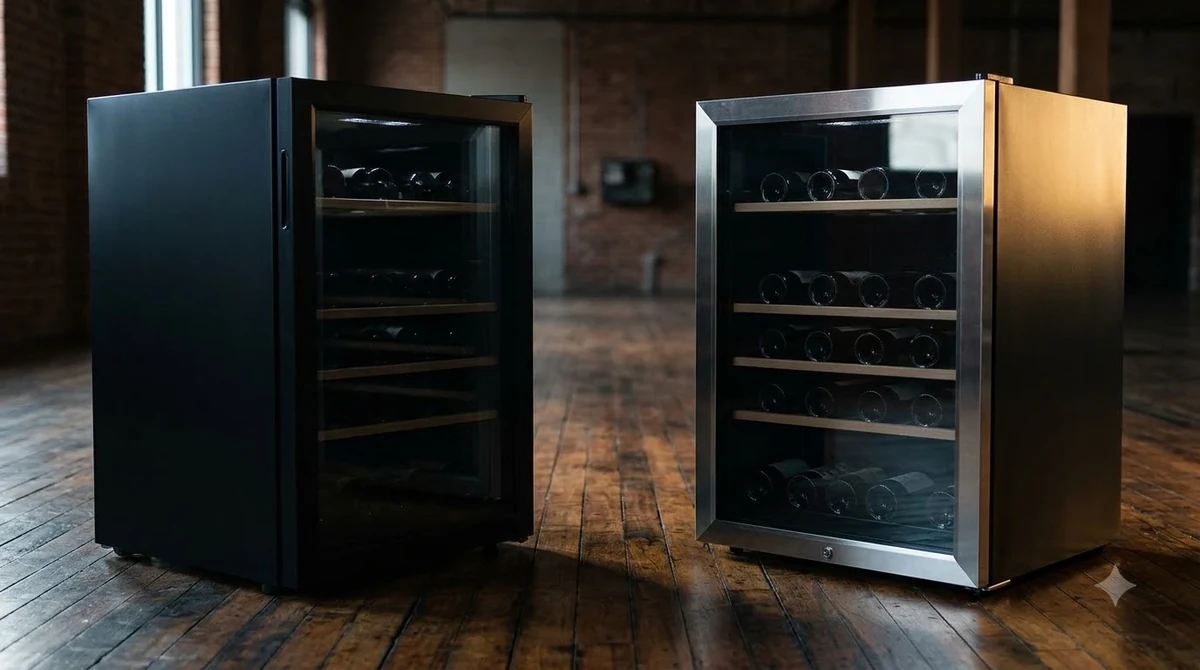
The following table highlights representative configurations documented in the manufacturer’s product information and the INAS90 manual. These are different product configurations, not interchangeable versions of one refrigerator.
| Product configuration | Advertised capacity | Temperature range | Dimensions (W × D × H) | Main use |
|---|---|---|---|---|
| 12-bottle/48-can compact cooler | 12 bottles or 48 cans | 40°F–61°F | 16.93 × 16.46 × 18.5 in. | Countertop or freestanding storage |
| INAS90 single-zone cooler | Approximately 26 bottles or 130 cans | 40°F–61°F | 17.52 × 19.29 × 31.18 in. | Small home wine and beverage collection |
| 24-inch dual-zone refrigerator | 18 bottles and 66 cans | 36°F–50°F | 23.43 × 22.76 × 34.25 in. | Separate wine and beverage storage |
| 23.4-inch 46-bottle dual-zone model | 46 bottles | 41°F–68°F overall | 23.4 × 22.7 × 34.2 in. | Larger undercounter-style collection |
Capacity figures represent advertised configurations, not guaranteed results with every bottle shape. In particular, a refrigerator rated for standard Bordeaux bottles may accommodate fewer bottles if the collection contains wider Pinot Noir bottles, Champagne bottles, or other unusually shaped glass.
Compact single-zone refrigerators
The 12-bottle/48-can model is one of the smaller options. Its 1.3-cubic-foot interior and dimensions of 16.93 inches wide, 16.46 inches deep, and 18.5 inches high make it suitable for a countertop, small bar area, or another compact location.
Its advertised temperature range is 40°F to 61°F. The refrigerator includes adjustable shelving, horizontal bottle storage, a reinforced glass door, and blue LED lighting. Its reversible-door arrangement is another useful feature where the available opening direction matters.
The INAS90 is a larger single-zone configuration. Its 3.2-cubic-foot interior is advertised for approximately 26 standard wine bottles or 130 cans. Four movable wire shelves provide some flexibility for organizing bottles and canned drinks, although combining both types of storage reduces the space available for each.
These compact configurations are best understood as everyday beverage refrigerators with wine-storage capabilities. They can keep drinks organized and chilled, but they do not offer the separate temperature environments that some wine collectors prefer.
Larger dual-zone refrigerators
The 24-inch Antarctic Star refrigerator is designed for households that want to store wine and other beverages in the same appliance. Its advertised capacity is 18 standard 750 ml bottles and 66 standard 12-ounce cans. Separate controls allow the two compartments to operate at different temperatures.
Its listed temperature range is 36°F to 50°F, with a double-layer tempered-glass door, sliding beechwood and stainless-steel racks, and blue interior lighting. The refrigerator measures 23.43 inches wide, 22.76 inches deep, and 34.25 inches high.
The 46-bottle configuration is another option for a larger collection. Wayfair lists six wooden shelves, two temperature zones, and an overall temperature range of 41°F to 68°F. Its dimensions are 23.4 inches wide, 22.7 inches deep, and 34.2 inches high.
These larger models are more appropriate for households with several wine styles or a regular supply of entertaining beverages. Nevertheless, the temperature range of the specific unit matters: not every dual-zone refrigerator offers the same settings, so buyers should avoid assuming that one model’s capabilities apply to another.
What Antarctic Star Does Well
Antarctic Star’s strongest selling points are practical design features, several storage sizes, and the availability of dual-zone configurations. These characteristics make the brand relevant to people who want a dedicated beverage refrigerator without necessarily purchasing a specialized wine-aging cabinet.
One advantage is the range of physical dimensions. A 12-bottle refrigerator can fit into a much smaller space than a 46-bottle cabinet, while the INAS90 offers a middle ground for households that want more room without dedicating an entire undercounter section to wine storage.
Another advantage is the inclusion of adjustable shelving. Fixed shelves can make it difficult to organize bottles of different sizes, especially when a collection includes sparkling wine, standard Bordeaux bottles, and wider Burgundy bottles. Movable shelves offer additional flexibility, although the actual usable capacity still depends on the arrangement.
The dual-zone configurations are particularly useful for people who regularly serve different beverages. A refrigerator with independent controls can maintain separate settings for the upper and lower compartments, depending on the particular model. That is more convenient than trying to use one temperature setting for every bottle.
Customer feedback also provides some encouraging signs. Wayfair’s review summary for the 46-bottle refrigerator identifies attractive appearance, quiet operation, and the usefulness of dual-zone functionality as recurring positive themes. These are relevant qualities for a refrigerator positioned in a kitchen, dining area, or home bar.
Glass-front doors are another practical design choice. They let owners identify bottles without opening the refrigerator, while interior LED lighting makes the contents easier to see. The manufacturer’s smaller models also use blue lighting as part of their display-oriented design.
For buyers comparing manufacturers, it is useful to distinguish basic beverage-storage priorities from specialist wine-preservation requirements. Similar comparisons can be made with whether Rovsun is a good brand or whether Galanz is a good brand. The important question is not simply which name is more familiar, but which specific appliance offers the right dimensions, temperature controls, and support.
Common Complaints and Limitations
The main concerns surrounding Antarctic Star wine refrigerators involve real-world capacity, temperature expectations, and the possibility of inconsistent ownership experiences. Advertised specifications are useful starting points, but they do not eliminate the need to examine model-specific limitations.
Advertised capacity may be optimistic
Bottle capacity is usually calculated using a standard bottle shape. A refrigerator advertised for 46 Bordeaux-sized bottles may hold fewer if the owner primarily stores wider Burgundy bottles or sparkling wines. Champagne bottles, in particular, can take up considerably more shelf space than standard bottles.
Wayfair’s customer-review summary for the 46-bottle model specifically identifies mixed opinions about storage capacity. Some owners report that larger or nonstandard bottles do not fit as easily as the advertised configuration suggests. Shelf spacing is therefore an important purchasing consideration.
The same practical limitation applies to smaller refrigerators. A 12-bottle rating does not mean every combination of bottle shapes will fit simultaneously. Before purchasing, consider the dimensions of the bottles you actually own rather than relying entirely on the maximum advertised count.
Temperature performance requires realistic expectations
A temperature setting is not necessarily the same as a verified, perfectly stable internal temperature. Room temperature, ventilation, door openings, loading patterns, and the condition of the door seal can all affect refrigerator performance.
For example, the INAS90 manual lists a range of 40°F to 61°F. That makes it suitable for keeping many wines and beverages chilled, but it does not provide the full flexibility of a refrigerator capable of maintaining a warmer environment for long-term storage of a mixed wine collection.
The 24-inch dual-zone model has a different published range, from 36°F to 50°F. That specification should not be confused with the 41°F to 68°F range listed for the separate 46-bottle model by Wayfair.
Long-term durability is not guaranteed
Customer feedback for the larger refrigerator is not uniformly positive. While many comments are favorable about appearance and quiet operation, the available review summary also identifies concerns about bottle fit and the overall ownership experience.
Review summaries are useful for identifying recurring themes, but they cannot establish a precise failure rate. A handful of positive or negative experiences should not be treated as proof that every unit will perform identically.
Potential owners should pay attention to the seller’s return arrangements, the manufacturer’s warranty, and the process for obtaining replacement parts. These details become particularly important if a refrigerator is being installed as part of a permanent kitchen renovation.
How to Choose an Antarctic Star Wine Cooler
The best Antarctic Star refrigerator depends on how many bottles you store, whether you also need space for cans, and whether separate temperature controls are important. Choosing by actual storage requirements is generally more reliable than selecting the largest advertised capacity.
1. Calculate your real storage needs
Start by counting the bottles you expect to store regularly. A small household that keeps six to ten bottles available for occasional dinners may find the compact 12-bottle configuration sufficient. Someone who regularly purchases wine by the case may prefer the INAS90 or a larger cabinet.
Allow some extra room for future purchases and different bottle shapes. Filling every available shelf to its advertised maximum can make bottles difficult to remove and may reduce flexibility when the collection changes.
2. Decide whether one or two zones are necessary
A single-zone refrigerator maintains one general temperature environment throughout the cabinet. It is a straightforward choice if most of the contents are similar beverages or if the main goal is keeping wine at a consistent serving or storage temperature.
A dual-zone model offers more flexibility for households that keep different wine styles and beverages together. However, the temperature ranges of both compartments should be checked individually. A dual-zone label does not automatically mean that either section can accommodate every preferred serving temperature.
3. Check the dimensions and ventilation
Measure the available location before ordering. The INAS90, for example, is 31.18 inches high, 17.52 inches wide, and 19.29 inches deep. The larger 24-inch refrigerator is 34.25 inches high and 23.43 inches wide.
Leave enough room for the door to open, bottles to slide out, and ventilation to function properly. The INAS90 manual recommends at least five inches of clearance on each side and advises placing the appliance away from direct sunlight and heat sources.
4. Check the cooling and shelf design
Look at the shelf material, spacing, and adjustability. Wire shelves are practical for basic beverage storage, while wooden racks provide a more traditional wine-cellar appearance. The 24-inch model combines beechwood and stainless-steel rack elements.
Also consider the cooling system and expected operating environment. A refrigerator located in a warm garage may face different conditions from one installed inside a climate-controlled kitchen. Avoid assuming that the same performance will be achieved in both environments.
5. Review the seller and warranty before ordering
Check whether the seller provides a clear return process and whether the exact model is covered by the manufacturer’s warranty. A refrigerator is a substantial appliance to transport, particularly if it needs to be returned because of shipping damage or installation incompatibility.
Confirm the availability of customer support and keep the purchase receipt. If the refrigerator is intended for an undercounter installation, verify the manufacturer’s installation requirements rather than relying on the product’s appearance or general marketing description.
Tip: Before purchasing, measure the widest wine bottle in your collection and compare it with the available shelf spacing. Also measure the installation opening, including the space needed for the door and ventilation. These two checks can prevent many avoidable capacity and installation problems.
Warranty and Customer Support
Antarctic Star’s official warranty page describes a manufacturer’s limited warranty of one year from the original purchase date unless the individual product manual states otherwise. The coverage applies to qualifying defects in materials and workmanship under normal operating conditions, subject to the manufacturer’s exclusions. Buyers can review the official Antarctic Star warranty terms before making a purchase.
This is an important distinction for buyers comparing refrigerators. A one-year manufacturer’s warranty provides a defined initial support period, but it should not be confused with a promise that every component will be replaced under every circumstance.
What the warranty covers
The manufacturer’s policy states that qualifying hardware components found to have defects in materials or workmanship may be replaced during the first year. Replacement or repair decisions are subject to the manufacturer’s discretion.
The warranty excludes damage associated with accidents, misuse, neglect, fire, external causes, alterations, repairs, and commercial use. It is also nontransferable to a subsequent purchaser or recipient.
Another important limitation concerns transportation. The manufacturer states that the purchaser is responsible for removal and transportation costs associated with the appliance. If a replacement or repaired product is shipped, the manufacturer says it will cover the shipping cost of that replacement or repaired product.
How to request assistance
Keep the original purchase receipt and make sure it identifies the purchase date. These documents are specifically requested when submitting a warranty claim.
The official warranty page directs customers to the manufacturer’s contact service at [email protected] for technical support and warranty assistance. Customer service may ask questions to determine whether a particular issue qualifies for coverage.
For operating questions, the INAS90 manual is also a useful reference. It covers installation, temperature adjustment, lighting, cleaning, and common troubleshooting situations. Owners should use documentation for their precise model because controls and temperature ranges can differ between product configurations.
Overall, the warranty provides a basic starting point for support, but buyers should read the terms before ordering. Anyone planning to use a refrigerator in a commercial setting should be particularly careful because the standard limited warranty explicitly excludes commercial use.
Frequently Asked Questions
Is Antarctic Star a good brand for wine refrigerators?
Antarctic Star offers several practical refrigerator configurations, including compact units and larger dual-zone cabinets. Its products may suit everyday home beverage storage, but the available information does not establish a comprehensive brand-wide reliability record. Compare individual models, warranty terms, and owner feedback before purchasing.
Where can I find an Antarctic Star wine cooler manual?
The manufacturer’s website includes a Support section with instruction videos and warranty information. Manuals are also available through third-party manual libraries, including the INAS90 documentation. Match the model identifier on the refrigerator’s rating label to the document before following its operating instructions.
Why does my Antarctic Star wine refrigerator make noise?
Refrigerators can produce sounds from their cooling components, airflow, and normal operating cycles. The INAS90 troubleshooting documentation also identifies an uneven installation and objects touching the appliance as possible sources of excessive noise. A refrigerator that develops a sudden loud noise, persistent rattling, or abnormal vibration should be inspected rather than assumed to be operating normally.
Can Antarctic Star wine coolers store Champagne bottles?
Some Champagne bottles are wider and heavier than standard Bordeaux bottles, which can make shelf placement more difficult. The manufacturer’s advertised capacities are based on standard-sized storage assumptions, so a refrigerator may hold fewer sparkling-wine bottles than its maximum stated count. Check shelf dimensions and clearance before purchasing.
Can an Antarctic Star wine refrigerator be transported immediately after unplugging?
Transport instructions can vary by model, and the documentation for the specific appliance should take priority. Keep the original packaging when possible, secure removable shelves, and protect the glass door during transportation. Before restarting a refrigerator that has been moved, follow the manufacturer’s instructions regarding upright positioning and settling time.
Antarctic Star is worth considering if you want a dedicated wine and beverage refrigerator with compact options, adjustable storage, and selected dual-zone configurations. Its biggest advantages are practical features and a range of sizes, while capacity limitations, installation requirements, and model-specific performance deserve careful consideration. Choose according to your actual bottle collection and preferred temperature settings, and review the warranty and return arrangements before making a final decision.
More in Brand Hubs
 Icyglee Wine Fridge: Compare Capacities, Features and ModelsUpdated Nov 20, 2026
 Fomup Wine Fridge: Explore Models, Features, and Buying TipsUpdated Nov 20, 2026
 Aaobosi Wine Fridge: Compare Models and Choose the Right CoolerUpdated Nov 20, 2026
 Orymuse Wine Fridge Reviews: Compare Capacities, Features and WarrantyUpdated Nov 20, 2026
 Tylza Wine Fridge: Find the Right Cooler for Your CollectionUpdated Nov 20, 2026
 Vintec Wine Fridge: Features, Warranty, and Buying AdviceUpdated Nov 20, 2026