

We may earn a commission when you buy through links on this page, at no extra cost to you. Learn more.
In Portugal, encruzado wine is a dry white made from the Encruzado grape, a variety associated above all with the Dão region, where it produces fresh, structured wines with citrus, orchard-fruit, floral, and mineral notes. Stainless-steel versions are often crisp and direct, while oak fermentation and lees aging can add breadth and nutty complexity. Its balance of acidity and texture makes it a versatile partner for grilled fish, cod, roast poultry, and cheese, and the best examples can develop gracefully in bottle.
Encruzado is one of Portugal’s most distinctive white grapes, yet it remains less familiar to many American wine drinkers than Albariño, Vinho Verde, or Chardonnay. Knowing its Dão origins, cellar styles, and food matches makes it easier to choose a bottle with confidence.
Where Encruzado Grows in Portugal’s Dão Region
Encruzado is strongly identified with the Dão, a mountainous wine region in central-northern Portugal where the grape holds a leading place among white varieties. Granite-based vineyards, pronounced day-to-night temperature changes, and elevations that commonly reach 400 to 800 meters help its wines combine ripe fruit and texture with a clean, persistent finish.
The Dão is inland, but its mountain setting moderates summer heat. The Serra do Caramulo and Serra da Estrela help shelter it from Atlantic westerlies and hot, dry easterly air, while cool nights slow ripening. Decanter describes cold air settling on the high plateau overnight and morning fogs forming around the Dão, Mondego, and Alva river valleys. These conditions help preserve aromatic definition during a growing season that can otherwise be warm and dry.
Granite is the region’s dominant soil, unlike the schist that predominates in the neighboring Douro. The Dão is not uniform: western sites closer to Atlantic influence tend to have a smaller day-to-night temperature range and shorter growing season, while higher eastern sites in Serra da Estrela can hold fruit longer on the vine. Decanter’s regional profile of the Dão lists 14,476 hectares under vine and annual production of 15,845 hectoliters, with 557 hectares of Encruzado. The seven subregions include Alva, Besteiros, Castendo, Serra da Estrela, Silgueiros, Terras de Azurara, and Terras de Senhorim.
| Dão reference point | Reported figure | Why it matters |
|---|---|---|
| Total vineyard area | 14,476 ha | Shows the scale of the regional appellation |
| Annual wine production | 15,845 hl | Provides context for regional output |
| Encruzado plantings | 557 ha | Confirms its leading role among Dão whites |
These are the regional figures reported by Decanter, which attributes its vineyard statistics to Portugal’s wine institute; they provide context rather than a live tally. For the appellation body’s own description, the Dão Wine Board’s grape-variety page identifies Encruzado as the leading white variety in the region.
What Encruzado Wine Tastes Like
Most Encruzado is dry, with citrus and orchard fruit supported by fresh acidity and a mineral edge. Its body can range from medium to full, but good examples tend to retain enough tension to keep their texture from feeling heavy.
A young, unoaked bottle often shows lemon, lime peel, green apple, pear, quince, or white peach. Aromas may include white flowers, fresh herbs, and a subtle vegetal note. The Dão Wine Board also identifies floral, mineral, and vegetable notes as part of the grape’s range, alongside an elegant balance between alcohol and acidity.
Minerality is a sensory impression rather than a literal taste of granite; it may suggest wet stone, flint, chalk, or a saline-like finish. Oak-aged examples can add vanilla, toast, baking spice, butter, and roasted nuts. With bottle age, some develop hazelnut, pine nut, resin, honey, and savory complexity while retaining freshness.
For a closer look at the Encruzado grape, separate its natural profile from cellar choices. The variety supplies fruit, acidity, and structure; fermentation vessel, lees contact, and maturation determine whether those elements feel crisp, rounded, creamy, or savory. Two bottles from the same grape can therefore taste noticeably different.
How Encruzado Is Made
Encruzado gives winemakers room to make both fresh, early-drinking whites and more layered wines intended for bottle development. The key decisions include picking date, pressing, fermentation temperature, vessel, and whether the wine remains on its lees after fermentation.
For a clean, fruit-led style, grapes are gently pressed and the juice is fermented in temperature-controlled stainless steel. Cooler fermentation helps retain citrus and orchard-fruit aromas, while a neutral vessel avoids adding vanilla or toast. The wine can then be bottled relatively young, when its freshness and direct fruit character are most apparent.
Other producers ferment some or all of the juice in oak barrels. Barrel fermentation and maturation can broaden texture and contribute gentle spice or nutty notes; the type and age of the barrel matter, since used oak usually adds less obvious wood flavor than a new barrel. Some producers combine stainless steel and oak portions to balance freshness with weight.
Lees aging adds another dimension. The spent yeast cells left after fermentation can give the wine a creamier texture and bread-dough or nut-like nuance; stirring the lees, called bâtonnage, can increase this effect. Decanter notes that Encruzado responds particularly well to oak and lees aging, yet also makes impressive unoaked wines. Dão whites may be bottled as varietal wines or blended with other local grapes for a broader regional expression.
Tip: When comparing two Encruzado bottles, look for three details in the producer’s notes: fermentation vessel, time on lees, and whether the lees were stirred. These choices often reveal more about the expected texture than the grape name alone.
Oak-Aged and Unoaked Styles
There is no single mandatory taste for Encruzado: stainless-steel wines emphasize citrus, floral lift, and clarity, while barrel-fermented or lees-aged versions usually feel broader and more layered. Neither style is automatically better; choose according to whether you prefer precision and freshness or savory depth and texture.
An unoaked Encruzado is often the clearest introduction to the grape. It may show lemon, green apple, pear, and a firm mineral line, with acidity carrying the finish. This style suits drinkers who like crisp, dry whites but want more body than a very light aperitif wine; it is especially good with grilled fish, shellfish, and simply prepared vegetables.
Oak treatment can range from subtle seasoning to an obvious toasted character. Partial barrel fermentation or aging in used barrels generally lets fruit and acidity remain prominent, while new oak can add vanilla, sweet spice, and a richer impression. Decanter has described barrel-fermented, lees-aged examples as full-bodied and nutty, with creamy richness alongside grapefruit, flowers, and orchard fruit.
Producer notes offer practical clues. “Stainless steel,” “unoaked,” or “fresh and mineral” suggests a direct profile; “barrel fermented,” “aged on lees,” or “batonnage” points toward added texture. Oak-aged Encruzado is sometimes compared with white Burgundy because it can combine acidity, body, and barrel-derived complexity, but the comparison is about structure and technique, not identical flavor or origin.
Food Pairings for Encruzado
Encruzado’s freshness and medium-to-full texture make it flexible at the table, especially with savory richness that does not overwhelm its aromas. Start with fish and seafood, then consider poultry, pork, creamy grains, mushrooms, and cheeses when the wine has more body or oak influence.
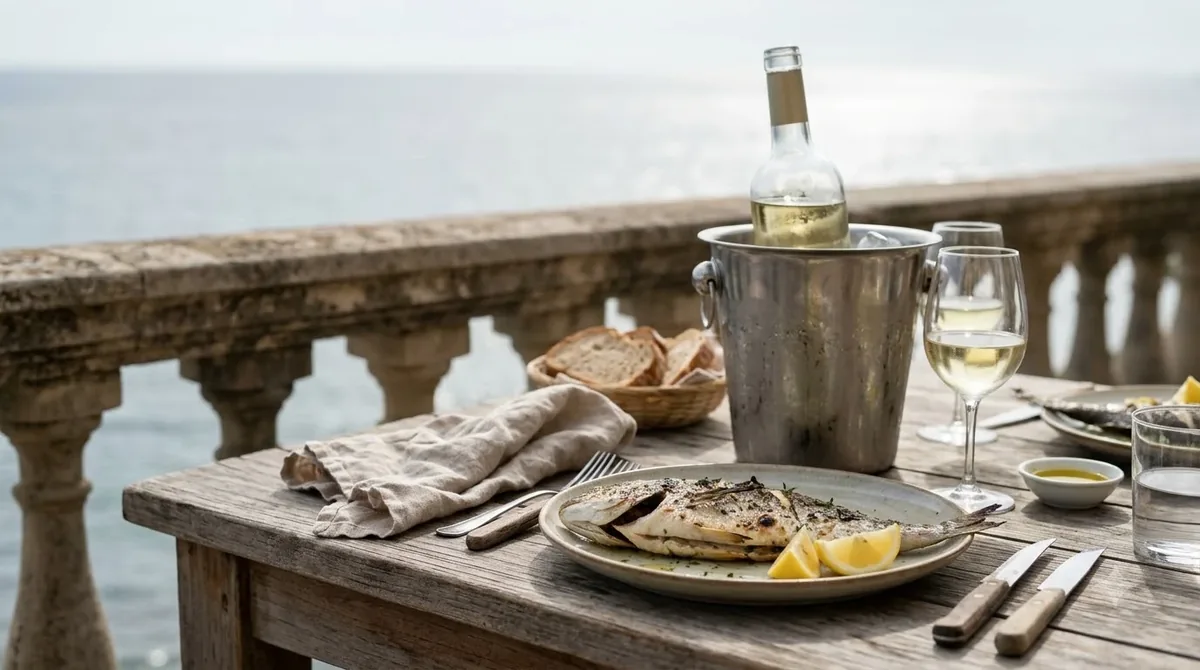
Try it with grilled sea bass, cod, halibut, prawns, scallops, or seafood rice. Its acidity refreshes the palate, while the body can stand up to olive oil, butter, garlic, and herbs. Salt cod with potatoes and olive oil is a natural Portuguese-style match. A fresher, unoaked bottle also works with lemon, parsley, fennel, and simply cooked vegetables.
Roast chicken, turkey, pork loin, and veal suit Encruzado because their flavors are savory without being too forceful. Oak-aged examples can handle cream sauces, browned butter, and roasted poultry skin; a lighter stainless-steel version is better with citrus, herbs, and a lighter pan sauce. Mushroom risotto and other creamy rice dishes are good choices when the wine has some lees-derived texture.
Choose cheese according to the wine’s weight. Fresh or unoaked Encruzado works with young sheep’s cheese, fresh goat cheese, and mild semi-soft cheeses, while a broader barrel-aged bottle can stand up to aged sheep’s milk cheese or nutty hard cheese. Salt and fat soften the impression of acidity, so richer cheeses often make the wine seem rounder. Keep very hot chili sauces and sugary glazes in check: chili heat can make alcohol feel more prominent, while sweetness can make a dry wine taste sharper. If you prefer a brisker Portuguese white, compare Encruzado with Arinto wine; for a broader overview of grape styles and pairings, see Wine by Type.
Serving Temperature, Aging, and Storage
Serve Encruzado cool rather than ice-cold so its citrus, flowers, and mineral notes remain clear. A lighter, unoaked bottle works around 45 to 50°F, while a fuller or oak-aged version is usually more expressive around 50 to 55°F.
Remove a very cold bottle from the refrigerator a short time before pouring, or chill one briefly if it has been stored at room temperature. A standard 750-milliliter bottle gives about five 5-ounce glasses. Use a medium-sized white-wine glass with enough room to gather aromas; a very narrow glass can make a textured wine seem less expressive.
Good Encruzado can age, but its development depends on producer, vintage, and winemaking. Its balance of acidity and alcohol provides a firm foundation, and the Dão Wine Board notes that mature examples can show hazelnut, pine nut, and resin while retaining freshness. More ambitious oak-aged wines and bottles from strong sites are the likeliest candidates for extended cellaring; simple unoaked versions are often best while their primary fruit is vivid.
With time, lemon and green apple can shift toward preserved citrus, dried orchard fruit, nuts, honey, and savory complexity. Color may deepen from pale straw toward gold, and texture can feel broader. Store bottles on their side in a dark, stable place near 55°F, away from heat and sharp temperature swings. After opening, reseal and refrigerate; most still whites are best within three to five days.
How to Choose a Bottle of Encruzado
Begin with the label and producer description. Dão DOC is the clearest regional signal, while terms such as Reserva or a named vineyard may indicate a more structured bottling, depending on the producer and appellation rules. Look for an explicit Encruzado grape statement when you want to taste the variety on its own rather than a regional white blend.
Next, decide which style suits the occasion. For an aperitif, grilled fish, or a warm-weather meal, choose a young bottle described as fresh, citrus-led, or mineral. For roast poultry, mushroom risotto, or richer sauces, look for barrel fermentation, oak maturation, or extended lees contact. Those methods usually provide the body and savory dimension that work beside richer dishes.
Producer notes can help narrow the choice. Quinta dos Roques is one Dão estate associated with varietal Encruzado, and Decanter has highlighted its work with single-variety wines. Other regional producers make both crisp and more ambitious versions, so the grape name alone does not tell you whether the finished wine will be light, broad, oaky, or restrained.
Tasting Encruzado beside a familiar white can help clarify its style. Chardonnay is a reference for comparing body and oak, while Sauvignon Blanc provides a contrast for acidity and aromatic intensity. Portugal’s Arinto offers another point of comparison: it is known for brisk acidity, whereas Encruzado often brings more breadth and a resinous-mineral signature.
Frequently Asked Questions
These five answers cover pronunciation, regional labeling, blending, cellar terms, and how to identify a bottle’s style before opening it.
How do you pronounce Encruzado?
A useful English approximation is “en-kroo-ZAH-doo,” with the strongest emphasis near the end. Portuguese pronunciation varies slightly by speaker and accent, but that version will be understood in a wine-shop conversation.
What does Dão DOC mean on a label?
DOC stands for Denominação de Origem Controlada, Portugal’s controlled-origin designation. It identifies a regulated wine origin and its production framework, rather than simply naming a grape variety or flavor style.
Can Encruzado be blended with other grapes?
Yes. Dão whites may combine Encruzado with local varieties such as Bical, Malvasia Fina, and Cerceal Branco. The blend can add different aromatic or structural elements, while a varietal bottling gives a more direct expression of Encruzado.
Does Dão make red wines as well as white wines?
Yes. Dão is also an important source of Portuguese reds, particularly wines based on Touriga Nacional, Jaen, Alfrocheiro, and Tinta Roriz. The region also produces rosé and sparkling wines.
Is Encruzado wine always vegan?
Not necessarily. Some wineries use animal-derived fining agents during clarification, while others use mineral, plant-based, or no fining agents. Vegan status is a production detail, so look for a vegan certification or ask the producer about its cellar practices.
Encruzado is a rewarding choice for anyone looking beyond familiar international whites: it offers Dão’s combination of freshness, texture, and mineral character in styles that range from crisp and unoaked to layered and barrel-aged. Start with a young bottle to learn its citrus profile, then compare it with a lees-aged example alongside grilled fish, roast poultry, or sheep’s cheese.
More in Wine Types & Grapes
 Zinfandel Sugar Content: Dry Red vs. White Zinfandel GramsUpdated Nov 21, 2026
 Best Zinfandel Substitute Options for Sipping and CookingUpdated Nov 21, 2026
 Zweigelt Food Pairing: Best Dishes, Cheeses, and Serving TipsUpdated Nov 21, 2026
 Zinfandel Tannins Explained: How Structure Shapes Every BottleUpdated Nov 21, 2026
 Zinfandel Sweetness Level: Dry Red vs. Sweet White Zin ExplainedUpdated Nov 21, 2026
 Xinomavro Food Pairing: Best Dishes, Styles, and Serving TipsUpdated Nov 21, 2026