

We may earn a commission when you buy through links on this page, at no extra cost to you. Learn more.
arroyo grande wine tasting is a Central Coast California experience centered on cool-climate Chardonnay and Pinot Noir, with inland sites adding Syrah and Zinfandel. The valley’s Pacific influence preserves freshness, while its warmer hills broaden the range of styles in the glass. A good visit combines a vineyard stop or two with a Village tasting room and time for a relaxed meal.
Arroyo Grande sits in southern San Luis Obispo County, a short drive from the Pacific coast and the communities around Pismo Beach and the Five Cities. Its wineries offer a more intimate alternative to larger California wine destinations: expect estate-grown bottlings, small-production labels, sparkling wine, and a strong sense of place rather than a single uniform house style. The key to planning well is understanding the valley’s two growing environments and choosing tasting rooms that match the wines you most want to explore.
Where Arroyo Grande Valley Wine Country Sits
Arroyo Grande Valley is a recognized winegrowing area in San Luis Obispo County on California’s Central Coast. Its southern position, relatively close to the Pacific, makes it a useful stop for visitors who want coastal scenery and cool-climate wines without making the trip a full-day expedition into a remote vineyard district.
The valley’s vineyard area extends from lower, ocean-influenced ground toward higher inland slopes. The San Luis Obispo Guide places the AVA’s southern border about 11 miles from the Santa Barbara County line and describes the valley as running northwest, with its lower half closer to the ocean and its upper half rising into surrounding hills. That geography matters in the glass: the lower sites tend to feel cooler and foggier, while higher locations have more protection from persistent marine dampness. It is one reason a tasting flight can move from taut Chardonnay and Pinot Noir to more generous Syrah or Zinfandel without leaving the same broad valley.
Arroyo Grande is both a town and the name used for the winegrowing area, so the two experiences overlap but are not identical. Some tastings take place among vines; others are in or near the Village, where visitors can combine a flight with shops and a stroll along Branch Street. For readers learning how California regions are identified and compared, the site’s broader overview of Wine Regions provides helpful context before planning a route.
How the Climate and Terrain Shape the Wines
Pacific air and coastal fog are central to Arroyo Grande Valley’s identity, but the effect is not uniform across the area. Lower vineyards sit nearer the ocean and spend more time under fog, while higher inland vineyards receive cooler air but are less exposed to damp conditions and can have a longer ripening window.
The San Luis Obispo Guide’s regional profile reports a low elevation of 178 feet, an average of 491 feet, and a high of 991 feet. Its growing-season climate summary lists a high of 72.3 degrees Fahrenheit, a low of 49.2 degrees, and 3 inches of rain. These are profile figures rather than a promise about the weather on a particular visit, but they help explain why the valley can retain acidity while still producing ripe fruit. The same guide links lower, fog-influenced sites with Chardonnay and Pinot Noir, and higher sites with Zinfandel and Syrah.
| Regional measure | Reported figure | What it describes |
|---|---|---|
| Lowest elevation | 178 feet | Lower end of the AVA profile |
| Average elevation | 491 feet | Average across the profile |
| Highest elevation | 991 feet | Upper end of the AVA profile |
| Growing-season high | 72.3°F | Climate summary high |
| Growing-season low | 49.2°F | Climate summary low |
| Growing-season rain | 3 inches | Rainfall figure in the same profile |
Soils add another layer. Local winemaker Bob Lindquist describes the valley as open to the Pacific and points to seabed-influenced soils as part of its grape-growing character. Rather than assuming one soil type defines every vineyard, compare wines from named sites and ask whether the fruit comes from the lower coastal end or a higher inland location. Those details can help explain differences in weight, ripeness, and acidity. For a concise overview of the local landscape and vineyard stops, see the San Luis Obispo Guide’s Arroyo Grande Valley profile.
Which Grapes and Wine Styles to Taste First
Start with Chardonnay and Pinot Noir, the two varieties most closely associated with Arroyo Grande Valley. Then use Syrah and Zinfandel to explore the warmer side of the valley, and look for sparkling bottlings or less familiar varieties if a tasting room offers them.
Cool-climate Chardonnay is a useful first pour because it can show citrus, orchard fruit, mineral notes, and lively acidity without relying on heavy ripeness. Producers may choose different levels of oak and lees texture, so compare the finish and weight as well as the aromas. A leaner example can suit shellfish or simply grilled fish, while a broader, barrel-influenced Chardonnay can stand up to roast chicken, browned butter, or a creamy vegetable dish. Ask whether the wine comes from an ocean-facing site or a higher parcel; the answer may help explain why two local Chardonnays have different richness even when they share the same grape.
Pinot Noir is the other essential comparison. In a cooler growing area, look for red cherry, cranberry, raspberry, forest-floor, or savory herbal notes, with acidity that keeps the wine lively. Pinot Noir usually has low-to-medium tannin, so it is a flexible partner for roast poultry, mushroom dishes, salmon, and pork. Syrah offers a contrasting profile: darker fruit, pepper, savory spice, and a firmer structure. Zinfandel is generally a riper, fuller expression, often with brambly fruit and a broader palate. These styles are not interchangeable, which is why a flight that moves from Pinot Noir to Syrah can teach more than ordering several wines of one type.
There is room beyond those four grapes. Local producers also work with Albariño, Riesling, Chenin Blanc, Grenache, Viognier, Marsanne, Mourvèdre, Tempranillo, and Rhône-style blends. Wine Enthusiast’s regional archive includes Pinot Noir, Chardonnay, Syrah, Grenache, and Laetitia sparkling wines. Ask what is being poured beyond the headline varieties; an unfamiliar grape may become the most memorable glass. The archive’s Arroyo Grande Valley wine reviews offer examples of the styles covered by critics.
Wineries and Tasting Rooms Worth Considering
A useful shortlist includes Laetitia Vineyard & Winery, Talley Vineyards, Peacock Cellars, Center of Effort, Kynsi Winery, Timbre Winery, and the Verdad & Lindquist Family tasting room. They offer different settings, from vineyard estates to a Village stop, so choose by atmosphere and wine style rather than trying to visit every name in one day.
Laetitia Vineyard & Winery and Talley Vineyards are strong choices for visitors interested in estate settings and cool-climate grapes. The San Luis Obispo Guide lists Laetitia at 453 Laetitia Vineyard Drive, Talley at 3031 Lopez Drive, and Peacock Cellars at 1543 Los Berros Road. Visit Arroyo Grande describes Talley as a family-owned winery dating to 1986, focused on estate-grown Pinot Noir and Chardonnay, with vineyard views and outdoor seating. Peacock is a farmstead-style stop, while Center of Effort is a family-owned estate with vineyard views and a contemporary tasting facility.
For a more varied flight, consider Kynsi, Timbre, or Verdad & Lindquist. Kynsi’s tasting room is in a historic ranch dairy and is described as appointment-only; its lineup includes Pinot Noir, Pinot Blanc, Chardonnay, Syrah, and red blends. Timbre has a Village tasting room with a patio and works with varieties that include Chardonnay, Pinot Noir, Cabernet Sauvignon, Rhône grapes, and Riesling. The Verdad & Lindquist Family tasting room is at 211 East Branch Street in the Village. Its flight includes five wines, and reservations are required for parties of five or more. To compare addresses and current visitor information before setting out, consult this overview of Arroyo Grande vineyards. The best choice depends on whether your priority is vineyard scenery, a focused Pinot Noir flight, or a broader exploration of regional varieties.
How to Plan a Relaxed Tasting Day
Two or three well-chosen tasting stops are usually more rewarding than squeezing in a long list. Decide whether you want to spend the day at vineyard properties, stay close to the Village, or combine one of each, and confirm the details directly with each tasting room before traveling.
Begin by grouping your stops geographically. Laetitia, Talley, and Peacock are vineyard-oriented options with street addresses outside the central Branch Street tasting-room cluster; Verdad & Lindquist is in the Village. A practical day could start with a morning estate tasting, pause for lunch, and finish with a shorter Village flight. This order leaves room to compare the wines without rushing from one appointment to the next. Do not assume that every winery accepts walk-ins: Kynsi is specifically described as appointment-only, and the local visitor information advises guests to arrange most appointments in advance. Opening days, tasting formats, group rules, and event schedules can change, so confirm these details close to your visit.
Before booking, allow enough time for your chosen format: a seated flight takes longer than a quick bar tasting, and a guided vineyard visit adds time beyond the pours. At Verdad & Lindquist, the published flight includes five wines and reservations are required for groups of five or more. Ask whether the room can accommodate a driver, non-drinking guest, or varied wine interests. Plan transportation before the first pour, designating a sober driver or arranging a suitable ride, and bring water and allow time for food between appointments. If your trip is part of a longer U.S. wine itinerary, a comparison with a desert region such as Willcox wine tasting can help put Arroyo Grande’s coastal character in perspective.
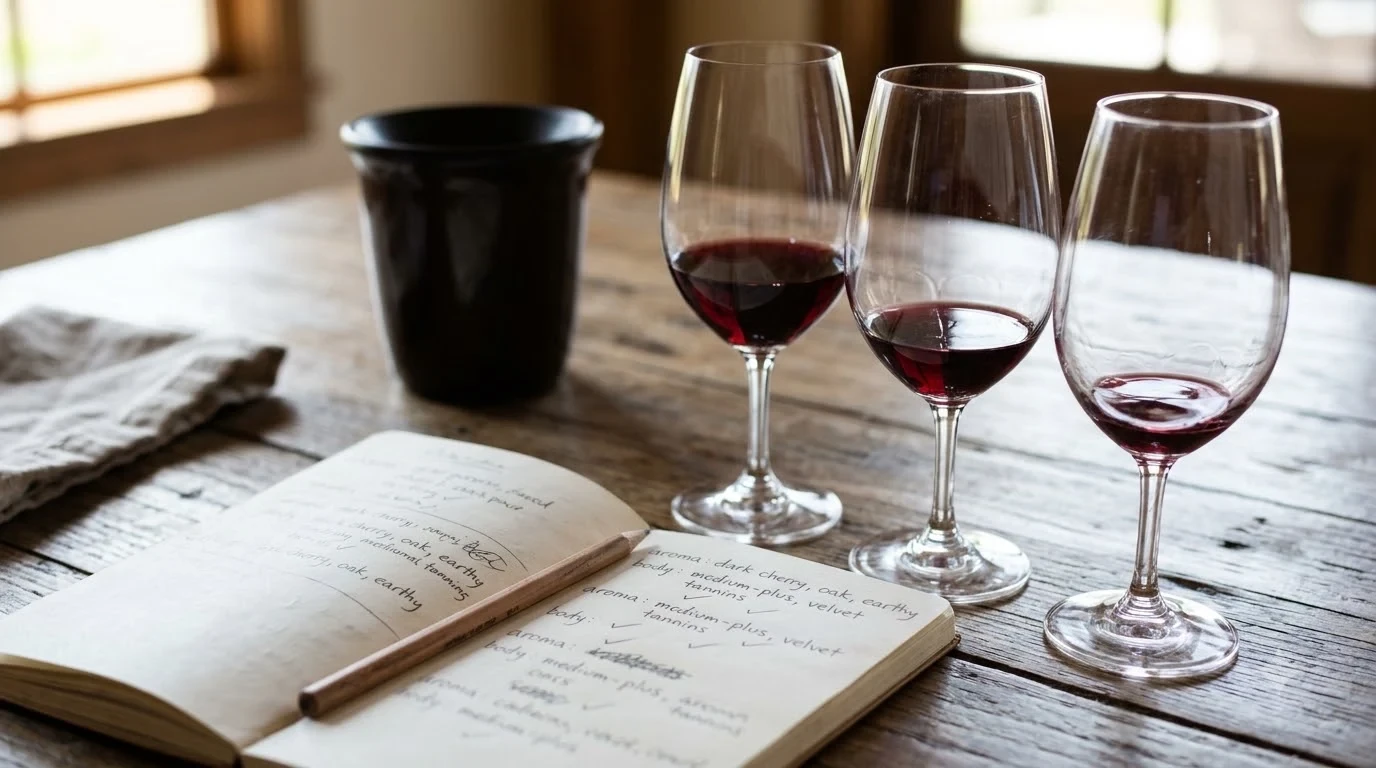
Tip: Choose one winery whose wines you especially want to study, then make the other stop or stops shorter. Write down the grape, vineyard name, and one aroma or texture from each pour; those three details make it much easier to remember what distinguished each bottle later.
Food Pairings, Serving Temperatures, and Tasting Technique
Arroyo Grande’s cool-climate whites and lighter reds are natural partners for seafood, poultry, vegetables, and dishes with fresh herbs. Match the wine’s acidity to the food, keep tannin in mind with richer dishes, and serve each style cool enough to preserve its balance without muting its aromas.
Chardonnay works with roast chicken, grilled halibut, crab, corn, and dishes with a little cream or butter. A brighter style can handle lemon, herbs, and simply prepared shellfish; a fuller version is better alongside a richer sauce. Pinot Noir is a flexible choice for roast turkey, duck, pork tenderloin, mushrooms, and grilled salmon because its acidity and moderate tannin are less forceful than those of many full-bodied reds. For the same reason, avoid pairing a strongly tannic Cabernet Sauvignon or Syrah with oily fish: the combination can taste harsh or metallic. Salt and fat soften tannin, which is why a structured red often feels more balanced with a savory, rich dish than with a delicate one.
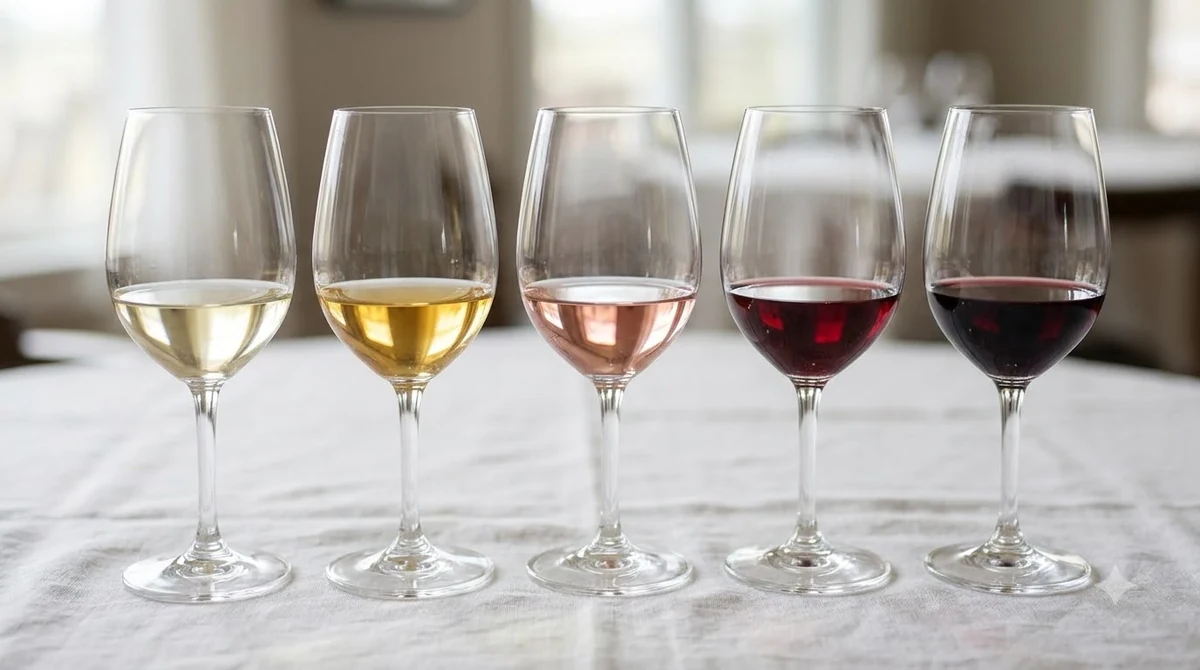
Use serving temperature to bring out the wine’s best features. Light whites and rosé generally show well at 45–50°F, fuller whites at 50–55°F, and light reds such as many Pinot Noirs at 55–60°F. A more structured Syrah can be served toward the cooler end of the full-red range, around 60–65°F, rather than warm room temperature. If a bottle is too cold, give it a few minutes in the glass; if it is too warm, a brief chill can make the fruit and acidity feel more precise. Pour modest tasting measures, pause between wines, and revisit a glass after it has had time to open.
At the tasting bar, start with sparkling wine or lighter whites, then move to fuller Chardonnay, Pinot Noir, and finally Syrah or Zinfandel. Smell before sipping and notice acidity, texture, and tannin as a drying sensation on the gums. Ask about whole-cluster fermentation, skin contact, or oak aging if those details interest you, but the more useful question is what the producer wanted the vineyard and grape to express. Keep notes in plain language—crisp, creamy, tart cherry, pepper, or firm finish—rather than a long string of borrowed terms.
Frequently Asked Questions
Does Arroyo Grande Valley produce sparkling wine?
Yes. Laetitia appears in regional wine reviews with both a non-vintage Brut Cuvée and a non-vintage Brut Rosé Méthode Champenoise. These bottlings show that the area’s cool-climate focus extends beyond still Chardonnay and Pinot Noir.
What is distinctive about Verdad’s Albariño?
Verdad says it was the first winery in California to produce a varietal Albariño for commercial release, in 2000. The grape has Spanish roots, and its bright citrus character makes it a useful point of comparison with the region’s Chardonnay and other aromatic whites.
How long has Bob Lindquist been making wine?
Visit Arroyo Grande’s interview with Lindquist says he has crafted wine on the Central Coast since 1982, beginning with the Qupé brand. He describes his preferred style as balanced and elegant, with an ability to develop over time in the cellar.
What kinds of wines are in the Sawyer Lindquist range?
The winery’s current description lists Pinot Gris, a Tempranillo-Syrah blend, and Pinot Noir under the Sawyer Lindquist label. It notes that most wines from this label are sold through the tasting room and wine club, so availability can differ from the other labels poured at the same address.
Can a visitor explore more than one wine label at the Village tasting room?
Yes. The Branch Street location brings together Verdad Wine Cellars, Lindquist Family Wines, and Sawyer Lindquist Wines. That setup gives visitors a chance to compare Spanish-variety bottlings, Rhône-inspired wines, and the family collaboration without traveling to three separate tasting rooms.
Arroyo Grande Valley rewards visitors who taste with its geography in mind: compare a fog-influenced Chardonnay or Pinot Noir with a fuller Syrah or Zinfandel from higher ground, and leave time to enjoy the Village as well as the vineyards. With two or three confirmed stops and a little room for an unplanned favorite, the region makes an approachable and distinctive Central Coast wine day.
More in Wine Regions
 Willcox Wine Trail: Discover Arizona’s High-Elevation Wine CountryUpdated Nov 20, 2026
 Yakima Valley Wine Region: Find the Best Styles to TryUpdated Nov 20, 2026
 Vosne Romanee Wine Tasting: Identify Aromas and Choose Better PairingsUpdated Nov 20, 2026
 Yakima Valley Wine Festival: Find the Best Seasonal Wine EventsUpdated Nov 20, 2026
 Wales Vineyards: Discover Cool-Climate Wines and Where to VisitUpdated Nov 20, 2026
 Yountville Wine Festival: Discover Napa Wines and Local FoodUpdated Nov 20, 2026