

We may earn a commission when you buy through links on this page, at no extra cost to you. Learn more.
dreaming tree red wine refers to a California lineup led by Crush Red Blend, Cabernet Sauvignon, and Pinot Noir, so the right bottle depends on whether you prefer a plush, jammy blend, a fuller Cabernet, or a lighter, more delicate Pinot. The wines share an approachable, fruit-forward outlook, but they are not interchangeable at the table. This guide explains their flavor profiles, grape makeup, alcohol details, serving temperatures, and food matches so you can choose with confidence.
The brand is a collaboration between musician Dave Matthews and California winemaker Grayson Stewart, but the useful buying decision starts with the wine in the bottle rather than the celebrity connection. Dreaming Tree’s current red range offers three different routes into California red wine: a blended style for dark-fruit fans, Cabernet for a firmer structure, and Pinot Noir for a brighter, gentler profile. Vintage and market can affect technical details, so the clearest approach is to compare the wine style first and then read the specific bottling information.
What the California Red Lineup Includes
Dreaming Tree’s red lineup has three main choices: Crush Red Blend, Cabernet Sauvignon, and Pinot Noir. They come from California and share the producer’s stated preference for wines that are fruit-forward, approachable, and ready to enjoy rather than bottles intended for long cellar aging.
Crush is the most immediately generous of the group. The producer describes raspberry, dark cherry, smoky berry, and raspberry jam, followed by a soft finish. That profile makes it a natural starting point for people who want a ripe, smooth red that can work at a casual meal or a group gathering. For a closer look at its fruit and aroma vocabulary, see these dreaming tree crush tasting notes.
The single-variety bottlings give you a more specific style choice. Cabernet Sauvignon leans into blackberry, plum, and toasted oak, with a bigger frame and firmer tannin. Pinot Noir moves toward strawberry, cherry, vanilla, and spice, with a gentler feel. The producer also offers white wines, including Chardonnay and Sauvignon Blanc; the Dreaming Tree white wine range is a useful comparison when the meal or your preference calls for a brighter white rather than a red.
Crush Red Blend: Fruit, Blend and Tannin
Crush Red Blend is the label’s signature mixed-grape red, built for a ripe fruit impression and a soft, rounded finish. The producer highlights jammy raspberry and dark cherry, while independent reviewers describe additional layers such as spice, herbal notes, oak, and savory accents.
There is no reason to assume every vintage uses the same grape formula. The Tasting Panel’s review of the 2021 Crush describes a Zinfandel-based blend with Cabernet Sauvignon, Petite Sirah, and Petit Verdot, aged in American oak; its tasting description mentions ripe strawberry, sandalwood, red tea, and a plush texture. An earlier Wine Enthusiast review of a different Crush bottling described a blend made mostly from Cabernet Sauvignon and Merlot. These descriptions are not contradictory: they show that the blend can change over time, and they are a reminder not to treat a past recipe as a permanent specification. The Tasting Panel review of Crush gives the more recent blend example in detail.
In the glass, expect ripe berry fruit before looking for subtler notes. Depending on the vintage, dark cherry and raspberry may sit alongside black fruit, peppery spice, herbs, cocoa, or oak-derived impressions. The 2021 bottling received a 90-point rating from Wine Enthusiast, whose review listed pink peppercorn, blackberry, brandied blueberry, orange marmalade, olive, rosemary, and mocha among its descriptors. Those are tasting observations from one vintage, not a promise that every bottle will show every note. The Wine Enthusiast review of the 2021 Crush is best read as a snapshot of that bottle rather than a permanent flavor formula.
Cabernet Sauvignon and Pinot Noir: Two Different Red Styles
Dreaming Tree Cabernet Sauvignon and Pinot Noir offer two distinct alternatives to the Crush blend. The Cabernet is the firmer, fuller-feeling choice for rich food, while the Pinot Noir is the more delicate option for poultry, salmon, mushrooms, and softer cheeses.
The producer describes its Cabernet Sauvignon with blackberry, plum, and a touch of toasty oak, calling it a full-bodied expression of California Cabernet. That description fits the grape’s usual structure: Cabernet Sauvignon is high in tannin, so it can leave a drying, grippy sensation around the gums, especially when young. That structure is useful with protein-rich foods and dishes with some fat, because salt and fat soften the perception of tannin. Grilled flank steak, beef short ribs, and portobello burgers are sensible pairings, with the mushroom burger offering a substantial meat-free alternative.
Pinot Noir usually has lower to medium tannin and higher acidity than Cabernet Sauvignon. Dreaming Tree’s version is described with strawberry, cherry, vanilla, and spice, and the producer recommends roasted chicken, grilled salmon, portobello burgers, and soft cheeses. Its brighter profile makes it easier to pair with dishes that would be overwhelmed by a strongly tannic red. It is also the better choice of the three if you prefer red wine with a lighter body and a fresher, more lifted finish. A useful shortcut: choose Cabernet for steak, Pinot for roast chicken or salmon, and Crush when you want ripe fruit and a softer blended style.
Alcohol Level, Body and Serving Temperature
Dreaming Tree red wines are best understood by bottling rather than by one brand-wide alcohol figure. A Wine Enthusiast listing for the 2021 Crush gives 14% alcohol by volume, while the SAQ product entry for a different Crush listing gives 13.5%; that spread is a practical example of why alcohol details should be tied to the specific bottle and vintage.
Alcohol can influence the impression of warmth and weight, but it does not tell you everything about body or sweetness. Crush is promoted as ripe and smooth, Cabernet has more pronounced tannin, and Pinot Noir generally has less tannin and more acidity. The producer does not publish one universal alcohol figure for all three reds. For more on how ABV is shown and interpreted, see this guide to Dreaming Tree wine alcohol content.
Serve red wine cool rather than warm: too much heat can make alcohol seem more prominent, while excess cold can mute aroma and make tannin feel harder. For a warm room, chill the bottle briefly before serving and use these practical temperature ranges as your starting point:
| Red wine style | Serving temperature | Good fit in the lineup | What to expect |
|---|---|---|---|
| Light-bodied red | 55–60°F | Pinot Noir | Brighter fruit, higher acidity, gentle tannin |
| Medium to full-bodied red | 60–65°F | Crush Red Blend | Ripe berry flavors and a rounded feel |
| Full-bodied red | 60–65°F | Cabernet Sauvignon | Dark fruit, oak notes, firmer tannin |
Food Pairings for Barbecue, Burgers and Weeknight Meals
Dreaming Tree’s own pairing suggestions point toward barbecue ribs, Vietnamese-style pork sandwiches, stuffed poblano peppers, steak, short ribs, roasted chicken, salmon, and portobello burgers. The most reliable match depends on the dish’s weight, seasoning, fat, and acidity—not simply whether the main ingredient is meat or vegetables.
Crush is a strong partner for dishes with sweet-savory flavors and a little char. Try it with barbecue ribs, pulled pork, grilled sausages, meatloaf, or a burger with caramelized onions. Raspberry and dark-cherry flavors can sit comfortably beside browned meat and smoky grill notes, while the blend’s soft finish is less demanding than a very tannic Cabernet. It can also work with stuffed poblano peppers when the filling includes beans, rice, mushrooms, or cheese. Keep very hot chile heat moderate: alcohol and tannin can make chile burn feel stronger, so a heavily spiced dish may be more comfortable with Pinot Noir or a white wine.
Cabernet Sauvignon is the natural pick for beef with enough richness to meet its tannin. Grilled flank steak, short ribs, lamb burgers, and a lentil or portobello burger with a savory topping all have the weight to stand up to the wine. Salt and fat soften tannin, which is why a juicy burger or a well-seasoned steak can feel more balanced than lean meat served plain. Avoid pairing a strongly tannic Cabernet with oily fish; that combination can make the wine feel harsh and out of balance.
Pinot Noir covers a wider range of lighter dishes. Serve it with roast chicken, turkey, grilled salmon, mushroom risotto, roasted squash, or a board of Brie and other soft cheeses. Its acidity can refresh the palate between bites, and its gentler tannin is less likely to overwhelm fish or poultry. Match acidic foods with wines of equal or higher acidity: tomato sauce, vinegar-heavy slaw, and citrus dressings can make a low-acid red seem flat. For those meals, Pinot is usually the safer red option than Cabernet.
Buying, Storing and Serving the Bottle
Start by choosing the style, then confirm the bottling details that matter to you. Crush is the most flexible option for a shared table, Cabernet is for meals that can handle more tannin, and Pinot Noir is for lighter dishes or drinkers who prefer a less forceful red.
The Dreaming Tree describes its wines as California-grown and ready to enjoy, rather than wines made for extended cellar aging. A retailer or regional listing may show a specific vintage, grape blend, or alcohol percentage that differs from another market’s listing, so use the bottle in front of you as the final reference for that bottling. Store an unopened bottle on its side in a cool, dark place near 55°F when it has a cork closure, away from sunlight, heaters, and repeated temperature swings. After opening, reseal still red wine and refrigerate it; most opened still wines are best used within 3–5 days. A 750 ml bottle gives about five standard 5 oz pours, so plan roughly one bottle for every five glasses. Temperature stability matters more than holding an exact reading every hour: avoid storing wine above a refrigerator, beside a dishwasher, in a sunny kitchen, or in a hot car. Without a wine fridge, choose the coolest dark closet available and keep the bottle away from repeated temperature swings. Once opened, keep the closure snug and return the bottle to the refrigerator between pours, especially in a warm room.
Tip: If the room is warm, give a red bottle 15–20 minutes in the refrigerator before serving, then pour a small taste. It is easier to let a cool wine warm in the glass than to fix a wine that has become too warm on the table.
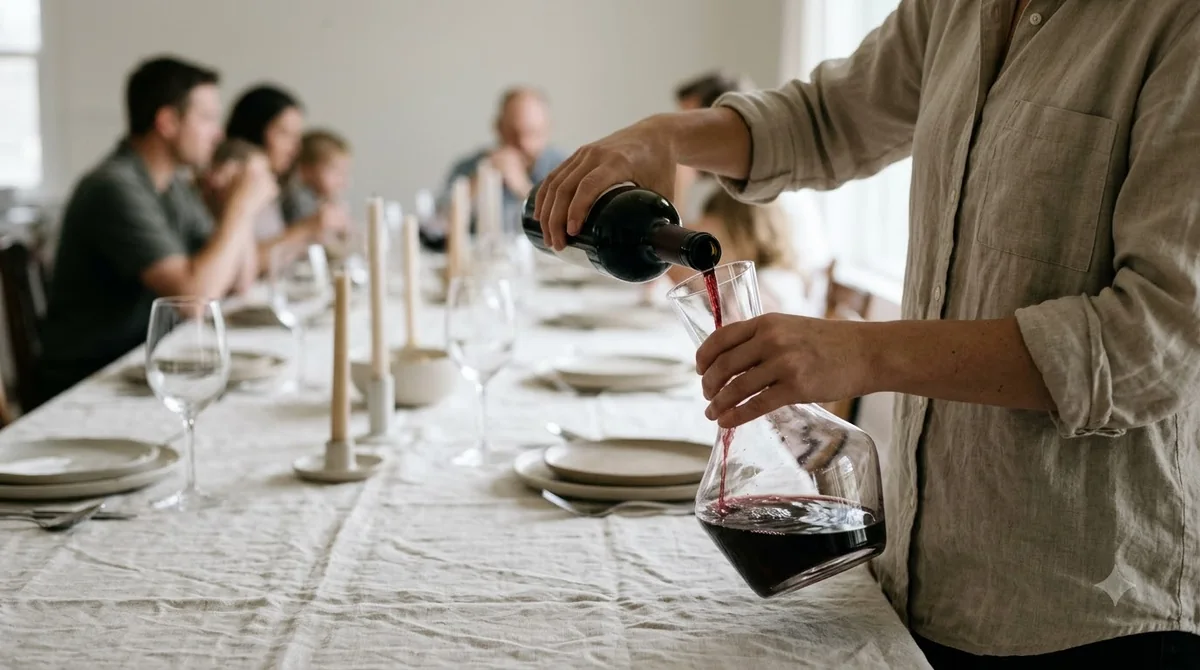
Decanting is optional for most approachable, fruit-forward reds. For a young Cabernet or Crush that seems tightly wound, decanting for 30–60 minutes can help open its aromas; Pinot Noir usually needs less aeration, and a few minutes in a broad glass may be enough. For more background on the producer and its other labels, the broader Wine Brands section can help place Dreaming Tree alongside other California producers. Choose the body and flavor profile you want, serve it at the right temperature, and pair it with food of similar intensity.
Frequently Asked Questions
These quick answers address common points that are easy to miss when comparing a blended red with two single-variety wines. They also clarify a few production and packaging details that do not appear on every front label.
Does any regional listing give a specific Crush grape split?
Yes. One SAQ product record lists a Crush bottling as 67% Merlot and 33% Zinfandel. That percentage is tied to the particular listing and should not be treated as the recipe for all vintages or markets.
How much residual sugar does that Crush listing report?
The same SAQ record reports 6.4 grams of sugar per liter and classifies the wine as dry. The figure is a product-record detail, not a universal measurement for every Crush bottling.
How does the SAQ describe the listed Crush’s body?
The regional listing calls it medium-bodied, with a generous mouthfeel, noticeable acidity, and wood influence. It also marks the bottling as ready to drink rather than assigning it a long aging window.
Does the brand use lighter bottles and recycled labels?
The brand announced packaging changes that include bottles about one-third lighter than the average premium wine bottle and labels made with 100% post-consumer recycled content. The updated bottle design also removes the capsule, leaving the cork exposed and reducing one packaging component.
Which vineyard practices does the brand identify as part of its sustainability work?
The brand has described efforts involving efficient water use, soil management, pollinator and beneficial-insect habitat, energy efficiency, and groundwater protection. Those details concern vineyard practices and sit alongside its separate packaging changes.
Dreaming Tree red wine offers three distinct styles rather than one house flavor: Crush for plush fruit, Cabernet Sauvignon for structure, and Pinot Noir for freshness. Choose the bottle that suits the meal, serve it slightly cool, and let the vintage-specific details guide your expectations.
More in Wine Brands
 Underwood Wine Price: Compare Bottles, Cans, and Pack SizesUpdated Nov 21, 2026
 Zenato Wine Price: Compare Styles and Choose the Right BottleUpdated Nov 21, 2026
 Zuccardi Wine Price: Compare Bottles and Find the Right RangeUpdated Nov 21, 2026
 Yellow Tail Moscato Review: Taste, Sweetness and Serving TipsUpdated Nov 21, 2026
 Wolf Blass Yellow Label Review: Choose Your Best StyleUpdated Nov 21, 2026
 Wolffer Estate Rose Review: Choose the Right Bottle for Your TableUpdated Nov 21, 2026