

We may earn a commission when you buy through links on this page, at no extra cost to you. Learn more.
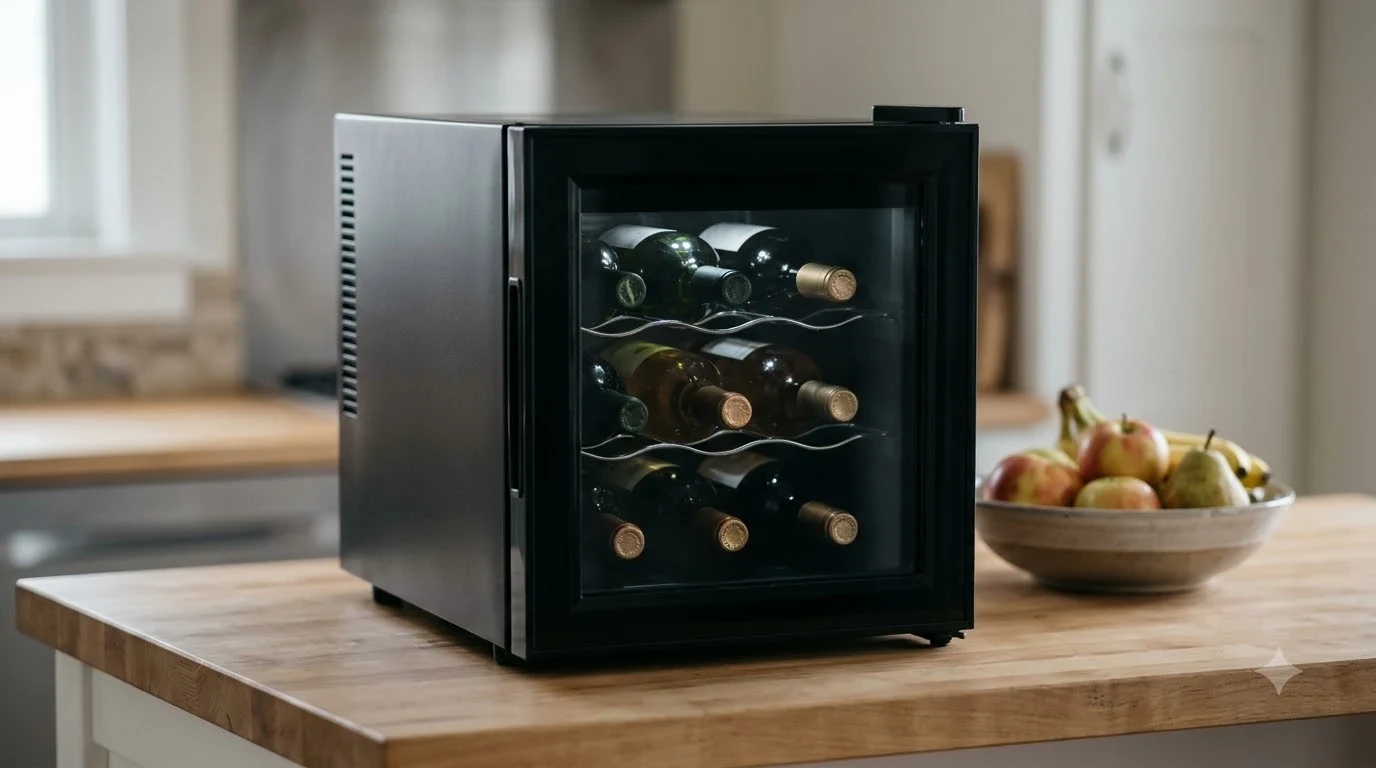
A compressor vs thermoelectric wine cooler decision usually comes down to room temperature and collection size: choose a compressor for warmer rooms and dependable cooling, or choose a thermoelectric model for a small collection in a consistently cool, quiet space. Compressor systems can pull a cabinet well below room temperature, while thermoelectric systems have a more limited cooling range. The quieter option is not automatically the better storage option; the best choice is the one that can hold a steady temperature where you plan to install it.
A wine cooler is useful only when its cooling system suits the room around it. Before comparing bottle counts, shelves, glass doors, or digital controls, understand how each technology removes heat and how that process affects temperature, sound, installation, and everyday use.
How Compressor and Thermoelectric Cooling Work
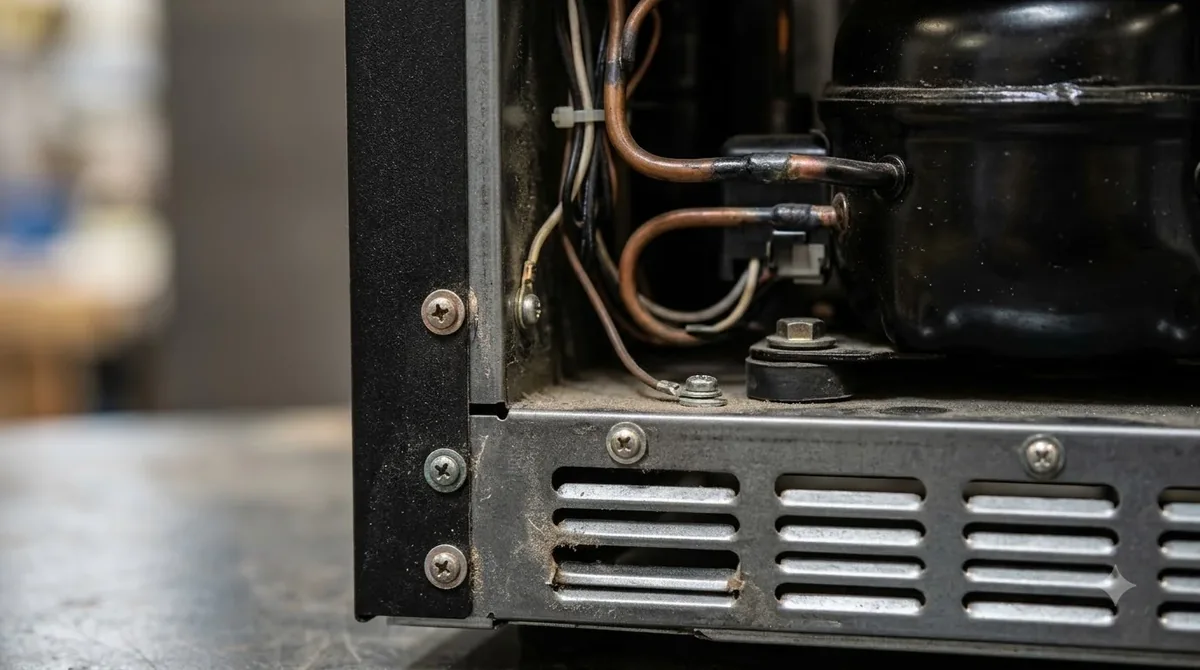
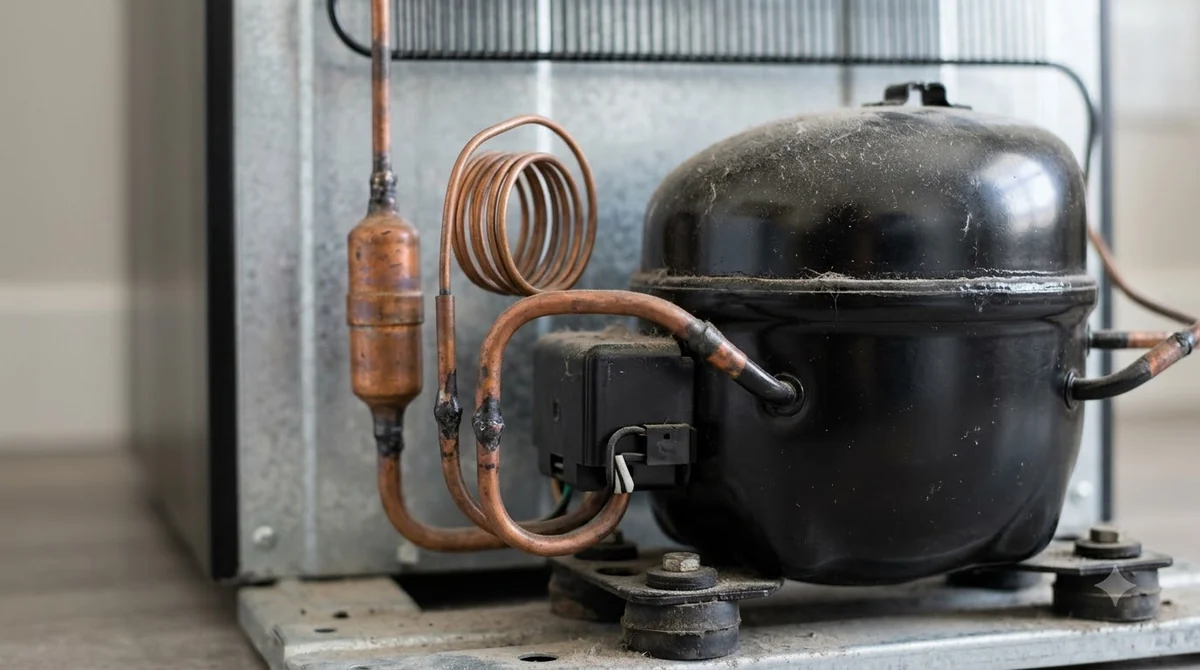
A compressor wine cooler uses a refrigerant circuit like a household refrigerator. The compressor circulates refrigerant through components that absorb heat inside the cabinet and release it outside. A thermostat controls the cycle, while fans on some models move cold air through the shelves or exhaust warm air. This system can create a substantial difference between cabinet and room temperature, making it useful in kitchens, dining rooms, and other spaces that warm up during the day.
A thermoelectric cooler uses the Peltier effect rather than a compressor and circulating refrigerant. Electric current moves heat through a solid-state module: one face becomes cool and the other hot. Fans distribute cool air and carry heat away. With no compressor cycling on and off, there are fewer moving parts and usually less mechanical noise and vibration, although the fans remain audible and need open airflow.
Neither system guarantees good storage on its own. Insulation, door seals, air circulation, controls, and construction also affect performance; even a powerful compressor unit can struggle if ventilation is blocked. For a closer explanation of the solid-state design, see what is a thermoelectric wine cooler. The distinction also helps explain why a thermoelectric cabinet may feel less forceful during a rapid temperature recovery after several warm bottles are loaded. Both systems need time to bring the wine itself to the target temperature; a quick change on the digital display does not mean every bottle has cooled through.
Room Temperature and Cooling Performance
Room temperature is the first practical test. Vinotemp describes the coldest achievable temperature in a thermoelectric cooler as approximately 20°F below ambient temperature. Treat that as a planning estimate, not a guarantee: ventilation, insulation, door openings, bottle load, and the model all affect the result.
In a 70°F room, a 20°F pull-down could bring a thermoelectric cabinet near 50°F. In an 80°F room, the same margin leaves it around 60°F, above a 55°F storage target and warmer than many people prefer for sparkling wine or crisp whites. A compressor is more dependable in a hot kitchen, a sunny spot, or a room with seasonal swings. Wine Enthusiast’s comparison likewise notes that compressor models reach lower temperatures and handle warmer ambient conditions better.
These examples apply Vinotemp’s approximate 20°F pull-down figure; they are illustrations, not guaranteed temperatures. They assume adequate ventilation and limited door openings.
| Room temperature | Illustrative thermoelectric cabinet temperature | Practical implication |
|---|---|---|
| 65°F | About 45°F | Potentially cold enough for chilled whites and sparkling wine |
| 70°F | About 50°F | May suit cool storage, depending on the model and setting |
| 75°F | About 55°F | Near a common long-term storage target, with little cooling headroom |
| 80°F | About 60°F | Usually too warm for a 55°F storage target |
| 85°F | About 65°F | Not a sensible environment for a thermoelectric unit intended to hold wine near 55°F |
For long-term storage, consistency matters more than a very cold display setting. Vinotemp identifies approximately 55°F as a storage target. A compressor generally has more reserve capacity as the room changes; a thermoelectric model can still work in an air-conditioned room if its stated operating range covers the warmest likely conditions. Cabinet location matters as much as the thermostat setting: a sunlit window, an oven wall, or a poorly ventilated alcove adds heat that the cooling system must remove. A thermometer placed near the cooler can reveal whether the room regularly exceeds the assumptions behind the product specifications.
Tip: Measure the installation area during its warmest part of the day. A cooler that seems adequate in a showroom may lack cooling headroom in a sunny kitchen.
Noise, Vibration, and Wine Storage
Thermoelectric cooling suits a spot close to people because it generally runs more quietly and transmits little mechanical vibration. Haier describes its thermoelectric cellars as producing minimal noise and vibration without a compressor. That can be useful in a bedroom, office, or open-plan living area, provided the room stays cool enough.
Quiet does not mean silent: thermoelectric cabinets still use fans to move air and remove heat. Dust, blocked vents, or placement against a wall can reduce cooling and make the fan work harder. Follow the manual’s clearance instructions and keep intake and exhaust areas open.
Compressor coolers can produce a low hum, fan noise, and changes in sound as the cycle starts or stops. Vintec notes that rubber shock pads and vibration-absorbing shelves can limit vibration in quality cabinets. Look for these details instead of judging by the technology label alone; a level floor and secure shelves also help prevent rattles. Noise ratings can help when manufacturers publish them, but the number should be compared under similar test conditions. Listen for fan noise as well as compressor noise, and remember that a hollow cabinet, hard floor, or nearby wall can amplify otherwise modest operating sounds.
Temperature stability and light exposure matter alongside vibration. A quiet unit that cannot hold the desired temperature is not the better storage choice. Vintec explains how compressor mounting and internal fans can affect a cabinet’s storage environment.
Capacity, Bottle Shapes, and Installation
Thermoelectric coolers are commonly associated with compact collections, while compressor models span a wider range of cabinet sizes. There is no universal bottle limit for either technology, so compare dimensions and shelf layout rather than treating the capacity label as a promise. This matters if your collection is growing or you plan to keep several cases on hand.
Vinotemp says its cooler capacity ratings are based on standard 750-milliliter Bordeaux bottles. Wider Burgundy and sparkling-wine bottles, magnums, and unusual shoulders reduce the usable count. If you keep several bottles of dry cava, look for flexible shelf spacing rather than relying on the headline capacity.
Installation matters too. Vinotemp says its front-exhaust built-in coolers release heat through the front, while the freestanding models it discusses need at least 6 inches of rear clearance. Never enclose a rear-venting cooler unless the manufacturer rates it for built-in use; trapped heat can reduce cooling performance. Thermoelectric models also need open airflow and are described by Vinotemp as freestanding, rear-exhaust units.
Measure the opening, door swing, outlet, and ventilation space before ordering. Include the handle in the depth measurement and confirm that shelves can slide out. For under-counter use, choose a model specifically rated for built-in installation, not one that merely fits the opening. Also check whether the door can open far enough to let shelves slide out, whether the power cord reaches the outlet without being pinched, and whether the appliance can be pulled forward for cleaning or service. Those practical details are easy to overlook when the cabinet is measured only by its external width and height.
Energy Use, Operating Costs, and Maintenance
Do not assume that thermoelectric always uses less electricity because it has no compressor, or that compressor models always cost more to run. Thermoelectric systems have limited cooling headroom and may run for long periods in a warm room. Compressor models cycle to maintain a target, but energy use still depends on capacity, insulation, room temperature, and door openings.
Vinotemp characterizes compressor units as having a higher purchase cost but lower operating cost; its comparison presents thermoelectric models as cheaper to buy but potentially more expensive to run. Vintec also describes Peltier cooling as less efficient than vapor compression. Treat these as general comparisons, not a substitute for the exact model’s energy label. Compare annual kilowatt-hour figures and the room where the unit will operate. A wattage figure on its own describes electrical draw at a particular moment, not the total electricity used across a year. Annual consumption is more useful for comparing appliances of similar capacity, provided the published ratings use a comparable test method. The room and how often you open the door still influence real-world use.
For either type, keep the door gasket clean, dust vents and fans as directed, level the cabinet, and leave airflow unobstructed. If it runs constantly, check room temperature, door openings, crowded shelves, and blocked vents before assuming a part has failed; Vinotemp lists these among common causes of poor cooling or frequent cycling.
A compressor fault may require a qualified refrigeration technician, although Vintec notes that individual parts can be replaceable. Thermoelectric units have fewer mechanical parts, but a failed module, fan, or power supply can still stop cooling. Compare warranty terms, parts availability, and local service support before buying.
Choose a Cooler for Your Collection and Room
For a kitchen, dining area, garage-adjacent room, or other space that warms in summer, a compressor cooler is the more flexible choice. It is also a strong starting point for a large collection, a dual-zone cabinet, or colder service temperatures. Its advantage is greater ability to remove heat when the surrounding air is warm, not automatic superiority in every model.
A thermoelectric cooler makes sense in a consistently cool room when the collection is modest and quiet operation matters most. It can suit a compact apartment, study, or living room. Compare its temperature range with the warmest likely room condition: at 80°F, a unit limited to roughly 20°F below ambient is unlikely to hold wine near 55°F.
Decide whether you need one zone or two. A single zone suits bottles stored at one temperature; dual zones separate wines for different serving needs. Common wine-service guidance places full-bodied reds at 60–65°F, light reds at 55–60°F, light whites and rosé at 45–50°F, and sparkling wine at 40–50°F. These are serving, not long-term storage temperatures; a stable setting near 55°F is a common storage target. For instance, a bottle of sparkling wine can be stored near that cellar temperature and moved to a colder refrigerator before dinner. A dual-zone cooler is convenient when bottles are being held ready for service, but it should not be confused with a requirement to age reds and whites at separate temperatures.
Plan for the collection you expect to have, not just today’s 8 bottles. Allow for unusual bottle shapes and air circulation, and do not pay for dual zones if one storage temperature meets your needs. The Buying Basics section can help you consider bottle styles and buying habits before settling on a cabinet size. Rank priorities instead of seeking a model that wins every category: for a warm room, start with compressor cooling and compare noise, vibration isolation, energy use, and service support; for a cool room where quiet operation and a compact footprint matter most, thermoelectric may fit. Construction, ventilation, shelves, and warranty still decide whether the individual model is right.
Frequently Asked Questions
Should a new wine cooler stand upright before it is plugged in?
Vinotemp tells owners to leave its coolers upright for 24 hours before connecting power so the coolant can settle after transport. Requirements vary, so follow the manual for the exact model.
Does a wine cooler’s bottle capacity include Champagne bottles?
Capacity figures generally assume standard 750-milliliter Bordeaux bottles. Champagne bottles and magnums reduce the count, so check shelf spacing and any oversized-bottle shelf before buying.
Can a wine cooler also be used to chill food?
Haier says its thermoelectric wine cellars are not designed or recommended for food because the interior may not be cold enough to prevent spoilage or bacterial growth. Use an appliance rated for food storage for perishables.
Can a wine cooler sit directly beside an oven or range?
Heat from cooking equipment raises the surrounding temperature and makes cooling harder. Vinotemp advises against direct sunlight or moist locations; also follow the model’s stated clearances and heat-source restrictions.
Does a glass door protect wine from all light?
No. Tinted or UV-treated glass offers protection, but not every glass door blocks all wavelengths. Keep the cabinet out of direct sunlight and choose a specifically UV-protective door when light control matters.
The better choice is the cooler that can maintain a suitable, steady temperature in the room where it will live. Match the cooling technology to your climate, then confirm the installation requirements, bottle fit, noise level, and energy information for the exact model.
More in Wine Buying Guides
 Riesling Gift: Choose a Bottle They’ll LoveUpdated Nov 21, 2026
 Sweet Red Wine Gift: Choose a Bottle They’ll LoveUpdated Nov 21, 2026
 Malbec Gift: How to Choose a Memorable Bottle for Any OccasionUpdated Nov 21, 2026
 Sherry Gift Ideas That Match Every Wine LoverUpdated Nov 21, 2026
 Moscato Gift: How to Choose a Sweet Wine They’ll LoveUpdated Nov 21, 2026
 Merlot Gift: How to Choose a Bottle They’ll AppreciateUpdated Nov 21, 2026