

We may earn a commission when you buy through links on this page, at no extra cost to you. Learn more.
If you are asking where is vinho verde from, the answer is the Minho region in far northwest Portugal, a cool, humid strip of land bounded by the Minho River to the north and the Atlantic coast to the west. The denomination is the largest in Portugal and is split into nine sub-regions. Most of its wine is white, light in alcohol, and fresh, and the name refers to youth and freshness rather than to color.
Vinho verde is one of the most recognizable wines in Portugal, yet many people still wonder where it actually comes from. The confusion starts with the name. Translated, it means “green wine,” which sounds like a grape variety or a color, but it is neither. Vinho verde is a demarcated region, a protected designation, and a style all at once, and knowing which one you are looking at helps you choose a better bottle. Below you will find where the region sits, how its nine sub-regions differ, which climate and soils shape the wines, which grapes go into them, and how the name is protected today.
Where Vinho Verde Sits in Northwest Portugal
The region occupies the far north of mainland Portugal, where the land meets the Spanish border and the Atlantic coast.
According to the official Wines of Portugal regional profile, Vinho Verde is the largest denomination in the country, covering around 24,000 hectares across the northwest of continental Portugal. Its northern boundary is the Minho River, which forms the frontier with Spain, and the region runs along the Atlantic coast as far as the city of Porto. Its southern edge reaches the banks of the Vouga River, so the denomination covers a long, narrow stretch rather than a single compact valley.
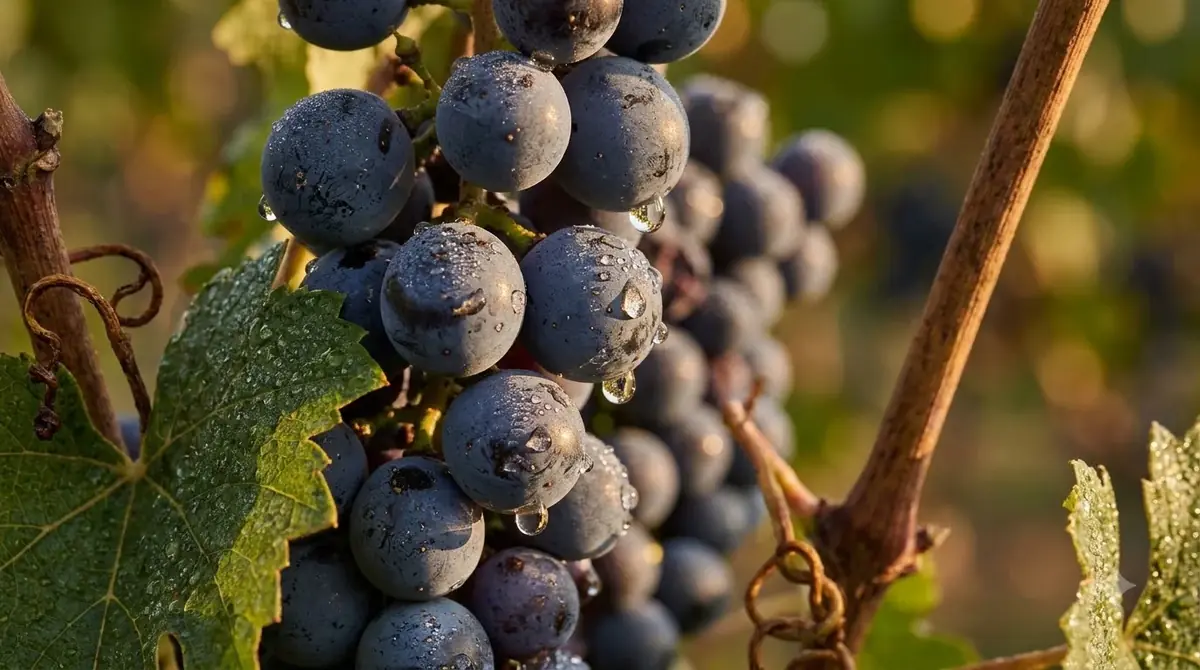
The landscape is unusually green and humid. The same profile describes an extreme Atlantic influence, cool temperatures and abundant rainfall, and it notes that ownership is spread across thousands of small plots, some barely bigger than a backyard. That fragmentation is one reason the region has such a wide range of producers, from tiny family estates to larger bottlers working with the same climate.
The figures below give the region’s basic scale. Two different area measures appear in the sources, one for the whole demarcated territory and one for planted vines, so the table keeps them separate.
| Measure | Figure |
|---|---|
| Denomination area (Wines of Portugal) | About 24,000 hectares |
| Vines planted (regional commission CVRVV) | About 16,000 hectares |
| Sub-regions in the denomination | Nine |
| Year the region was demarcated (CVRVV) | 1908 |
| Sparkling wine produced since | 1999 |
| Alcohol in lighter styles (Wine Folly) | 8.5% to 10.5% |
| Alcohol in richer styles (Wine Folly) | 11.5% to 13% |
The gap between 24,000 and 16,000 hectares comes down to measurement. One figure describes the full demarcated territory, while the other counts the land actually planted with vines, so both numbers can be accurate at the same time.
Why “Green” Refers to Youth and Freshness, Not Color
The name translates literally to green wine, but the regional commission says the word describes neither the wine’s color nor how ripe its grapes were.
The homepage of the regional commission, known as CVRVV, makes that point directly and describes the name as green in name only. Vinhos Verdes are not defined by color or by a degree of ripeness, and the word has stuck as the label for a style rather than a description of what is in the glass. Most bottles are white, so the name surprises many first-time buyers who expect a green liquid.
Wines of Portugal lists two explanations that are still repeated. One credits the acidity and freshness of the wine, which some people compare to unripe fruit. The other points to the region’s lush vegetation, which stays green even through winter. The sources do not settle the question, and both explanations continue to circulate.
Because the style depends on bright acidity and a light body, the wines are generally made to be drunk young. In that sense the word green also works as a label for youth, and it tells you more about how the wine is meant to be enjoyed than about the grapes or the glass color.
The Nine Sub-Regions and How They Differ
The denomination is divided into nine sub-regions, and their names can appear on a label next to the Vinho Verde name.
Wines of Portugal lists them as Monção e Melgaço, Lima, Cávado, Ave, Basto, Sousa, Amarante, Paiva and Baião. The most distinctive is Monção e Melgaço, which the same profile describes as the only sub-region shielded from direct Atlantic influence. Its maritime and continental climate produces fuller-bodied wines with higher alcohol than most of the region, and Wine Folly singles out its excellent Alvarinho for elegant, mineral character.
Wine Folly also groups the sub-regions into broad climate zones. The coastal districts of Lima, Cávado and Ave are very rainy and are known for aromatic whites based on Loureiro, Arinto and Trajadura. The inland districts of Sousa, Paiva, Baião, Amarante and Basto are more mountainous and sheltered, and they gradually transition toward the Douro Valley. Those warmer inland valleys let later-ripening grapes such as Azal and Avesso reach maturity, and they are also where several native reds grow. For a comparison with the port side of that border, see our guide on where is port from.
For a shopper, the practical point is simple. A label that names a sub-region generally tells you more about the wine’s origin than the regional name alone, because the climate and grapes can differ sharply from one zone to the next.
The Atlantic Climate and Granite Soils Behind the Style
Atlantic weather, heavy rain and granite soils explain why the wines are cool, lean and mostly white.
Wine Folly notes that cool, wet Atlantic conditions make it difficult for red varieties to ripen fully. That is the main reason red and rosé remain a small share of production and are rare outside Portugal, while white grapes handle the climate far better. The coastal sub-regions are the wettest, and the ocean weather that reaches them keeps the vineyards humid for much of the year.
Wines of Portugal describes soils that are mostly granite and fertile to very fertile, with vineyards concentrated along the valleys of the main rivers. Granite drains well, and Wine Folly connects the well-draining granitic soils of Monção and Melgaço to the mineral character of its Alvarinho. The result is a cluster of small, distinct terroirs rather than one uniform landscape.
The vineyards themselves look different from most European wine country. The same Wines of Portugal profile lists systems such as the enforcado, where vines are intertwined with trees, and the latada, a pergola with a raised trellis. Many of these older methods still exist beside the simpler cordon system that is now more common, which shows how farming here has adapted to small plots and steep, wet ground.
The Grapes Grown in This Corner of Portugal
White varieties dominate, led by Alvarinho, Loureiro, Arinto, Avesso, Azal and Trajadura, while red and rosé grapes make up a much smaller share.
Wines of Portugal names the dominant white grapes as Alvarinho, Arinto (known locally as Pedernã), Avesso, Azal, Loureiro and Trajadura. Wine Folly describes Azal as high in acid and slow to ripen, often used to lift freshness in blends. Arinto can show juicy melon and citrus with some bitterness on the finish, and great examples can age seven years or more. Loureiro is the grape many drinkers compare to Riesling for its aromatic lift.
Alvarinho deserves a closer look because it is the most prized white in the region. Wine Folly notes that producers are increasingly bottling it on its own, and that it shows citrus, grapefruit and floral notes over a textured, mineral-driven palate. Trajadura is the grape often blended with it, adding richness and aromas of pear and citrus blossom.
Red and Rosé Varieties
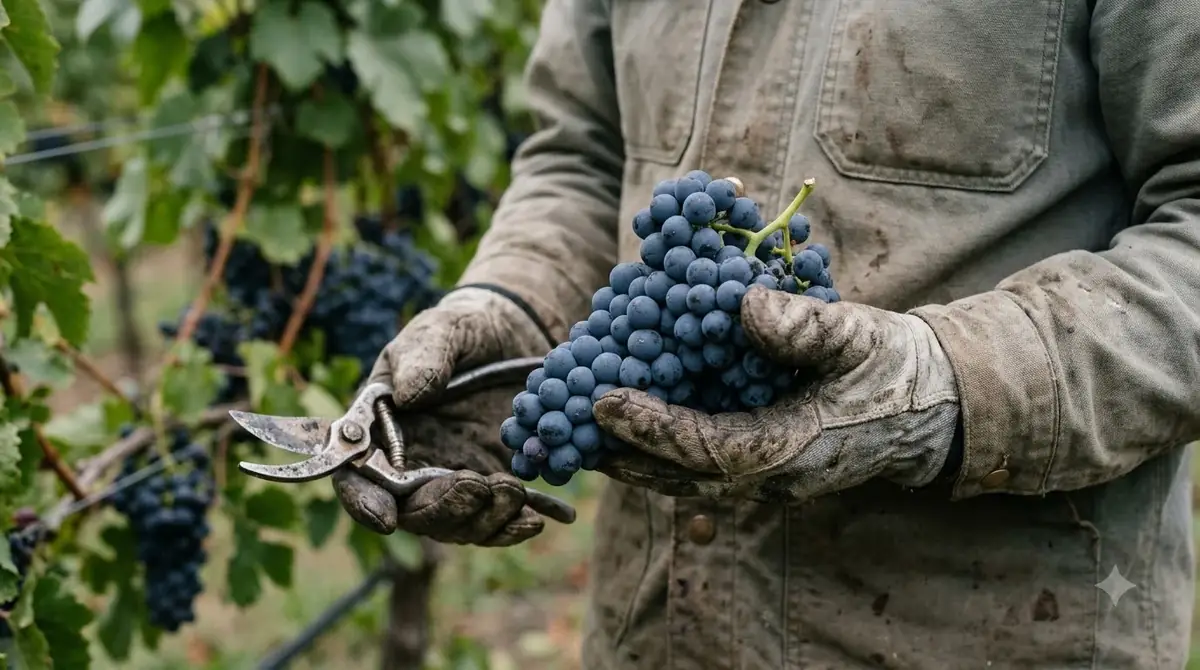
Wines of Portugal lists the red varieties as Borraçal, Brancelho, Espadeiro and Vinhão. Wine Folly adds Padeiro, a rare native grape that produces naturally pale, light-bodied wines resembling rosé. Red styles remain a niche within the region, and readers who want a point of comparison with a more familiar red can read about where is merlot from to see how origin shapes a popular red’s character.
Alcohol is one of the easiest ways to read a style. Wine Folly gives a range of 8.5% to 10.5% for lighter, citrus-driven whites and 11.5% to 13% for richer, more textured wines. The lower end is what most people expect from the category, while the higher end shows up in more structured bottlings. For more on the numbers, see our guide to vinho verde alcohol content.
How the Region’s Wines Reached the World and Who Protects the Name
Vinho Verde has been shipped abroad for centuries, and a regional commission now manages both its designation and its certification.
The regional commission says the first Portuguese wines shipped to several European destinations came from this region as early as the 14th century. Wines of Portugal adds that regular exports to England began in the 17th century, probably first from the Monção area and leaving through the port of Viana do Castelo. The commission also describes the region as one of the oldest wine regions in the world, and the trade history supports that claim.
Vineyards were encouraged early. A charter granted by Afonso Henriques to the men of Bouças in 1172 exempted new vine plantings from tax for five years, after which the tax was a sixth of the wine harvested. That kind of early incentive helps explain how the region built its reputation long before modern appellation rules existed.
Today the Comissão de Viticultura da Região dos Vinhos Verdes, abbreviated CVRVV, is legally recognized as the managing body for the Vinho Verde designation of origin and the Minho geographic indication. It also certifies the wines under those designations, and the region has been demarcated since 1908. The commission’s website, vinhoverde.pt, is a useful place to confirm the official rules and region details.
Tip: Look for the words Vinho Verde together with a sub-region name such as Monção e Melgaço or Lima. Wine Folly notes that sub-regional bottlings tend to be more structured and mineral-driven, and they rely less on carbonation than entry-level blends.
Frequently Asked Questions
These answers cover the questions that tend to follow the basics of origin and style.
Is all vinho verde white?
Most of it is, but red wines and rosés do exist. Vinhão is the best-known red grape, and Wine Folly describes it as deeply colored and high in both acidity and tannins, with dark fruit and peppery notes. Expect a firmer, more tannic red than the whites suggest.
Does vinho verde have bubbles?
Some bottles have a slight spritz, and others have none. Wine Folly says the spritz comes from retained dissolved carbon dioxide or gentle carbonation. Many modern producers minimize it to highlight texture and the character of the vineyard.
Can you visit the vineyards?
Yes, and Wine Folly recommends early summer, when vineyard activity peaks and small producers rarely exported welcome visitors. Barcelos is a convenient base, known for its historic estates and strong local wine culture. The interior is hillier and harder to get around, so a rental car is useful.
Is Alvarinho the same as Albariño?
Yes, they are the same grape, known as Albariño just across the border in Spain. In the Vinho Verde region it is increasingly bottled on its own, and Wine Folly notes that the best examples can be structured and age-worthy. Look for the name Alvarinho on the label as a shortcut to the more serious bottlings.
How cold should vinho verde be served?
Light whites and rosés are generally best at 45 to 50 F, while fuller whites do well at 50 to 55 F. Serving the wine too warm can make it taste flat, while serving it too cold tends to mute its aromas. Chill the bottle in the refrigerator before pouring rather than relying on ice.
Vinho verde comes from the Minho region of northwest Portugal, and nearly every trait of the wine traces back to that Atlantic north. Remember the nine sub-regions, the granite soils and the native white grapes, and you will know what to look for on the label. For the bigger picture on how this style fits among other categories, see Wine by Type.
More in Wine Types & Grapes
 Zinfandel Sugar Content: Dry Red vs. White Zinfandel GramsUpdated Nov 21, 2026
 Best Zinfandel Substitute Options for Sipping and CookingUpdated Nov 21, 2026
 Zweigelt Food Pairing: Best Dishes, Cheeses, and Serving TipsUpdated Nov 21, 2026
 Zinfandel Tannins Explained: How Structure Shapes Every BottleUpdated Nov 21, 2026
 Zinfandel Sweetness Level: Dry Red vs. Sweet White Zin ExplainedUpdated Nov 21, 2026
 Xinomavro Food Pairing: Best Dishes, Styles, and Serving TipsUpdated Nov 21, 2026