

We may earn a commission when you buy through links on this page, at no extra cost to you. Learn more.
what is brunello di montalcino? It is a prestigious dry red wine from Montalcino in Tuscany, Italy, made exclusively from Sangiovese grapes. Its long maturation gives the wine structure and complexity before it reaches the market. Expect bright acidity, firm tannins, and flavors that can move from cherry and herbs to leather and dried fruit with age. The name refers to a protected wine style tied to one Tuscan municipality, not to any Sangiovese grown anywhere in Italy.
Brunello is one of Tuscany’s most recognizable red wines, but its identity is more specific than its reputation suggests. The grape, growing area, production limits, and release schedule all matter. Understanding those details makes it easier to choose a bottle, decide when to open it, and serve it with food that suits its natural balance.
What Makes Brunello di Montalcino Distinct
Brunello di Montalcino is a DOCG red wine made from 100 percent Sangiovese within the historic boundaries of Montalcino, a hill town in southern Tuscany. Its combination of one grape, a defined place, and at least two years of oak aging gives it a recognizable identity among Italian reds.
The letters DOCG stand for Denominazione di Origine Controllata e Garantita, Italy’s controlled and guaranteed designation of origin. This classification is tied to a production code: Brunello must come from the Montalcino area, use Sangiovese alone, meet a maximum grape yield, spend a required period in oak, and remain in the cellar until its permitted release date. The rules are not optional style suggestions. They define what may be sold under the Brunello di Montalcino name.
In local usage, Sangiovese is traditionally called Brunello. You may also see the local material described as Sangiovese Grosso, though the essential legal point is the grape variety rather than a single clone. A bottle labeled Brunello di Montalcino therefore cannot be a blend with Merlot, Cabernet Sauvignon, or another red grape. That is a useful distinction from many other Tuscan wines, where blends may be permitted.
Brunello is normally dry, full-bodied, and marked by pronounced acidity and firm tannins. Its color often shifts from ruby to garnet with age. The Brunello consortium’s official overview describes woodland notes, aromatic wood, berries, vanilla, and preserves; individual bottles may also show cherry, dried herbs, spice, or earth. For more detail, see these Brunello di Montalcino tasting notes.
The Montalcino Landscape and Its Subzones
Montalcino’s varied slopes and soils help explain why Brunello does not taste exactly the same from one producer or vineyard to another. The town sits in southeastern Tuscany, and vineyards run from warm lower elevations to cooler sites higher on the hill.
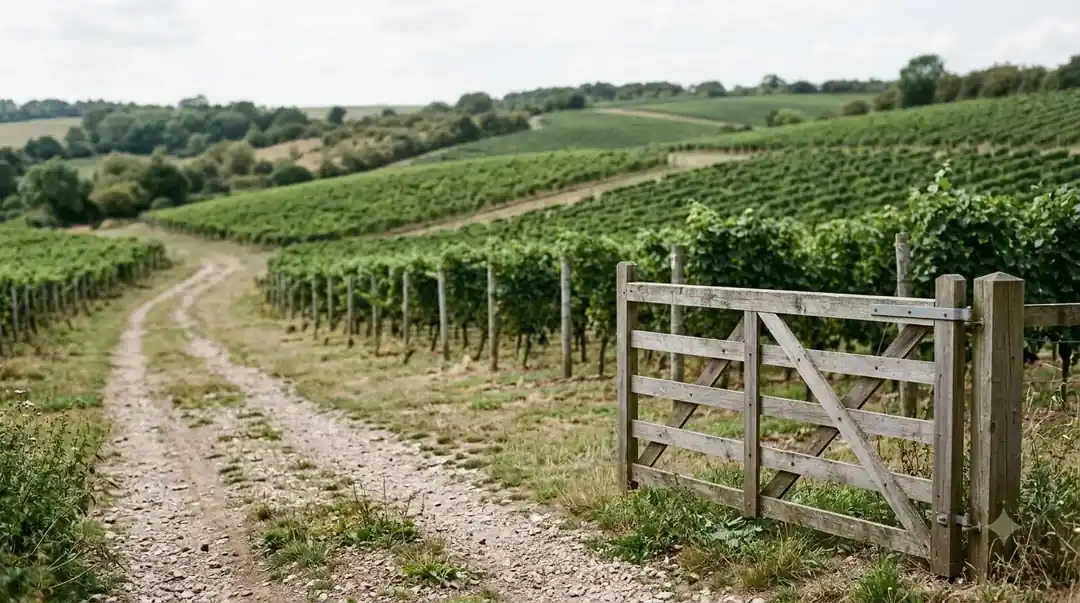
Montalcino is about 25 miles south of Siena and 25 miles from the Tyrrhenian Sea, according to Wine Enthusiast’s Sangiovese overview. Its vineyards range from roughly 320 to 2,165 feet above sea level. The landscape is also shaped by Monte Amiata, a dormant volcano to the southeast that reaches 1,738 meters and helps channel cooler air toward the vineyards on summer nights.
In the southwest, around Sant’Angelo Scalo, vineyards sit at approximately 100 to 200 meters and include sandy soils. Decanter describes wines from this warmer area as fruitier and approachable earlier. The southeastern sector around Sant’Angelo in Colle, by contrast, reaches about 444 meters and includes calcareous soils. Decanter cites roughly 500 millimeters of annual rainfall there, compared with 700 millimeters on the northern side; wines can combine generous fruit, nutty details, and ripe tannins. Farther east, Castelnuovo dell’Abate is associated with earthy elegance, calcareous marl, and alluvial pebbles.
The northern slopes often produce a fresher, more restrained expression, with redcurrant and pomegranate rather than only ripe cherry. Limestone appears in higher sites near Montalcino village, while clay becomes more prominent toward Canalicchi. These are tendencies, not guarantees: exposure, the growing season, harvest decisions, and cellar methods all shape the final wine. A producer working across several sites may blend lots for a house style, while a single-vineyard bottling can express a narrower location.
Sangiovese Flavor, Structure, and Aging
Sangiovese gives Brunello its vivid acidity, savory character, and firm tannic backbone. The grape can produce lighter, early-drinking reds in some settings, but Montalcino’s warmer Mediterranean climate and long maturation support a more concentrated and ageworthy style.
In a younger Brunello, look for sour cherry, red cherry, plum, dried herbs, violet, and spice. Depending on the site and producer, darker fruit, balsamic notes, tobacco, or earth may appear too. Acidity keeps the fruit from seeming heavy, while tannin adds grip through the palate and finish. Even a fruit-forward example usually has enough freshness and firmness to work with rich food.
With bottle age, primary fruit can become more savory, showing leather, tobacco, dried leaves, forest floor, truffle, and spice. Wine Enthusiast notes that mature Sangiovese can develop tobacco, flint, and leather alongside dried cherry. A warm vintage, a cooler hillside site, a producer’s extraction choices, and storage conditions all influence how quickly the wine evolves.
The consortium gives a broad aging range of about 10 to 30 years for well-kept Brunello, while some bottles may last longer. This is a guide, not a promise that every vintage needs three decades. A warmer, fruitier wine may be inviting sooner; a firm, high-elevation wine may need more time. Compare bottles from different stages to see how cherry fruit shifts toward dried fruit, savory herbs, and earth.
Production Rules and the Long Wait Before Release
Brunello’s long release schedule is part of its definition, not simply a marketing choice. The DOCG rules require at least 24 months in oak and additional bottle aging, with Riserva receiving a longer minimum before it can be sold.
The Consorzio del Vino Brunello di Montalcino sets a maximum grape yield of 80 quintals per hectare, or 8 metric tons, and a minimum alcohol level of 12.5 percent. Bottling must take place within the production area. Standard Brunello reaches the market on January 1 of the fifth year after harvest; Riserva is released one year later.
| Production requirement | Brunello standard | Riserva |
|---|---|---|
| Grape | 100% Sangiovese | 100% Sangiovese |
| Maximum grape yield | 80 quintals/ha (8 metric tons/ha) | 80 quintals/ha (8 metric tons/ha) |
| Minimum oak aging | 24 months | 24 months |
| Minimum bottle aging | 4 months | 6 months |
| Earliest release | January 1, fifth year after harvest | One year later |
| Minimum alcohol | 12.5% | 12.5% |
For example, a 2021 standard Brunello can be released on January 1, 2026, while a 2021 Riserva follows on January 1, 2027. These are earliest dates under the rules; a producer may keep a wine longer before release. Riserva is not simply a label for the most expensive bottle or a guarantee that it will taste better. It is a regulated category with a longer minimum maturation period, and the producer still has to decide whether the vintage and lots warrant that designation.
The rules set the minimum time in oak, not a single barrel size or style. Some producers favor large, older casks that contribute less obvious oak flavor; others use smaller barrels or some newer wood. Those choices affect how fruit, tannin, and oak integrate, while the minimum two-year wood period remains fixed.
Brunello Compared With Rosso di Montalcino and Chianti
Brunello is not the only Sangiovese wine from Montalcino, and the distinctions among Tuscan reds are useful when choosing a style. Rosso di Montalcino comes from the same town and grape but is designed for earlier release, while Chianti Classico comes from a separate appellation with different production rules.
Rosso di Montalcino DOC is also made from Sangiovese grown within Montalcino, but it can be released on September 1 of the year after harvest. It has no comparable minimum of two years in oak, so it is generally fresher, fruitier, and ready to drink earlier than Brunello. Think of Rosso as a more immediate expression of the local grape and place, not as an inferior version. It can be a smart choice for weeknight meals or for someone who enjoys Sangiovese but does not want to wait years to open the bottle.
Chianti Classico, produced between Florence and Siena, follows its own rules. Wine Enthusiast notes that its minimum Sangiovese proportion is 80 percent, while Brunello must be 100 percent Sangiovese. Chianti Classico covers eight municipalities and varied microclimates; depending on category and producer, it can be lighter and more accessible earlier, though Riserva and Gran Selezione examples can also age well.
Think of these as different expressions rather than a quality ladder: Rosso for bright cherry fruit and a shorter wait, Chianti Classico for a varied Tuscan red, and Brunello for the more concentrated, tannic side of Montalcino. For an overview of other styles, browse Wine by Type.
Choosing, Serving, and Pairing a Bottle
A good Brunello purchase starts with the occasion and the expected drinking window. A younger, fruit-forward bottle may suit a meal in the near term, while a more structured wine from a cooler or higher site may reward additional cellaring.
Read the vintage, producer, and any vineyard name together rather than relying on one general vintage ranking. Riserva means a longer minimum aging schedule, but it does not replace producer reputation or vintage conditions. For a first bottle, choose a trusted producer and a wine whose tasting profile suits your plans; not every Brunello needs decades in the cellar.
Serve Brunello at about 60 to 65 degrees Fahrenheit, the usual range for full-bodied reds. Too much warmth can make alcohol seem prominent, while excessive chill can mute aroma and accentuate tannin. Use a large-bowled glass and pour a standard five-ounce serving. A young, full-bodied bottle can benefit from 30 to 60 minutes of air. Handle older bottles more gently: stand them upright before opening if you expect sediment, then decant carefully only to separate clear wine from the deposit.
Tip: Open a young Brunello about 30 to 60 minutes before dinner, but taste it first. If its aroma is already expressive and its tannins feel integrated, a long decant may not add anything.
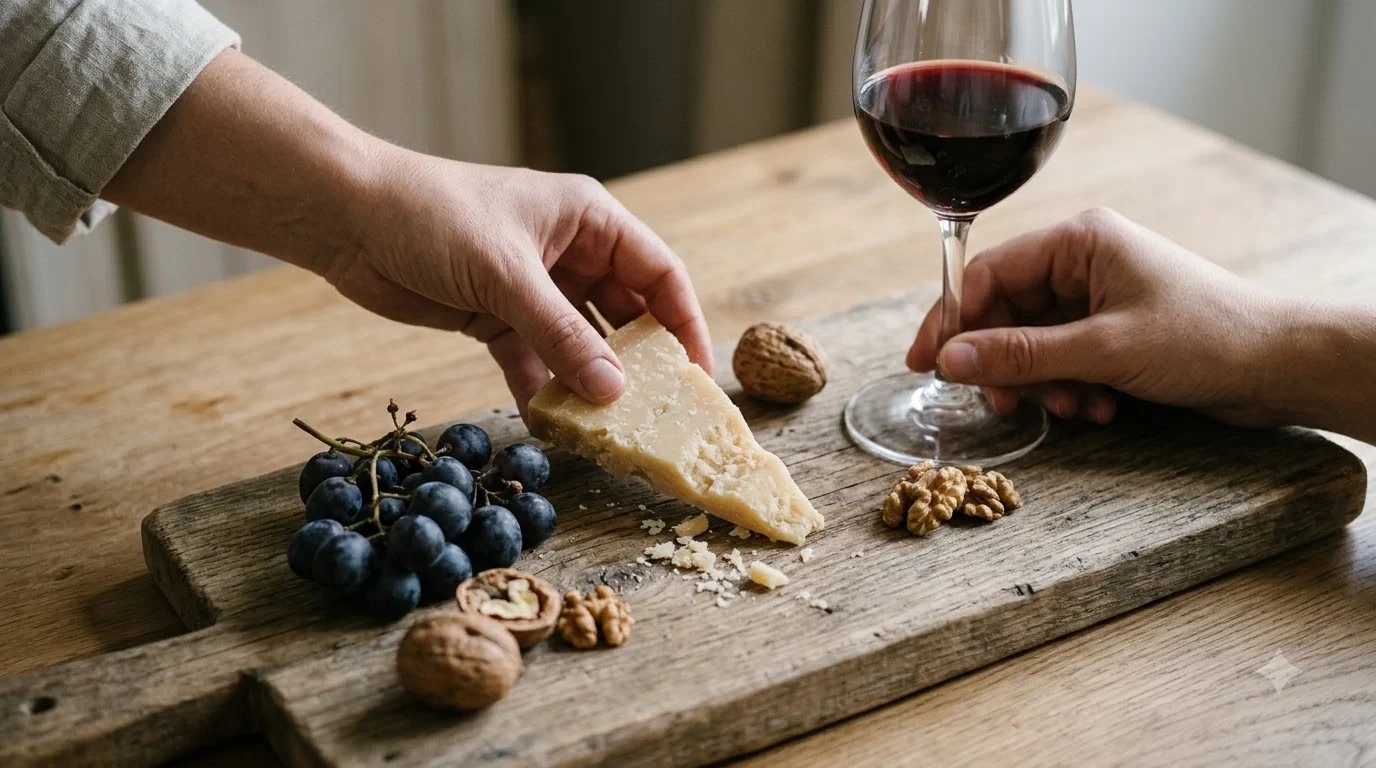
Brunello’s acidity and tannin suit rich, savory dishes: grilled or braised beef, lamb, venison, wild boar, and other game, especially with mushrooms, rosemary, or a reduction sauce. Acidity cuts through fat, while protein and savory cooking soften tannin. Tuscan pecorino and other aged cheeses also work well. Tomato-based pasta can pair successfully when the sauce is rich and has similar or higher acidity; delicate oily fish is a poor match for a very tannic red.
A dry red can taste sour beside a dessert that is sweeter than the wine, and very hot chili dishes can make alcohol and tannin seem more aggressive. Favor herbs, roasted vegetables, mushrooms, and browned meat instead. For glassware, temperature, and opening time, see how to serve Brunello di Montalcino. For the Italian name, use this guide to how to pronounce Brunello di Montalcino. After opening, keep leftover wine sealed in the refrigerator; still red wines generally keep three to five days. Store unopened bottles on their side near 55 degrees Fahrenheit in a dark place with a steady temperature and little vibration.
Frequently Asked Questions
These quick answers cover label terms and details that often appear when comparing Brunello bottles from Montalcino. They also explain a few features that are not immediately obvious from the wine’s name or color.
What does DOCG stand for?
DOCG means Denominazione di Origine Controllata e Garantita, translated as Denomination of Controlled and Guaranteed Origin. It is Italy’s top traditional tier of geographic wine designation and sets rules for the wine’s origin and production. Brunello di Montalcino received DOCG recognition in 1980.
Can Brunello carry a single-vineyard name?
Yes. Producers may identify a specific vineyard on the label when the wine comes from that site and meets the applicable rules. Decanter reported that just 3 percent of the Brunello bottles released in 2022 carried a single-vineyard mention, so the practice is still relatively uncommon across the denomination.
How large is the Montalcino wine area?
Decanter describes the wider Montalcino territory as covering about 24,000 hectares, with less than 15 percent planted to vines. Within that territory, about 2,100 hectares were reserved for Brunello di Montalcino DOCG in the figures cited in its regional overview. The distinction matters: the town’s full landscape is much larger than the area planted specifically to Brunello.
What does Annata mean on a Brunello label?
Annata identifies the regular vintage bottling, as distinct from Riserva. It is not a separate grape or a different appellation. A standard Annata Brunello still has to meet the DOCG grape, yield, oak-aging, bottle-aging, and release requirements.
Why are Brunello bottles shaped like Bordeaux bottles?
The production rules specify a Bordeaux-style bottle for Brunello di Montalcino. That is a packaging requirement rather than an indication that the wine is made from Bordeaux grapes. The familiar high shoulders and straight sides make the bottle easy to recognize among many Italian reds.
Brunello di Montalcino stands apart because its identity is grounded in one grape, one Tuscan territory, and a carefully regulated period of maturation. Start with a producer and vintage that suit your drinking plans, then give the wine enough air, food, and attention to show its balance of fruit, acidity, and structure.
More in Wine Types & Grapes
 Zinfandel Sugar Content: Dry Red vs. White Zinfandel GramsUpdated Nov 21, 2026
 Best Zinfandel Substitute Options for Sipping and CookingUpdated Nov 21, 2026
 Zweigelt Food Pairing: Best Dishes, Cheeses, and Serving TipsUpdated Nov 21, 2026
 Zinfandel Tannins Explained: How Structure Shapes Every BottleUpdated Nov 21, 2026
 Zinfandel Sweetness Level: Dry Red vs. Sweet White Zin ExplainedUpdated Nov 21, 2026
 Xinomavro Food Pairing: Best Dishes, Styles, and Serving TipsUpdated Nov 21, 2026