

We may earn a commission when you buy through links on this page, at no extra cost to you. Learn more.
Should ice wine be chilled? Yes, serve it between 43°F and 50°F (6°C to 10°C), which keeps its acidity crisp while its honeyed fruit flavors stay open. Ice wine is a very sweet dessert wine, and a proper chill brings its sugar and acidity into balance. Served too warm, it can taste heavy and syrupy, while a glass served too cold mutes the aromas that make it special. A bottle needs about 15 minutes in an ice bucket or about two hours in the refrigerator to reach that range.
Ice wine is one of the most misunderstood bottles on the shelf. Its tall, slim bottle and deep color leave many buyers unsure how to handle it, and plenty of people cannot decide whether it belongs before dinner, after dinner, or alongside the main course. Wine Country Ontario, the regional promotion body for Ontario wine, describes Icewine as Canada’s “liquid gold” and notes that many consumers have only a vague understanding of when it should be served. This guide covers why temperature matters, how to chill the bottle, which glass and pour size to use, how to pair it with food, and how to keep it once opened. If you want a broader view of how wine styles differ, see Wine by Type.
What Makes Ice Wine Different From Other Dessert Wines
Ice wine is made from grapes that freeze while still hanging on the vine, and that single step changes the wine’s sugar, acidity, and body. Knowing how it is made explains why it needs more care at the table than most dessert styles.

Under the Vintners Quality Alliance (VQA) rules in Ontario, the grapes must be naturally frozen on the vine. According to Wine Country Ontario, harvesting and pressing must happen while the air stays at or below -8°C, and the juice must average at least 35° Brix, the measure of sugar in grapes. Because the water in each berry freezes and stays behind when the grapes are pressed, the sugar and acidity become highly concentrated. The result is a thick, golden liquid that tastes intensely sweet yet is held up by a sharp streak of acidity.
Most ice wine is made from Riesling and Vidal, and Riesling carries more acidity than Vidal, which gives it a crisper edge. Other varieties appear too, including Gewürztraminer, Cabernet Franc, Merlot, and Chardonnay. Red ice wines, usually made from Cabernet Franc, bring a different character to the glass and are often treated as a separate category at the table. If your question is about a sweet red rather than a white style, the advice in should sweet red wine be chilled covers that category in more detail.
Ice wine is sweet, but the sweetness is not meant to be heavy. Daily Meal describes the sugar as concentrated into the ice crystals, leaving the wine with a touch of acidity to balance things out. That balance is the key to serving it well. Temperature controls how loudly the sweetness speaks, and the right chill keeps the acidity present enough to keep each sip lively.
Should Ice Wine Be Chilled? The Right Temperature Range
Most guidance places ice wine between 43°F and 50°F, the same band recommended for sweet white wines. That window keeps the wine fresh and lively instead of thick or thin.
Daily Meal recommends chilling ice wine to between 46 and 50 degrees Fahrenheit, which sits inside the broader band and is an easy target to remember. Light and sparkling styles run colder, while full-bodied reds are served much warmer. The table below compares the main categories so you can see where ice wine falls.
| Wine style | Serving temperature | Why the temperature matters |
|---|---|---|
| Ice wine | 43–50°F (6–10°C) | Cool enough to keep the acidity sharp |
| Sweet white wine | 43–50°F (6–10°C) | Cool enough to keep the aromas lively |
| Sparkling wine | 40–50°F (4–10°C) | Cold keeps the bubbles fine and crisp |
| Full-bodied red wine | 60–65°F (16–18°C) | Warmer service lets the fruit and structure show |
Serving too warm, a sweet wine can taste heavy, and the sugar starts to dominate everything in the glass. Serving too cold, and the wine loses the perfume that gives it character. Lakeview Wine Co., a producer based in Niagara-on-the-Lake, puts it plainly: when ice wine is too warm it loses its crispness, and when it is too cold the aroma gets cut. The window is narrow, so a few degrees matter more here than they would with a young dry white.
Ice wine also sits in a different category from sparkling wine. Bubbles call for colder service, and the chill keeps them tight and lively, so should sparkling wine be chilled is answered with a cooler target than ice wine needs. Ice wine sits closer to the sweet white end of the chill scale, so one target works for most bottles, provided you do not overshoot it.
How to Chill Ice Wine Without Overshooting
An ice bucket gets a bottle to serving temperature in about 15 minutes, while a refrigerator takes roughly two hours for a gentler result. Wine Country Ontario recommends both methods, and the right choice depends on how much time you have before guests arrive.
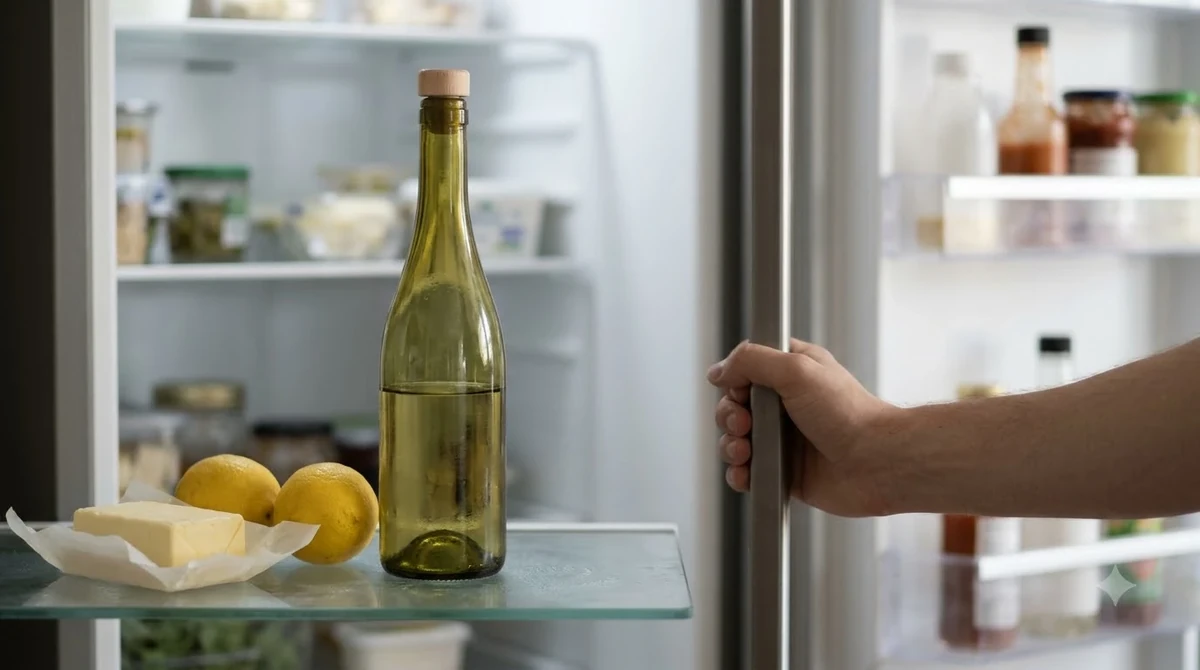
Chilling is easy to get wrong in both directions. Daily Meal warns against serving ice wine too cold and suggests a couple of hours in the refrigerator or a shorter stay in the freezer if you are in a hurry. The freezer is quick, but it is also easy to forget, and a bottle left there past its target can come out tasting muted. For most people the refrigerator is the safer choice, because it works without supervision and gives you a wider margin for error.
An ice bucket is the faster and more forgiving option when you need the bottle ready on short notice. Fill it with water and ice, since water surrounds the bottle more completely than ice alone. Check the bottle after about 15 minutes and pour a test sip if you are unsure. Remember that wine keeps warming in the glass, so if the room is warm, aim for the cooler side of the range, and let the bottle come up slightly as it sits on the table.
Once the bottle is chilled, keep it in the refrigerator until just before serving. A bottle sitting on a counter during dinner will warm steadily, so many hosts keep a second bottle in the fridge as a backup. The checklist below sums up the timings and amounts that matter most.
| Step | Time or amount | Why it helps |
|---|---|---|
| Chill the bottle in an ice bucket | About 15 minutes | Brings the wine to temperature quickly |
| Chill the bottle in the refrigerator | About 2 hours | Gentler, steadier cooling for planned meals |
| Chill the wine glasses | About 10 minutes | Keeps the first pour from warming |
| Pour size | 1.5 to 2 ounces | Enough sweetness and aroma for one serving |
Glassware and Pour Size for Ice Wine
A standard white wine glass shows ice wine’s aromas better than a tiny dessert glass, and a pour of about 1.5 to 2 ounces is plenty.
Lakeview Wine Co. advises leaving the skinny dessert glasses on the shelf, because a standard white wine glass lets the wine open up and gives you room to swirl. Wine Country Ontario makes the same recommendation, calling for a traditional white wine glass to bring out the full bouquet. Daily Meal notes that sommeliers favor a frosty tulip-shaped glass, which concentrates the fragrant notes near the rim. The principle is the same across all three: a glass with some width and shape keeps the aroma from fading before the first sip.
Pour size matters because ice wine is dense with sugar. Wine Country Ontario suggests allowing 1.5 ounces per person, while Lakeview recommends about two ounces per glass. A 375 milliliter bottle therefore stretches across several guests, and a modest pour lets each sip register sweetness, acidity, and fruit instead of coating the palate. If you plan to build a pitcher or batch drink with a splash of ice wine, the base of the mix matters more than the ice wine itself, so check should sangria be chilled before you assemble it.
Tip: Chill the glasses in the refrigerator for about 10 minutes before pouring, so the first sip is as cool as the wine. Lakeview Wine Co. recommends this simple step for keeping the aroma intact.
Pairing Ice Wine With Food
The core rule is that dessert should never be sweeter than the ice wine, and savory foods with salt or heat also suit it well.
Wine Country Ontario states that when you serve ice wine with dessert, the dessert should be less sweet than the wine. Fruit-based desserts work well, such as peach cobbler, cheesecake, or unsweetened fruit pies, and crème brûlée or other rich custards stand up to the wine’s body. Lakeview Wine Co. applies the same test, noting that white ice wines suit fruit desserts while a red ice wine is excellent with dark chocolate. Matching weight matters here too, so a light fruit tart and a dense chocolate torte will call for different bottles.
Ice wine’s sweetness also works well against spice. The Wine Country Ontario guide explains that the heat in most peppers comes from capsaicin, which sweetness helps tame while leaving the spice flavors intact. That is why Thai curry, spicy fried chicken, and Indian, Mexican, and Creole dishes are dependable matches. Daily Meal makes a similar point about spicy and salty foods. Start with a mild dish if you are unsure how much heat the wine can handle, because a very fiery curry can overpower a delicate Riesling ice wine.
Cheese and chocolate are classic partners. Blue cheese is especially good, since the wine’s sweetness softens its salt and richness. Daily Meal names Roquefort, blue cheese, and Parmigiano Reggiano as pungent cheeses that do not clash with the wine. For chocolate, pair white chocolate with a Riesling or Vidal ice wine and reach for dark chocolate when you pour a red. For a fuller set of ideas, the Icewine guide from Wine Country Ontario is a useful reference.
Storing Ice Wine After You Open It
Once opened, ice wine should be re-corked, refrigerated, and finished within about three to five days.
Lakeview Wine Co. advises enjoying an opened bottle within three to five days, which matches the general rule for still wines. Re-cork the bottle, seal it, and return it to the refrigerator between pours so the sugar and acidity stay stable. Cold storage slows the oxidation that dulls fruit, so the wine keeps its freshness longer than a bottle left on the counter. A half-empty bottle loses freshness faster than a full one, so if you only plan to pour a few glasses, a smaller format may make more sense.
Before opening, store unopened bottles on their side in a cool, dark spot, ideally near 55°F. Steady conditions matter more than hitting an exact number, so avoid spots near heat sources, direct sunlight, or appliances that vibrate. Lakeview also describes a consistent cellar temperature of around 12 to 15°C as ideal, which is the same general range in different units.
Smell and taste the wine before pouring. If the aromas feel dull or the fruit has flattened, the bottle is past its best, and a splash in a cocktail is a sensible use for it. Good storage keeps the wine’s bright character for the days you are most likely to enjoy it.
Frequently Asked Questions
These answers cover the questions readers ask most often about serving, buying, and keeping ice wine.
Can ice wine be served over ice?
Ice wine can be poured over ice, but cubes melt quickly and the added water dilutes the sugar and acidity balance, which dulls the aromas. A better approach is to chill the bottle longer in an ice bucket and keep the glasses in the refrigerator, which keeps the wine cool without changing its flavor.
Why is ice wine so expensive?
Wine Country Ontario explains that the grapes stay on the vine after the normal fall harvest, where they are exposed to rot, wind, hail, and birds. Crews must pick the frozen fruit by hand at night, and it takes about 3.5 kilograms of Riesling or 3 kilograms of Vidal to fill one 375 milliliter bottle. The same weight of grapes would yield six to seven times as much table wine.
Can ice wine be used in cocktails?
Yes, and Wine Country Ontario publishes several recipes. Its VQA Icewine Martini combines two ounces of Vidal ice wine with two ounces of vodka, stirred over ice and garnished with a frozen grape. The VQA Icewine Royale pairs one ounce of red ice wine with three ounces of sparkling wine and a raspberry garnish.
How can I tell real ice wine from an imitation?
Look for the word “Icewine” spelled as one word and a VQA logo on the label, because the term is a registered trademark in Canada. Wine Country Ontario warns that cheaper imitations freeze grapes artificially, use concentrate, or sweeten and fortify the wine, and the results do not taste like the real thing.
Does ice wine get better with age?
Not every style does. Lakeview Wine Co. says Chardonnay, Cabernet Franc, and Merlot ice wines are best enjoyed while still young, while Riesling ages nicely and can develop more complexity over time. Check the grape variety before buying a bottle you plan to keep.
Serving ice wine well comes down to a few simple habits: chill it to 43 to 50°F, pour it into a white wine glass, and keep the pour modest. Pair it with fruit desserts, cheese, or spicy food, and keep it cold while it sits on the table. Reseal it promptly after opening, and the wine’s sweetness and acidity will do the rest.
More in Wine Types & Grapes
 Zinfandel Sugar Content: Dry Red vs. White Zinfandel GramsUpdated Nov 21, 2026
 Best Zinfandel Substitute Options for Sipping and CookingUpdated Nov 21, 2026
 Zweigelt Food Pairing: Best Dishes, Cheeses, and Serving TipsUpdated Nov 21, 2026
 Zinfandel Tannins Explained: How Structure Shapes Every BottleUpdated Nov 21, 2026
 Zinfandel Sweetness Level: Dry Red vs. Sweet White Zin ExplainedUpdated Nov 21, 2026
 Xinomavro Food Pairing: Best Dishes, Styles, and Serving TipsUpdated Nov 21, 2026