
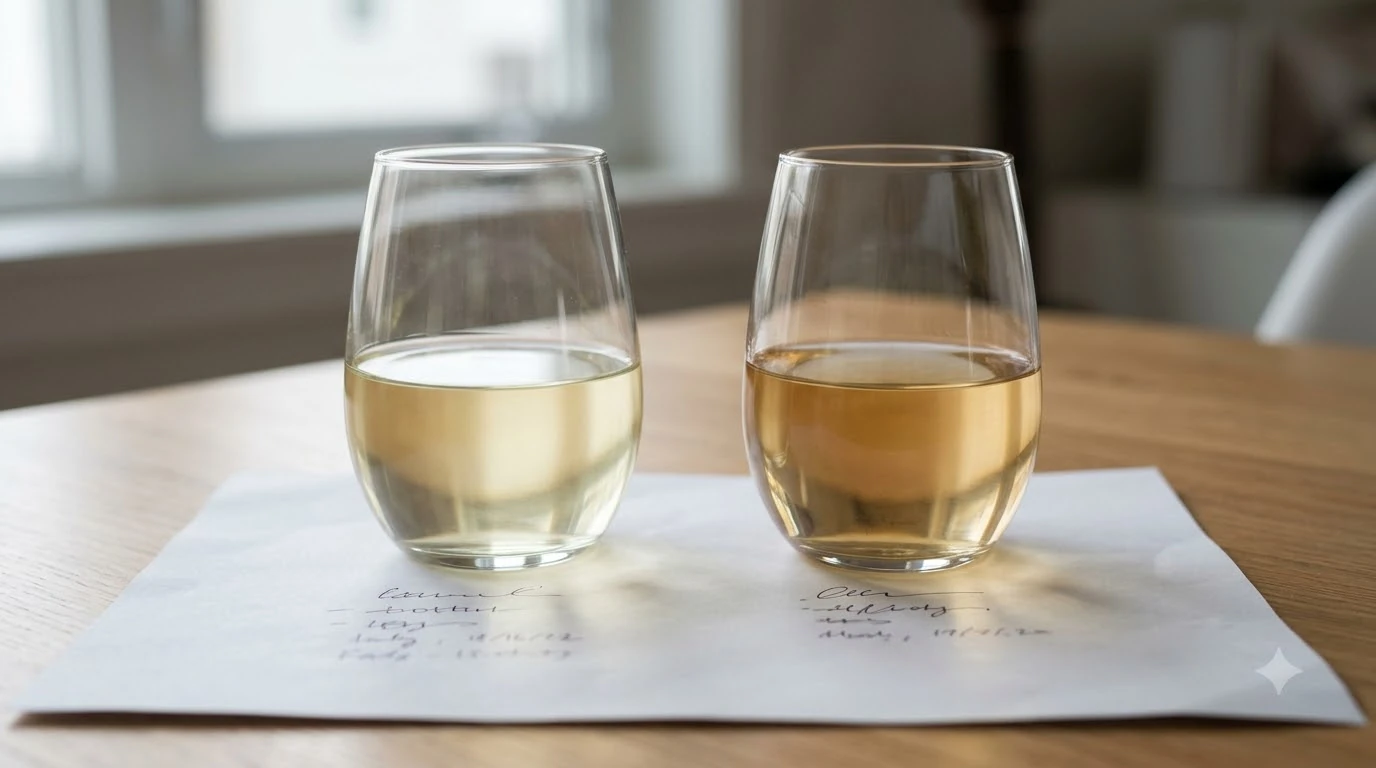

We may earn a commission when you buy through links on this page, at no extra cost to you. Learn more.
Orvieto vineyards produce the white wines of Orvieto DOC, a hilly appellation spanning southwestern Umbria and part of northern Lazio, with Grechetto and Procanico at the heart of its blends. The area is known for a distinctive mix of volcanic tuff, clay, sandy marine deposits, and river soils. Its wines range from crisp, dry whites to richer Superiore bottlings and sweet wines made from late-harvest or botrytized grapes.
For wine drinkers, Orvieto is more than a historic hill town and a familiar name on Italian white-wine lists. The vineyards surrounding the city form a varied growing landscape, and the DOC rules preserve a recognizable blend while allowing different expressions of place, ripeness, and sweetness. Understanding the geography and label terms makes it easier to choose a bottle that suits a meal, a cellar, or a visit to Umbria.
Where the Orvieto Vineyard Zone Begins and Ends
Orvieto DOC covers a broad, hilly area in southwestern Umbria that extends across the regional border into northern Lazio. Orvieto Classico is narrower: the term identifies grapes grown in the historic heart of the appellation around the town’s tuff-rock outcrop.
The production zone includes all or part of 18 municipalities. Thirteen are in the province of Terni, including Orvieto, Allerona, Baschi, Ficulle, Fabro, and Porano; five are in the province of Viterbo, including Bagnoregio, Lubriano, and Civitella d’Agliano. That cross-border geography matters because a bottle carrying the Orvieto name does not necessarily come from the immediate countryside below the city walls.
Classico is therefore a useful point of reference rather than a guarantee of one uniform flavor. Vineyards within the historic zone still occupy different slopes and soil types, while the wider DOC includes sites farther from the town. For context, the Consorzio’s Orvieto DOC grape and style overview sets out the approved varieties and the range of wine types.
Volcanic Tuff, Clay, and River Deposits Shape the Vineyards
Orvieto’s geology changes across short distances, giving vineyards different combinations of drainage, water retention, and mineral character. The principal landscapes include volcanic tuff in the south, clay around the center, sandy areas with marine fossils in the northeast, and silty alluvial ground beside the Paglia River.

The tuff is linked to the volcanic history of the Vulsini area and the formation of nearby Lake Bolsena. In southern parts of the denomination, vineyards closer to the lake sit on more distinctly volcanic ground. Wine writers have associated some of these wines with savory, salty impressions and greater structure, although those traits also depend on grape maturity, vineyard exposure, and cellar choices.
Central clay soils can retain moisture longer than freer-draining ground. Farther northeast, sand mixed with marine fossils records an older marine environment; near the Paglia River, silty alluvium creates another distinct zone. These contrasts help explain why two Orvieto DOC wines can differ in texture and aroma.
The town itself rises from a prominent mass of tuff, a rock that also shaped its underground spaces. The European Union’s product specification notes the long association between the tuff formation and local wine processing and preservation. For vineyard readers, the main lesson is practical: Orvieto is not one flat soil type, and a map or producer description can be more revealing than the DOC name alone.
Grechetto and Procanico Set the Blend
Grechetto and Procanico are the two principal grapes behind Orvieto DOC, and together they must make up at least 60% of the blend. Procanico is the local name used for Trebbiano Toscano; the remaining portion may include other permitted, nonaromatic white varieties suited to the growing area.
Grechetto contributes much of the blend’s identity. It can bring ripe orchard-fruit flavors, a firmer palate, and a gently savory or slightly bitter finish. Depending on the site and winemaking, it may feel broad and rounded or more taut and mineral. In blends, it often supplies the frame and texture that distinguish Orvieto from neutral, light-bodied whites.
Procanico, the local Trebbiano Toscano, provides a complementary profile. It can contribute freshness, delicate fruit, and a lighter outline around Grechetto’s more substantial character. The precise balance varies by producer and vintage, but the minimum 60% combined share protects the regional foundation while leaving room for approved supporting grapes.
Other permitted white grapes may appear in the remaining share, so Orvieto is not a single-variety wine. Producers may use local grapes such as Verdello, Drupeggio, or Malvasia, and some blends include Chardonnay where allowed. Blend details help show whether a bottle leans toward Grechetto’s texture or Procanico’s freshness.
DOC Rules Explain Classico and Vineyard Yields
The Orvieto DOC specification links the name to defined municipalities, approved grapes, and limits on vineyard production. It also reserves Classico for the oldest part of the growing zone, while separate yield ceilings apply to the standard, Superiore, and sweet-wine categories.
The consolidated Italian production specification sets the following maximum grape yields. It also restricts suitable vineyard sites to 100–500 meters above sea level, excludes wet or insufficiently sunny valley-floor plots, and requires at least 3,000 vines per hectare in new plantings. The rules prohibit forcing practices but allow emergency irrigation. The official Orvieto DOC specification gives these limits in its vineyard and production articles. The yield figures refer to kilograms of grapes per hectare, not finished wine per hectare or bottle counts.
| Orvieto category | Maximum grape yield | What the term signals |
|---|---|---|
| Orvieto | 11,000 kg/ha | Standard DOC wine |
| Orvieto Superiore | 8,000 kg/ha | A lower permitted crop ceiling |
| Orvieto Muffa Nobile | 5,000 kg/ha | Noble-rot sweet wine |
| Orvieto Vendemmia Tardiva | 7,000 kg/ha | Late-harvest wine |
The lower ceilings for Superiore and the two concentrated styles are important because vineyard output affects the amount of fruit available for each bottle. A lower legal maximum does not automatically make a wine better, but it sets a more restrictive production framework than the standard Orvieto category. The difference also helps explain why the terms on the label should be read as meaningful production distinctions, not decorative language.
Classico and Superiore describe different things. Classico is geographic, pointing to the historic core around Orvieto; Superiore identifies a category with its own production requirements, including the 8,000-kilogram-per-hectare ceiling shown above. A wine can therefore communicate both an origin within the older zone and a more restrictive production category when the label carries both terms.
Tip: When comparing two bottles, first distinguish Orvieto from Orvieto Classico, then look for Superiore, Vendemmia Tardiva, or Muffa Nobile. Those words tell you more about origin or style than a general reference to Umbria on the front label.
Dry, Off-Dry, and Sweet Orvieto Styles
Most Orvieto is made in a dry style, but the appellation retains a broad sweetness range. The traditional terms include secco, abboccato, amabile, and dolce, alongside Superiore, late-harvest Vendemmia Tardiva, and Muffa Nobile.
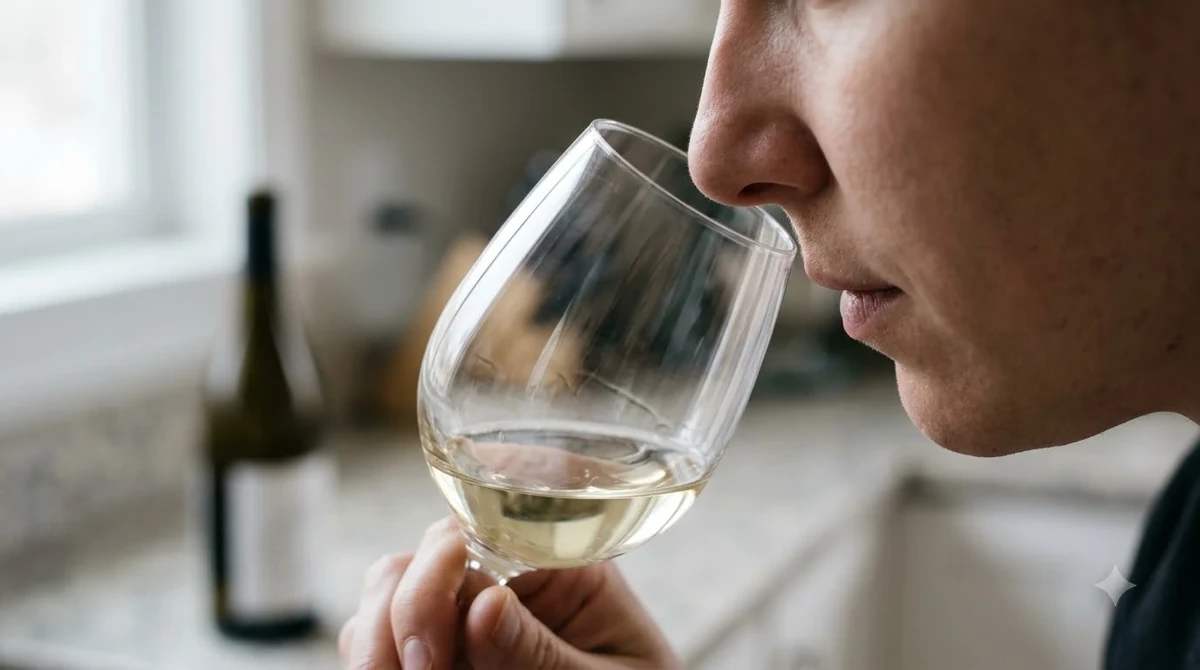
Secco means dry and is the natural starting point for drinkers who want a crisp white for the table. These wines are commonly described through delicate fruit, peach or other orchard-fruit notes, and a finish that can carry a faint almond-like bitterness. A good dry Orvieto can work as an aperitif, but its balance also makes it useful with food rather than limiting it to the first course.
Abboccato indicates a wine with a touch of sweetness, while amabile is more noticeably medium-sweet and dolce is sweet. The terms help distinguish wines that might otherwise look similar on a shelf. Superiore is a separate quality category rather than a sweetness level; its wines can remain dry, and Wine Enthusiast describes Classico Superiore examples as having a creamier texture while retaining fresh acidity.
Vendemmia Tardiva refers to late-harvest fruit, which can concentrate sugars as grapes remain on the vine; under the current DOC rules, the term may be used only for Orvieto or Orvieto Classico carrying the Superiore qualification. Muffa Nobile is associated with noble rot, the beneficial form of Botrytis cinerea that shrivels grapes and concentrates their juice. Autumn mists can support this process. These wines move away from the straightforward citrus-and-peach profile of dry Orvieto toward honeyed, concentrated, and sometimes candied-fruit flavors. Sweetness does not mean that every bottle will taste alike: a gently off-dry Orvieto can still feel refreshing when its acidity is balanced, while a Muffa Nobile bottling tends to be richer and more suitable for a smaller pour. The best choice depends on whether the wine is meant to refresh the palate, accompany savory food, or match a dessert.
Producers Show Different Interpretations of Orvieto
Producer choice matters in a region where varied soils and blending decisions create several expressions of the same DOC. Barberani, Decugnano dei Barbi, and Marchesi Antinori’s Castello della Sala are among the names highlighted by wine publications for Orvieto and its surrounding white-wine culture.
Castello della Sala is associated with Orvieto Classico Superiore made from Grechetto, Procanico, Drupeggio, and Malvasia. Decanter has also noted the role of vineyard altitude at the estate and autumn mists that encourage noble rot on varieties including Grechetto, Riesling, Semillon, and Traminer. That combination illustrates how the broader area can produce both fresh dry whites and concentrated sweet wines rather than a single house style.
Decugnano dei Barbi is another reference point for the region, and its vineyard appears in Wine Enthusiast’s discussion of central Italian white grapes. Barberani is also named among producers to explore. Rather than assuming that one producer represents every Orvieto vineyard, compare bottles from two or three estates and pay attention to the stated blend, subzone, and sweetness level.
Oak aging may give a wine a broader, layered feel, while lees contact can add creaminess without sweetness; neither is automatic for Orvieto DOC, so look for these details in producer notes. A comparison with the Chianti Classico vineyards shows how central Italian appellations use historic place names to identify origin. The site’s Wine Regions overview explains how DOC boundaries and traditional terms work across Italy.
Food Pairings and Serving Temperatures
Dry Orvieto is especially comfortable beside fried foods, white meats, and fish, while the sweeter styles work better with desserts or rich, salty accompaniments. The key is to match the wine’s body and sweetness to the dish rather than treating every bottle from the appellation as interchangeable.
With fried vegetables, calamari, or lightly battered fish, the wine’s acidity can refresh the palate between bites. It also pairs naturally with roast chicken, turkey, and simply prepared pork or veal, where a crisp white complements the meat without overwhelming it. Delicate seafood dishes are a sensible match; strongly tannic red wines are less suitable for oily fish, so the white-wine structure of Orvieto gives diners an easy direction.
For a sweeter Orvieto, choose a dessert at least as sweet as the wine. Fruit tarts, almond pastries, poached pears, and desserts with candied citrus can echo the wine’s fruit notes. Muffa Nobile can also suit blue cheese or a rich liver pâté, where salt and fat balance concentrated sweetness. For a savory meal, abboccato or amabile can work with dishes that have a touch of sweetness, such as glazed poultry or gently spiced preparations.
Serve dry Orvieto around 45–50°F, cool enough to retain freshness but not so cold that its aroma disappears. Sweet versions can be served around 43–50°F, adjusted toward the warmer end for more concentrated bottlings. A standard 750-milliliter bottle provides about five 5-ounce pours, making it practical to serve with a meal for four or five people. Once opened, refrigerate the bottle with a stopper; still wines generally keep for three to five days, though freshness can fade sooner.
Frequently Asked Questions
These points clarify five details that can be difficult to read from a bottle label or a general description of the region. They cover the separate red denomination, label wording, acidity, sweet-wine color, and alcohol measurement.
Is Orvieto DOC a red wine or a white wine?
Orvieto DOC is a white-wine designation. The area has a separate red denomination, Rosso Orvietano DOC, whose permitted varieties include Sangiovese, Merlot, Cabernet Sauvignon, Ciliegiolo, and Montepulciano. The two names refer to distinct appellations, so a red bottle from the area should not be assumed to be Orvieto DOC.
Can the word Umbria appear on an Orvieto label?
Yes. The approved labeling provisions allow the larger geographic name Umbria to appear after Orvieto and below the DOC or PDO wording. Its lettering must be no larger or more prominent than the Orvieto designation, helping preserve the appellation name as the main label reference.
What minimum acidity does Orvieto DOC require?
The general Orvieto DOC standard and Vendemmia Tardiva require at least 4.5 grams per liter of total acidity, expressed as tartaric acid. Muffa Nobile has a higher minimum of 5.0 grams per liter. These are legal analytical thresholds, not a guarantee that every bottle will taste equally sharp or brisk.
How does Muffa Nobile change color as it ages?
The official description allows Muffa Nobile to range from golden yellow toward amber with age. That color development reflects the wine’s concentrated, sweet style and maturation. A deeper hue by itself does not establish quality; aroma, balance, and storage history matter too.
What is the minimum alcoholic strength for Orvieto DOC?
The current Italian production rules set minimum total alcohol at 10.0% by volume for standard Orvieto and 12.0% for Superiore. Vendemmia Tardiva must reach 13.0% total alcohol, including at least 10.0% actual alcohol, while Muffa Nobile must have at least 10.5% actual alcohol. These are different legal thresholds for different styles, not a single minimum for every Orvieto bottle.
Orvieto rewards attention to both place and label: the historic Classico zone, varied soils, Grechetto-Procanico foundation, and range of sweetness all shape the experience in the glass. Start with a dry Orvieto for the table, then compare a Classico Superiore or a sweet Muffa Nobile to see how far the appellation can stretch.
More in Wine Regions
 Willcox Wine Trail: Discover Arizona’s High-Elevation Wine CountryUpdated Nov 20, 2026
 Yakima Valley Wine Region: Find the Best Styles to TryUpdated Nov 20, 2026
 Vosne Romanee Wine Tasting: Identify Aromas and Choose Better PairingsUpdated Nov 20, 2026
 Yakima Valley Wine Festival: Find the Best Seasonal Wine EventsUpdated Nov 20, 2026
 Wales Vineyards: Discover Cool-Climate Wines and Where to VisitUpdated Nov 20, 2026
 Yountville Wine Festival: Discover Napa Wines and Local FoodUpdated Nov 20, 2026