

We may earn a commission when you buy through links on this page, at no extra cost to you. Learn more.
Far Niente red wine is best known for its Oakville Cabernet Sauvignon, a full-bodied Napa Valley red with concentrated dark fruit, polished tannins, and a long, structured finish. The estate’s 2022 bottling is made primarily from Cabernet Sauvignon, with a small Malbec component, and aged in French oak. Expect a dry, powerful wine suited to steak, lamb, and other richly flavored dishes, rather than a light, casual red.
Far Niente occupies a distinct place in Napa Valley: its historic Oakville estate is associated with both Chardonnay and Cabernet Sauvignon, but Cabernet is the winery’s signature red. Understanding the Oakville origin, the vintage-specific blend, and the wine’s firm structure makes it easier to choose a bottle, plan a meal, and decide whether to open it now or give it more time.
Far Niente Red Wine and the Oakville Cabernet Identity
Far Niente red wine refers most directly to the winery’s Oakville Cabernet Sauvignon. Alongside Chardonnay, Cabernet is one of the estate’s defining wines, known for depth, freshness, and age-worthiness.
The winery traces its history to 1885 and describes four decades of Cabernet Sauvignon production. That continuity matters because the label is closely tied to a single estate and a recognizable house style. The red wine is not simply a generic Napa Valley Cabernet wearing a historic name: its identity is linked to Oakville, its vineyards, and the estate’s cellar program. The current Far Niente portfolio also includes a Cave Collection, which offers older releases from the winery’s cellars. A library bottle and a current vintage may share the estate name, but they should not be expected to show the same stage of development.
Far Niente belongs to a wider family of Napa wineries that includes Nickel & Nickel, Bella Union, and Post & Beam. Those names are not interchangeable with Far Niente. The winery’s core Cabernet has an Oakville identity, while the sister labels have their own vineyard and stylistic approaches. Readers comparing producers can use our guide to Wine Brands to understand why a winery family may contain several distinct labels. For a look at the estate’s white-wine counterpart, see our Far Niente Chardonnay tasting notes.
Oakville’s Climate and Vineyard Character
Oakville combines warm Napa Valley days with cooling fog and breezes, a balance that helps Cabernet reach full ripeness without losing all of its freshness. Its range of soils and exposures also means that wines from different vineyard positions can show different shades of fruit, structure, and savory character.
According to Napa Valley Vintners, the Oakville American Viticultural Area spans roughly 130 to 1,000 feet in elevation. Summer temperatures commonly reach the mid-90s Fahrenheit, while evening and early-morning fog helps preserve acidity. The western side has sedimentary gravelly alluvial loams; the eastern side includes heavier volcanic soils. Those differences matter because vineyard drainage, afternoon sun, and soil composition influence how vines develop and how fruit ripens.
Far Niente’s 2022 Cabernet is sourced from Martin Stelling Vineyard, situated behind the historic winery along Oakville’s western hills. The winery describes the site as a source of richness and structure with finesse, and notes that both Far Niente and Nickel & Nickel source Cabernet from it. The vineyard sits near well-known sites including To Kalon, Martha’s Vineyard, and Harlan Estate. These names help locate the wine within Oakville’s established Cabernet landscape, but they do not mean the Far Niente bottling is a blend of fruit from those neighboring vineyards.
Oakville’s character is more useful as context than as a guarantee of one fixed flavor. A warm growing season may encourage ripe black-fruit notes, while cooler conditions and the influence of fog can help maintain freshness. The western hillside setting of Martin Stelling also provides a more precise reference point than the broad phrase “Napa Valley Cabernet.” For regional background, Napa Valley Vintners’ Oakville AVA profile explains how the appellation’s climate, elevation, and soil variation shape Cabernet Sauvignon.
What Goes Into the 2022 Cabernet
The 2022 Far Niente Cabernet Sauvignon provides a useful, documented example of the estate’s approach. It is a Cabernet-led blend with a measured amount of Malbec, and its élevage uses French oak for a period that gives the wine structure while allowing ripe fruit to remain central.
According to the winery’s technical details, the 2022 bottling is 98% Cabernet Sauvignon and 2% Malbec. It spent 20 months in French oak, with 79% of the barrels new and 21% once-used. The wine also averaged 15 days of skin contact. Those figures describe this vintage; they should not be treated as a permanent formula for every Far Niente Cabernet. Blends, harvest conditions, and barrel programs can vary from one year to another.
The 2022 harvest ran from September 24 through October 21, and Nicole Marchesi is named as the winemaker for the bottling. The wine’s fruit came from Martin Stelling Vineyard, connecting the final blend to the western side of Oakville. Taken together, the composition, skin-contact period, and oak regimen give readers a more grounded picture than a generic description of “rich Napa Cabernet.” They also explain why the wine can feel both generous and structured: Cabernet provides the central tannic frame, Malbec contributes a small blending component, and barrel aging adds texture and spice.
French oak does not automatically mean a wine tastes like vanilla or wood. New barrels can contribute spice, toast, and a sense of density, but the intensity depends on the proportion of new oak, the barrel’s toast, the length of aging, and the fruit’s concentration. In this 2022 example, the new-oak share is substantial but not total, while the once-used barrels provide a less assertive oak influence. The best way to judge the balance is to taste the fruit, spice, and tannin together rather than treating oak as a separate flavor that should dominate.
Aroma, Flavor, Tannin, and Aging Potential
Far Niente Cabernet is a dry, full-bodied red built around dark fruit, firm but polished tannins, and savory oak-related detail. Its richness is balanced by freshness and texture, so the wine should feel structured rather than sugary or jammy.
The winery describes the 2022 vintage with aromas of ripe boysenberry, black olive tapenade, floral perfume, and baking spice. On the palate, it identifies boysenberry, blueberry, and plum, with silky tannins and a lingering impression of sweet fruit. Wine Enthusiast’s review of the 2022 bottling adds ripe dark fruits, espresso, chocolate, pine, redwood, blackberry blossom, and graphite. The publication rated that wine 94 points and listed its alcohol at 14.5%. Those details refer to the reviewed 2022 bottle, not a universal alcohol figure or tasting profile for every vintage. The full Wine Enthusiast review of the 2022 Far Niente Cabernet provides its own tasting assessment.
Cabernet Sauvignon naturally carries more tannin than many lighter red grapes. Tannin creates a drying or gripping sensation along the gums and cheeks, especially when a young wine is paired without food. In Far Niente, that structure is part of the style: it helps the wine stand beside protein-rich dishes and gives it the capacity to develop in bottle. The estate describes its Cabernet as age-worthy and collectible, but that does not mean every bottle must be cellared for years before opening.
Napa Valley Vintners describes Cabernet Sauvignon as a grape with substantial color and tannin, and gives a broad cellar-life range of 10 to 20 years or more for the variety. Treat that as regional context, not a guarantee for an individual bottle. Vintage quality, storage conditions, cork integrity, and personal preference all affect the best drinking window. A younger Far Niente Cabernet is likely to emphasize dark fruit, oak spice, and firmer tannin; with time, those components may become more integrated and secondary notes can become more apparent.
Food Pairings for a Full-Bodied Cabernet
Far Niente Cabernet works best with dishes that have enough protein, fat, and savory depth to meet its tannin and concentration. Grilled or roasted red meat is the classic match, but mushrooms, aged cheese, and slow-cooked dishes can also make the wine feel more balanced.
Start with ribeye, strip steak, grilled lamb chops, or braised short ribs. The protein and fat in the meat soften the perception of Cabernet’s tannins, while browned surfaces and savory juices complement the wine’s dark-fruit and spice notes. A pepper-crusted steak can work well, but very hot chili sauces are less dependable because alcohol and tannin can intensify the sensation of heat. For a more restrained preparation, roast beef with rosemary, thyme, and pan juices is a reliable option.
Mushrooms are another strong partner. A mushroom risotto, grilled portobello, or lentil-and-mushroom shepherd’s pie has earthy flavors that connect with the wine’s graphite, olive, and forest-like notes. Aged cheddar, Gouda, or hard sheep’s-milk cheese can also soften the tannic edge. Avoid making the dish much sweeter than the wine: a sweet glaze or fruit sauce can make a dry Cabernet seem harder and more bitter by comparison.
For a meal without red meat, choose foods with savory intensity and enough richness. Eggplant roasted with olive oil, a mushroom tart, or a deeply browned vegetable lasagna can work better than delicate greens or simply steamed vegetables. Oily fish such as salmon or mackerel is a poor fit for a tannic Cabernet because the fish’s oil and the wine’s tannin can clash. If the menu centers on fish, a more acidic white wine is usually the safer choice.
Tip: Match the wine’s weight to the dish. A full-bodied Cabernet can overwhelm lightly seasoned chicken or delicate vegetables, while a fatty ribeye, braised lamb shank, or mushroom-rich entrée gives its tannins and dark fruit something substantial to meet.
Serving, Decanting, and Storing the Bottle
Serve Far Niente Cabernet slightly cooler than a warm dining room, give a young bottle time to open, and store any remaining wine under refrigeration. Temperature and air exposure can change how clearly the fruit, oak, and tannins show in the glass.
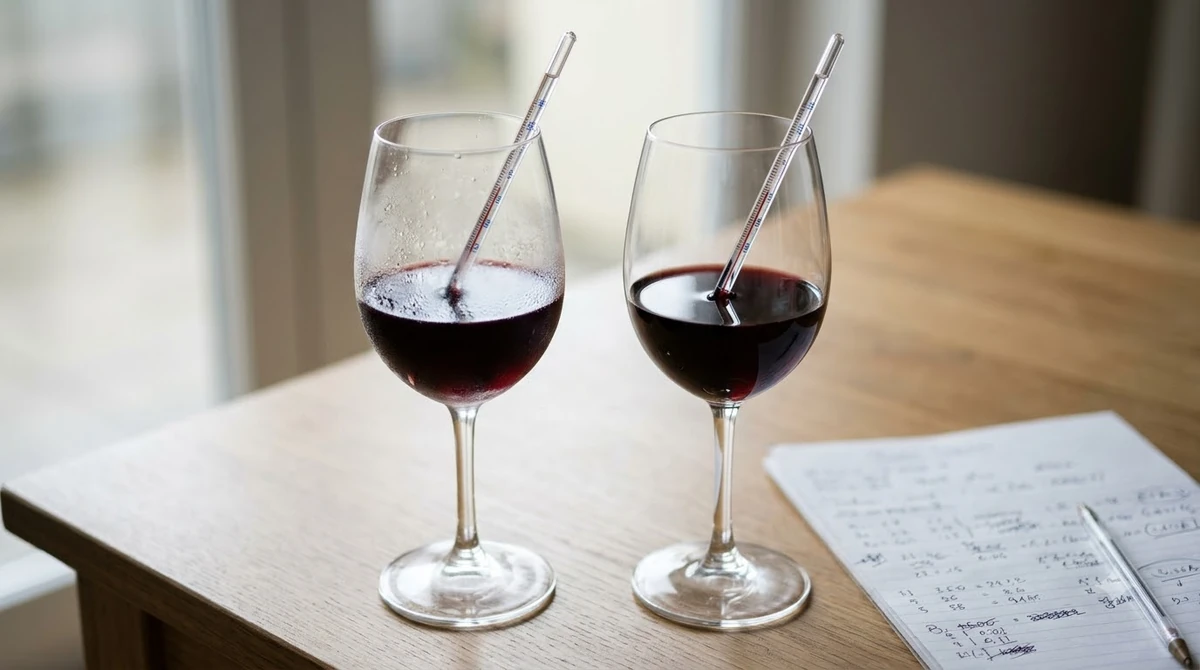
For a full-bodied red such as Cabernet Sauvignon, aim for 60–65°F. A bottle served too warm can make alcohol seem more prominent and fruit less defined; a bottle served too cold can mute aroma and make tannin feel harder. If the bottle has been stored near 55°F, allow it to warm gradually after opening. If it has been sitting in a warm room, a short chill in the refrigerator can bring it closer to serving temperature.
A young, structured red often benefits from 30–60 minutes in a decanter. Pour slowly and taste a small sample before deciding whether it needs more air. Decanting can soften the initial impression of a tightly wound Cabernet and release aromas, but it is not mandatory for every vintage. An older bottle may need careful handling instead: stand it upright before opening if sediment is present, pour gently, and avoid leaving a mature wine exposed to air for an extended period.
A standard 750-milliliter bottle provides about five 5-ounce pours. That is a useful planning measure for dinner, especially when the wine is served alongside a substantial meal. For storage, keep unopened bottles on their sides in a cool, dark place near 55°F, away from vibration and rapid temperature swings. Once opened, reseal the bottle and refrigerate it; most still wines keep for about three to five days, although the fruit may fade before the final day.
| Serving detail | Practical guideline | Why it helps |
|---|---|---|
| Serving temperature | 60–65°F | Keeps alcohol, fruit, and tannin in balance |
| Decanting a young red | 30–60 minutes | Allows aromas to open and tannins to feel less closed |
| Standard bottle | 750 ml; about five 5-oz pours | Helps plan portions for dinner |
| Unopened storage | Near 55°F, on its side | Limits heat and cork-drying risks |
| Opened bottle | Refrigerate; about 3–5 days | Slows oxidation and preserves the remaining wine |
Frequently Asked Questions
These answers add useful background beyond the 2022 blend and tasting profile, including the winery’s name, history, and visitor arrangements in Oakville. They also help separate Far Niente’s estate Cabernet from the broader Napa Valley wine family.
What does the name Far Niente mean?
“Far Niente” is translated by Napa Valley Vintners as “without a care.” The phrase was found carved in stone on the winery building during its restoration, giving the name a direct link to the historic estate rather than to a grape or vineyard designation.
What happened to Far Niente during Prohibition?
The winery ceased operation in 1919, around the start of Prohibition, and its buildings and estate were abandoned. Gil and Beth Nickel bought the old stone winery in 1979 and spent three years restoring it. The name “Far Niente” was found carved into the building’s stonework during that restoration.
Does Far Niente make wine other than Cabernet Sauvignon?
Yes. Chardonnay is the other defining wine of the Far Niente estate, and the winery says it first produced Chardonnay in 1981. Its wider wine-estate family also includes labels such as Nickel & Nickel, Bella Union, Post & Beam, EnRoute, and Dolce, each with a separate identity.
Can visitors taste Far Niente wines at the Oakville winery?
Napa Valley Vintners lists Far Niente tastings as appointment-only, with regular hours shown as 10 a.m. to 5 p.m. daily. The winery is at 1350 Acacia Drive in Oakville, California, and the directory notes that virtual tastings are also offered. Confirm arrangements with the winery before making the trip.
Is Far Niente’s winery on the National Register of Historic Places?
Yes. Napa Valley Vintners identifies the Oakville property as being on the National Register of Historic Places. The estate’s stone winery and gardens are part of its historic setting, which is one reason a visit focuses on the property as well as the wines.
Far Niente Cabernet is a focused choice for drinkers who enjoy Oakville’s ripe dark fruit, polished but substantial tannins, and ability to evolve with bottle age. Pay attention to the specific vintage, serve it at 60–65°F, and pair it with a dish that has enough richness to match its structure.
More in Wine Brands
 Louis Latour Wine Price: Compare Bottles by Style and TierUpdated Nov 20, 2026
 Yellow Tail Moscato Price: What to Expect Before You BuyUpdated Nov 20, 2026
 Sutter Home Sweet Red Review: Find the Right Food PairingsUpdated Nov 20, 2026
 Franzia Chillable Red Review: Find the Right Serving StyleUpdated Nov 20, 2026
 Veuve Clicquot Rose Review: Flavor, Food Pairings and Buying AdviceUpdated Nov 20, 2026
 Rombauer Wine Price: Compare Bottles Before You BuyUpdated Nov 20, 2026