

We may earn a commission when you buy through links on this page, at no extra cost to you. Learn more.
The xarel lo grape is a white variety native to Catalonia, best known for giving Cava body, structure, freshness, and savory character. It also makes distinctive still whites in Penedès and Alella, where citrus, stone fruit, and herbal notes can take different shapes. Its balanced acidity and firm structure make it useful in sparkling blends and as a single-variety wine. Understanding its Catalan home helps explain why it can feel crisp and refreshing while still giving a wine noticeable weight.
Xarel·lo is one of the defining grapes of northeastern Spain, yet it is less familiar to many American wine drinkers than Chardonnay, Sauvignon Blanc, or even the other classic Cava grapes. It is worth knowing because it can bring more than bubbles: the grape makes food-friendly dry whites, adds a savory edge to traditional-method sparkling wine, and responds well to careful aging. The sections below explain what to expect in the glass and how to choose a style that fits the occasion.
Xarel-lo’s identity and Catalan roots
Xarel·lo is a white wine grape associated above all with Catalonia, the northeastern Spanish region that includes Barcelona and the Penedès wine country. Its name appears in several spellings, including Xarel-lo, Xarel·lo, and Xarello; the accent marks the Catalan form, while English-language wine labels and retailers often use the unaccented spelling.
The grape’s strongest regional connection is with Penedès, a broad wine-growing area between the Mediterranean coast and the hills inland from Barcelona. The Penedès designation describes more than 2,500 hectares of vineyards and divides its landscape into 10 terroirs shaped by differences in soil, climate, and elevation. Xarel·lo is the area’s most important indigenous white variety, so its wines offer a direct way to understand the region’s identity. For a wider overview of Spanish white grapes, the Airén grape is a useful comparison: it is another important Spanish variety, but Xarel·lo has a much closer association with Catalan sparkling and still wines.
Although Cava made the name internationally recognizable, Xarel·lo is not simply a sparkling-wine ingredient. Producers also bottle it as a dry still white, sometimes on its own and sometimes as part of a blend. In Penedès, young versions tend to emphasize freshness and fruit, while more structured examples may be fermented or aged in barrels. The same grape can therefore produce a brisk weekday white or a more layered bottle suited to a substantial meal.
Vineyard conditions and the growing season
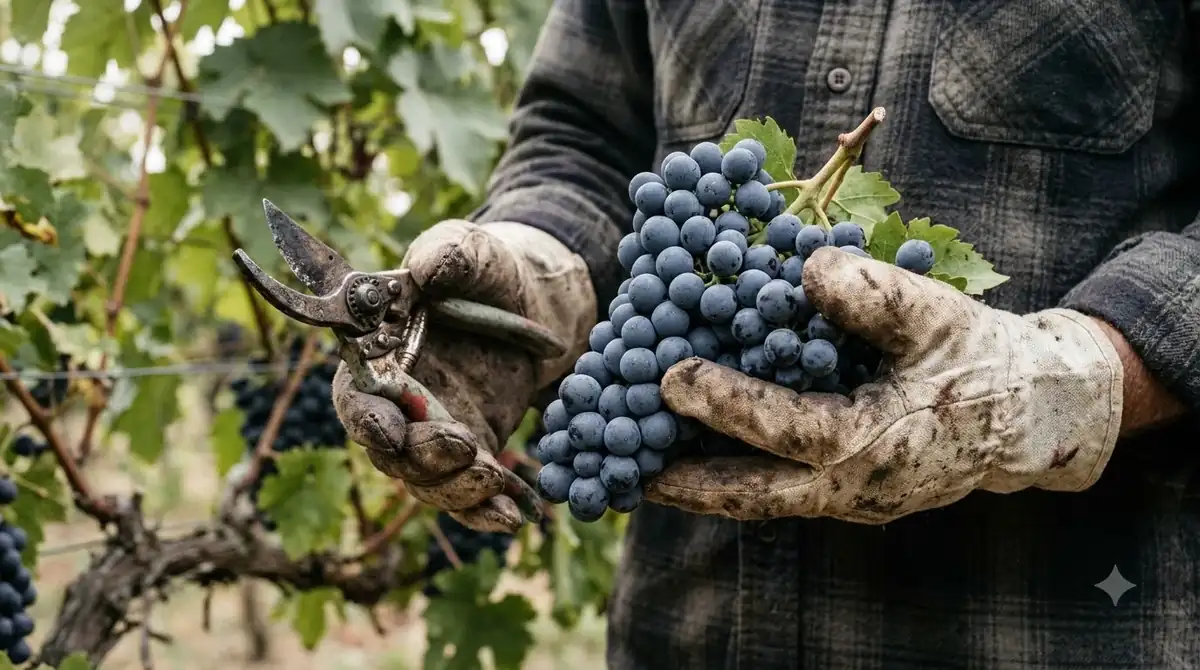
Xarel·lo is a mid-season variety that can adapt to a range of soils and vineyard conditions, but successful cultivation still depends on careful canopy and crop management. Its thick-skinned berries and capacity to accumulate sugar help explain why the grape can contribute both body and freshness to wine.
Wine Enthusiast describes Xarel·lo as a grape whose budding and ripening are neither especially early nor especially late. It performs well at relatively low elevations and tolerates a wider range of soils and climates than some varieties, but growers need to prune carefully to keep yields under control. That balance matters: excessive crop levels can dilute the grape’s concentration, while thoughtful vineyard work gives the finished wine more definition.
The variety has specific disease concerns. Wine Enthusiast identifies susceptibility to powdery mildew, downy mildew, and coulure, a condition in which poor fruit set leaves bunches with uneven or missing berries. These risks make vineyard monitoring important, particularly when spring weather is unsettled. The grape’s thick skins are one part of its physical character, but they do not remove the need for attentive disease management.
Penedès itself is not a single uniform site. The vineyards stretch from areas influenced by the sea toward higher inland ground, and the regional materials describe 10 distinct terroirs, including places above 800 meters in elevation. Those differences help explain why a coastal-influenced wine can feel different from one grown farther inland, even when both are made from Xarel·lo. When you compare bottles, the producer’s village or subzone can be as useful as the grape name.
How Xarel-lo shapes Cava
In classic Cava, Xarel·lo is one of three traditional white grapes, alongside Macabeo and Parellada. It contributes body, structure, and freshness, helping the blend retain energy and age gracefully after its second fermentation in the bottle.
Cava is made by the traditional method: the base wine undergoes a second fermentation inside the bottle that will be sold to the customer. That is different from Prosecco’s common tank method, in which the second fermentation takes place in a sealed pressure tank. The method gives Cava its fine bubbles and can add bready or yeasty notes as the wine spends time on the lees. Xarel·lo gives the blend a firmer frame, so the wine can feel more substantial than a simple, fruit-led sparkling white.
The three classic grapes play complementary roles. Macabeo generally supplies freshness and fruit, Xarel·lo provides structure and savory depth, and Parellada brings finesse and aromatic lift. The blend can vary by producer, and Cava rules also permit other varieties, including Chardonnay and Subirat Parent. A bottle made entirely from Xarel·lo is possible, too, so the grape name on a label may describe the main ingredient rather than a fixed recipe.
Longer aging is one reason the grape matters to traditional-method sparkling wine. The Cava regulatory board says Xarel·lo helps give the blend body and longevity, particularly in wines intended for extended aging. The Penedès designation also recognizes Clàssic Penedès sparkling wines, which undergo a second fermentation in the bottle and a minimum 15 months of aging. For the curious buyer, the Cava regulatory board’s grape overview explains how each of the classic varieties contributes to the finished wine.
Still wines, aromas, and texture
Still Xarel·lo is usually dry, with fresh acidity, a medium-weight feel, and a profile that can combine citrus, stone fruit, herbs, and earthy or mineral impressions. The final style depends on the site, harvest decisions, fermentation vessel, and time spent aging before release.
In a young, unoaked example, look for lemon, lime, pear, and white peach, often with a green-herbal or lightly savory note. The aroma is not always as overtly tropical or floral as some Sauvignon Blancs or aromatic Rieslings. Instead, Xarel·lo can be quieter and more textured, with its appeal coming from the way fruit, acidity, and a slightly earthy edge fit together. That makes it a good choice for drinkers who like crisp whites but want something with a little more presence.
Barrel fermentation or aging can create a broader, more layered style. The Penedès regulatory council describes these wines as fuller-bodied, warm, long, and marked by a mineral finish. Oak treatment does not mean every bottle tastes strongly of vanilla or toast; the wood may be used for fermentation, maturation, or both, and the amount of new oak varies by producer. Expect the texture and length to become more prominent, with fruit less overt than in a freshly bottled young wine.
Regional guidance suggests that many young Penedès whites show their best in the year after bottling, while barrel-fermented or barrel-aged whites can develop positively for two to five years. This is a useful starting point rather than a universal rule for every bottle. A fresh, unoaked Xarel·lo is generally bought for its lively fruit and immediate appeal; a serious barrel-aged version may reward a little patience. For a clear introduction to the grape’s range, read this Wine Enthusiast profile of Xarel-lo.
| Style | What to expect | Useful time frame |
|---|---|---|
| Young still Penedès white | Fresh fruit, lively acidity, smooth texture | Often best in the year after bottling |
| Barrel-fermented or barrel-aged white | More body, warmth, length, and mineral character | Can develop over 2–5 years |
| Clàssic Penedès sparkling | Traditional-method bubbles, structure, and regional character | Minimum 15 months of aging |
Choosing, serving, and storing a bottle
Choose Xarel·lo by deciding first whether you want a still white or a sparkling wine. For a bright aperitif or seafood meal, a young, unoaked Penedès bottling is a natural starting point; for a richer dinner, look for a barrel-fermented still wine or a more mature traditional-method sparkling bottle.
Read the style cues on the label. Words such as fermentat en barrica or barrica suggest that barrel fermentation or aging has shaped the wine, while terms indicating a vintage or longer sparkling-wine aging can point toward a more developed bottle. The grape may appear as Xarel·lo or Xarel-lo, and some regional names differ, so it helps to know both the grape and the place. If you are new to the variety, the site’s guide to how to pronounce Xarel-lo can make it easier to ask for it at a wine shop or restaurant; the broader Wine by Type section can help compare it with other white and sparkling styles.
Serve a youthful, lighter still Xarel·lo at about 45–50°F so its citrus and herbal aromas remain vivid without the wine feeling too cold. A fuller barrel-aged version can be served a touch warmer, around 50–55°F, which gives its texture and savory notes room to show. For a sparkling Xarel·lo or Cava, aim for 40–50°F. A standard 750 ml bottle yields about five 5-ounce pours, although smaller sparkling pours are common at a tasting or reception.
Tip: Chill the bottle in advance, then let a fuller still Xarel·lo warm slightly in the glass. A few degrees can make the difference between a wine that seems merely tart and one that shows its pear, herbal, and mineral details.
Store unopened bottles on their side in a cool, dark place near 55°F, away from direct light and temperature swings. Once opened, keep still Xarel·lo in the refrigerator and aim to finish it within three to five days; sparkling Cava is best within one to three days if it is resealed with a sparkling-wine stopper. The wine will lose some freshness as air works on it, so close the bottle promptly and keep it cold between pours.
Food pairings for Xarel-lo
Xarel·lo’s acidity and moderate weight make it especially good with seafood, vegetables, eggs, and simply prepared poultry. The best matches let its citrus, herbal, and savory notes complement the food rather than compete with a heavy sauce or strong sweetness.
For a young still wine, pair it with grilled white fish, shrimp, scallops, oysters, or a plate of steamed mussels with lemon. The Penedès regulatory council specifically recommends its white wines with fish and seafood prepared without sauces, oysters, eggs, cold dishes, and fresh or lightly cured cheeses. That is a practical guide: the wine’s freshness works best when the dish keeps its flavors clear and avoids excessive richness.
Vegetable dishes can work just as well. Try Xarel·lo with asparagus, artichokes, zucchini, fennel, or a green salad dressed with olive oil and lemon. A version with more body can stand up to roasted chicken, herbed pork loin, or a vegetable tart with soft cheese. If the food has a pronounced citrus dressing or vinegar component, choose a wine with enough acidity to keep the pairing balanced rather than letting the dish make the wine seem flat. Traditional-method sparkling Xarel·lo or Cava is flexible at the table because bubbles and acidity refresh the palate between bites. Serve it with fried seafood, salty almonds, potato chips, croquettes, tempura vegetables, or soft cheeses. The crisp finish cuts through salt and oil, while the wine’s structure gives it enough character for richer appetizers. For a main course, try Cava with roast chicken, grilled prawns, or a mushroom-and-herb risotto.
Avoid making very sweet desserts the partner for a dry Xarel·lo: the wine can taste sharp beside a dish that is much sweeter. For dessert, choose a wine at least as sweet as the food, or return to Xarel·lo with a savory cheese course instead. Chili-heavy dishes also call for care, since alcohol and tannin can intensify perceived heat; a fresh white or sparkling style is usually more forgiving than a strong, high-alcohol pairing.
Frequently Asked Questions
When was Xarel-lo first recorded by name?
The Cava regulatory board says the variety was first mentioned by the name Xarel·lo in the Penedès in 1785. That places the documented name in the same Catalan area most closely associated with the grape today.
What is Xarel-lo called in Alella?
In Alella, northeast of Barcelona, Xarel·lo is known as Pansa Blanca. The name is useful to recognize on regional discussions and wine lists because it refers to the same grape rather than a separate variety.
When is Xarel-lo usually harvested?
The Cava regulatory board places its usual harvest around mid-September, later than early-picked Chardonnay and Pinot Noir and before the late-harvested Parellada. Growers often pick in the early morning or late evening, when cooler temperatures help preserve freshness.
Is Xarel-lo related to Macabeo?
The Cava regulatory board says the grape’s DNA profile suggests it could be related to Macabeo, and notes that the two are sometimes confused. They remain distinct varieties and play different roles in the classic Cava blend.
Can Xarel-lo grow outside Catalonia?
Yes, although its plantings are heavily concentrated in Catalonia. The Cava regulatory board estimates that almost 99 percent of Spain’s Xarel-lo plantations are in that region, while the grape is authorized in most Spanish wine regions.
Xarel·lo is a grape with two useful sides: it can give Cava backbone and aging capacity, or make a distinctive still white with citrus, herbs, and savory texture. Start with a young Penedès bottling to learn its fresh profile, then compare it with a barrel-aged wine or a traditional-method sparkling version to see how much range the variety offers.
More in Wine Types & Grapes
 Zinfandel Sugar Content: Dry Red vs. White Zinfandel GramsUpdated Nov 21, 2026
 Best Zinfandel Substitute Options for Sipping and CookingUpdated Nov 21, 2026
 Zweigelt Food Pairing: Best Dishes, Cheeses, and Serving TipsUpdated Nov 21, 2026
 Zinfandel Tannins Explained: How Structure Shapes Every BottleUpdated Nov 21, 2026
 Zinfandel Sweetness Level: Dry Red vs. Sweet White Zin ExplainedUpdated Nov 21, 2026
 Xinomavro Food Pairing: Best Dishes, Styles, and Serving TipsUpdated Nov 21, 2026