

We may earn a commission when you buy through links on this page, at no extra cost to you. Learn more.
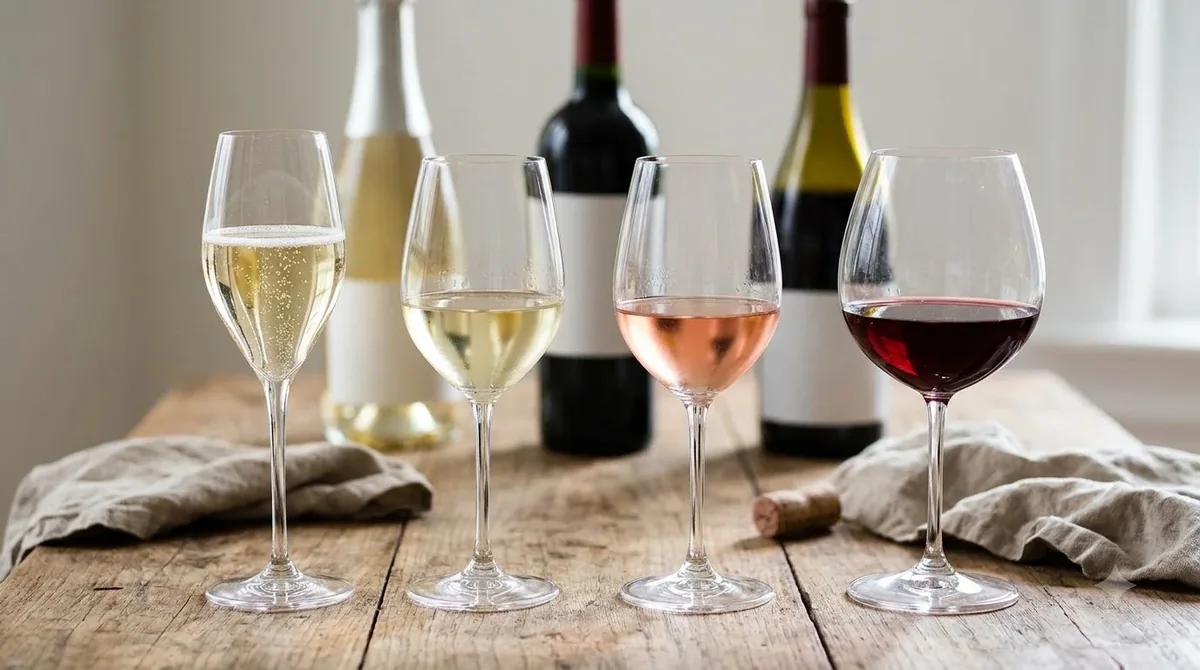
The usual moscato color is pale straw to golden yellow, especially in familiar Moscato Bianco wines such as Moscato d’Asti. The wider Muscat family also produces wines that look pale pink, coppery amber, or ruby red, depending on the grape variety and how the juice is handled. Color alone does not tell you whether a Moscato is sweet, sparkling, or high in alcohol. To identify the style, read the shade alongside the grape name, region, and wine description.
Moscato is best known in the United States as a fragrant, lightly sparkling white wine, but the name covers more than one grape and more than one style. The Italian name usually points to Muscat Blanc à Petits Grains, also called Moscato Bianco, while “Muscat” can refer to a much larger grape family. The difference matters: a pale glass of Moscato d’Asti and a deep red glass of Moscato Rosa can share an aromatic family name without looking alike.
What Color Is Moscato Usually?
For the bottle most shoppers have in mind, expect a clear, light white wine with a straw-yellow, lemon-yellow, or soft golden cast. Moscato d’Asti from Piedmont is officially described as straw to yellow of varying intensity, so a subtle gold tone is normal rather than a sign that the wine has turned.
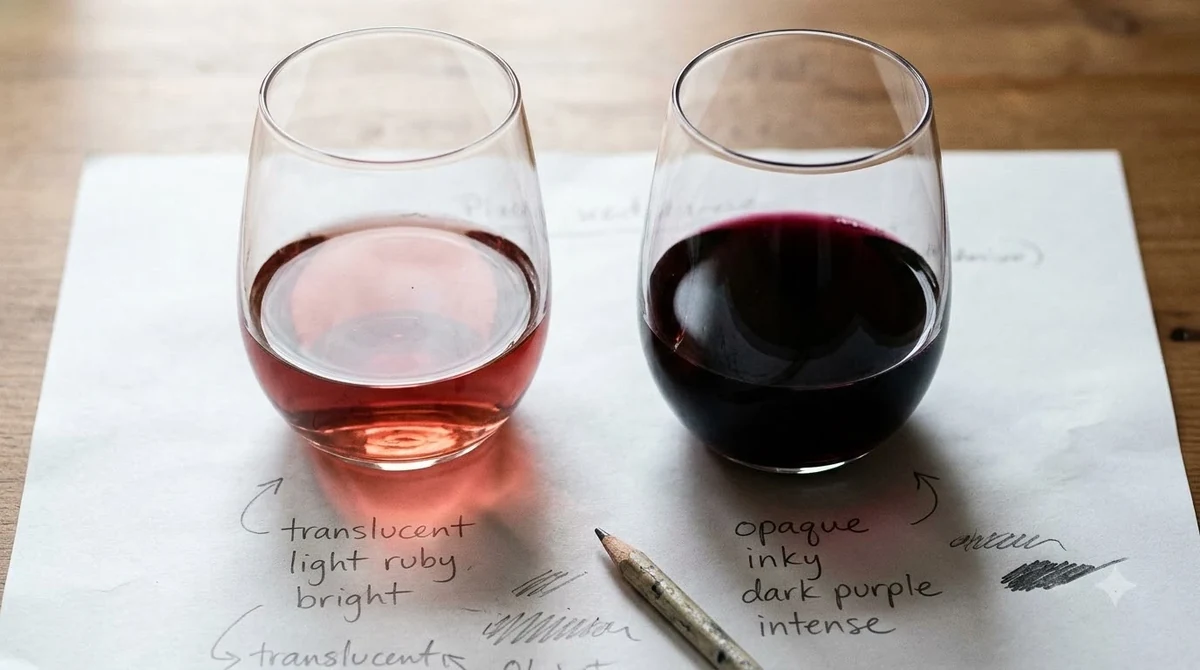
In a glass, the palest examples can look almost clear at the rim, with a light yellow core. Others show a more noticeable golden tint, especially when the fruit was very ripe or the winemaking style gives the wine more color and texture. The hue can vary by producer and bottling, even when two wines share the Moscato Bianco grape. A slight greenish glint may also appear in a young, fresh white wine; it is a visual impression, not a separate Moscato category.
The regional specification for Moscato d’Asti describes its color as “yellow more or less intense, straw” and its appearance as brilliant. That is a helpful benchmark for the classic style, not a rule for every wine carrying Muscat or Moscato on its label. California producers, for example, make Muscat wines in white, pink, and red shades as well as in still, sparkling, and dessert forms. The range is broad because the family includes several varieties, not because the familiar white wine changes its color by recipe alone.
Lighting makes a difference when you judge the shade. View the wine against a plain white background and look at the edge of the liquid where it meets the bowl of the glass. A clear glass and neutral daylight make it easier to distinguish pale straw from yellow-gold or amber. A colored glass, warm restaurant lighting, or a dark table can make a pale wine look deeper than it is.
How Muscat Grape Varieties Affect the Shade
The starting point is the grape itself: Muscat is a family, and its members do not all have the same skin color. Muscat Blanc à Petits Grains, the variety commonly called Moscato Bianco in Italy, has yellow-hued berries; mutations in the Muscat family can be pink, red, or dark brown. That variation helps explain why the Muscat name covers several colors.
The Barbera d’Asti and Monferrato consortium describes ripe Moscato Bianco berries as greenish yellow to amber. It also notes that the variety is aromatic and is often used for sweet wines and sparkling styles, while dried grapes can make passito wines. Those berry colors do not mean every finished wine will be amber; winemaking determines how much pigment enters the juice.
Muscat of Alexandria is another important member of the family. It is also known by names such as Zibibbo in Sicily and Moscatel in parts of Spain and Portugal. It has larger, darker berries and is often used for concentrated sweet wines, although dry examples exist too. Muscat Ottonel is a separate variety found in parts of Central and Eastern Europe, including Austria, Hungary, and Romania. The label’s grape name can therefore tell you more than the generic word “Moscato.”
Red-skinned members include Moscato Rosa and Moscato di Scanzo. Wine writers commonly group these under the wider Muscat family, but they are not the same grape as Moscato Bianco. Moscato Rosa is particularly associated with Trentino-Alto Adige in northern Italy, where it makes aromatic red dessert wines. For a concise explanation of the grape-name distinctions, Decanter’s Muscat, Moscatel, and Moscato overview distinguishes the family from the specific varieties and regional names.
Why Moscato d’Asti Is Pale Yellow
Moscato d’Asti is the familiar reference point because it is made from Moscato Bianco and is generally a lightly sparkling white wine. The protected style comes from southern Piedmont, across 52 towns in the provinces of Asti, Alessandria, and Cuneo, and the regional specification calls for Moscato Bianco at 100 percent.
The finished wine is normally brilliant and straw-yellow to a more pronounced yellow. Its floral, fruity aromas can suggest orange blossom, peach, citrus, sage, and ripe pear, but those aromas do not indicate that the wine is orange or red. Aroma and color are separate parts of the tasting experience. A Moscato d’Asti can smell of orange blossom while remaining a pale white wine in the glass.
The production style also helps explain its familiar profile. Moscato d’Asti is only partially fermented, leaving natural grape sugar in the wine and keeping alcohol relatively low; Decanter describes typical alcohol levels around 5 to 5.5 percent. It is often gently fizzy rather than forcefully sparkling, with carbon dioxide adding a fine lift to the glass. That lightness suits fruit desserts, pastries, and other sweets.
Do not confuse the color of the wine with the color of the label or bottle. Some producers use gold foil, green glass, or pale labels that can make the wine look more golden on a shelf. When poured, the liquid itself should be read in a clear glass. A light straw hue is entirely consistent with Moscato d’Asti, while a deep ruby color would point to a different grape or style.
Pink, Ruby, and Amber Moscato Styles
Pink and red Moscato wines are real styles, not necessarily white Moscato with an unusual tint. Some are made from darker-skinned Muscat varieties, while the precise production method depends on the wine and its region. Moscato Rosa from Alto Adige is a clear example: it is a red-hued grape and can produce a bright ruby or pale ruby-red dessert wine.
There is an important distinction between a pink-colored wine marketed as “Pink Moscato” and a wine made from the specific Moscato Rosa grape. The first name describes a color or style but does not identify one grape; the second identifies a specific variety. Do not assume that every bottle labeled Pink Moscato is Moscato Rosa, or that every wine made from Moscato Rosa is pale pink. Producers in Alto Adige describe examples that range from pale ruby to bright ruby red.
Amber is another possibility, but it needs context. Moscato Bianco berries can ripen from greenish yellow toward amber, and some Muscat wines are made with extended skin contact or oxidative aging that deepens their color. A skin-contact white Muscat can move toward gold or orange without becoming a red wine. Fortified Muscat dessert wines may also show deeper gold, amber, or tawny tones, especially as they mature.
Color intensity is not a sweetness scale. A pale Moscato can be quite sweet, while a deeper Muscat may be dry, sweet, or fortified. A red Moscato Rosa can have acidity and some tannin alongside its sweetness. Check the grape, region, and style before using shade to predict flavor.
How Skin Contact and Winemaking Change Moscato Color
Grape skins provide much of the pigment in red and pink wines, so the time juice spends with the skins is a key part of color. Many white Moscato wines are pressed and fermented with little skin contact, which keeps their color pale. Red-skinned Muscat varieties can be macerated with their skins to draw out color, while a short maceration can produce a lighter red shade and limit tannin extraction.
Franz Haas’s producer page describes its Moscato Rosa as bright ruby red and says it is vinified like a red wine, with a shorter maceration to avoid overly astringent tannins. The producer lists a recommended serving range of 14–16°C (57–61°F), and reports production of 12,000–15,000 bottles. Its vines grow at 250–300 meters in a ventilated area, and the wine is held in stainless steel tanks before bottling. These details show how a distinctly red Moscato can still be handled to preserve aromatic freshness.
Other producers use different timing and methods. Kettmeir’s Moscato Rosa Athesis, from Caldaro in Alto Adige, is described as pale ruby red with orange streaks; the producer lists 14 percent alcohol and a 12–14°C serving temperature. Age can also change a white wine’s appearance: young white Moscato usually shows brighter, paler tones, while oxygen exposure or long maturation can move some wines toward deeper gold or amber. A deliberately aged or fortified Muscat may be amber by design, so compare the liquid with the style described by the producer rather than assuming every golden hue is oxidation.
How to Choose, Serve, and Store Moscato by Color
Start with the style you want, then use color as a supporting clue: pale straw Moscato d’Asti is a lightly sparkling white, while ruby Moscato Rosa is a different, often dessert-focused wine with red-fruit and floral notes. The site’s Wine by Type section places Moscato alongside other white, red, rosé, and sparkling styles.
Serving temperature should follow the style rather than the depth of color alone. Sweet white wines are generally best served around 43–50°F, while Franz Haas specifies 57–61°F for its red Moscato Rosa. Use the producer’s recommendation for a particular wine when it differs from the broad category range.
Tip: Chill a pale, sweet Moscato well before serving, then pour a small amount into a clear glass against a white background. Check the aroma and the label before deciding that a deeper gold shade means age, oxidation, or a different grape.
| Wine or grape reference | Typical color description | Useful numeric detail |
|---|---|---|
| Moscato d’Asti DOCG | Brilliant straw to yellow of varying intensity | 100% Moscato Bianco; minimum alcohol 5% by volume in the regional specification |
| Moscato Bianco grapes | Ripe berries range from greenish yellow to amber | Ripening is generally early to medium-early, in the second ten days of September in the consortium description |
| Franz Haas Moscato Rosa | Bright ruby red | 14–16°C serving range; 12,000–15,000 bottles reported by the producer |
| Kettmeir Moscato Rosa Athesis | Pale ruby red with orange streaks | 14% alcohol; 12–14°C serving temperature |
For sparkling wine comparisons, the color of Cava is a useful contrast: a sparkling wine’s hue also depends on its grape blend and production choices, not simply on the presence of bubbles. Moscato’s gentle fizz does not make it red, white, or pink; the grape and winemaking decisions set the color. If you are buying Moscato to keep for a special occasion, consult the guide to how long Moscato lasts unopened for storage expectations, because color alone cannot tell you how long a bottle will hold well. The wine’s name is usually pronounced “moh-SKAH-toh”; the short guide to how to pronounce Moscato can help you say it clearly at a shop or restaurant.
Frequently Asked Questions
These quick answers address details that can be confusing when different bottles use similar Muscat names. They also explain why color, grape identity, and serving style should be considered separately.
Is pink Moscato the same as Moscato Rosa?
No. “Pink Moscato” is a color or style description and does not identify one grape, while Moscato Rosa is a specific red-skinned Muscat variety. A bottle labeled 100% Moscato Rosa identifies that grape; a pink Moscato label alone does not.
Can white Moscato look orange?
Yes. A white-skinned Muscat can take on a deeper orange or copper shade when it is made with extended skin contact, a technique sometimes described as orange-wine production. Wine Enthusiast has reviewed a Muscat Blanc à Petits Grains skin-contact wine described as darkly colored in the glass.
Does a darker Moscato contain more sugar?
Not necessarily. Pigment comes primarily from grape skins and winemaking, while sweetness depends on the amount of residual sugar left after fermentation. A dark Moscato and a pale Moscato can have very different sweetness levels, so color is not a reliable substitute for tasting notes or a sugar figure.
Is Moscato Rosa always a still wine?
No. Most familiar Alto Adige examples are still dessert wines, but sparkling examples are also produced. Kloster Neustift’s Moscato Rosa Praepositus, for example, is described by the winery as sparkling garnet red and is made with five days of fermentation on the skins.
Are Muscat of Alexandria and Moscato Bianco related?
Yes. Decanter notes that Muscat of Alexandria is the result of an ancient natural crossing of Muscat Blanc à Petits Grains and Axina de Tres Bias, a black-skinned variety that originated in Greece. That lineage connects the two grapes while helping explain why Muscat of Alexandria has different berry characteristics.
The most familiar moscato color is pale yellow, but the Muscat family reaches well beyond that single look. Use the grape name and winemaking style to tell a straw-colored Moscato d’Asti from a ruby Moscato Rosa or an amber skin-contact Muscat. Once you know what is in the bottle, the color becomes a helpful clue rather than the whole story.
More in Wine Types & Grapes
 Zinfandel Sugar Content: Dry Red vs. White Zinfandel GramsUpdated Nov 21, 2026
 Best Zinfandel Substitute Options for Sipping and CookingUpdated Nov 21, 2026
 Zweigelt Food Pairing: Best Dishes, Cheeses, and Serving TipsUpdated Nov 21, 2026
 Zinfandel Tannins Explained: How Structure Shapes Every BottleUpdated Nov 21, 2026
 Zinfandel Sweetness Level: Dry Red vs. Sweet White Zin ExplainedUpdated Nov 21, 2026
 Xinomavro Food Pairing: Best Dishes, Styles, and Serving TipsUpdated Nov 21, 2026