

We may earn a commission when you buy through links on this page, at no extra cost to you. Learn more.
franzia chardonnay alcohol content is listed at 12.5% ABV for a U.S. 3-liter box. That puts it in the moderate range for a still white wine and means a standard 5-ounce pour contains about 0.625 fluid ounce of pure alcohol. Package size changes how much wine is in the box, not the stated alcohol concentration.
Franzia Chardonnay is a medium-bodied, semi-dry white wine described by the producer with ripe apple and pear, vanilla, and subtle oak notes. Understanding its alcohol percentage is useful for estimating a pour, comparing it with other wines, and deciding how to serve the box at a meal. The details below separate the listed ABV from the amount of wine in each package and explain how U.S. labeling rules work.
The Listed Alcohol Content in Franzia Chardonnay
The practical answer is 12.5% alcohol by volume (ABV). A U.S. listing for the 3-liter Franzia Chardonnay box gives 12.5% ABV, and the same listing describes the wine as medium-bodied and semi-dry. Treat 12.5% as the published figure for the product listing, rather than assuming every package in every market will carry an identical label.
ABV measures the share of a wine’s volume that is pure ethanol. At 12.5% ABV, 100 milliliters of wine contains about 12.5 milliliters of alcohol by volume. It is a concentration measurement: it does not mean that 12.5% of the box is a separate layer of alcohol, and it does not tell you how many servings the box contains without also knowing the package volume.
Franzia’s official Chardonnay page describes a smooth, semi-dry white wine with ripe apple and pear, hints of vanilla, and a refreshing finish with subtle oak. It identifies 5-liter, 1.5-liter, and 500-milliliter packages. The official page emphasizes the wine’s style and formats, while the retailer product listing supplies the specific 12.5% figure for its 3-liter presentation. Those are complementary details, not competing measurements.
What 12.5% ABV Means in a Glass
A 5-ounce pour of wine at 12.5% ABV contains about 0.625 fluid ounce of pure alcohol, or approximately 18.5 milliliters. The same percentage in a larger pour delivers more total alcohol because the serving contains more wine, so pour size matters just as much as the number printed beside ABV.
The arithmetic is straightforward: multiply the wine volume by 0.125. For a 5-ounce serving, 5 × 0.125 equals 0.625 fluid ounce of alcohol by volume. A 6-ounce pour at the same ABV contains 0.75 fluid ounce of pure alcohol, which is 20% more wine and 20% more alcohol than the 5-ounce pour. The percentage has not changed; the total amount has.
Box volume and serving count
Franzia states that its standard serving is 5 ounces. Its official page lists 34 servings for a 5-liter box, 10 for a 1.5-liter box, and 3 for a 500-milliliter package. A separate U.S. retail listing describes the 3-liter box as four standard 750-milliliter bottles and 20 five-ounce glasses. The small differences between exact metric conversions and printed serving counts come from rounding to whole servings.
| Package or pour | Wine volume | Approximate 5-ounce servings | What it tells you |
|---|---|---|---|
| Single serving | 5 fl oz (about 148 mL) | 1 | Standard pour used in Franzia’s serving information |
| Small carton | 500 mL | 3 | Three rounded servings |
| Box | 1.5 L | 10 | About two 750 mL bottles |
| Box | 3 L | 20 | About four 750 mL bottles |
| Large box | 5 L | 34 | More total wine, not a higher ABV |
The table shows why alcohol percentage and package size answer different questions. A 500-milliliter package and a 5-liter box can have the same concentration but supply very different total amounts of wine. The larger format contains ten times as much wine as the small format, so it also contains about ten times as much total alcohol if the ABV is the same.
How Franzia Chardonnay’s Style Shapes the Experience
Franzia describes its Chardonnay as medium-bodied and semi-dry, with ripe apple, pear, vanilla, and subtle oak. Those style terms help explain the wine’s feel and flavor, but they do not replace the 12.5% ABV figure or provide a precise way to estimate alcohol in a glass.
“Medium-bodied” refers to the impression of weight and texture in the mouth. Chardonnay can range from lean and crisp to broad and creamy because the grape adapts to different climates and cellar choices. Wine Enthusiast explains that cooler-climate Chardonnay often leans toward citrus and mineral notes, while warmer-climate examples can show riper fruit such as peach and pineapple. The producer’s apple, pear, vanilla, and subtle-oak description gives readers a more specific expectation for this Franzia bottling.
“Semi-dry” describes perceived sweetness, not alcohol strength. A wine may taste round or slightly sweet while still having a moderate ABV; sweetness and alcohol are separate characteristics. Franzia’s own description places this Chardonnay between fully dry and noticeably sweet styles. That matters for food planning: the wine’s fruit and soft oak notes may complement dishes with gentle seasoning, while a highly sweet dessert generally needs a wine at least as sweet as the dessert.
Oak can contribute vanilla, toast, spice, and a richer impression in Chardonnay, although the presence of an oak note does not prove that a particular wine was aged in new barrels. Producers can use different cellar methods to shape a Chardonnay, and the Franzia description names subtle oak as a flavor impression without giving a detailed barrel regimen. It is better to report the stated flavor than to guess at the winemaking equipment or length of aging.
Body, acidity, and alcohol are different measurements
Body is the wine’s perceived weight; acidity contributes freshness and a mouthwatering edge; ABV is the percentage of alcohol by volume. Chardonnay is generally considered to have moderate acidity, although climate, harvest timing, and winemaking can shift the result. A wine that feels full or creamy is not necessarily higher in alcohol than one that tastes lean, and a crisp finish is not proof of a lower ABV.
How U.S. Wine Labels State Alcohol Content
On a U.S. wine label, alcohol content is expressed as a percentage of alcohol by volume. The Alcohol and Tobacco Tax and Trade Bureau (TTB) says a numerical statement is mandatory for wine above 14% ABV, while wine from 7% through 14% may omit the number when the brand label uses the permitted “table wine” or “light wine” designation.
That rule helps explain why some table wines show a clear percentage and others may use a class or type term instead. If a number appears, it may be printed on any label panel of the container, not only on the front. TTB labeling guidance also specifies that the statement is written in terms of alcohol by volume; the agency’s examples include “13.5% Alc. by Vol.” and “ALCOHOL 13.5% BY VOLUME.”
There is also a permitted tolerance between the labeled alcohol percentage and the actual alcohol content. For wine at 14% ABV or below, TTB allows a tolerance of plus or minus 1.5 percentage points for a specific percentage statement. For wine above 14%, the tolerance is plus or minus 1 percentage point. This is a regulatory allowance, not a prediction that any particular box is at the high or low edge of the range.
For that reason, the listed 12.5% figure should be read as the declared ABV associated with the product listing, not as a claim that every sample will measure exactly 12.500%. TTB also requires a label statement to identify the correct class, type, and taxable grade of the wine; the tolerance cannot be used to make a wine’s category incorrect. The agency’s explanation is available in its wine alcohol-content labeling guidance.
For buyers, the most practical habit is to compare the number and the package format together. A percentage tells you concentration, while milliliters or liters tell you the amount of wine. A larger carton does not automatically mean stronger wine, and a smaller carton does not automatically mean lower alcohol.
Serving Temperature and Storage for the Box
Serve Franzia Chardonnay chilled, around 45–50°F, which suits light and medium-bodied white wines. That temperature keeps the wine refreshing while allowing the apple, pear, vanilla, and subtle oak notes to remain noticeable rather than muted by excessive cold.
A few minutes in the refrigerator will usually help a warm box reach serving temperature, but avoid leaving a glass in the freezer to speed the process. Very cold wine can seem less aromatic and less expressive. If the wine is colder than you prefer, let the poured glass stand briefly; it will warm gradually without needing to heat the full package.
Franzia’s official product page says its box wine stays fresh for up to six weeks after opening. That is a brand-specific statement about its packaging, and it is different from the usual guidance for an opened glass bottle of still wine. Close the tap securely after pouring, keep the package in a cool place or refrigerated as directed by the package, and avoid leaving the spout exposed between servings.
Tip: Chill the box before serving, pour a measured 5-ounce glass, then close the tap fully. Keeping the spout clean and the package properly closed helps you use the producer’s stated freshness window rather than exposing the wine to unnecessary air.
Plan serving amounts by the number of people and the package size, not by guessing from the box’s outer dimensions. A 1.5-liter format is listed by Franzia as about 10 five-ounce servings; the 5-liter format is listed as about 34. Those figures make it easier to estimate how much wine to chill for a dinner without treating the box as one oversized serving.
Food Pairings and Comparisons with Other Wines
Franzia recommends Chardonnay with hearty soups and describes patio and casual occasions as natural settings for the wine; a U.S. product listing also suggests pasta and chicken. These foods suit a medium-bodied, semi-dry white with apple, pear, vanilla, and subtle oak notes without demanding a powerful tannic structure.
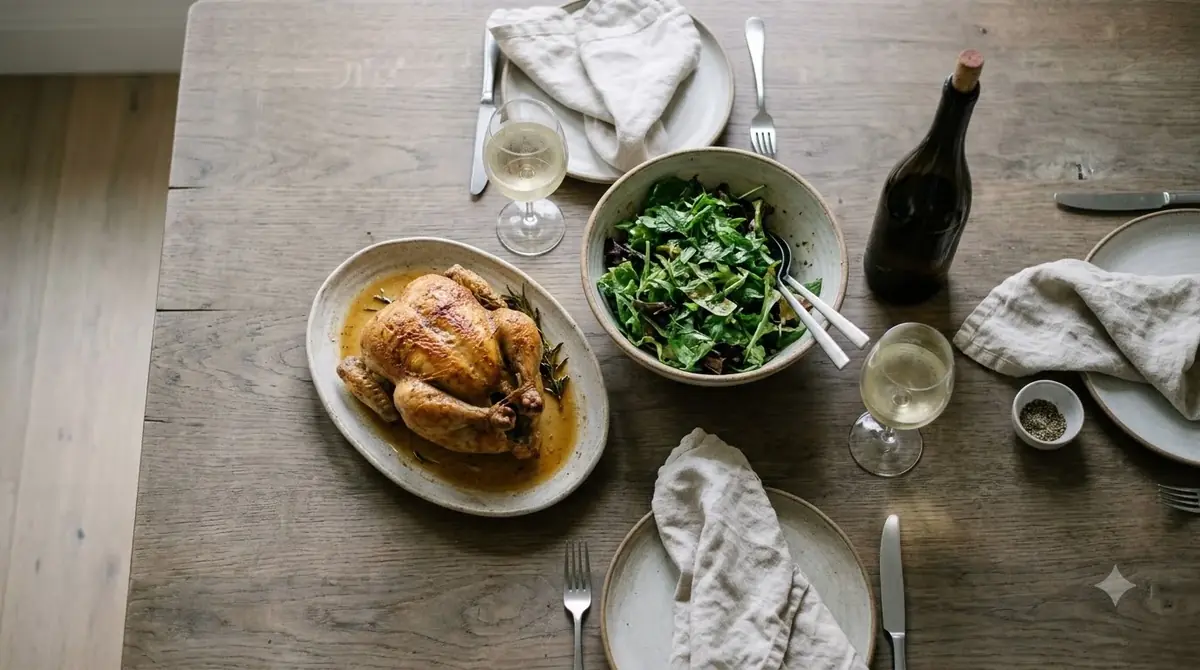
Try it with roast chicken, chicken Alfredo, mushroom pasta, mild seafood, or a creamy potato soup. The wine’s moderate acidity can refresh the palate alongside richer textures, while its fruit character works with gentle herbs and browned or roasted flavors. For a dish built around lemon juice, sharp vinegar, or another strongly acidic ingredient, use a wine with equal or higher acidity so the food does not make the wine taste flat.
Use caution with very spicy food. Alcohol can make chili heat feel more intense, so a 12.5% ABV Chardonnay may seem hotter alongside heavily peppered dishes than alongside mild or creamy ones. If the meal includes a lot of chile, choose a less fiery preparation or a wine style with a different balance rather than expecting the Chardonnay’s fruit notes to neutralize the heat.
It may help to compare Franzia Chardonnay with other familiar styles before choosing a box. Franzia Chillable Red is a red-wine option, and its alcohol figure is a separate product question; the Franzia Chillable Red alcohol content page can help make that comparison. Franzia White Zinfandel is a pink wine with a different sweetness profile, so its Franzia White Zinfandel alcohol content should be considered on its own rather than inferred from Chardonnay. For a fuller red-wine comparison, Meiomi Pinot Noir alcohol content is another distinct reference point. Pinot Noir typically has low-to-medium tannin and high acidity, while Chardonnay is a white grape with moderate acidity and no red-wine tannin structure to compare in the same way. A reader browsing by producer or label can also explore the site’s broader Wine Brands information without assuming that one brand’s products share the same ABV.
Frequently Asked Questions
Questions about Chardonnay often go beyond the 12.5% ABV figure and basic serving math. These answers cover its use in sparkling wine, cellar choices such as malolactic fermentation, and the grape’s international growing range.
Is Chardonnay used to make Champagne?
Yes. Chardonnay is one of the three principal grapes permitted in traditional Champagne blends, alongside Pinot Noir and Meunier. A Champagne labeled blanc de blancs is made exclusively from white grapes and is commonly made entirely from Chardonnay.
Why can Chardonnay taste buttery?
A buttery character can come from malolactic fermentation, a cellar process that converts sharper malic acid into softer lactic acid. The process can also create diacetyl, a compound associated with buttery aromas; it is a winemaking choice, not a flavor guaranteed by the Chardonnay grape.
Can Chardonnay be made without oak?
Yes. Some producers ferment and store Chardonnay in stainless-steel tanks to preserve fresh fruit and a crisp profile. Oak influence can also come from barrels or from oak alternatives such as chips, blocks, or staves, so an oak-flavored wine does not automatically prove that it spent its entire fermentation and aging period in a barrel.
Is Chardonnay grown outside France and the United States?
Yes. Chardonnay is grown in Australia, New Zealand, South Africa, Argentina, and Chile, among other countries. In Italy, it is used in sparkling wines such as Franciacorta, while Austria uses the synonym Morillon for the grape.
Is Chardonnay always a still wine?
No. Chardonnay appears in still white wines, sparkling wines, and some dessert wines. The grape is used in Champagne and other sparkling-wine regions as well as in the familiar still Chardonnay styles sold in boxes and bottles.
Franzia Chardonnay’s listed 12.5% ABV gives you a useful starting point for comparing wines and planning a measured pour, while the producer’s package information helps estimate how many glasses a box can provide. Focus on both the percentage and the serving size, then serve the wine chilled with foods that suit its medium body and semi-dry fruit profile.
More in Wine Brands
 Underwood Wine Price: Compare Bottles, Cans, and Pack SizesUpdated Nov 21, 2026
 Zenato Wine Price: Compare Styles and Choose the Right BottleUpdated Nov 21, 2026
 Zuccardi Wine Price: Compare Bottles and Find the Right RangeUpdated Nov 21, 2026
 Yellow Tail Moscato Review: Taste, Sweetness and Serving TipsUpdated Nov 21, 2026
 Wolf Blass Yellow Label Review: Choose Your Best StyleUpdated Nov 21, 2026
 Wolffer Estate Rose Review: Choose the Right Bottle for Your TableUpdated Nov 21, 2026