

We may earn a commission when you buy through links on this page, at no extra cost to you. Learn more.
If you are wondering where is pinot grigio from, the grape actually originated in the Burgundy region of France—where it is known as Pinot Gris—before spreading across Europe and becoming famous in northeastern Italy. Today, northern Italian regions like Alto Adige, Trentino, Friuli-Venezia Giulia, and Veneto produce the bulk of the world’s crisp, dry Pinot Grigio. Beyond Italy and France, the grape also thrives in Germany, Austria, Oregon, California, Washington, Australia, and New Zealand.
Because the same grape wears different names depending on where it grows, tracking its origins explains why one bottle tastes like zesty lemon peel while another feels rich and honeyed. Understanding its journey from medieval French vineyards to modern alpine slopes helps you know what to expect every time you pull a cork or twist a screwcap.
What Is Pinot Grigio?
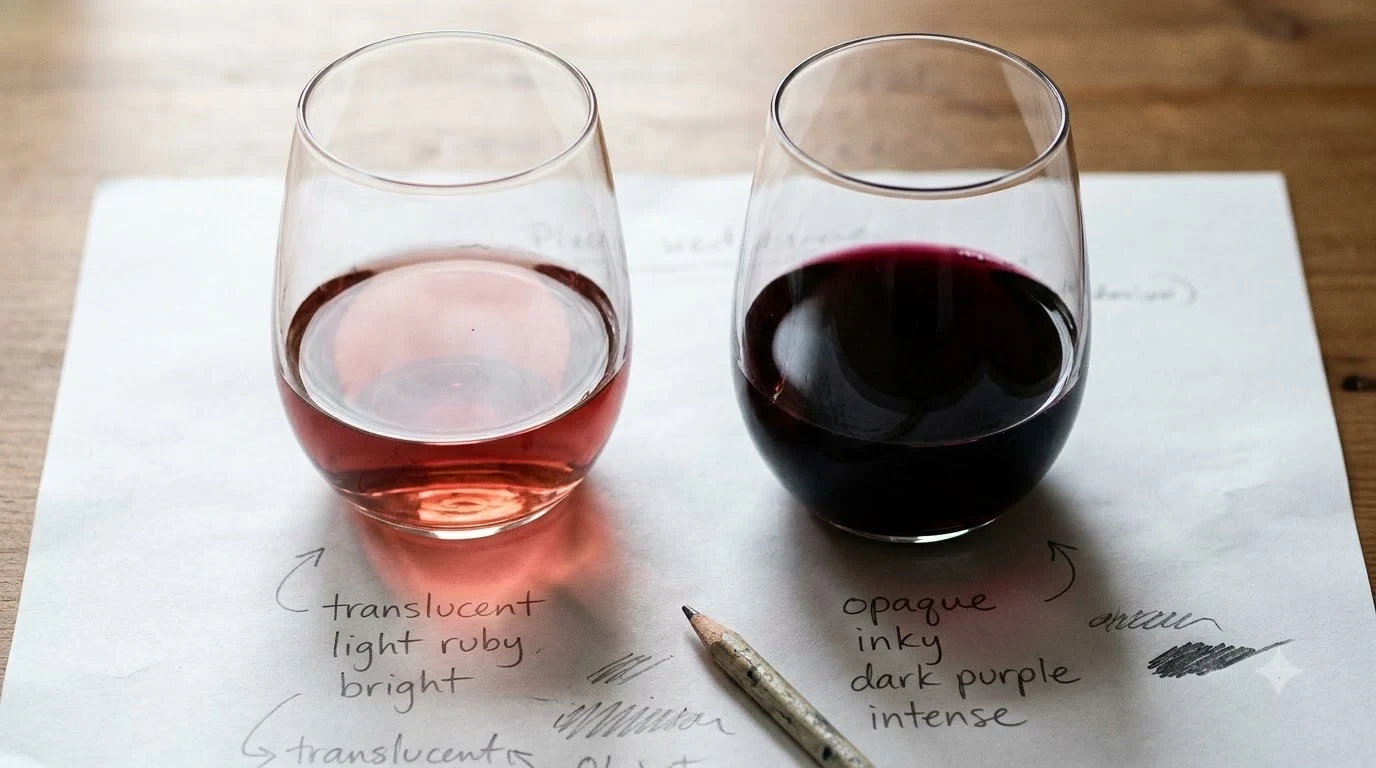
Pinot Grigio is a white wine made from a grayish-pink grape variety that is a natural genetic color mutation of red Pinot Noir. Even though the skins carry a dusty pink, blue-gray, or coppery tint on the vine, winemakers typically press the fruit gently and separate the juice quickly to produce a pale straw-colored white wine.
Genetically, Pinot Grigio and Pinot Gris are the exact same vine. The difference in naming comes down to language and regional tradition rather than botany: “gris” means gray in French, while “grigio” means gray in Italian. In Germany and Austria, the same grape goes by Grauburgunder or Ruländer. Because its ancestor is where is pinot noir from, the vine shares Pinot Noir’s sensitivity to climate, soil, and vineyard elevation, reacting dramatically to changes in temperature and sunlight.
According to wine historians and VinePair’s Pinot Grigio guide, the grape first appeared in Burgundy during the Middle Ages before Emperor Charles IV helped carry cuttings into Central Europe in the fourteenth century. By the nineteenth century, the vine had arrived in northern Italy, where local growers embraced its crisp acidity and clean fruit profile. Over the late twentieth century, Italian exports turned the name Pinot Grigio into a household staple across the United States.
Flavor and Styles
Pinot Grigio is not a single uniform flavor; its taste shifts between lean and minerally, ripe and fruity, or rich and off-dry depending on climate and winemaking choices. Cool alpine vineyards preserve high natural acidity and citrus flavors, while warmer regions bring out riper orchard and stone fruit notes.
Reviewers at Wine Folly organize the grape into three main stylistic camps: minerally and dry, fruity and dry, and rich or sweet. The classic northern Italian style sits firmly in the minerally and dry category, offering bright flavors of green apple, pear, lemon peel, white peach, and a distinctive wet-gravel or saline finish. Most everyday bottles are fermented in stainless steel tanks to protect those fresh, floral, and citrus aromatics without adding oak spice.
A lesser-known traditional style from northeastern Italy is called ramato, which translates to “coppery.” To make ramato Pinot Grigio, winemakers leave the clear juice in contact with the pinkish-gray grape skins for hours or days during early fermentation. That brief skin contact tints the wine a pale copper or salmon hue and adds subtle grip, dried herb notes, and crushed rose petal aromatics that bridge the gap between crisp white wine and light rosé.
| Regional Style | Typical Label Name | Climate | Key Tasting Notes | Body and Sweetness |
|---|---|---|---|---|
| Northeastern Italy (Alto Adige, Friuli, Veneto) | Pinot Grigio | Cool alpine to temperate | Lemon peel, green apple, pear, almond, wet stone | Light to medium-bodied, bone-dry |
| Alsace, France | Pinot Gris | Cool, sunny, dry | Ripe yellow peach, honey, ginger, clove, beeswax | Full-bodied, dry to sweet |
| Germany and Austria | Grauburgunder | Cool continental | Quince, yellow apple, white blossom, mineral | Medium to full-bodied, mostly dry |
| United States (Oregon, California, Washington) | Pinot Gris or Pinot Grigio | Cool maritime to warm | Nectarine, honeydew melon, Meyer lemon, pear | Medium-bodied, dry and fruit-forward |
Where It Grows
While its genetic roots lie in Burgundy, northeastern Italy serves as the modern heartland of Pinot Grigio, flanked by major plantings in France, Central Europe, and the Pacific Northwest. Each region shapes the grape’s acidity, alcohol weight, and aromatic intensity through elevation, latitude, and soil composition.

In Italy, three northeastern regions—Veneto, Friuli-Venezia Giulia, and Trentino-Alto Adige—account for the vast majority of production. The flat, alluvial plains of Veneto supply high volumes of light, easy-drinking bottles, whereas the steep mountain slopes of Alto Adige push vineyards up to 3,300 feet in elevation. Those high-altitude sites experience wide swings between warm daytime sun and cold alpine nights, slowing down grape ripening and creating structured, aromatic wines with notes of nectarine, honeysuckle, and flint. Neighboring Friuli-Venezia Giulia, with its marl and sandstone soils buffered by the Alps and the Adriatic Sea, yields smooth, textured bottles with bold acacia flower and orchard fruit character.
Across the border in northeastern France, Alsace treats the grape—labeled Pinot Gris—as one of its noble varieties. Sheltered by the Vosges Mountains, Alsace enjoys dry, sunny autumns that allow grapes to ripen fully on limestone and clay soils, resulting in full-bodied, spicy, and sometimes off-dry or late-harvest dessert wines. Germany and Austria cultivate extensive acreage under the name Grauburgunder, particularly in Baden, Pfalz, Burgenland, and Styria, where dry, food-friendly bottlings dominate local tables.
Outside Europe, the United States is the second-largest producer of the grape. Oregon’s Willamette Valley has made Pinot Gris its signature white grape, producing vibrant, dry wines with crisp pear and citrus notes that mirror the region’s cool, damp climate. California, Washington, Australia, and New Zealand also produce notable quantities, often leaning toward riper stone-fruit and tropical aromatics in sunnier sites. If you enjoy exploring how geography transforms different Italian and European grapes, comparing Pinot Grigio with where is lambrusco from or where is moscato from shows just how diverse Italy’s regional wine map really is.
How to Serve Pinot Grigio
Pinot Grigio should always be served chilled to highlight its crisp acidity and refreshing fruit character, though serving it too cold can mute its subtle floral and mineral aromatics. A standard white wine glass with a medium-sized bowl works best to concentrate its delicate scents while keeping the pour cool.
For light, high-acid bottles from Veneto, Trentino, or Oregon, aim for a refrigerator-cold serving temperature of around 45°F (7°C). If you are pouring a richer, more textured bottle from Alto Adige, Friuli, or Alsace, let the bottle sit out of the fridge for ten to fifteen minutes so it warms closer to 50°F (10°C). That slightly higher temperature allows stone fruit, almond, and subtle spice notes to open up on the palate.
Unlike bold red wines, young Pinot Grigio does not need decanting and is meant to be poured straight from the bottle. Once opened, re-cork or seal the bottle tightly and store it upright in the refrigerator, where it will stay fresh and vibrant for two to three days before the fruit aromatics begin to fade.
Tip: If your Pinot Grigio tastes flat or neutral right out of the refrigerator, let it sit in your glass for five minutes—a slight rise in temperature quickly unlocks hidden pear, citrus blossom, and mineral notes.
Food Pairing
Pinot Grigio’s bright acidity, clean finish, and moderate body make it one of the most adaptable white wines at the dinner table. Its natural zing acts much like a squeeze of fresh lemon, cutting through richness while echoing delicate herbs, seafood, and salty cheeses.
Light, crisp Italian styles shine alongside raw or simply prepared seafood, including oysters on the half shell, steamed mussels, grilled shrimp, ceviche, and flaky white fish cooked with lemon and olive oil. They also pair effortlessly with fresh vegetable dishes, pesto pasta, caprese salad, and young cheeses like mozzarella, burrata, and fresh goat cheese. In northern Italy, locals frequently serve Alto Adige Pinot Grigio with savory dumplings known as knödel, herb-roasted chicken, and sautéed wild mushrooms.
Fuller-bodied Pinot Gris from Alsace or skin-contact ramato bottlings can handle richer, more complex dishes. Their rounded texture and subtle spice complement pork tenderloin, roasted squash, creamy risotto, and mildly spiced Asian dishes where a bone-dry, razor-thin white wine might feel overwhelmed. For more inspiration across different wine styles, browse our overview of Wine by Type.
How to Choose a Bottle
Reading the regional appellation and label terminology is the fastest way to predict whether a bottle will taste crisp and citrusy or rich and rounded. Because producers rarely write flavor descriptions on the front label, origin clues do most of the heavy lifting.
If you want a classic, light-bodied, bone-dry refresher, look for bottles labeled “Pinot Grigio” from northern Italian appellations such as Alto Adige DOC, Trentino DOC, Friuli Grave, Collio, or Pinot Grigio delle Venezie DOC. Checking the alcohol by volume (ABV) printed in small type on the label also offers a reliable clue: bottles between 11.5% and 12.5% ABV tend to be lighter and zippier, while bottles around 13% to 13.5% ABV usually deliver more mid-palate weight and ripe fruit.
If you prefer a fuller, richer white wine, look for bottles labeled “Pinot Gris” from Alsace, Oregon, or Washington, or “Grauburgunder” from Germany. On Alsatian labels, terms like Vendange Tardive indicate late-harvest grapes with noticeable sweetness, while standard regional bottlings are typically dry to lightly off-dry with generous texture.
Frequently Asked Questions
Is Pinot Grigio originally from Italy or France?
Pinot Grigio originated in the Burgundy region of France during the Middle Ages, where it was called Pinot Gris. Cuttings later spread across Central Europe and reached northern Italy in the nineteenth century, where Italian winemakers popularized the crisp, dry style known worldwide as Pinot Grigio.
Are Pinot Grigio and Pinot Gris the exact same grape?
Yes, Pinot Grigio and Pinot Gris are the exact same grape variety—a grayish-pink mutation of Pinot Noir. Winemakers generally use “Pinot Grigio” for lighter, drier, citrus-driven Italian-style wines and “Pinot Gris” for fuller-bodied, fruitier, or slightly richer styles made in France and the Pacific Northwest.
Why is Pinot Grigio called “gray” Pinot if it is a white wine?
Both “grigio” in Italian and “gris” in French translate to “gray,” referring to the grape’s unusual dusty pink, blue-gray, and coppery skins on the vine. Winemakers press the grapes gently and remove the skins quickly before fermentation so the finished wine stays pale straw yellow rather than turning red or pink.
Is Pinot Grigio always a dry wine?
The vast majority of Italian, German, and American Pinot Grigio is fermented completely dry with crisp acidity and no noticeable sweetness. However, versions labeled Pinot Gris from Alsace, France, can range from dry to off-dry or sweet, especially when marked as late-harvest wines.
Tracing where Pinot Grigio comes from reveals a grape that bridges French heritage and Italian winemaking craft. Whether you reach for a bright, alpine bottle from Alto Adige or a textured Pinot Gris from Oregon or Alsace, paying attention to the region on the label makes it easy to find the exact style you enjoy.
More in Wine Types & Grapes
 Zinfandel Sugar Content: Dry Red vs. White Zinfandel GramsUpdated Nov 21, 2026
 Best Zinfandel Substitute Options for Sipping and CookingUpdated Nov 21, 2026
 Zweigelt Food Pairing: Best Dishes, Cheeses, and Serving TipsUpdated Nov 21, 2026
 Zinfandel Tannins Explained: How Structure Shapes Every BottleUpdated Nov 21, 2026
 Zinfandel Sweetness Level: Dry Red vs. Sweet White Zin ExplainedUpdated Nov 21, 2026
 Xinomavro Food Pairing: Best Dishes, Styles, and Serving TipsUpdated Nov 21, 2026