

We may earn a commission when you buy through links on this page, at no extra cost to you. Learn more.
La Mancha wine comes from Spain’s sprawling central plateau south of Madrid, where extreme continental heat and scarce rainfall produce concentrated, fruit-forward reds and crisp, refreshing whites. Most bottles center on Tempranillo—known locally as Cencibel—and the hardy native white grape Airén, alongside international varieties like Cabernet Sauvignon, Syrah, Chardonnay, and Sauvignon Blanc. Established as a Denominación de Origen in 1976, the region is famous among American wine drinkers for delivering everyday value across young unoaked bottles and oak-aged Crianza, Reserva, and Gran Reserva reds.
Best known in literature as the wind-swept backdrop to Cervantes’ Don Quixote, Castilla-La Mancha is also the engine room of Spanish viticulture. Across hundreds of thousands of acres of sun-baked limestone and sandy clay, centuries-old cooperative cellars sit alongside modern single-estate wineries crafting structured, age-worthy bottles that punch well above their weight at the dinner table.
What Is La Mancha Wine?
La Mancha wine refers primarily to bottles produced within the Denominación de Origen (DO) La Mancha, Spain’s largest demarcated wine appellation, as well as broader regional wines labeled under the Castilla-La Mancha Indicación Geográfica Protegida (IGP). Stretching across four provinces on the southern Meseta Central, the appellation spans roughly 152,500 hectares (about 377,000 acres) of vineyards, making it one of the largest continuous wine-growing areas in the world.
For decades, La Mancha was viewed almost exclusively as a bulk-wine powerhouse, supplying neutral white wine for brandy distillation and everyday table blends. That reputation shifted dramatically beginning in the late twentieth century, when winemakers introduced temperature-controlled stainless steel fermentation, drip irrigation, and selective oak aging. Today, the Consejo Regulador oversees more than 230 wineries and nearly 14,000 growers, certifying everything from bright, easy-drinking young wines to complex single-vineyard releases.
Understanding the label hierarchy helps clarify what is inside the bottle. Standard DO La Mancha wines follow strict rules on permitted grapes, yields, and barrel maturation. Alongside the main DO, the broader Castilla-La Mancha wine region encompasses smaller, specialized appellations—such as Valdepeñas, Almansa, and Manchuela—as well as elite single-estate Vino de Pago designations awarded to individual properties with distinct microclimates.
Flavor Profile and Key Grape Styles
La Mancha wines balance generous, sun-ripened fruit with a savory, herbaceous edge shaped by high-elevation diurnal temperature swings. Red wines typically range from 13% to 14.5% ABV with medium-plus body and rounded tannins, while modern whites sit closer to 12% to 13% ABV with lively citrus and orchard-fruit aromatics.
White wine production is anchored by Airén, an ancient, drought-tolerant Spanish grape that thrives in arid soils where few other varieties survive. Historically vinified into heavy, oxidative whites, Airén is now harvested earlier and fermented cold in stainless steel to yield pale, light-bodied wines tasting of green apple, Meyer lemon, white peach, and blanched almond. Macabeo (also known as Viura), Verdejo, Chardonnay, and Sauvignon Blanc also play prominent roles, often bottled solo or blended to add floral lift and crisp acidity.
On the red side, Cencibel—the regional name for Tempranillo—dominates quality bottlings. Youthful, unoaked examples burst with red cherry, plum, and wild strawberry, while barrel-aged styles develop deeper layers of blackberry, dried fig, vanilla, leather, sweet tobacco, and toasted Mediterranean herbs. Winemakers frequently blend Cencibel with Garnacha, Syrah, Merlot, Cabernet Sauvignon, or Petit Verdot to build darker color, firmer structure, and spiced black-fruit richness.
| Style / Aging Tier | Primary Grapes | Aging Requirements (DO La Mancha) | Key Tasting Notes |
|---|---|---|---|
| Joven (Young White & Red) | Airén, Macabeo, Sauvignon Blanc, Cencibel | No oak required; released within months of harvest | Green apple, citrus blossom, fresh cherry, juicy red berries |
| Roble / Oak-Aged | Cencibel, Syrah, Cabernet Sauvignon | Minimum 60 days in oak barrels | Ripe plum, blackberry, subtle vanilla, light toast |
| Crianza | Cencibel, Garnacha, international blends | 24 months total aging, including at least 6–12 months in oak | Roasted red fruit, cedar, baking spice, supple tannins |
| Reserva | Cencibel, Cabernet Sauvignon, Merlot | 36 months total aging, with at least 12 months in oak and 24 in bottle | Dried fig, leather, tobacco leaf, charred herbs, cocoa |
| Gran Reserva | Old-vine Cencibel, select red blends | 60 months total aging, including at least 18–24 months in oak | Black cherry compote, dried spice, truffle, silky resolved tannins |
Where It Grows: Climate and Terroir
La Mancha occupies a vast, windswept plateau sitting between 600 and 700 meters (roughly 2,000 to 2,300 feet) above sea level across the provinces of Albacete, Ciudad Real, Cuenca, and Toledo. While travelers exploring famous European wine regions often picture steep terraced hillsides, La Mancha is defined by wide, flat plains dotted with historic windmills and low bush-trained vines.
The climate is intensely continental and arid, often summarized by locals as nine months of winter and three months of scorching summer. According to the DO La Mancha regulatory council, summer highs regularly reach 45°C (113°F) while winter temperatures plunge below freezing, accompanied by roughly 3,000 hours of annual sunshine and just 300 to 400 millimeters of rainfall a year. Crucially, the plateau’s high elevation triggers dramatic drops in nighttime temperatures during late summer, allowing grapes to retain natural acidity even as intense sunlight drives full sugar ripeness.
Beneath the vines lie reddish, Miocene-era sandy-clay soils resting over a porous limestone and chalk subsoil. Because this poor, rocky earth holds very little surface moisture, mature bush vines send roots several meters deep to tap underground water reserves, naturally limiting yields and concentrating flavor. The dry air and relentless sun also keep fungal diseases like mildew and rot at bay, making La Mancha one of Spain’s largest hubs for certified organic viticulture.
How to Serve and Store La Mancha Wine
Serving La Mancha wine at the proper temperature keeps its ripe fruit vibrant and prevents higher-alcohol reds from feeling heavy on the palate. Because styles span from crisp unoaked whites to five-year-old Gran Reservas, adjusting chill time and glassware makes an immediate difference.
Serve crisp Airén, Macabeo, and dry rosados well chilled at 45°F to 50°F (7°C to 10°C) in a standard white wine glass to highlight their citrus zest and stony freshness. Light-bodied Joven reds and young Cencibel shine with a brief 15-minute stint in the refrigerator, bringing them to 55°F to 60°F (13°C to 15°C), which emphasizes bright berry fruit and keeps tannins snappy.
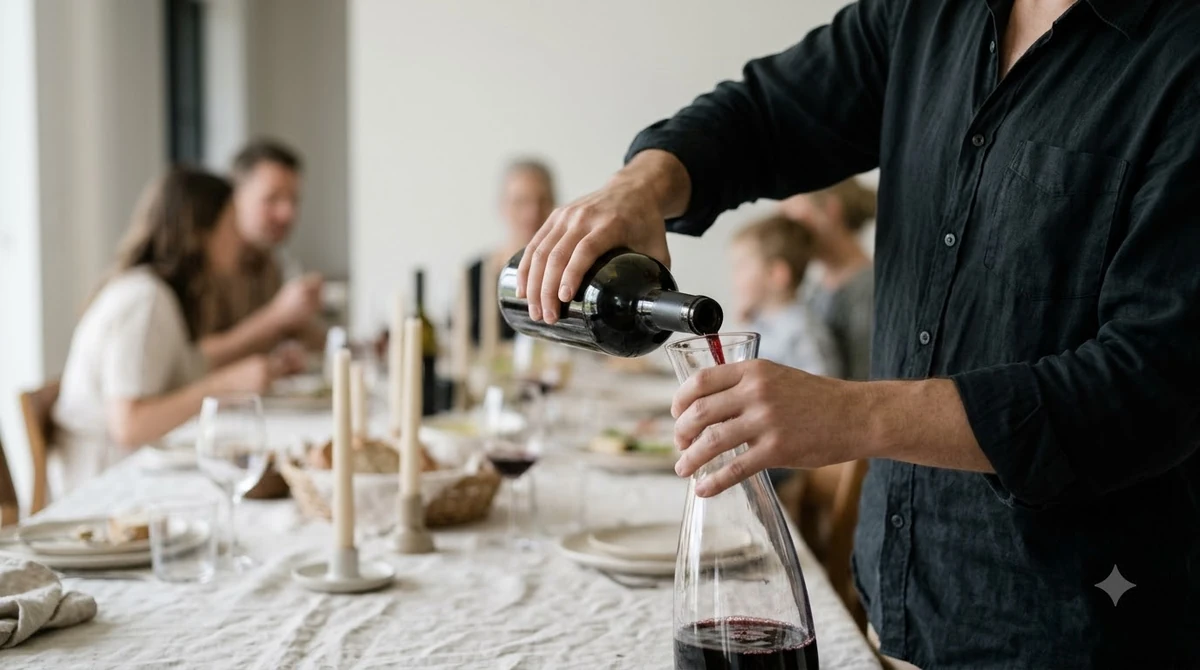
Structured Crianza, Reserva, and Gran Reserva reds perform best at cellar temperature—60°F to 65°F (15°C to 18°C)—poured into a large-bowled Bordeaux or universal red glass. Young oak-aged reds benefit from 30 to 45 minutes in a decanter to soften firm tannins and open up savory herb and spice aromatics, whereas older Gran Reservas only need gentle pouring off any natural sediment. Store unopened bottles horizontally in a dark, cool spot around 55°F; Joven whites and reds are built for enjoyment within one to two years of vintage, while well-structured Reservas and Gran Reservas can evolve gracefully for eight to fifteen years.
Tip: When a bottle label lists “Cencibel,” you are drinking Tempranillo—the exact same grape prized in Rioja and Ribera del Duero, adapted to central Spain’s warmer plateau.
Food Pairing with La Mancha Wine
La Mancha’s cuisine evolved alongside its vineyards, built around sheep’s milk cheese, saffron, garlic, game meats, and olive oil—all natural partners for the region’s wines. The classic regional match is aged Manchego cheese paired with either a crisp, nutty Airén or a savory Cencibel Crianza, where the wine’s acidity and moderate tannins cut cleanly through the cheese’s rich, lanolin-kissed fat.
For white wines and dry rosados, lean toward lighter tapas, seafood, and bright vegetable dishes. Chilled Airén or Macabeo pairs effortlessly with garlic shrimp (gambas al ajillo), grilled white fish, marinated olives, patatas bravas, and fresh goat cheese salads. Their clean mineral finish refreshes the palate between salty, olive-oil-rich bites without clashing with herbs or citrus.
Oak-aged Cencibel and Syrah-Tempranillo blends call for richer, smoky, and slow-cooked fare. Serve Crianza or Reserva reds alongside roast lamb rubbed with rosemary and thyme, grilled pork tenderloin, chorizo, braised beef short ribs, or smoky eggplant and lentil stews. The charred-herb and leather notes in aged La Mancha reds mirror caramelized crusts from the grill while their bright berry core balances savory spices.
How to Choose a Bottle
Navigating a retail shelf of La Mancha wines becomes straightforward once you know which label cues signal freshness versus oak complexity. Start by matching the Spanish aging classification on the back or front label to the occasion: choose Joven or Tradicional for casual weeknight meals and warm-weather sipping, and look for Crianza, Reserva, or Gran Reserva when you want deeper spice, leather, and dried-fruit complexity.
Check the vintage date carefully on white wines, rosados, and unoaked reds. Because Airén and Joven Cencibel rely on primary fruit vibrancy, bottles from the most recent one or two harvests deliver the liveliest aromatics. For Reserva and Gran Reserva reds, look for producers working with old bush vines (viñas viejas) or higher-elevation vineyard plots, which tend to preserve brighter acidity and finer-grained tannins than flat valley-floor fruit.
Finally, pay attention to appellation tiers beyond the standard DO La Mancha seal. Bottles labeled Vino de Pago come from single estates recognized by Spanish wine law for distinct soil and microclimate character—much like exploring single-village bottlings when comparing Aloxe-Corton wine in Burgundy or planning a Beaune wine tasting itinerary. Meanwhile, wines labeled Vino de la Tierra de Castilla (IGP) give winemakers freedom to experiment with non-traditional grape blends and modern winemaking techniques, often yielding expressive, fruit-packed reds and aromatic whites.
Frequently Asked Questions
Is La Mancha wine sweet or dry?
The vast majority of La Mancha wine is fermented completely dry, from crisp Airén whites to full-bodied Cencibel reds. While the DO regulations do permit semi-dry, sweet, and sparkling styles, nearly all bottles exported to the United States are dry table wines with minimal residual sugar.
What is the difference between Tempranillo and Cencibel?
Cencibel is simply the traditional local name for the Tempranillo grape in Castilla-La Mancha. Genetically it is the same variety grown in northern Spain, though La Mancha’s hotter, sunnier climate tends to give Cencibel riper dark-berry fruit, softer acidity, and a distinct note of dried Mediterranean herbs.
How does La Mancha wine compare to Rioja?
Both regions rely heavily on Tempranillo and use Spain’s Crianza, Reserva, and Gran Reserva barrel-aging tiers, but their climates create noticeable stylistic differences. Rioja’s cooler Atlantic and mountain influences produce slightly more structured, high-acid reds, whereas La Mancha’s sunny plateau yields rounder, plusher, more fruit-forward reds that often feel approachable at a younger age.
Can La Mancha red wines age in the cellar?
Yes, particularly Reserva and Gran Reserva bottlings made from old-vine Cencibel or Cabernet Sauvignon blends. While young Joven wines should be enjoyed within two years of harvest, well-made Reservas and Gran Reservas frequently develop tertiary notes of leather, cedar, and dried fig over eight to fifteen years in a cool cellar.
Whether you are pouring a chilled glass of crisp Airén alongside aged Manchego or uncorking a five-year-old Cencibel Gran Reserva for Sunday dinner, La Mancha wine offers an approachable window into Spain’s agricultural heartland. Exploring the region’s native grapes and traditional aging tiers makes it easy to find expressive, food-friendly bottles for nearly any meal.
More in Wine Regions
 Willcox Wine Trail: Discover Arizona’s High-Elevation Wine CountryUpdated Nov 20, 2026
 Yakima Valley Wine Region: Find the Best Styles to TryUpdated Nov 20, 2026
 Vosne Romanee Wine Tasting: Identify Aromas and Choose Better PairingsUpdated Nov 20, 2026
 Yakima Valley Wine Festival: Find the Best Seasonal Wine EventsUpdated Nov 20, 2026
 Wales Vineyards: Discover Cool-Climate Wines and Where to VisitUpdated Nov 20, 2026
 Yountville Wine Festival: Discover Napa Wines and Local FoodUpdated Nov 20, 2026