

We may earn a commission when you buy through links on this page, at no extra cost to you. Learn more.
If you are wondering what is the most popular wine in the world, the clear answer is Cabernet Sauvignon, which ranks first in both global vineyard plantings and retail bottle sales. Known for its deep color, black fruit flavors, and firm tannins, this red grape leads both international production and American consumer demand. Chardonnay holds the top spot among white wines, while Merlot, Pinot Noir, and Sauvignon Blanc round out the most widely enjoyed bottles on the market.
Popularity in the wine world can be measured in two main ways: total vineyard acreage planted around the globe and total bottles purchased by everyday drinkers. Across both metrics, a small group of classic international grape varieties dominates restaurant wine lists, grocery store aisles, and home cellars.
What Is the Most Popular Wine Globally and in the US?
Cabernet Sauvignon holds the number one position worldwide in vineyard acreage and leads the United States market in total retail sales. Chardonnay follows closely as the most popular white wine globally and the second-highest-selling varietal across American stores.
According to global wine guides like Wine Folly, Cabernet Sauvignon owes its worldwide dominance to its thick skins, resilience in varied climates, and consistent flavor profile. Winemakers from France to California, Chile, and Australia rely on this grape to craft structured red wines that appeal to casual buyers and longtime collectors alike. Because the grape adapts well to oak aging, it delivers reliable notes of black cherry, blackcurrant, cedar, and vanilla that drinkers immediately recognize.
In the United States, consumer preferences lean heavily toward bold reds and rich whites, though lighter styles continue to gain shelf space. While Cabernet Sauvignon and Chardonnay command the largest share of retail volume, Pinot Grigio, Pinot Noir, Sauvignon Blanc, and Merlot each attract millions of loyal buyers. Understanding how what is terroir in wine shapes these grapes explains why a Napa Valley Cabernet tastes riper and lusher than an herbal, earthy version from Bordeaux.
Some of the world’s most planted grapes remain surprisingly unfamiliar to casual shoppers because their harvests go largely into regional table wines or spirits. Spain’s white Airén grape and Italy’s Trebbiano Toscano cover vast stretches of European farmland, yet rarely appear by name on American retail labels. Most shoppers instead gravitate toward recognizable varietal names printed clearly on the front of the bottle.
Flavor Profiles of the World’s Top Wines
The most popular wines succeed because they offer distinct, easy-to-recognize flavor profiles ranging from crisp citrus to rich dark berries. Comparing their body, acidity, and oak influence makes it simple to see why different styles appeal to different palates.
| Wine Variety | Style | Primary Flavors | Body and Structure | Typical Serving Temp |
|---|---|---|---|---|
| Cabernet Sauvignon | Red | Blackcurrant, black cherry, cedar, baking spice | Full-bodied, high tannins, medium-high acidity | 60–68°F (15–20°C) |
| Chardonnay | White | Green apple, lemon, pineapple, vanilla, butter | Medium to full-bodied, moderate acidity | 44–55°F (7–12°C) |
| Merlot | Red | Plum, red cherry, cocoa, dried herbs | Medium to full-bodied, soft to medium tannins | 58–63°F (14–17°C) |
| Pinot Noir | Red | Raspberry, cranberry, rose petal, forest floor | Light to medium-bodied, low tannins, bright acidity | 55–60°F (12–15°C) |
| Sauvignon Blanc | White | Lime, grapefruit, white peach, cut grass | Light-bodied, high acidity, crisp finish | 38–45°F (3–7°C) |
| Pinot Grigio | White | Pear, lemon zest, green melon, wet stone | Light-bodied, high acidity, clean finish | 38–45°F (3–7°C) |
Visual flavor breakdowns published by VinePair highlight how dramatically winemaking choices alter these core grapes. Chardonnay acts as a true chameleon in the cellar: fermented in stainless steel, it tastes bright and mineral-driven with crisp green apple notes, whereas aging in toasted oak barrels creates creamy textures and flavors of butter, caramel, and vanilla. This stylistic range allows one grape to satisfy both crisp-white fans and lovers of rich, full-bodied pours.
Among red wines, tannin levels often determine which bottle a drinker reaches for first. Cabernet Sauvignon brings firm, mouth-drying tannins that soften when paired with rich food, while Merlot offers a plush, velvety texture dominated by ripe plum and cherry. Pinot Noir sits on the lighter end of the red spectrum, trading heavy weight for bright red berry fruit, floral aromatics, and refreshing acidity.
Where the Most Popular Grapes Grow
Although the world’s favorite wine grapes originated primarily in France, they now thrive across major wine regions on six continents. Warmer climates generally produce riper, fruit-forward bottles, while cooler regions yield higher acidity and subtle herbal or earthy notes.
Bordeaux, France, serves as the historic birthplace of Cabernet Sauvignon, Merlot, and Sauvignon Blanc, where winemakers traditionally blend them to achieve balance. Today, California’s Napa Valley and Sonoma County rival France in global reputation, producing sun-drenched Cabernet Sauvignon and plush Chardonnay. Further north, Oregon’s Willamette Valley has earned international acclaim for delicate, earthy Pinot Noir that mirrors the classic style of Burgundy.
Southern Hemisphere wine regions also contribute heavily to global supply and everyday retail favorites. New Zealand’s Marlborough region transformed Sauvignon Blanc into a global phenomenon with intensely aromatic bottles bursting with grapefruit and passionfruit. Meanwhile, Australia’s Barossa Valley and McLaren Vale built worldwide followings for bold Shiraz—the regional name for Syrah—and generous, fruit-driven Chardonnay.
Spain and Italy anchor European production with native varieties that command massive domestic and international followings. Tempranillo defines Spain’s Rioja and Ribera del Duero regions with savory red fruit, leather, and vanilla notes from oak aging. Across Italy, Pinot Grigio flourishes in the cool northern foothills of Veneto and Alto Adige, delivering crisp, refreshing white wines built for warm weather.
How to Serve Popular Wines at Their Best
Serving wine at the proper temperature keeps alcohol, acidity, and tannins in harmony so every aroma shines in the glass. Most people serve red wines too warm and white wines too cold, which masks delicate fruit flavors.
Full-bodied red wines like Cabernet Sauvignon and Syrah show best between 60°F and 68°F, which is noticeably cooler than a heated modern living room. Storing a red bottle on a kitchen counter at 72°F can make the alcohol smell sharp and the fruit taste flat. Placing a room-temperature red in the refrigerator for about 20 minutes before pouring brings it right into its ideal window, and decanting a young Cabernet for an hour helps soften its firm tannins.
White wines benefit from a gentle chill rather than ice-cold temperatures straight from a standard refrigerator. Light, crisp whites such as Sauvignon Blanc and Pinot Grigio shine around 38°F to 45°F, keeping their bright acidity snappy and refreshing. Fuller-bodied, oak-aged Chardonnays taste far more expressive between 44°F and 55°F, so taking the bottle out of the fridge 20 minutes before serving unlocks its toasted oak and orchard fruit aromas.
Tip: Follow the 20-minute rule before dinner—put red bottles in the fridge for 20 minutes to cool down, and take white bottles out of the fridge 20 minutes early to warm up.
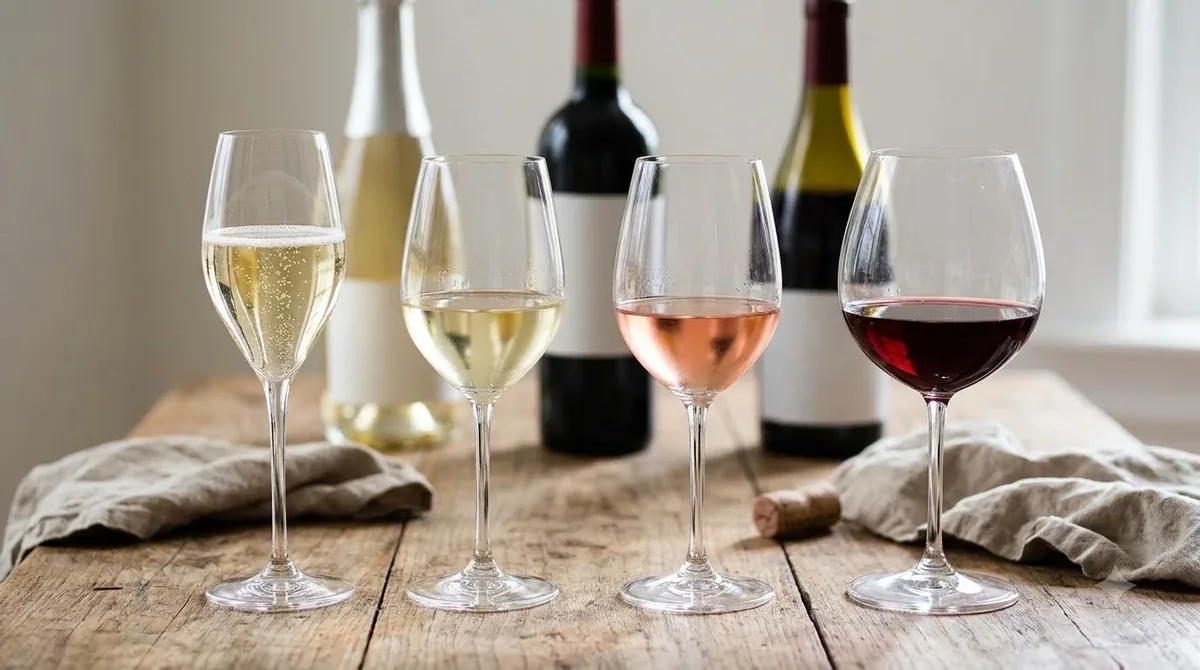
Glassware also influences how these popular styles taste from the first sip to the last. Oversized bowls with wide rims give bold red wines plenty of surface area to breathe, mellowing tannins and releasing dark berry aromas. Narrower tulip-shaped glasses help preserve delicate floral and citrus notes in crisp white wines while directing the liquid toward the center of the palate. If you are hosting a gathering, reviewing how many glasses of wine is too much helps ensure everyone paces their pours comfortably.
Food Pairing and Choosing the Right Bottle
Matching a wine’s weight and structure with the richness of your meal makes any popular bottle taste noticeably better. Bold reds crave protein and fat, while crisp whites brighten lighter, herbaceous, or seafood-based dishes.
Cabernet Sauvignon pairs naturally with grilled ribeye steak, braised short ribs, and aged cheddar because the proteins and fats bind to the wine’s firm tannins, making the sip feel smoother. Merlot and Pinot Noir offer greater flexibility at the dinner table; Merlot complements roasted pork, mushroom risotto, and wood-fired pizza, while Pinot Noir excels alongside roasted salmon, duck, and earthy vegetarian dishes.
White wines bring refreshing contrast to lighter fare and creamy sauces alike. Sauvignon Blanc cuts right through goat cheese, fresh oysters, herb-roasted chicken, and ceviche thanks to its lively citrus acidity. Rich, barrel-aged Chardonnay pairs effortlessly with butter-poached lobster, roast turkey, and creamy pasta dishes, while un-oaked Chardonnay works well with grilled shrimp and light salads.
When browsing a wine shop or restaurant list, reading the label carefully helps you pick a bottle that matches your taste without guesswork. Look for the region and alcohol by volume (ABV) printed on the label: wines with 14% ABV or higher generally come from warmer climates and taste riper and fuller-bodied, whereas bottles around 12% to 13% ABV tend to feel lighter and brighter. For more foundational tips on decoding labels and storage, explore our Wine Q&A resource before your next shopping trip.
Frequently Asked Questions
What is the most popular red wine in the world?
Cabernet Sauvignon is the most popular red wine in the world, leading both global vineyard acreage and retail bottle sales in the United States. Its thick-skinned grapes thrive in major wine regions from Bordeaux to Napa Valley, producing full-bodied reds with blackcurrant, black cherry, and oak spice flavors.
What is the most popular white wine?
Chardonnay is the most popular white wine globally and the top-selling white varietal in American stores. Its popularity comes from its versatility in the winery, allowing producers to craft everything from crisp, un-oaked, citrus-driven styles to rich, buttery, oak-aged bottles.
Is sweet wine or dry wine more popular?
Dry wines account for the vast majority of global wine consumption and retail sales, led by dry styles of Cabernet Sauvignon, Chardonnay, Merlot, and Sauvignon Blanc. However, off-dry and sweet wines such as Moscato, Riesling, and White Zinfandel remain steady favorites among newer wine drinkers and those who prefer lower-alcohol, fruit-forward pours.
Why are French grape varieties so popular worldwide?
French varieties like Cabernet Sauvignon, Chardonnay, Merlot, Pinot Noir, and Sauvignon Blanc became global standards because France set the benchmark for fine winemaking and export trade over several centuries. Winemakers in North America, South America, Australia, and New Zealand planted these familiar grapes to establish international credibility, making them household names for shoppers everywhere.
Whether you reach for a structured glass of Cabernet Sauvignon or a crisp pour of Sauvignon Blanc, the world’s most popular wines earned their reputation through reliable flavor and food-friendly versatility. Exploring regional variations of these familiar grapes is one of the easiest ways to discover new favorites without straying far from styles you already enjoy.
More in Wine Basics
 Which Rose Is Best for Your Taste, Budget, and Food PairingsUpdated Nov 21, 2026
 Is Cheap Wine Bad? How to Find Bottles Worth DrinkingUpdated Nov 21, 2026
 What To Write On A Wine Gift Tag: Thoughtful Messages For Every OccasionUpdated Nov 21, 2026
 Which Wine Is Best For Weight Loss? Compare Lower-Calorie ChoicesUpdated Nov 21, 2026
 What Is The Best Wine For Mimosas? Choose Bubbly That Balances Orange JuiceUpdated Nov 20, 2026
 Which Prosecco Is Best for Your Taste and OccasionUpdated Nov 20, 2026