

We may earn a commission when you buy through links on this page, at no extra cost to you. Learn more.
Does wine make you gain weight? Wine can add calories to your daily intake, but weight change depends on how much you drink and how your overall eating pattern balances over time. Wine contributes calories mainly through its alcohol, and sweeter styles also add sugar. No single glass causes weight gain on its own, but regular extra calories from any source can contribute to it over time.
This guide looks at where the calories in wine come from, how wine style changes the picture, and what the public health guidance says about how much is reasonable. It is meant to help you make an informed choice rather than to set a diet rule.
Where the calories in wine come from
Wine contains two main sources of energy. The first is alcohol, which contributes calories on its own. The second is residual sugar, the natural sugar left in the wine after fermentation. Dry wines have little residual sugar, while dessert and sweet wines contain much more.
Because alcohol is a significant source of calories, two wines with the same serving size can differ in energy depending on their alcohol level and sweetness. A full-bodied dry red and a light sweet white can therefore land at different points on the calorie scale, even though both are a single glass.
Wine does not usually provide nutrients in meaningful amounts, so the calories it adds are sometimes described as empty. That description is a simplification, but it does help explain why the total amount consumed matters so much when the goal is weight management.
Serving size is the other half of the equation. Wine is usually poured by the glass, and the size of that glass varies widely between a restaurant pour and a home pour. Two people can drink the same bottle over an evening and take in quite different amounts of alcohol and sugar, simply because one pours more generously. Thinking in terms of the pour rather than the bottle gives a more accurate picture of what is being consumed.
How wine style changes the calorie picture
Style matters more than the color on the label. Sweetness and alcohol level are the two factors that move the number up or down. The table below compares common styles in simple terms, so you can see which way each one leans.
| Wine style | Typical sweetness | Main calorie source |
|---|---|---|
| Dry red wine | Low residual sugar | Mostly alcohol |
| Dry white wine | Low residual sugar | Mostly alcohol |
| Sparkling brut | Very low residual sugar | Mostly alcohol |
| Off-dry or sweet white | Noticeable residual sugar | Alcohol plus sugar |
| Dessert or fortified wine | High residual sugar | Alcohol plus a large amount of sugar |
The table shows a pattern rather than exact figures. Individual bottles vary, and the label or producer’s sheet gives the most accurate sweetness information for a specific product. As a general rule, the sweeter the style, the more the sugar component matters.
What the public health guidance says about wine
Guidelines for moderate drinking are usually framed in drinks per day rather than in calories. The Centers for Disease Control and Prevention defines moderate drinking as two drinks or less in a day for men and one drink or less in a day for women. The CDC also notes that a single beverage may contain more than one standard drink.
The CDC’s alcohol use overview lists these definitions along with broader health effects of drinking. Because a large glass of wine can equal more than one standard drink, measuring the pour is often more useful than estimating from memory.
Calories are only one part of the picture. The same guidance that defines moderate use also says that drinking less is better for health than drinking more, so the overall amount you drink matters for more than body weight.
Practical ways to keep wine in balance
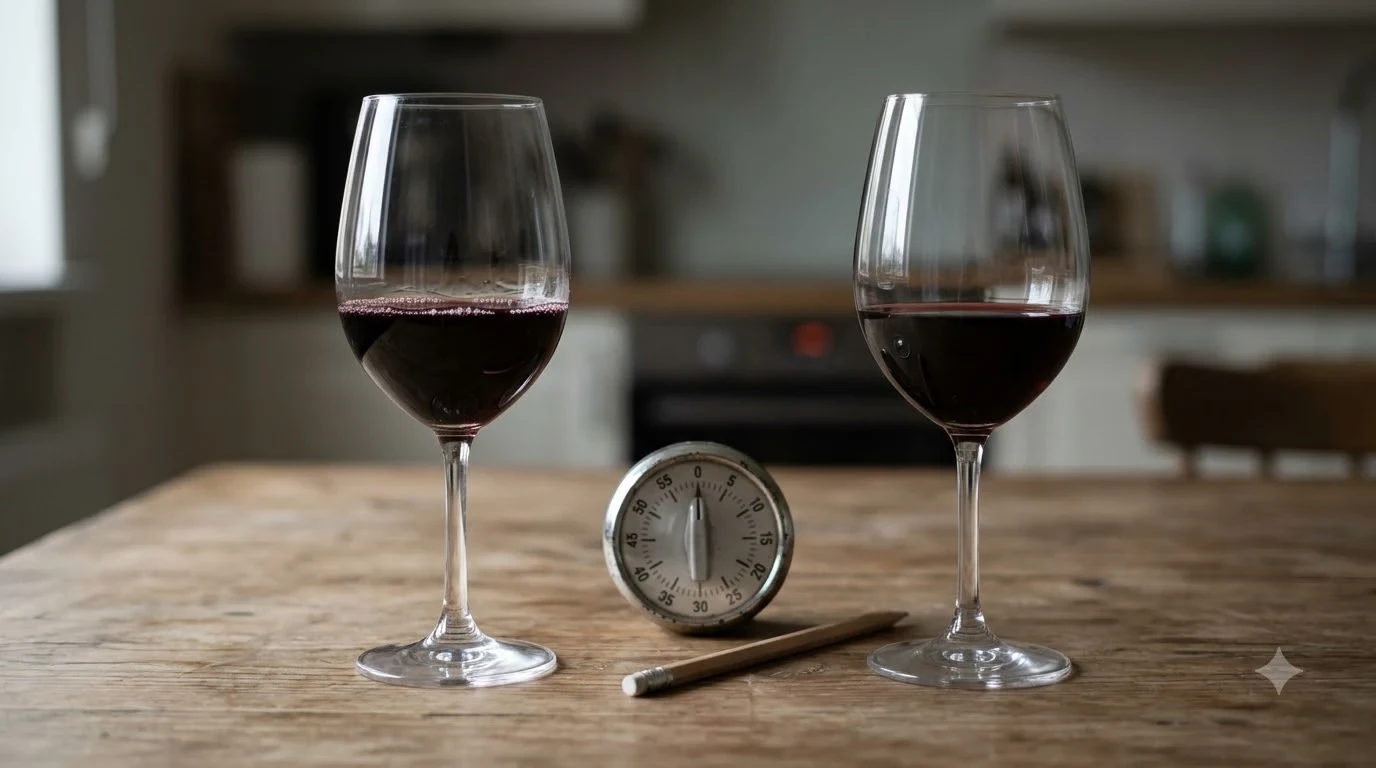
If you want to track wine within your overall eating plan, start with the pour size. A standard glass is smaller than many restaurant pours, and a generous glass at home can add up quickly across a week. Measuring for a few days can show you where your intake actually sits.

Choosing a drier style is one way to reduce the sugar contribution, though it will not change the alcohol component. Spacing drinks across the week rather than concentrating them into a single evening can also make the total easier to see and manage.
Finally, remember that calories from food and drink add together. A glass of wine with a rich dinner is a different total than the same glass with a light meal, so it helps to look at the full day rather than only the drink.
How drinking habits change the total
The number of glasses matters, but so does the setting in which they are poured. A glass enjoyed alongside a meal is often part of a larger plate, while a glass poured while cooking or waiting for dinner can be an extra snack on top of food. Many people find that their total intake grows in the hours after work, when the bottle is already open and the pour is not measured.
Pour size is another common source of drift. A standard glass is smaller than many restaurant pours, and a generous glass at home can equal more than one standard drink. Using the same glass each time, or measuring once to learn what your usual pour looks like, makes it easier to see the real amount.
Consistency also plays a role. Several glasses spread across a week can add up to a larger total than the same amount would suggest on any single night. Keeping a simple tally for a couple of weeks can reveal patterns that are hard to notice day to day, and it gives you a clearer baseline if you decide to change anything.
Social settings add their own variation. Dinners out, celebrations, and tastings often include several pours, and dessert wines or sparkling drinks may be added at the end of a meal. Planning ahead for these occasions, such as deciding on a limit before you arrive or choosing a lighter style, gives you more control over the total without giving up the experience.
Frequently Asked Questions
Does one glass of wine cause weight gain?
One glass on its own is unlikely to change body weight noticeably. Weight is shaped by the total calories consumed and used across days and weeks, so the pattern of regular intake matters more than any single serving.
Is red wine better for weight than white wine?
Dry red and dry white wines are often similar in calories at the same serving size, since alcohol is the main contributor in both. The sweetness of the specific bottle is usually a bigger factor than the color.
Do sweet wines have more calories?
Yes, sweeter wines generally contain more residual sugar, which adds to the calorie total on top of the alcohol. Dessert and fortified wines tend to be the highest in sugar.
How can I tell how sweet a wine is?
Look for the producer’s tasting notes or technical sheet, which often describe sweetness in words such as dry, off-dry, or sweet. Those descriptions are a practical guide when the label itself does not list sugar.
Wine can be part of a balanced routine when the portion is kept in view and the style matches your goals. If you are comparing other everyday wine questions, our guide on does wine have gluten covers label checks, and the is wine bad for you article looks at the wider health questions around drinking.
More in Wine Basics
 Which Rose Is Best for Your Taste, Budget, and Food PairingsUpdated Nov 21, 2026
 Is Cheap Wine Bad? How to Find Bottles Worth DrinkingUpdated Nov 21, 2026
 What To Write On A Wine Gift Tag: Thoughtful Messages For Every OccasionUpdated Nov 21, 2026
 Which Wine Is Best For Weight Loss? Compare Lower-Calorie ChoicesUpdated Nov 21, 2026
 What Is The Best Wine For Mimosas? Choose Bubbly That Balances Orange JuiceUpdated Nov 20, 2026
 Which Prosecco Is Best for Your Taste and OccasionUpdated Nov 20, 2026