

We may earn a commission when you buy through links on this page, at no extra cost to you. Learn more.
The best wine cart for most homes is a rolling horizontal-rack service cart with built-in stemware hangers and a durable top surface for uncorking and pouring. For small apartments, a slim vertical tower cart maximizes bottle count without eating floor space, while outdoor hosts should look for weather-resistant metal or teak frames with locking casters. Collectors who care about short-term serving temperature will get the most value out of a hybrid cart designed to house or mimic cooled storage alongside open prep space.
Unlike a standard spirits trolley, a dedicated wine cart solves two specific problems: keeping natural corks wet through horizontal bottle cradles and protecting fragile stemmed glasses while rolling across rugs or thresholds. Choosing the right style comes down to how many bottles you keep on hand, where you serve guests, and whether you need a countertop workspace for decanting.
Quick Comparison
Each wine cart style prioritizes a different mix of bottle orientation, prep surface, and mobility.
| Cart Type | Bottle Orientation | Typical Capacity | Prep Surface | Best Setting |
|---|---|---|---|---|
| Horizontal-Rack Service Cart | Horizontal (cork-wet) | 8 to 16 bottles | Full top tray or wood counter | Dining rooms and living areas |
| Slim Apartment Tower Cart | Horizontal or angled | 6 to 12 bottles | Compact top shelf | Narrow kitchens and tight corners |
| Entertainer’s Serving & Stemware Cart | Mixed horizontal and upright | 10 to 20 bottles | Large spill-resistant top | Dinner parties and holiday hosting |
| Outdoor Patio Wine Cart | Horizontal cradles with guardrails | 6 to 12 bottles | Slatted wood or metal tray | Decks, patios, and poolside |
| Industrial Butcher-Block Wine Cart | Horizontal grid + open shelves | 12 to 24 bottles | Thick hardwood cutting surface | Kitchens and open-concept islands |
Best for Everyday Dining Room Service: Horizontal-Rack Service Carts
A classic horizontal-rack service cart combines two or three tiers of scalloped bottle cradles with hanging stemware rails and a flat serving top. It gives you an all-in-one station for storing a week or two of dinner bottles while keeping your corkscrew, foil cutter, and decanter within arm’s reach.
Why it stands out: Horizontal storage is non-negotiable for bottles sealed with natural cork, because keeping liquid in contact with the cork prevents it from drying out and letting oxygen spoil the wine. Reviewers at Wine Enthusiast point out that a sturdy tabletop surface serves a vital dual purpose—displaying frequently opened bottles while doubling as a practical prep station for pouring. Under-shelf stemware tracks also free up crowded kitchen cabinets by suspending Bordeaux or universal stems safely upside down.
Keep in mind: Scalloped metal or wood racks are usually sized for standard 750 mL Bordeaux bottles, meaning wider Burgundy, Pinot Noir, or sparkling wine bottles can feel snug or eat into neighboring slots. Check that the cart includes locking wheels on at least two casters so it stays planted when you lean into a stubborn cork. This style is best for everyday wine drinkers who want a handsome, mobile piece of dining room furniture rather than a full-scale bar cart built around tall liquor bottles.

- Storage
- 6 bottles, 6 goblets
- Size
- 24.8 in. L x 11 in. W x 32 in. H
- Wheels
- 4 swivel casters, 2 lockable
- Load
- 66 lb per tier
Dining rooms that serve wine at the table can use this three-tier cart, which stores at least six bottles and six goblets on its rack and hanging glass holders. Four 360-degree casters, two of them lockable, roll it between kitchen and table, and an anti-drop fence keeps items in place. Each tier carries 66 lb, and assembly takes about 30 minutes.
Pros & ConsView
- Four swivel casters, two lockable
- Rack and holders for six bottles and goblets
- Each tier supports 66 lb
- Narrow 11-inch depth limits larger items
- Assembly takes about 30 minutes
Best for Small Apartments: Slim Vertical Tower Carts
Slim vertical tower carts trade wide prep surfaces for a narrow footprint—often under 16 inches wide—that slides cleanly beside a refrigerator, pantry, or credenza. By stacking single-bottle cradles vertically along a steel or hardwood frame, these carts hold a surprising number of bottles in tight urban floor plans.
Why it stands out: Narrow carts turn dead wall space into organized storage without blocking walkways or dining chairs. Many slim designs angle the bottles slightly downward toward the neck, which keeps corks moist while letting you read labels at a glance without pulling bottles out of their slots. Lightweight frames and 360-degree swivel casters make it easy to roll the entire rack out to the living room when guests arrive and tuck it away afterward.
Keep in mind: A narrow footprint means a higher center of gravity, so loading heavy bottles onto the top shelf first can make the cart tippy over thick carpet or door thresholds. Always load your heaviest bottles on the bottom tiers to anchor the frame, and look for raised perimeter rails on the top tray so glasses do not slide off during transport. This type fits apartment dwellers and renters who need movable bottle storage without sacrificing square footage.
Best for Dinner Parties and Hosting: Entertainer’s Serving & Stemware Carts
Built for multi-bottle gatherings, an entertainer’s serving cart pairs high-capacity bottle storage with expanded stemware racks, removable serving trays, and upright compartments for chilled whites or ice buckets. It functions as a self-serve pouring station so hosts spend less time running back and forth to the kitchen.
Why it stands out: Larger hosting carts separate room-temperature reds from upright slots reserved for open bottles, sparkling wine, or a tabletop chiller. If you are planning a tasting flight or calculating how many glasses in a bottle of wine you will need for a crowd, having a dedicated surface for pre-poured stems and a dump bucket keeps the flow smooth. Removable top trays are especially useful for clearing empty glasses back to the sink in one trip.
Keep in mind: Fully loaded with 15 or more glass bottles plus stemware, a large hosting cart can easily top 70 pounds, which puts real stress on cheap plastic casters. Look for steel-reinforced corner joints and rubberized locking wheels that roll quietly over hardwood without scratching. This setup works best for frequent hosts who regularly open four to six bottles over an evening.

- Glasses
- Holds up to 4 wine glasses
- Bottles
- 2 bottle compartments
- Size
- 11.8 in. D x 17 in. W x 33 in. H
- Material
- Engineered wood
Dinner parties in smaller dining rooms suit this compact cart, with a first-tier rack that holds up to four wine glasses and two bottle compartments. A handle steers four 360-degree casters, two with brakes, and six S-hooks hold utensils or towels. A protective fence guards the top, the cart can be disassembled, and assembly takes about 15 minutes.
Pros & ConsView
- Rack holds four glasses and two bottles
- Six S-hooks for utensils and towels
- Handle and braked casters for easy moves
- Bottle storage limited to two compartments
- Engineered wood frame, not metal
Best for Patios and Decks: Outdoor Weather-Resistant Wine Carts
Outdoor wine carts swap indoor veneers and untreated steel for powder-coated aluminum, marine-grade stainless steel, or naturally oil-rich hardwoods like teak and acacia. They let you roll bottles, acrylic stemware, and snacks straight from the kitchen out to the deck without making multiple trips through screen doors.
Why it stands out: Indoor particleboard swells and warps after a single humid evening or surprise sprinkle, whereas outdoor-rated carts shed moisture and resist UV fading. Slatted shelves prevent rainwater from pooling around bottle bases, and larger outdoor casters handle textured concrete pavers, composite decking, and grass edges far better than tiny indoor wheels. Many outdoor models also include side towel bars and built-in bottle openers for casual al fresco pours.
Keep in mind: Direct sunlight and outdoor heat can quickly push red wine past ideal serving temperatures and damage delicate aromas. Even with a weatherproof frame, never store bottles permanently on an outdoor cart—load it right before guests arrive and roll leftovers back inside when the party ends. Outdoor carts are built for backyard cooks, patio loungers, and poolside entertainers.
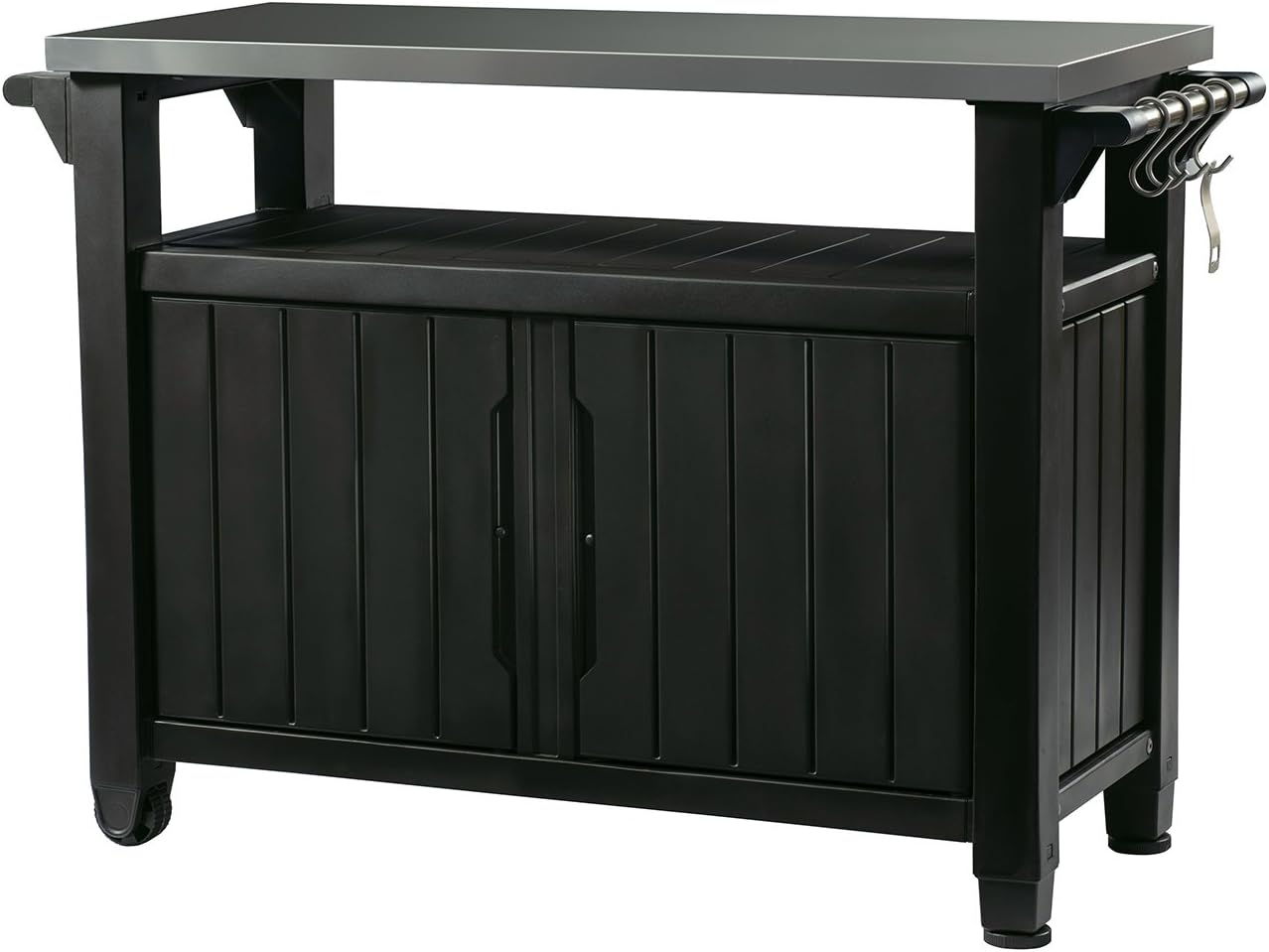
- Material
- Resin body, 201 stainless top
- Storage
- 78 gallons total
- Size
- 52.7 in. W x 20.5 in. D x 35.5 in. H
- Load
- 110 lb maximum
Patios and decks need furniture that shrugs off weather, and this cart is built from weather-resistant polypropylene that resists rusting, peeling, and denting. The stainless steel top gives an easy-clean prep and serving surface, while 78 gallons of combined interior and open storage hold drinks and supplies. It is portable and lockable, with two swivel casters.
Pros & ConsView
- Weather-resistant resin resists rust and peeling
- 78 gallons of interior and open storage
- Stainless steel top is easy to clean
- Wide 52.7-inch body needs ample patio room
- Weighs 50 pounds with only two wheels
Best for Kitchen Prep and Storage: Industrial Butcher-Block Wine Carts
An industrial butcher-block wine cart blends a thick hardwood worktop with under-counter bottle cubbies, accessory drawers, and steel framing. It bridges the gap between a rolling kitchen island and a wine rack, making it ideal for homes with limited counter space.
Why it stands out: The solid wood top gives you a stable, knife-friendly surface for slicing cheese, assembling charcuterie boards, and uncorking bottles right next to your wine supply. Built-in drawers keep waiters’ corkscrews, foil cutters, wine stoppers, and tasting notebooks organized in one spot instead of scattered across kitchen junk drawers. You can also browse our Accessories Library to stock those drawers with reliable aerators and preservation pumps.
Keep in mind: Hardwood butcher-block tops require periodic conditioning with food-grade mineral oil to prevent drying or staining from red wine drips, and their heavy weight makes them better suited as semi-permanent kitchen stations than nimble living room trolleys. Make sure the bottom rack sits high enough off the floor to stay clear of kitchen mops and pet water bowls. Choose this type if you want wine storage integrated into a hardworking culinary prep station.

- Bottles
- 12 horizontal slots
- Material
- Metal and wood
- Tiers
- 3-tier, five open shelves
- Lighting
- LED strip, 60 color modes
Kitchens that need prep space and storage in one piece can use this rustic floor-standing bar table, which has a large tabletop plus five open shelves. Twelve compartments store red wine bottles horizontally, and there is room for glasses, whiskey, or a coffee maker. A complimentary LED strip offers 60 color modes with music sync, and numbered parts simplify assembly.
Pros & ConsView
- Twelve slots for horizontal bottle storage
- Large tabletop for prep and serving
- LED strip with 60 color modes included
- Listed as floor standing, with no wheels mentioned
- Open shelving leaves items exposed
How to Choose
Before buying a wine cart, measure both the spot where it will live and the doorways or rugs it will cross when rolled out for guests. Check these four practical details so the cart holds up under real bottle weight:
- Caster size and locks: Wheels at least 2.5 to 3 inches in diameter roll smoothly over area rugs and room transitions. Insist on at least two locking casters so the cart stays stationary while you pull corks.
- Bottle slot diameter: Standard 750 mL Bordeaux bottles measure roughly 3 inches across, while Champagne, Alsace, and Burgundy bottles are noticeably wider or taller. Look for open-sided cradles or 3.5-inch spacing if you drink plenty of Pinot Noir or sparkling wine.
- Top surface durability: Red wine stains porous wood and unsealed stone quickly. Tempered glass, sealed quartz, powder-coated metal, or oiled hardwood with raised gallery rails will protect both your bottles and your floors from accidental spills.
- Weight capacity per shelf: A full case of 12 standard wine bottles weighs roughly 35 to 40 pounds on its own. Confirm that the cart’s frame and lower shelves are rated for at least 50 to 75 pounds so shelving does not sag over time.
Tip: Keep your wine cart parked away from sunny windows, radiators, and kitchen ovens—as storage experts at Wine Folly emphasize, consistent temperature and protection from light and vibration are far more important for preserving wine quality than fancy rack aesthetics.
Frequently Asked Questions
Should wine bottles be stored horizontally or upright on a wine cart?
Bottles sealed with natural cork should be stored horizontally or at a gentle downward tilt so the wine stays in contact with the cork, keeping it moist and airtight. Bottles with screw caps, glass stoppers, or synthetic corks can sit upright without issue, and open bottles should always stand upright in a top tray or chiller to prevent leaks.
What is the difference between a wine cart and a standard bar cart?
A standard bar cart prioritizes tall vertical shelf clearance for upright liquor bottles, mixers, and cocktail shakers. A wine cart trades some of that vertical height for horizontal scalloped racks or cubbies that cradle wine bottles on their sides alongside dedicated stemware hangers.
How many bottles should a home wine cart hold?
A capacity of 8 to 16 bottles hits the sweet spot for most households, giving you enough room for weeknight dinners plus a few bottles for weekend guests without making the cart too heavy to steer. If you regularly buy mixed cases or a seasonal wine advent calendar, aim for a 16- to 24-bottle cart with sturdy steel framing.
Can you store wine permanently on a rolling cart?
A wine cart is designed for short- to medium-term storage of bottles you plan to drink within a few weeks or months, rather than multi-year cellaring. Because rolling carts sit at room temperature and experience occasional movement, keep age-worthy bottles in a cool, dark wine fridge or cellar and use your cart for ready-to-drink favorites.
The right wine cart turns scattered bottles and fragile stems into an organized, roll-anywhere hospitality station tailored to your floor plan. Match the cart’s bottle capacity, wheel quality, and top surface to how you actually host, and you will spend far less time hunting for a corkscrew or clearing counter space when guests arrive.
More in Wine Accessories
 Coravin Vs Vacu Vin: Choose the Right Wine Saver for Your BottlesUpdated Nov 21, 2026
 Zwilling Wine Stopper Review: Preserve Open Bottles LongerUpdated Nov 21, 2026
 Wine Enthusiast Wine Preserver Review: Features, Benefits and LimitationsUpdated Nov 21, 2026
 Wine Enthusiast Wine Stopper: An Easier Way to Reseal Open BottlesUpdated Nov 21, 2026
 Vintorio Wine Opener: Two-Step Cork RemovalUpdated Nov 21, 2026
 Zwilling Wine Aerator Review: Aerate, Pour, and Seal With One ToolUpdated Nov 21, 2026