

We may earn a commission when you buy through links on this page, at no extra cost to you. Learn more.
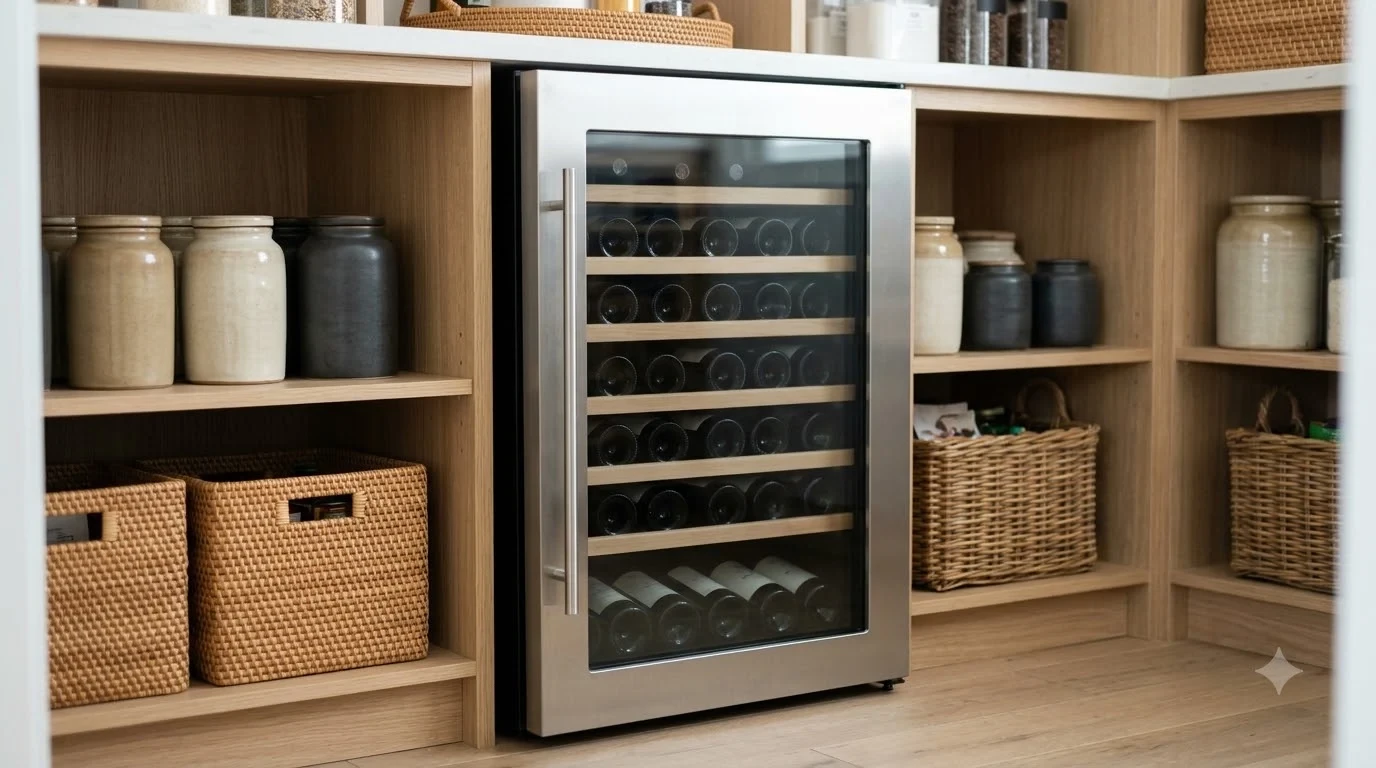
The best stainless steel wine cooler depends on where you plan to install it and whether you store one style of wine or a mixed collection of reds and whites. Front-venting built-in units work best for kitchen cabinetry, dual-zone compressor fridges suit households drinking both reds and sparkling whites, and compact thermoelectric models fit quiet countertops or home offices. Larger freestanding cabinets give serious collectors steady humidity and vibration control without custom millwork.
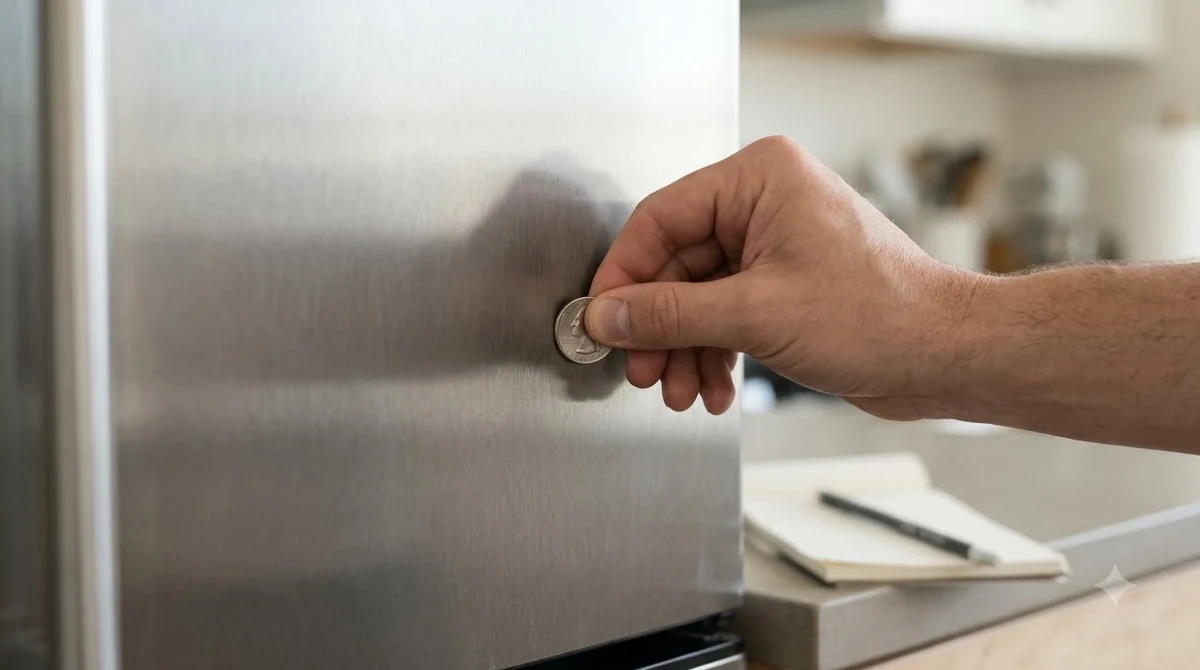
A stainless steel finish does more than match modern kitchen appliances—quality 304-grade or brushed steel frames resist corrosion, hide fingerprints better than high-gloss trims, and pair cleanly with UV-protective double- or triple-pane glass doors. Unlike a standard kitchen refrigerator that strips moisture and drops temperatures too low for corks and aromatics, a dedicated wine cooler holds steady temperatures between 40°F and 68°F while keeping vibration low. Reviewing wine fridges by type makes it far easier to match compressor power, ventilation style, and shelving layout to your actual drinking habits.
Quick Comparison
Each stainless steel wine cooler category balances ventilation design, cooling technology, and temperature zoning for a distinct space and bottle count.
| Cooler Type | Ventilation & Placement | Cooling System | Best Bottle Count | Primary Advantage |
|---|---|---|---|---|
| Undercounter Built-In | Front-venting; flush under counters | Compressor | 24 to 54 bottles | Zero side clearance needed for cabinetry |
| Dual-Zone Freestanding | Rear/side venting; open floor space | Compressor | 32 to 70 bottles | Separate temps for reds and whites |
| Compact Countertop | Rear/side venting; counters or bars | Thermoelectric | 6 to 18 bottles | Near-silent, vibration-free operation |
| Large-Capacity Cellar | Front or rear venting; dining rooms | Inverter compressor | 80 to 180+ bottles | Long-term aging stability and humidity |
| Wine & Beverage Center | Front-venting; kitchens or home bars | Compressor | 20 to 30 bottles + cans | Reversible shelves for bottles and cans |
Best for Built-In Kitchen Cabinetry
A front-venting under counter wine cooler slides flush beneath standard 34- to 36-inch kitchen countertops without overheating inside tight millwork.
Why it stands out: Standard refrigerators push heat out of the back and sides, which causes premature compressor failure if boxed into cabinets. Built-in stainless steel models route exhaust through a slotted toe-kick grille along the bottom front, allowing zero-clearance installation alongside dishwashers and base cabinets. Most feature smooth stainless door frames, reversible hinges, and telescopic beechwood racks that glide out smoothly so you can read labels without disturbing neighboring bottles.
Keep in mind and best for: Because these units fit standard 15-inch or 24-inch cabinet openings, internal capacity usually tops out around 24 to 54 standard Bordeaux bottles, and wider Pinot Noir or Champagne bottles will trim that count. Choose this type if you are remodeling a kitchen, adding a wet bar, or replacing a trash compactor with permanent, integrated wine storage.

- Capacity
- One 750 ml bottle
- Material
- Stainless steel
- Walls
- Double wall insulated
- Size
- 6.25 x 7.5 in
A classic tabletop bucket for white wine or champagne, sized to hold one standard 750 ml bottle. Double-wall stainless steel insulation helps the contents stay at serving temperature longer, and it also keeps red wine at cellar temperature. It works indoors or outdoors, at the table, in the kitchen or at the bar. Hosts with several bottles will need more than one.
Pros & ConsView
- Double-wall insulation holds serving temperature
- Suits white wine, champagne or reds
- Works indoors and outdoors
- Holds a single bottle
- Hand wash only
Best for Mixed Red and White Collections
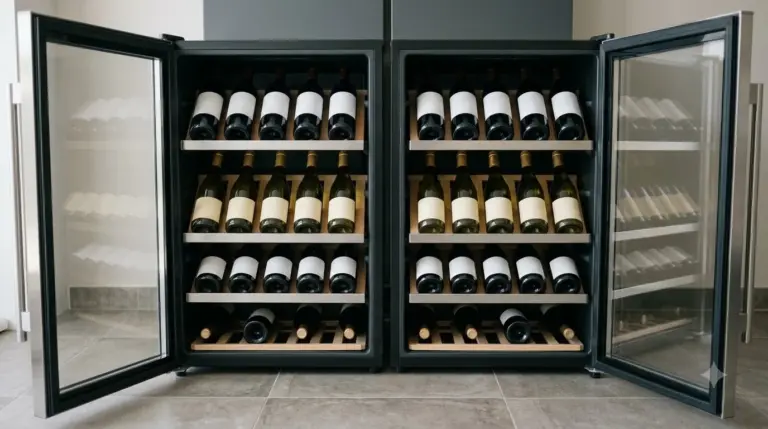
A dual-zone stainless steel cooler divides the interior into two independently controlled climate chambers so crisp whites and full-bodied reds stay ready to pour at the same time.
Why it stands out: According to the VinePair wine temperature serving guide, sparkling wines taste best ice-cold between 40°F and 50°F, whites shine at 45°F to 55°F, and medium- to full-bodied reds show their best structure between 60°F and 65°F. A dual-zone cabinet solves that gap with an insulated divider—typically chilling the upper compartment for whites and rosé while holding the lower compartment warmer for reds—backed by digital touch controls and double-pane tinted glass.
Keep in mind and best for: Dual-zone compartments have fixed or semi-fixed dividers, meaning you lose a row or two of bottle capacity compared to a similarly sized single zone wine cooler. This style is best for everyday wine drinkers who rotate through varied styles every week and want bottles at exact serving temperature without waiting on an ice bucket.

- Capacity
- 18 bottles
- Cooling
- Compressor with fan
- Temp Range
- 41–64°F, digital
- Extras
- Lock, LED light, touch controls
Collectors with both reds and whites in the same cabinet can use this freestanding 18-bottle cooler, which offers a 41–64°F digital range that reaches sparkling-wine temperatures. A compressor and built-in fan keep the temperature steady regardless of room heat. The double-paned UV-resistant door, soft LED light, and lock protect the bottles, while six wire racks rearrange for different sizes.
Pros & ConsView
- Digital control covers 41°F to 64°F
- Lockable door with UV-resistant glass
- Compressor stays stable against outside heat
- One section, so all bottles share one temperature
- Wire racks only
Best for Small Spaces and Countertops
Compact thermoelectric stainless steel coolers fit neatly on kitchen counters, bar carts, or office credenzas while holding six to 18 bottles.
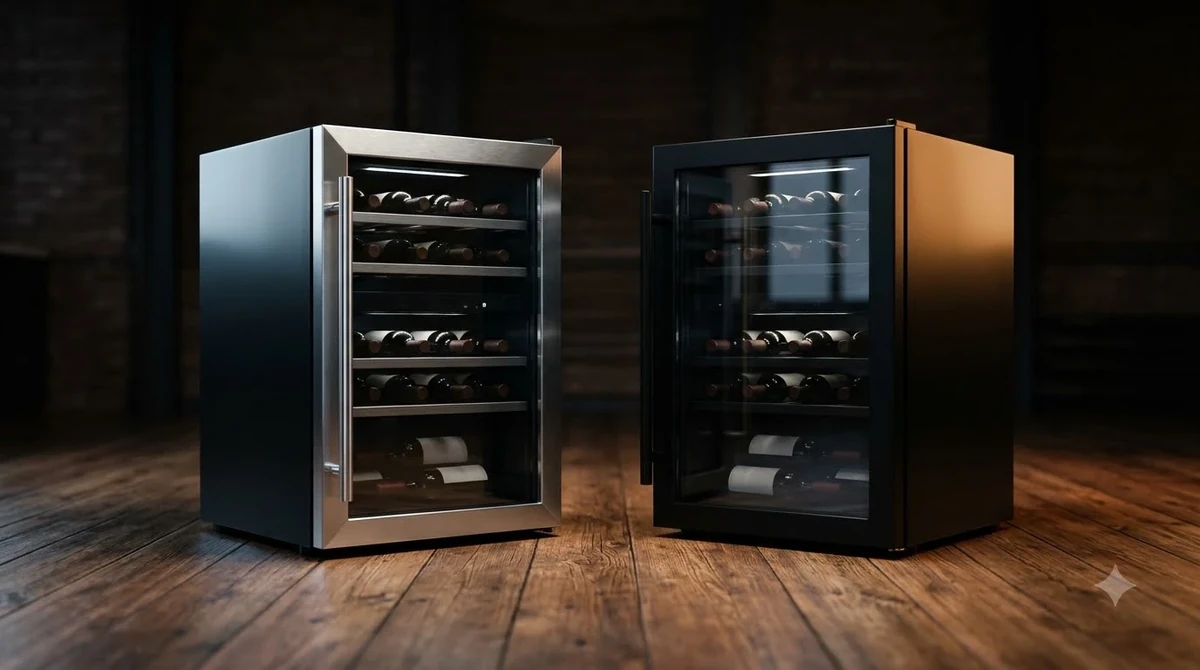
Why it stands out: Instead of a mechanical compressor and refrigerant coils, thermoelectric models use solid-state heat pumps that create virtually zero vibration and operate at a whisper. Avoiding micro-vibrations prevents sediment from staying suspended in older bottles, and the slim 10- to 15-inch footprints slip into apartments where floor space is tight. Many compact stainless units also include contoured wire racks or upright slots specifically shaped to keep opened bottles sealed and upright.
Keep in mind and best for: Thermoelectric cooling relies on ambient room temperature, typically dropping internal air about 20°F below the surrounding room; in a warm 80°F kitchen, it may struggle to chill sparkling wine down to 45°F. It works best for apartment dwellers, starter collections, and bedroom or office setups where silent operation matters more than deep chilling power.

- Capacity
- 12 bottles
- Temp Range
- 41–64°F
- Racks
- 5 removable wire racks
- Extras
- Door lock, touch controls
Smaller kitchens, offices, and dens can fit this compact 12-bottle freestanding cooler without giving up compressor cooling. Its fan keeps temperature even, and the 41–64°F range is cold enough for sparkling whites. Five adjustable wire shelves suit different bottle shapes, while a door lock, thermopane UV-resistant glass, and soft LED lighting keep the display protected.
Pros & ConsView
- Compact freestanding size for small spaces
- Five adjustable racks fit varied bottles
- Door lock and UV-resistant double glass
- Holds just 12 bottles
- One section means a single temperature
Best for Serious Collectors and Aging
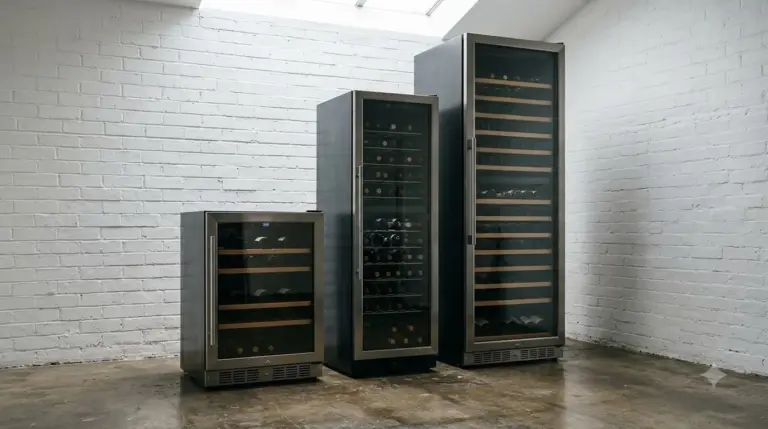
Tall, high-capacity stainless steel wine cellars hold 80 to 180 or more bottles with inverter compressors engineered for multi-year aging.
Why it stands out: Guidance from the Wine Enthusiast wine cellar buying guide highlights that long-term storage demands steady temperature control, active humidity management, and triple-pane UV-resistant glass rather than simple chilling. Full-height stainless steel cabinets use variable-speed inverter compressors that ramp up gently instead of cycling abruptly, maintaining consistent 55°F cellar conditions while keeping operating noise around 39 to 40 decibels. Wide shelf spacing also prevents label scraping on thicker Burgundy, Syrah, and magnum bottles.
Keep in mind and best for: A fully loaded 150-bottle cabinet weighs several hundred pounds and requires a dedicated, level floor spot away from direct sunlight or heating vents. Pick this category when your collection has outgrown casual kitchen storage and you want cellar-grade protection for bottles aging over several years.

- Material
- Stainless steel
- Volume
- 750 ml bottle
- Size
- 7.75 in. W x 7.75 in. H
- Weight
- 1.1 pounds
Tabletop service for a single pre-chilled bottle is what this double wall cooler is built for. It needs no ice, so a bottle stays cool through dinner, and the rust-resistant stainless steel is easy to clean. The classic shape works for wine, champagne, or other bottled drinks, giving a tidy presentation at a restaurant table or a home bar.
Pros & ConsView
- Double wall helps hold bottle temperature
- Rust-resistant, easy-clean stainless steel
- No ice needed for pre-chilled bottles
- Keeps bottles cool but does not chill them
- Fits a single 750 ml bottle
Best for Entertaining and Mixed Beverages
Stainless steel wine and beverage centers combine dedicated scalloped wine racks with flat shelving or French doors for canned seltzers, craft beer, and mixers.
Why it stands out: Standard wine coolers lack the shelf height for upright 12-ounce cans, while regular mini fridges roll wine bottles around and run too cold for red varietals. Dual-zone French-door or split-shelf beverage centers solve both problems—one side or upper zone cradles 20 to 30 wine bottles on wooden or coated wire racks, while the companion zone chills cans down to 34°F–40°F. Brushed stainless steel frames and LED interior lighting give these units a clean, bar-ready look for game rooms and kitchen islands.
Keep in mind and best for: Because beverage zones dip into the mid-30s, check that the wine side has an independent thermostat rather than a single shared cooling coil so your reds do not get over-chilled. This hybrid design fits frequent hosts and households that share one appliance between casual drinks and weeknight wine.

- Type
- Freezer chiller stick
- Material
- 18/10 stainless steel
- Freeze Time
- 2 hours minimum
- Extras
- Aerator, pour spout
Instead of a bucket, this slim rod chills from inside the bottle, so there is no wet bottle or ice to manage at the table. Freeze it for at least two hours, then insert it after pouring a little wine. A dual intake aerator and drip-free spout are built in, and the stainless steel will not dilute the wine the way melting ice can.
Pros & ConsView
- No ice or wet bottle at the table
- Built-in aerator and drip-free spout
- Fits standard 750 ml wine bottles
- Needs at least two hours in the freezer first
- Chills only the bottle it sits in
How to Choose
Before selecting a stainless steel wine cooler, measure your space carefully and match the hardware to how you buy and drink wine.
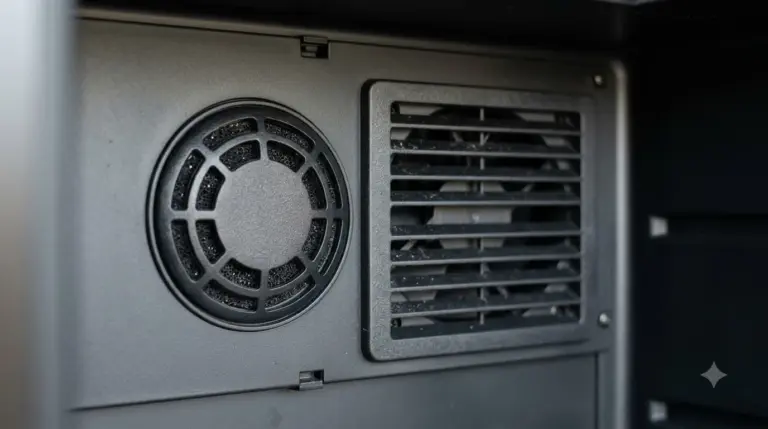
- Ventilation clearance: Built-in models vent from the front grille and sit flush against cabinetry. Freestanding units vent from the rear or sides and need at least 2 to 3 inches of open breathing room on each side and behind the cabinet to prevent overheating.
- Compressor vs. thermoelectric cooling: Choose compressor cooling for collections larger than 20 bottles, warm kitchens, or sparkling wines needing temperatures below 50°F. Choose thermoelectric cooling only for small 6- to 18-bottle units in climate-controlled rooms under 75°F.
- Real-world bottle capacity: Manufacturers calculate capacity using slim 750 mL Bordeaux bottles. If you drink Pinot Noir, Chardonnay, or Champagne in wider sloping bottles, expect actual capacity to be 15 to 25 percent lower than the stated number unless the unit lists luxury shelf spacing.
- Door glass and stainless grade: Look for double- or triple-pane tempered glass with UV tinting to block ultraviolet rays that cause premature aging. Brushed 304-grade stainless steel frames resist rust in humid kitchens and wipe clean far more easily than mirror-polished finishes.
- Shelving and vibration damping: Smooth-gliding beechwood or rubber-bushed steel shelves absorb micro-vibrations from the compressor and protect paper labels from tearing when you pull bottles out.
Tip: When measuring for an undercounter or freestanding spot, add 1.5 to 2 inches of depth clearance behind the cabinet for the power cord plug, and verify whether the door hinge is reversible so the glass door can open past 90 degrees without hitting an adjacent wall or cabinet pull.
Frequently Asked Questions
Is a stainless steel wine cooler better than a regular mini fridge?
Yes, because standard mini fridges run between 35°F and 40°F and actively pull humidity out of the air, which can dry out natural corks and mute wine aromas. A wine cooler maintains steady temperatures between 40°F and 68°F with higher ambient humidity and low-vibration shelves built specifically for horizontal bottle storage.
Should I buy a single-zone or dual-zone stainless steel wine cooler?
Choose a single-zone cooler if you primarily drink one style of wine or plan to age bottles long-term at a uniform 55°F cellar temperature. Choose a dual-zone model if you regularly drink both whites and reds and want each style held at its ready-to-serve temperature simultaneously.
How do I clean fingerprints off a brushed stainless steel wine cooler?
Wipe the stainless steel trim with a soft microfiber cloth slightly dampened with warm water and a drop of mild dish soap, always moving in the direction of the metal grain. Dry immediately with a clean cloth to prevent water spots, and avoid abrasive pads or bleach-based cleaners that can scratch or discolor the finish.
Can you store opened bottles of wine inside a wine cooler?
You can store recorked bottles inside a wine cooler as long as the unit has an upright rack or enough vertical clearance so wine does not leak past the stopper. Keeping an opened bottle chilled slows oxidation noticeably—for exact timelines by varietal, check our guide on how long does wine last after opening.
Selecting the right stainless steel wine cooler comes down to matching front- or rear-venting airflow to your room layout and choosing enough shelf space for the bottle shapes you buy most. Once you lock in the right size and temperature zones, a well-built stainless cabinet protects every bottle from heat spikes, UV light, and dry air for years.
More in Wine Fridges by Type
 Best White Wine Fridge for Reliable Chilling and StorageUpdated Nov 20, 2026
 Best Smart Wine Fridge for Steady Temperatures and Remote ChecksUpdated Nov 18, 2026
 Best Black Under Counter Wine Fridge Options for Kitchens and IslandsUpdated Nov 18, 2026
 Best Black Slim Wine Fridge for Narrow Gaps and Dark KitchensUpdated Nov 18, 2026
 Best Built In Dual Zone Wine Fridge Options by Kitchen LayoutUpdated Nov 18, 2026
 Best Slim Built in Wine Cooler: 5 Space-Saving Styles for Tight KitchensUpdated Nov 18, 2026