

We may earn a commission when you buy through links on this page, at no extra cost to you. Learn more.
The best wine filter depends on what you are trying to remove from the bottle—a fine-mesh stainless steel funnel is the top choice for catching physical sediment and broken cork, while a polymer-based purifier works best for reducing free sulfites and histamines. For older, unfiltered reds or fragile corks, mechanical mesh strainers and integrated decanter filters trap gritty solids without altering aroma. For single-glass convenience at restaurants or social gatherings, disposable chemical-binding wands offer portable purification in minutes.
Not every bottle of wine needs filtration, especially since most modern commercial wines are clarified before bottling. However, aged red wines naturally throw bitter tannin and pigment sediment over time, cold-stabilized whites occasionally form harmless tartrate crystals, and dry vintage corks can crumble right into the neck. Choosing the right tool means matching the filtration method—mechanical screening versus selective polymer absorption—to the actual issue in your glass, rather than buying a single gadget and expecting it to solve every pouring problem.
Quick Comparison
Each wine filter design solves a specific pouring challenge, balancing particle capture, aeration, and cleanup effort.
| Filter Type | Primary Target | Aeration Benefit | Reusability | Best Pour Volume |
|---|---|---|---|---|
| Stainless Steel Aerating Funnel | Coarse sediment, tartrate crystals, cork bits | High (built-in shower holes) | Fully reusable | Full 750ml bottle into decanter |
| Single-Glass Sulfite Wand | Free sulfites and histamines | Minimal (gentle stirring) | Single-use disposable | Individual 5-ounce pour |
| Bottle-Top Purifier System | Free sulfites, histamines, and light grit | Moderate to high (on-off switch) | Reusable housing with disposable pods | Full 750ml bottle |
| Ultra-Fine Mesh Strainer Basket | Micro-sediment and flaky older lees | Low (passive gravity drip) | Fully reusable | Full bottle or single glass |
| Filtering Decanter Stopper / Set | Sediment during decanting and serving | High (wide bowl or spiral coil) | Fully reusable | Entertaining and table service |
Best for Aged Reds and Broken Corks: Stainless Steel Aerating Funnel
A stainless steel funnel fitted with a removable fine-mesh screen is the most reliable all-around tool for catching physical solids while opening up tight young or cellar-aged reds. It sits securely in the neck of a decanter and splits the wine into fine streams as it filters out bitter dregs.
Why it stands out: Reviewers at Wine Enthusiast highlight how non-reactive 304-grade stainless steel prevents metallic flavor transfer and resists tarnishing over years of cellar service. Many designs combine a curved bottom spout with small side perforations, sending wine down the interior walls of a decanter to soften astringent tannins while the removable screen traps cork fragments and tartrate crystals before they reach your glass.
Keep in mind: Standard wire mesh screens excel at catching coarse grit and crumbly cork, though ultra-fine dusty lees from decades-old bottles can still slip through. You also need a steady hand and a wide-mouthed vessel underneath, and rinsing the mesh immediately after pouring is essential so dried pigment does not clog the tiny holes.
Best for: Home collectors who regularly decant full-bodied Cabernet Sauvignon, Nebbiolo, or vintage Port, or anyone keeping a durable centerpiece tool on a bar cart.
Best for Sulfite and Histamine Sensitivity: Single-Glass Purifier Wand
Single-glass purifier wands use food-grade, porous polymer beads rather than physical mesh to bind with free sulfites and histamines right inside your goblet. After swirling the wand in a poured glass for roughly three minutes, you lift it out and discard it, leaving the wine’s flavor profile intact.
Why it stands out: Unlike metal strainers—which only block solid particles and let dissolved molecules pass right through—selective resin wands target chemical preservatives at the molecular level. As Wine Folly notes in its guide to sulfites, while true sulfite sensitivity is relatively uncommon outside of people with asthma, warmer wines release more free sulfur compounds that can create a sharp, cooked-egg aroma; swirling a purifier wand helps strip those volatile compounds along with histamines.
Keep in mind: Because each wand is engineered for a single standard pour, ongoing per-glass costs add up quickly if you drink wine daily. They also provide virtually no mechanical straining for broken cork, and they will not remove alcohol or tannins—the two compounds most frequently linked to next-day headaches.
Best for: Dinner guests, restaurant diners, and travelers who want pocket-sized peace of mind when sampling unfamiliar wines by the glass.

- Pack
- 12 single-glass filters
- Removes
- Sulfites and histamines
- Use
- Disposable, one glass each
- Safety
- BPA-free, FDA compliant
For drinkers who react to sulfites, these replacement filters treat one glass at a time. The selective technology targets sulfites and histamines linked to wine headaches and congestion while leaving the wine's natural character alone, according to the maker. Each filter is disposable, BPA-free and FDA compliant, and the twelve-pack covers a couple of weeks of regular weeknight glasses.
Pros & ConsView
- Selectively removes sulfites and histamines
- BPA-free and FDA compliant materials
- Twelve disposable filters per pack
- Single-glass filters, not a full bottle
- Disposable, so you need to restock
Best for Hosting and Full-Bottle Purification: Bottle-Top Sulfite Purifier
A bottle-top purifier attaches directly to the rim of an open wine bottle or sits atop a glass, channeling the entire pour through a replaceable sulfite-capturing cartridge and an integrated aerator. It lets you treat a full 750ml bottle at once instead of stirring individual glasses one by one.
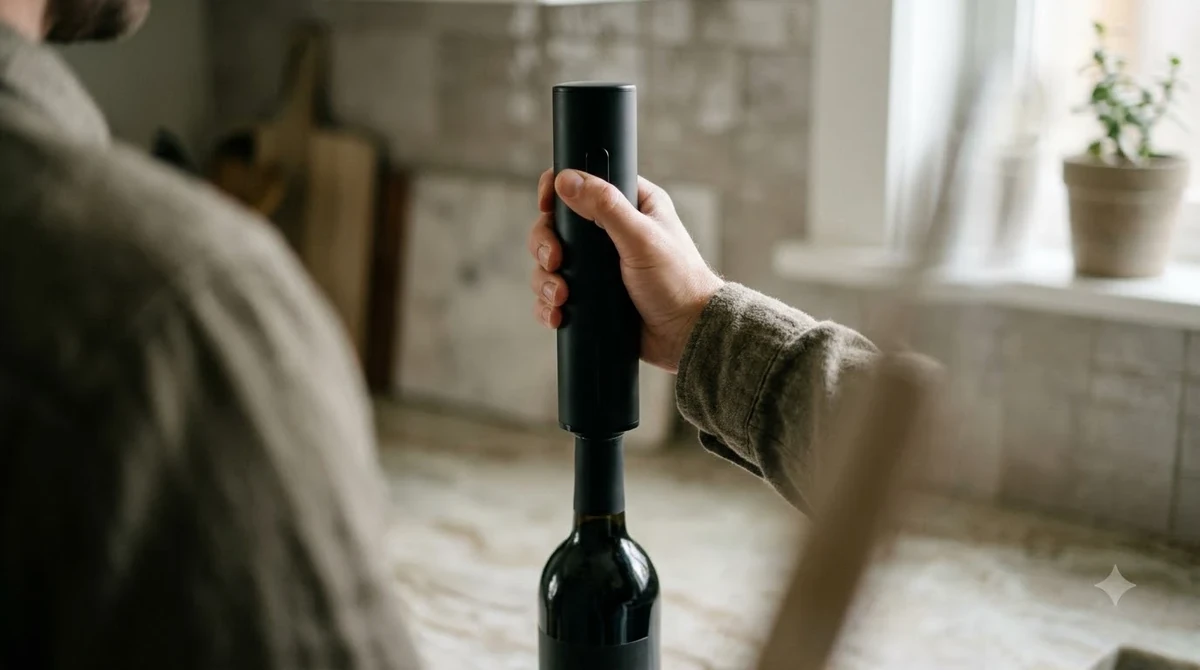
Why it stands out: Independent reviewers frequently point out that bottle-mounted systems solve the biggest drawback of disposable wands: waiting three minutes per glass while hosting friends. Most models also include a mechanical toggle switch so you can turn the aeration vent on for bold reds and off for delicate whites or sparkling wines, giving you control over oxygen exposure while filtering out preservative compounds.
Keep in mind: Pouring an entire bottle through a dense polymer pod takes noticeably longer than an unobstructed pour, requiring a bit of patience over the glass. You will also need to stock proprietary replacement filter pods, as each cartridge is calibrated to saturate after roughly one standard bottle.
Best for: Hosts pouring a full bottle of wine for four or five guests when someone at the table prefers lower-sulfite pours.

- Pack
- 8 filter sticks
- Method
- Stir in glass for 5 minutes
- Wines
- Red, white and sparkling
- Format
- Individually packaged
Hosts pouring for several guests can hand each person a stick instead of treating a whole bottle. Stir one in a glass for about five minutes to filter histamines and sulfites, with no substance released into the wine. Individually packaged sticks are portable for parties and tasting dinners, and they work with red, white and sparkling.
Pros & ConsView
- Individually packaged sticks travel easily
- Works with red, white and sparkling wines
- No substance is released into the wine
- Treats one glass at a time, not a bottle
- Five-minute stir slows service
Best for Unfiltered and Natural Wines: Ultra-Fine Micro-Mesh Strainer
An ultra-fine micro-mesh strainer—often built with 200-mesh woven stainless steel or food-grade nylon—captures microscopic yeast lees and powdery sediment that slip right past standard cocktail or funnel screens. Shaped like a small cone or double-eared kitchen sieve, it rests directly over a glass or carafe without needing a wide funnel base.
Why it stands out: Minimal-intervention and unfined wines often contain harmless suspended solids that look cloudy or leave a chalky texture on the final pour. Guidance from Wine Folly on decanting unfiltered red wines points out that placing a fine stainless steel strainer over the vessel is one of the cleanest ways to separate clear liquid from settled lees without disturbing the rest of the bottle.
Keep in mind: Finer weave counts slow down flow rates significantly, meaning an impatient pour can overflow the rim of a shallow strainer basket. Avoid paper coffee filters as a substitute, since unbleached or bleached paper fibers can absorb delicate aromatic oils and impart a papery taste to nuanced wines.
Best for: Fans of small-production natural wines, orange wines, and older library bottles with powdery, unsettled sediment.
Best for Smooth Table Service: Integrated Filtering Decanter Set
An integrated filtering decanter pairs a hand-blown glass or lead-free crystal vessel with a built-in mesh screen and aerating chamber right in the neck or stopper. Instead of balancing a separate funnel on top of a carafe, you pour straight from the bottle through the fitted top and serve immediately.
Why it stands out: Product editors at Wine Enthusiast highlight filtering decanter sets for eliminating post-pour clutter—there is no dripping funnel to set aside on your tablecloth once the bottle is empty. Many modern designs route the incoming wine through a spiral glass coil or outer chamber after passing the mesh screen, providing double aeration alongside clean, drip-free table service.
Keep in mind: Multi-piece crystal sets take up significantly more cabinet space than a compact funnel or pocket wand, and narrow sculptural necks usually require hand washing with specialized cleaning beads or a flexible brush. If you only open sediment-heavy bottles twice a year, a standalone strainer is much easier to store.
Best for: Entertainers who want a striking all-in-one vessel for holiday dinners, weekend tastings, or exploring a wine advent calendar lineup.

- Pack
- 18 single-use filters
- Per Filter
- Treats 7 fluid ounces
- Time
- Leave in glass about 3 minutes
- Filters
- Sulfites, histamines, tannins
Smooth table service starts in the glass here, not the decanter. Drop one filter into each pour for about three minutes, and it filters sulfites, histamines and tannin from roughly 7 fluid ounces without changing the wine's taste. Individually packaged filters fit a purse or pocket, and the 18 count stretches across a few dinners.
Pros & ConsView
- Eighteen individually packaged filters
- Each filter treats about 7 fluid ounces
- Quick three-minute wait in the glass
- Single use, so refills are needed
- Treats one glass, not a whole decanter
How to Choose
Before buying any wine filter, identify what is actually ending up in your glass. Physical debris—such as crumbling cork, tartrate crystals (the harmless “wine diamonds” found on the underside of white wine corks), and dark red pigment sediment—requires a mechanical barrier made of non-reactive stainless steel or food-grade nylon. Dissolved chemical compounds, including added sulfur dioxide and naturally occurring histamines, are microscopic molecules that pass straight through even the tightest metal weave; removing them requires a selective polymer purifier designed to bind those specific ions.
Next, think about your typical serving habits and cleanup tolerance. If you mostly drink one glass at a time on weeknights, a bulky decanter setup creates unnecessary dishwashing, whereas a compact rinse-and-dry strainer or single-glass wand fits effortlessly into a kitchen drawer. Conversely, if you regularly open older bottles for dinner guests, look for a wide-rimmed stainless steel funnel with a drip stand and a removable mesh insert so you can clear trapped lees in seconds between bottles. Browse our full Accessories Library to compare how different decanters, aerators, and stoppers pair with these filtration styles.
Tip: Stand bottles of aged or unfiltered red wine upright for at least 24 hours before opening so gravity pulls loose sediment to the bottom punt, then pour slowly in one continuous motion and stop as soon as cloudy dregs reach the shoulder of the bottle.
Frequently Asked Questions
Do wine filters remove alcohol or change the taste of wine?
No consumer wine filter removes alcohol, because ethanol molecules are completely dissolved in water and pass through both metal screens and polymer resins. A well-made stainless steel strainer or sulfite purifier should leave the wine’s core fruit, acidity, and tannin structure unchanged, though models with built-in aeration vents will soften harsh young tannins through oxygen exposure.
Can I use a regular coffee filter to strain sediment out of wine?
While a paper coffee filter will trap fine sediment in an emergency, wine professionals generally advise against it. Paper filters have extremely tight pores that slow pouring to a crawl and can strip out desirable flavor compounds while adding a subtle papery note. A fine-mesh stainless steel strainer or unbleached cheesecloth rinsed in water is a much safer alternative.
Do sulfite filters really prevent red wine headaches?
Sulfite filters can reduce free sulfur dioxide and histamines, which helps people who experience nasal congestion, flushing, or sensitivities triggered by those specific compounds. However, medical and wine experts note that sulfites are rarely the primary cause of wine headaches—dehydration, alcohol, and phenolic tannins are much more common culprits, and no filter removes them.
How do you clean a reusable wine filter screen without leaving soap residue?
Rinse stainless steel mesh filters under hot running water immediately after pouring so tannins and pigment do not dry inside the weave. If oils or stubborn lees build up, soak the screen in warm water with a drop of fragrance-free dish soap, scrub gently with a soft bristle brush, and rinse thoroughly before air-drying to avoid transferring detergent scents to your next bottle.
Matching your filter to the bottle in front of you keeps every pour clear, expressive, and free of unpleasant grit. Whether you keep a simple stainless steel screen tucked in your bar drawer for fragile vintage corks or rely on a selective purifier for peace of mind at dinner, the right tool lets the winemaker’s work shine without distraction.
More in Wine Accessories
 Coravin Vs Vacu Vin: Choose the Right Wine Saver for Your BottlesUpdated Nov 21, 2026
 Zwilling Wine Stopper Review: Preserve Open Bottles LongerUpdated Nov 21, 2026
 Wine Enthusiast Wine Preserver Review: Features, Benefits and LimitationsUpdated Nov 21, 2026
 Wine Enthusiast Wine Stopper: An Easier Way to Reseal Open BottlesUpdated Nov 21, 2026
 Vintorio Wine Opener: Two-Step Cork RemovalUpdated Nov 21, 2026
 Zwilling Wine Aerator Review: Aerate, Pour, and Seal With One ToolUpdated Nov 21, 2026