

We may earn a commission when you buy through links on this page, at no extra cost to you. Learn more.
The best wine stopper is an expanding silicone stopper for simple next-day pours, a manual or electric vacuum stopper for extending still wines up to several days, or a hinged clamp sealer for sparkling wine. While basic tapered plugs block outside air for a night or two, vacuum pumps actively remove oxygen from the bottle’s headspace to slow flavor loss. If you drink bubbly, only a locking clamp closure can withstand internal carbonation pressure, whereas inert gas systems suit collectors stretching special bottles across weeks.
Shoving a swollen natural cork back into a bottle neck rarely creates a reliable seal, and leaving wine exposed to air flattens bright fruit notes within hours. Whether you pour a single glass on a Tuesday or save half a bottle of Champagne from Saturday brunch, matching the closure mechanism to how fast you drink makes all the difference.
Quick Comparison
The five core closure styles differ significantly in how they manage oxygen, bottle pressure, and refrigerator storage.
| Stopper Type | Best For | Preservation Window | Side-Storage Safe | Sparkling Wine Safe |
|---|---|---|---|---|
| Expanding Silicone Stopper | Overnight & fridge storage | 1 to 2 days | Yes (lever-lock models) | No |
| Manual Vacuum Pump Stopper | Everyday still wine drinkers | 3 to 5 days | Usually, if seal holds | No |
| Hinged Champagne Sealer | Sparkling wine & Champagne | 3 to 5 days | No (store upright) | Yes |
| Inert Gas Preservation System | Multi-week pours & fine wine | Up to 4 weeks | Depends on system | Specialized models only |
| Pour-Through Aerator Stopper | Weeknight convenience & entertaining | 1 to 2 days | No | No |
Best for Everyday Still Wines and Fridge Storage: Expanding Silicone Stoppers
Expanding silicone stoppers use a tapered, food-grade elastomer body—often paired with a flip-down lever or twist top—to press outward against the inside of the glass neck for a leak-resistant seal.
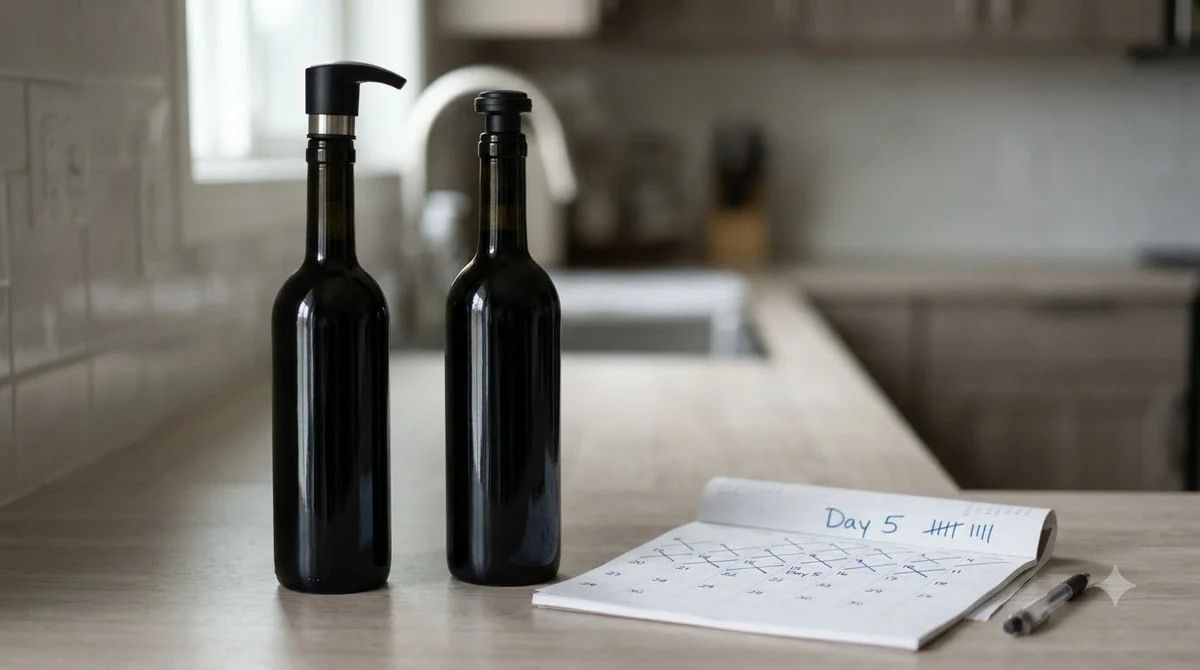
Why it stands out: Unlike decorative metal or glass plugs that rely solely on friction, expanding silicone designs compress inside the neck and widen when engaged, creating a tight physical barrier against outside air. Reviewers at Wine Enthusiast note that a snug seal is the primary factor in preventing oxygen from creeping in and dulling a wine’s profile overnight. Low-profile silicone caps also clear standard refrigerator door shelves and keep chilled whites or rosés from leaking if a bottle is laid on its side.
Keep in mind and best for: Because these closures trap whatever air is already sitting in the bottle’s headspace, oxidation still progresses gradually, making them ideal for finishing a bottle within one to two days rather than a full week. They are the smartest choice for casual weeknight drinkers, households with tight fridge space, and anyone who wants a dishwasher-safe stopper that fits both standard cork-finish bottles and screw-cap glass necks.

- Material
- Silicone seal, stainless accent
- Set Size
- 2 stoppers
- Seal
- Expands in bottle neck
- Size
- 3.75 x 4.75 in
A natural fit for everyday still wines, this stopper expands inside the bottle neck to seal in freshness and contracts again when you pull the top up. Its compact profile lets bottles sit on the top shelf of the fridge, and the fit holds even when bottles lie on their side. A stainless steel accent adds a polished look to the pair.
Pros & ConsView
- Silicone seal expands to lock in freshness
- Compact enough for the top refrigerator shelf
- Stays leakproof with bottles lying down
- Only two stoppers per pack
- Seals only; it does not pump out air
Best for Extending Still Wines Across the Week: Vacuum Pump Stoppers
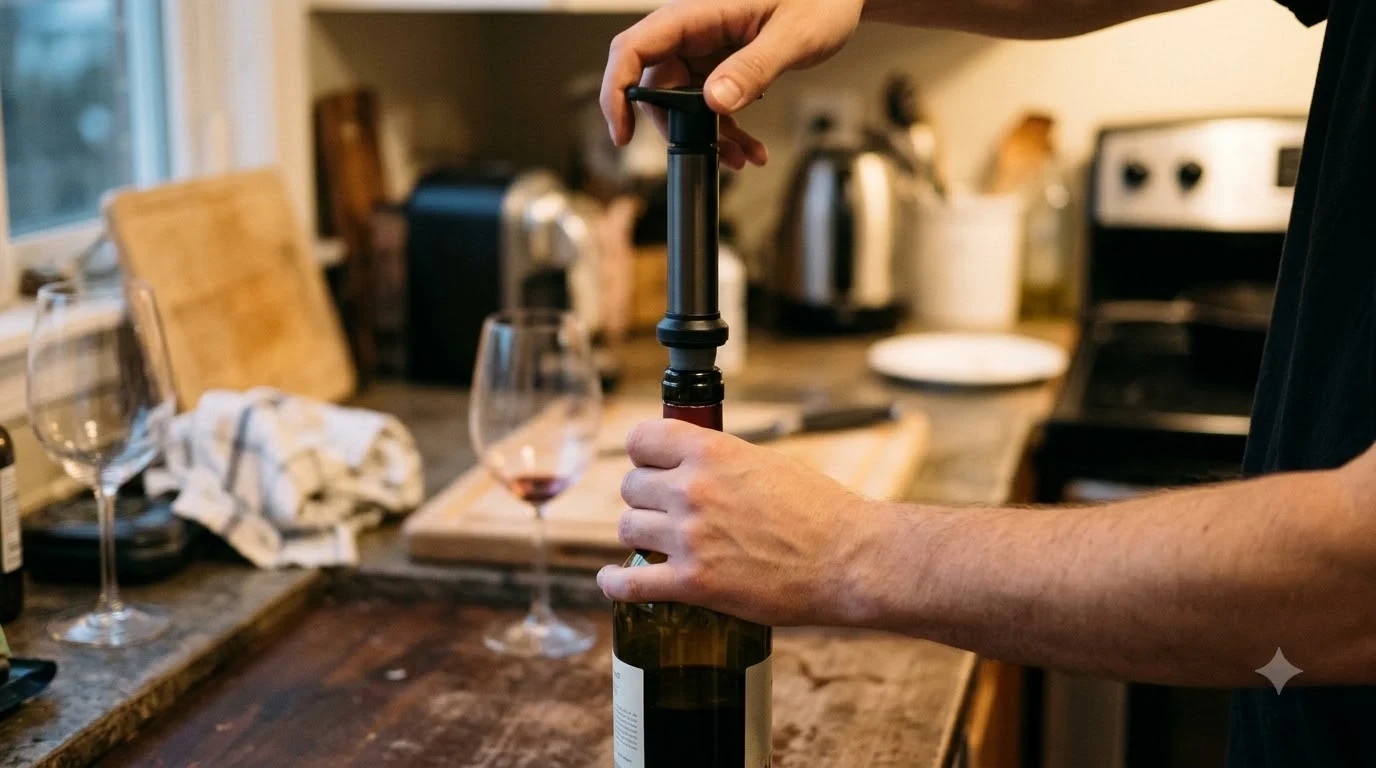
Vacuum stoppers pair a slotted rubber or silicone valve plug with a handheld or electric pump that extracts air from the opened bottle until a partial vacuum forms.
Why it stands out: Oxygen is the primary driver of wine spoilage, turning vibrant aromas into flat, vinegary notes. By pulling air out of the headspace before sealing the valve, vacuum systems significantly slow that chemical reaction compared to passive plugs. Sommeliers and beverage directors frequently favor classic manual pumps because an audible click or firm resistance signals when enough air has been removed, while battery-powered electric models automate the process in seconds with the press of a button.
Keep in mind and best for: Vacuum extraction can also pull out some delicate volatile aromatics over time, and temperature swings in a warm room can occasionally loosen the suction seal. Never use a vacuum pump on sparkling wine, as removing headspace pressure strips away carbonation immediately. Choose this style if you routinely take three to five days to finish a bottle of red or white wine and want reliable mid-week freshness without spending heavily on gas cartridges.

- Material
- TPE and PP, BPA-free
- Set Size
- 10 stoppers
- Freshness
- Up to 10 days with pump
- Care
- Dishwasher safe
Made for stretching a bottle across the week, these stoppers work with the Wine Saver Pump, sold separately, to vacuum seal opened bottles and slow oxidation for up to 10 days. Ten reusable rubber stoppers cover a whole rack of everyday bottles and replace loose corks. Each one is dishwasher safe, so cleanup between bottles is quick.
Pros & ConsView
- Ten reusable stoppers in one pack
- Pairs with a pump for up to 10 days
- Dishwasher-safe TPE and PP, BPA-free
- Pump is sold separately
- Needs the pump to create a vacuum seal
Best for Champagne and Sparkling Wine: Hinged Clamp Sealers
Hinged sparkling wine stoppers feature a thick silicone gasket held down by stainless steel side arms that clamp securely underneath the protruding glass lip of a Champagne or Prosecco bottle.
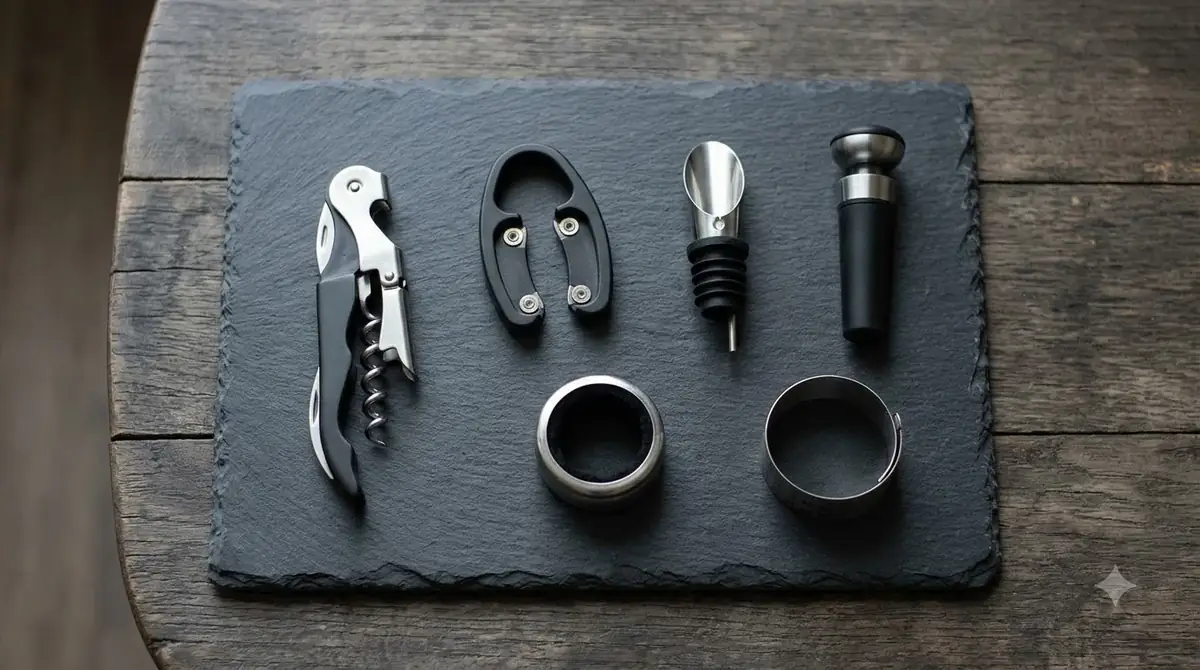
Why it stands out: Standard wine stoppers shoot straight out of a sparkling bottle because dissolved carbon dioxide builds substantial internal pressure. Hinged sealers mimic the downward force of a wire cage and mushroom cork, locking onto the bottle’s collar so bubbles stay dissolved in the liquid rather than escaping into the air. A sturdy metal frame with a soft silicone interior pad prevents both gas leaks and accidental pop-offs inside a crowded refrigerator.
Keep in mind and best for: These closures are engineered specifically for thick-lipped sparkling bottles and will not grip smooth still-wine necks properly. For best results, chill the bottle immediately after clamping, since cold liquid holds carbonation far better than warm wine. If you love opening Prosecco for Friday cocktails or saving half a bottle of Champagne for Sunday morning, a hinged clamp sealer is essential equipment for your bar cart.

- Material
- 304 stainless shaft, silicone seal
- Set Size
- 2 stoppers
- Fit
- 750 ml bottles, 18.5 mm opening
- Operation
- Press to seal, lift to open
A lever-style stopper rather than a true clamp, this pair presses a silicone seal against the bottle neck and lifts to release. It is sized for smooth, round openings of about 18.5 mm on standard 750 ml bottles, so check the neck before using it on sparkling wine. The 304 stainless steel center shaft and leakproof horizontal storage suit fridge shelves.
Pros & ConsView
- Lever press seals; lift to release
- Leakproof for horizontal fridge storage
- 304 stainless steel center shaft
- Fits only openings near 18.5 mm
- Sold as a pair, no larger pack
Best for Multi-Week Preservation: Inert Gas Systems
Inert gas preservers replace the oxygen inside a bottle with food-grade argon—a heavy, odorless gas used in winemaking—either through a stopper valve or via a thin hollow needle that pierces the cork without removing it.
Why it stands out: Rather than relying on partial air removal, argon blankets the surface of the wine and prevents oxygen from ever contacting the liquid. According to Coravin’s preservation testing, argon-based systems keep still wines tasting freshly opened for up to four weeks, allowing you to pour a single glass from an age-worthy bottle without committing to finishing it that week. Needle-style systems leave the natural cork intact, while stopper-based gas systems work across screw caps and synthetic closures.
Keep in mind and best for: Ongoing argon capsules add recurring operating costs, and needle-style devices require natural corks rather than synthetic plugs or twist-offs. This category is built for collectors, home enthusiasts tasting multiple bottles side by side, and anyone wondering how long does wine last after opening when pouring expensive vintages one glass at a time.

- Material
- Stainless steel
- Hold Time
- Up to 3 days, champagne
- Operation
- One-hand
- Size
- 3.88 x 2 in
This stopper is a short-term tool rather than a true inert gas system. Its stainless steel body gives a leak-proof, airtight seal that keeps champagne bubbly for up to 3 days, and one-hand operation makes resealing quick. It works for a cellar bottle opened for a weeknight pour, but it is not intended for long-term preservation.
Pros & ConsView
- Leak-proof, airtight stainless steel seal
- Champagne stays bubbly up to 3 days
- Easy one-hand operation
- Not an inert gas system
- Three-day window limits cellar use
Best for Entertaining and Drip-Free Pouring: Pour-Through Aerator Stoppers
Pour-through stoppers combine a tapered silicone base with an integrated spout and flip cap or removable plug, letting you aerate and serve wine without pulling the stopper out between glasses.
Why it stands out: During dinner parties or casual tastings, repeatedly yanking out a tight cork or stopper slows down service and risks drips across the tablecloth. Multi-function pourer stoppers channel wine smoothly into your wine glasses while drawing in small air bubbles to soften tight young reds, then snap shut in one motion once the round is poured. Many designs also include a fine mesh screen that catches stray cork crumbs or tartrate sediment.
Keep in mind and best for: Like passive silicone plugs, pour-through stoppers do not evacuate oxygen from the bottle, and their taller spouts can bump against upper refrigerator shelves. They are best suited for hosts serving multiple bottles over an evening who want clean pours and effortless resealing until the next day.
How to Choose
Selecting the right closure comes down to matching the mechanism to your drinking pace, bottle styles, and storage setup. Keep these practical factors in mind before stocking your drawer:
- Drinking timeline: If you finish an opened bottle within 24 to 48 hours, a simple expanding silicone stopper is plenty. Stretch your timeline to four or five days with a vacuum pump, or opt for argon gas if a bottle sits open for weeks.
- Bottle neck compatibility: Still wine bottles vary between narrow Bordeaux necks, sloped Burgundy shoulders, and threaded screw-cap rims. Look for tapered, flexible silicone ribs that compress smoothly across different diameters, and keep a dedicated clamp sealer on hand for thick-rimmed sparkling bottles.
- Storage orientation: Upright storage inside a fridge door works for almost any closure, but if you must lay white wine flat on a wire rack, choose a low-profile expanding silicone stopper with a mechanical lever lock rather than a tall decorative topper.
- Cleaning and maintenance: Wine residue and tannins build up quickly inside narrow valves and pouring spouts. Simple one-piece silicone stoppers rinse clean in seconds, whereas vacuum valves and aerator spouts need warm water flushes after every bottle so rubber seals do not stick.
Tip: Even the tightest stopper works better when paired with cold temperatures. Always refrigerate opened red, white, and sparkling wines upright—chilling slows down oxidation chemistry, and letting a red warm on the counter for 20 minutes before pouring brings its aromatics right back.
For a wider look at stoppers, pumps, and multi-bottle savers, browse our full Preservation & Stoppers hub.
Frequently Asked Questions
Can you use a regular wine stopper on Champagne or Prosecco?
No, standard friction or vacuum wine stoppers cannot hold back the internal carbonation pressure of sparkling wine. Without locking side clamps that grip the glass lip of the bottle, built-up gas will push a regular stopper right out and leave your bubbly flat within hours.
Do vacuum wine stoppers actually keep wine fresh longer?
Yes, for still wines, vacuum stoppers remove a portion of the oxygen inside the bottle’s headspace and typically extend drinkability to three to five days. While they do not eliminate oxygen completely like inert argon gas, they noticeably outperform passive corks and simple plugs when stored in the refrigerator.
Is it better to store an opened bottle of wine upright or on its side?
Store opened bottles upright whenever possible. Standing the bottle vertically minimizes the surface area of wine exposed to oxygen in the neck and prevents leaks, though low-profile locking silicone stoppers can handle horizontal storage temporarily if refrigerator shelf height is tight.
Can you just put the original cork back in the bottle?
You can reinsert a natural cork for a single night if you push the cleaner, slightly narrower end in first, but expanded corks rarely form a truly airtight seal. A dedicated silicone or vacuum stopper is easier to insert, creates a tighter barrier against air, and will not crumble into your wine.
The right closure turns leftover wine from a rushed obligation into an easy pour tomorrow night. Keep a couple of expanding silicone stoppers for everyday bottles, add a hinged sealer if you love sparkling wine, and step up to vacuum or argon preservation whenever you want your favorite vintages to last all week.
More in Preservation & Coravin
 Coravin Model Eleven Review: Preserve Wine Without Opening BottlesUpdated Nov 20, 2026
 Is Coravin Worth It? A Practical Guide to Its Real ValueUpdated Nov 20, 2026
 Coravin Timeless Six: Pour a Glass Without Opening the BottleUpdated Nov 20, 2026
 Coravin Pivot Plus Review: Keep Open Wine Fresh for WeeksUpdated Nov 20, 2026
 Coravin Screw Caps Review: Specs, Lifespan, and Real-World PreservationUpdated Nov 20, 2026
 Coravin Alternatives That Keep Open Wine Fresh LongerUpdated Nov 21, 2026