

We may earn a commission when you buy through links on this page, at no extra cost to you. Learn more.
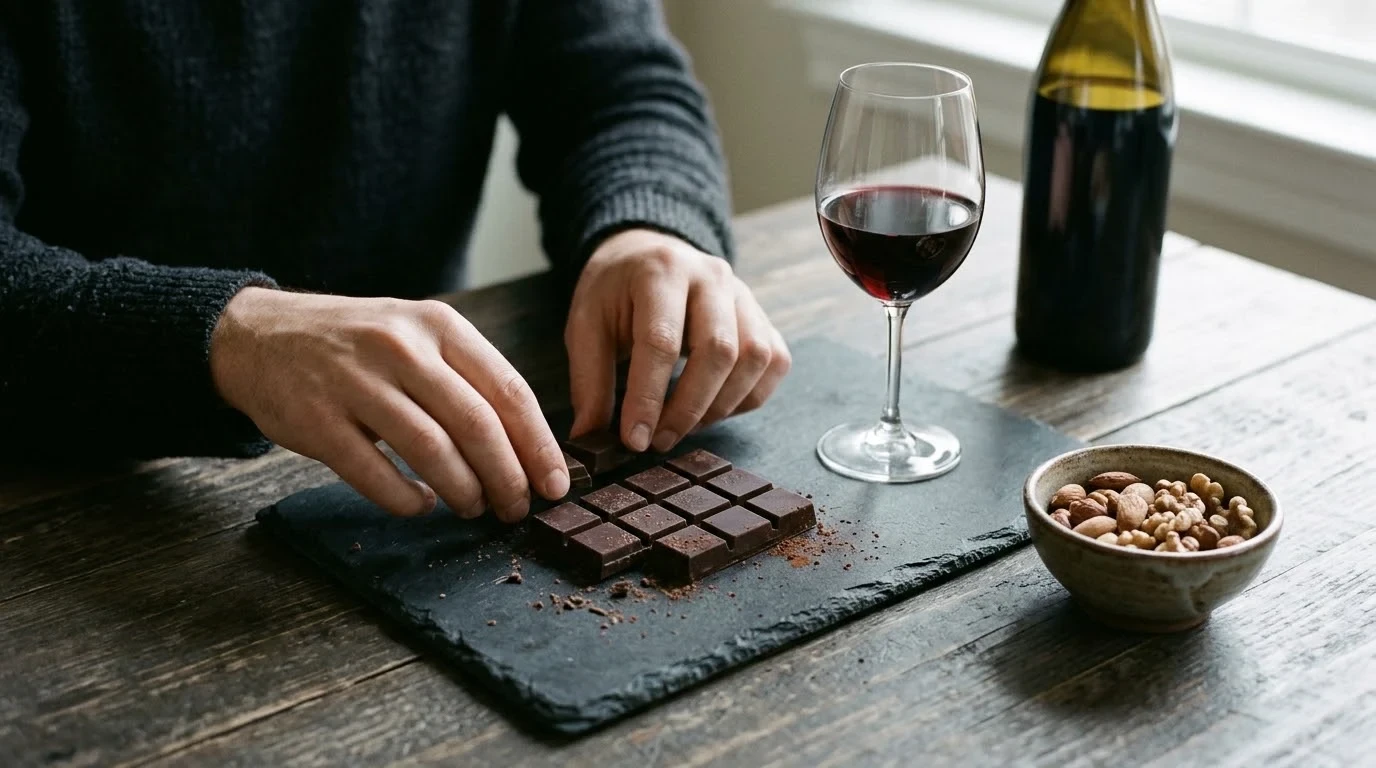
Rose wine with chocolate works best when the wine has bright red fruit, lively acidity and enough body to hold its own against the dessert. Dry rose tends to suit darker chocolate, while sweeter blush styles usually match milk and white chocolate better. The pink color matters far less than fruit, acidity and sweetness.
This guide explains which rose styles pair with different kinds of chocolate, why the wine’s structure matters more than its color, and how to serve the combination so both sides taste their best. You will also see the most common mistakes and a few simple desserts that work well.
What Makes Rose a Good Match for Chocolate?
Rose sits between red and white wine, so it can share traits with both. That middle position gives it room to work with several chocolate styles, from creamy white bars to fairly intense dark ones.
According to Decanter’s chocolate pairing guide, Sarah Jane Evans MW looks at a wine’s flavour, acidity, weight and length. She then asks whether those traits work with the intensity, sweetness and texture of the chocolate. That checklist is a useful starting point for any rose you are considering.
Chocolate itself varies a lot. Added ingredients such as ginger or fruit change the match, and the origin and production of the chocolate can also make a difference. Decanter also quotes a sommelier who says that theory only goes so far until you taste the two together, so treat any pairing idea as a starting point rather than a rule.
If you already know how heavier wines behave with chocolate, our red wine with chocolate guide covers the richer end of the same question. Rose borrows the bright fruit of a light red and the freshness of a white, which is why it often sits comfortably between the two.
Dry Rose vs. Sweet Blush: Which Works Better?
Dry rose usually suits dark chocolate, while sweeter blush styles are easier with milk and white chocolate. The key variable is how sweet the wine tastes compared with the dessert.
Decanter notes that chocolate is often high in sugar, and that very dry wines can clash with it. Fiona Beckett, a Decanter contributor, says that for her the wine needs to be sweeter than the dessert. Many people will disagree, so use her view as one perspective, not a fixed law.
Dry rose keeps its freshness next to bitter chocolate, and its acidity helps cleanse the palate between bites. A sweeter blush has more sugar to balance creamy, sugary chocolate, so the two can meet in the middle. The table below sums up the main differences.
| Rose style | Chocolate that usually fits | Why it works |
|---|---|---|
| Dry rose with bright red fruit | Dark chocolate with moderate cocoa | Acidity and fruit cut through bitterness |
| Full-bodied dry rose | Dark chocolate with nuts or fruit | More weight holds up to dense textures |
| Off-dry blush | Milk chocolate | Sweetness and soft fruit match creamy notes |
| Sparkling rose | Milk or white chocolate | Bubbles lift rich, buttery textures |
Best Rose Styles for Dark Chocolate
Dark chocolate needs a wine with enough fruit and acidity to avoid tasting thin beside its bitterness. Look for a dry rose with fresh red fruit rather than a pale, delicate bottling.
Dark chocolate is commonly defined by a minimum of 35 percent cocoa solids, and the bars get far higher than that. Wine Folly’s wine and chocolate pairings points out that dark chocolate does not like sharing space with high-tannin wines. Most rose is low in tannin, so it avoids that clash and lets the fruit come through.
Dry rose from southern France is a familiar style for this kind of match, because its herbal, red-fruited character can complement the chocolate’s roasted notes. If you want to understand how origin shapes a rose’s style, our guide on where rose is from covers the main regions. Pick a bottle that tastes fresh and savory rather than sugary, and keep the chocolate moderate so neither side overwhelms the other.
Pairing Rose with Milk and White Chocolate
Milk and white chocolate are softer and creamier, so they suit rose with more fruit and a touch of sweetness. Sparkling rose can also lift the richness of these bars.
Fiona Beckett notes that white and milk chocolate are generally easier to match than dark. Wine Folly explains that white chocolate contains cocoa butter but no cocoa solids, which makes it one of the more flexible partners for sweet wines. Pink fortified styles such as rose Port are often suggested with white chocolate because they bring strawberry notes.
Milk chocolate often contains cream, which adds fat and makes it work with a wider range of wines. For a table rose, look for ripe strawberry or cherry fruit with a gentle sweetness. Sparkling rose with fine bubbles can add lift to creamy bars, and it keeps the pairing light instead of heavy.
Chocolate Desserts That Go Well with Rose
Simple, cool desserts with fresh fruit make the easiest partners for rose. Hot, molten or very sweet desserts are harder to match and often need a different style of wine.
Beckett also observes that cold desserts are more wine-friendly than hot ones. She adds that other ingredients on the plate matter, so a cherry element may point you toward a sweeter red-fruited wine rather than a white. A rose with cherry or raspberry character can follow that same logic.
- Chocolate mousse with raspberries, served chilled
- White chocolate panna cotta with strawberries
- Dark chocolate tart with a light berry compote
- Milk chocolate and strawberry trifle
Avoid rich, molten fondants, which are difficult to match with almost any wine. Beckett suggests that fruit-led desserts give the wine the best chance. Keep the sweetness of the dessert and the wine in a similar range so neither one dominates the other.
Serving Tips for Rose and Chocolate
Serve the rose cool and let the chocolate come close to room temperature for the best balance. Small portions and slow tasting help you notice how the two change each other.
- Chill the rose until it is cool but not icy, so its fruit stays expressive.
- Pour a small glass and take a sip before you start the chocolate.
- Place a small piece on your tongue and let it melt slowly.
- When the chocolate is about two-thirds melted, take another sip of wine and notice how the flavors meet.
- Repeat with a different chocolate style to compare the results.
Decanter quotes Sarah Jane Evans MW describing this sip-and-melt approach for sherry, and it works just as well with rose. It gives you a clear sense of which bars suit which bottles. Keep portions modest, since rich desserts and wine add up quickly.
Tip: Start with milk chocolate and a sweeter blush, then move toward dark chocolate and a drier rose. This order makes it easier to notice the differences.
Common Mistakes to Avoid When Pairing Rose and Chocolate
Most disappointing pairings come from a sweetness mismatch, a heavy chocolate or a wine served too warm. Each mistake is easy to avoid once you know what to look for.
- Pairing a very dry rose with sweet milk chocolate, which can make the wine taste sour.
- Choosing a pale, delicate rose for intense, high-cocoa dark chocolate, which gets lost.
- Serving a molten chocolate dessert with a light rose, which overwhelms the wine.
- Serving the rose too warm, so its fruit feels flat and its acidity fades.
Another common error is assuming color predicts flavor. A deep pink rose is not always sweet, and a pale one is not always dry. Read the producer’s description or the style on the label before you buy.
Frequently Asked Questions
Does rose wine go with dark chocolate?
Yes, a dry rose with bright red fruit and good acidity can work with dark chocolate. Choose a moderate cocoa level, since very intense bars can overpower a light wine. Taste a small piece and a small sip together before you commit.
Is sweet blush better than dry rose with milk chocolate?
Often, yes. Milk chocolate is creamy and sweet, so a slightly sweeter blush can match its softness. A dry rose can still work if it has ripe fruit, but it may taste sharper beside the chocolate.
Does the color of rose matter when pairing with chocolate?
Color is a weak guide. Acidity, fruit, body and sweetness matter far more for chocolate pairings. Check the style description on the label or the producer’s notes to learn how sweet or dry the wine is.
Can I pair sparkling rose with chocolate?
Sparkling rose can be a good choice, especially with milk or white chocolate. The bubbles lift creamy textures and keep the pairing feeling light. Pour modest amounts and enjoy it slowly, as with any wine.
Rose wine with chocolate is easier to get right once you focus on sweetness, fruit and acidity rather than color. Start with a dry rose and dark chocolate, then try a sweeter blush with milk chocolate to compare. To learn more about grape and wine styles, explore Wine by Type.
More in Wine Types & Grapes
 Zinfandel Sugar Content: Dry Red vs. White Zinfandel GramsUpdated Nov 21, 2026
 Best Zinfandel Substitute Options for Sipping and CookingUpdated Nov 21, 2026
 Zweigelt Food Pairing: Best Dishes, Cheeses, and Serving TipsUpdated Nov 21, 2026
 Zinfandel Tannins Explained: How Structure Shapes Every BottleUpdated Nov 21, 2026
 Zinfandel Sweetness Level: Dry Red vs. Sweet White Zin ExplainedUpdated Nov 21, 2026
 Xinomavro Food Pairing: Best Dishes, Styles, and Serving TipsUpdated Nov 21, 2026