

We may earn a commission when you buy through links on this page, at no extra cost to you. Learn more.
Nuits Saint Georges wine is a structured, age-worthy French red wine made almost entirely from Pinot Noir in the southern Côte de Nuits subregion of Burgundy. Established as an official Appellation d’Origine Contrôlée in September 1936, the appellation covers roughly 300 hectares across the communes of Nuits-Saint-Georges and Premeaux-Prissey. While the region holds no Grand Cru vineyards, its 41 Premier Cru climats produce muscular, deeply colored Pinot Noir with firm tannins, dark berry fruit, and savory earthy complexity alongside a tiny fraction of rare white Chardonnay.
For wine drinkers exploring the broader landscape of Wine Regions, Nuits-Saint-Georges represents the sturdier, more structured side of red Burgundy. Unlike the lighter, more floral expressions found just to the north, bottles carrying this commune name offer chewy texture, notable longevity, and unmistakable limestone character.
What Nuits Saint Georges Wine Is
Nuits-Saint-Georges is a communal village appellation in eastern France that lends its name to the entire Côte de Nuits district, while taking its own name from its patron saint, Saint Georges. Around 96 percent of the appellation’s output is red Pinot Noir, with the remaining 4 percent devoted to rare white wines crafted primarily from Chardonnay.
According to the official Bourgogne wine council, the appellation received its AOC status on September 11, 1936, encompassing vineyards within both Nuits-Saint-Georges and the neighboring village of Premeaux-Prissey. Under regional regulations, red wines are made from Pinot Noir—though up to 10 percent of accessory white grapes such as Chardonnay, Pinot Blanc, or Pinot Gris are technically permitted in the vineyard blend—while white bottlings rely on Chardonnay and small amounts of Pinot Blanc.
Historically, the town of Nuits-Saint-Georges sits at the commercial and cultural heart of the Côte de Nuits. In 1934, local growers and merchants founded the famous Confrérie des Chevaliers du Tastevin brotherhood here to promote Burgundian wine culture. Decades later, the town even gained international fame when astronauts aboard the Apollo XV mission carried a Nuits-Saint-Georges label into space and named a lunar crater after the village.
Flavor Profile and Styles
Red Nuits Saint Georges wine is known for its deep crimson-to-ruby hue and muscular, full-bodied structure compared to gentler styles of Pinot Noir. Young bottles burst with blackcurrant, sour cherry, and wild strawberry alongside floral hints of rose and licorice, gradually evolving into savory notes of leather, truffle, and game with cellar age.
Because the town divides the vineyard area into distinct northern and southern sectors, the wines show noticeable stylistic differences depending on where the grapes grow. Vineyards in the northern half border Vosne-Romanée and tend to yield reds with finer tannins, brighter red fruit, and perfumed elegance. Bottlings from the southern section, stretching into Premeaux-Prissey, generally display denser color, firmer tannins, and a more rustic, chewy grip in their youth.
Reviewers at Wine Enthusiast frequently highlight the interplay of sappy Morello cherry, crushed violet, wild thyme, and white pepper in top bottlings, supported by vibrant natural acidity and chalky mineral tension. While approachable after five to seven years in the bottle, top Premier Cru cuvées often require a decade or more for their austere youthful tannins to soften into silkiness.
The seldom-seen white Nuits-Saint-Georges offers an entirely different sensory experience. Pouring a deep golden color, these Chardonnay-based wines are firm, rich, and aromatic, opening with scents of white flowers, toasted brioche, and honey, and typically peaking between four and eight years after harvest.
Where It Grows and Key Climats
The vineyards of Nuits-Saint-Georges span approximately 300 hectares along east- and southeast-facing slopes of the Côte d’Or escarpment between Dijon and Beaune. Although the appellation contains no Grand Cru sites, 41 individual vineyard plots—known locally as climats—hold Premier Cru status across roughly 147 hectares.
Geologically, the slopes reflect the same northern-versus-southern divide seen in the glass. In the north, vines root in pebbly alluvial soils washed down from higher elevations, transitioning to deeper silty deposits near the Meuzin river on the valley floor. To the south, alluvial soils emerging from the Combe des Vallerots mix with deep marly limestone at the base of the slope, while vines higher up the hillside grow directly over exposed limestone bedrock.
Among the 41 Premier Cru climats, several benchmark sites stand out on bottle labels. Les Saints-Georges—the historic vineyard that helped give the town its hyphenated name—is widely regarded by critics and growers as approaching Grand Cru quality for its depth and poise. Other prized names include Les Vaucrains, known for powerful, long-lived reds; Les Cailles, celebrated for silky finesse; and notable monopoles (single-owner vineyards) such as Clos de la Maréchale and Aux Perdrix.
Comparison of Appellation Tiers and Styles
Understanding how Nuits-Saint-Georges labels are organized helps clarify what is inside the bottle, as production spans village-level blends, single-vineyard Premier Crus, and rare whites. The table below outlines the core distinctions across the appellation’s primary categories.
| Wine Category | Primary Grape | Key Characteristics | Cellaring Potential | Ideal Serving Temp |
|---|---|---|---|---|
| Village Red | Pinot Noir | Deep ruby color, black cherry, spice, firm youthful tannins | 5 to 7 years | 59°F to 61°F (15°C to 16°C) |
| Premier Cru Red | Pinot Noir | Concentrated dark fruit, earthy truffle, dense mineral structure | 8 to 15+ years | 59°F to 61°F (15°C to 16°C) |
| Village & Premier Cru White | Chardonnay (and Pinot Blanc) | Golden hue, white flowers, brioche, honey, rich texture | 4 to 8 years | 52°F to 55°F (11°C to 13°C) |
While village-level bottlings often blend fruit from multiple parcels—or carry the name of a non-classified lieu-dit such as Les Plateaux—Premier Cru labels always display the words “Premier Cru” or “1er Cru” alongside the specific climat name. Maximum permitted yields are strictly capped at 50 hectoliters per hectare for village reds and 40 hectoliters per hectare for Premier Cru reds to ensure concentration.
How to Serve Nuits Saint Georges Wine
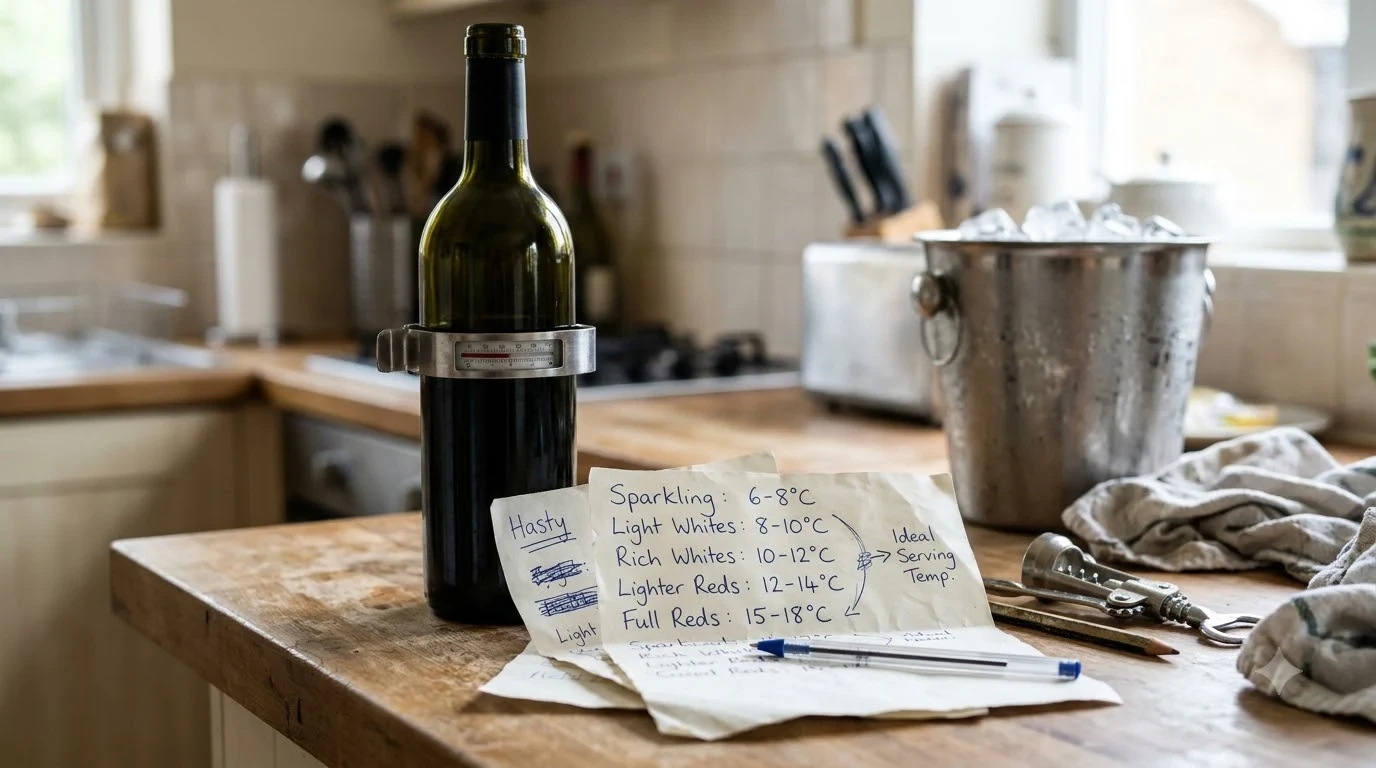
Proper temperature control is essential when pouring Nuits Saint Georges wine, as serving Pinot Noir too warm flattens its bright acidity and accentuates alcohol. Aim for a cool cellar temperature between 59°F and 61°F (15°C to 16°C) for reds, and chill rare white bottlings to between 52°F and 55°F (11°C to 13°C).
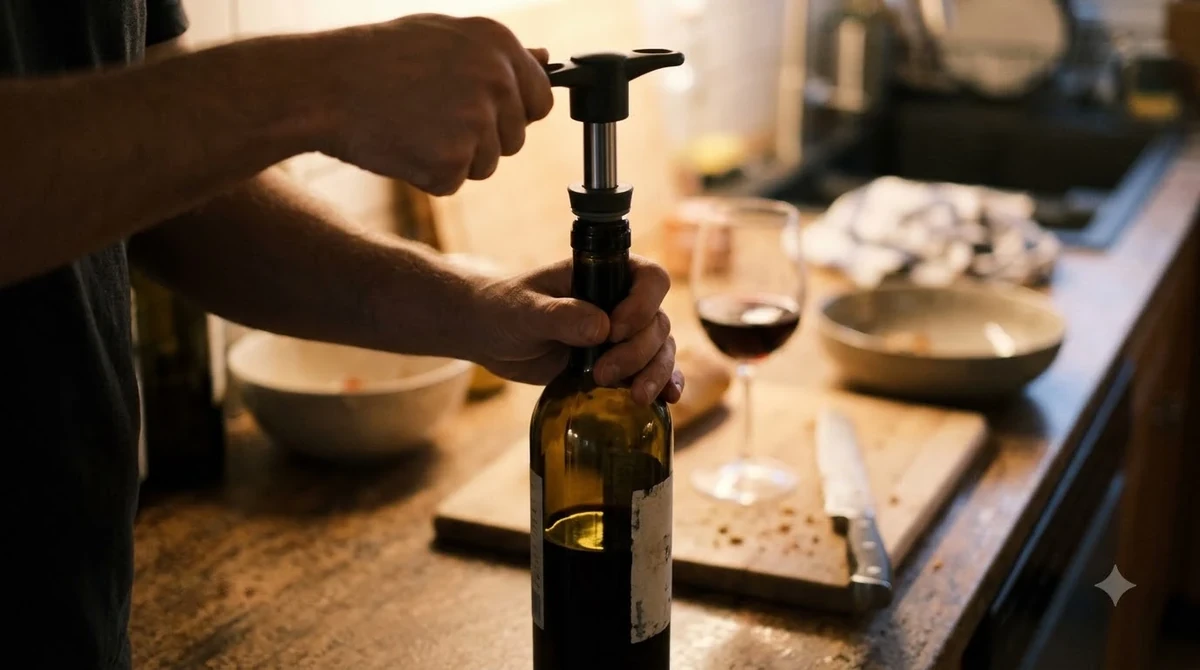
According to Wine Enthusiast’s serving temperature guide, Pinot Noir loses its nuanced fruit and floral aromatics when poured at standard 72°F room temperature. Placing a room-temperature bottle in the refrigerator for 30 to 45 minutes prior to opening brings it right into the sweet spot where its cherry, violet, and savory spice notes shine without thermal shock.
Decanting depends largely on the bottle’s age. Young village or Premier Cru reds under five years old benefit from 30 to 60 minutes in a wide-bottomed decanter to soften their firm tannins and blow off any initial reductive earthiness. Older vintages that have spent a decade or more in the cellar should be stood upright a day ahead to settle fine sediment and poured gently into large, bowl-shaped Burgundy stems without vigorous aeration, which can dissipate fragile aged aromatics.
Tip: Use a wide-bowled Burgundy glass rather than a narrow Bordeaux glass so the wine’s delicate rose, mushroom, and dark berry aromatics can collect and open up with each swirl.
Food Pairing Ideas
Because red Nuits Saint Georges wine combines mouth-coating tannins with lively acidity, it pairs best with rich, savory dishes rather than delicate fare. Roasted meats, braised poultry, feathered game, and washed-rind Burgundian cheeses match the wine’s sturdy frame and earthy undertones.
Classic regional pairings lean heavily into protein and umami to tame the wine’s youthful grip. Pan-seared duck breast, herb-crusted rack of lamb, beef bourguignon, and roasted veal chops pair effortlessly because dietary fat and protein soften Pinot Noir’s tannins on the palate. As bottles mature and develop gamey, truffle-like notes, they also shine alongside wild mushroom risotto, pheasant, or venison.
For cheese courses, avoid overly sharp blue cheeses and instead choose soft-centered washed-rind local specialties such as Époisses, Langres, or Soumaintrain, whose creamy texture mirrors the wine’s weight. If you happen to open one of the appellation’s rare white wines, pair its opulent brioche and honey profile with grilled sea bass, butter-poached lobster, or baked scallops.
How to Read the Label and Choose a Bottle
Reading Burgundy labels becomes straightforward once you know how geography and producer styles are presented on the front of the bottle. Every authentic bottle states “Appellation Nuits-Saint-Georges Contrôlée” or “Appellation Nuits-Saint-Georges Premier Cru Contrôlée,” followed by the producer or négociant name.
When selecting a bottle, start by matching the vintage and classification to your timeline. Village-level wines—especially those from northern parcels near Vosne-Romanée—offer more immediate red-fruited charm and can be enjoyed within three to seven years of harvest. If you are buying a Premier Cru from structured southern climats like Les Vaucrains or Les Pruliers, look for bottles with at least seven to ten years of bottle age unless you plan to cellar them yourself.
Keep in mind that producer reputation matters just as much as vineyard site in Burgundy. Historic estates and respected houses such as Henri Gouges, Domaine Faiveley, Jacques-Frédéric Mugnier, Domaine Méo-Camuzet, Domaine des Perdrix, Maison Louis Latour, and Albert Bichot each bring a distinct house style—ranging from traditional, structured, and long-lived to supple and polished. Readers who appreciate structured European reds like saint joseph wine from the Northern Rhône or tannic cahors wine from Southwest France—or who enjoy comparing Old World terroir against bold New World regions such as calistoga wine—will find Nuits-Saint-Georges a compelling benchmark for age-worthy Pinot Noir.
Frequently Asked Questions
Is Nuits Saint Georges wine always red?
Nearly all Nuits Saint Georges wine is red, with Pinot Noir accounting for roughly 96 percent of total production. However, a tiny remaining fraction—about 4 percent—is white wine made primarily from Chardonnay, often alongside small amounts of Pinot Blanc.
Why are there no Grand Cru vineyards in Nuits-Saint-Georges?
When Burgundy’s official appellation hierarchy was formalized in the 1930s, local growers in Nuits-Saint-Georges chose not to apply for Grand Cru status for top sites like Les Saints-Georges, partly to avoid higher taxes and stricter administrative rules. As a result, Premier Cru is the highest official classification within the commune, even though several climats are widely regarded as Grand Cru quality.
How long should you age Nuits-Saint-Georges?
Village-level red Nuits-Saint-Georges typically drinks well between five and seven years after the vintage, while top Premier Cru bottlings often require eight to fifteen years or more to reach full maturity. Rare white bottlings generally peak between four and eight years after harvest.
What does Nuits-Saint-Georges taste like compared to other Burgundy reds?
Compared to lighter, more perfumed Côte de Nuits neighbors like Chambolle-Musigny or Volnay in the Côte de Beaune, Nuits-Saint-Georges is darker, firmer, and more full-bodied. Expect concentrated black cherry, blackcurrant, rose, licorice, and chewy tannins that evolve into savory leather, earth, and truffle notes over time.
Whether poured alongside a Sunday roast lamb or laid down in a cool cellar for a decade, Nuits Saint Georges wine delivers an unmistakable expression of Burgundian Pinot Noir. By paying attention to northern versus southern vineyard origins, Premier Cru climat names, and proper cellar serving temperatures, you can experience one of the Côte de Nuits’ most rewarding appellations at its peak.
More in Wine Regions
 Willcox Wine Trail: Discover Arizona’s High-Elevation Wine CountryUpdated Nov 20, 2026
 Yakima Valley Wine Region: Find the Best Styles to TryUpdated Nov 20, 2026
 Vosne Romanee Wine Tasting: Identify Aromas and Choose Better PairingsUpdated Nov 20, 2026
 Yakima Valley Wine Festival: Find the Best Seasonal Wine EventsUpdated Nov 20, 2026
 Wales Vineyards: Discover Cool-Climate Wines and Where to VisitUpdated Nov 20, 2026
 Yountville Wine Festival: Discover Napa Wines and Local FoodUpdated Nov 20, 2026