

We may earn a commission when you buy through links on this page, at no extra cost to you. Learn more.
Santa Cruz Mountains wineries sit on hillside vineyards above the coastal fog and are known for Pinot Noir, Chardonnay, and Cabernet Sauvignon grown in thin, stony soils. The American Viticultural Area was established in 1981 and follows the fog line along the coast. Its cool, mountainous conditions give the wines a style that differs from the warmer valleys nearby.
This guide explains what sets the region apart, how the terrain and climate shape its wines, and how to plan a winery visit. Read the sections in order if you are new to the area, since each one builds on the last.
What Makes the Santa Cruz Mountains Wine Region Unique
The region is a federally recognized American Viticultural Area, or AVA, that spans parts of Santa Clara, Santa Cruz, and San Mateo counties. Its boundaries follow mountain ridges and the fog line rather than county lines alone. That geography-first definition is one reason the appellation is often cited as an early example of a region named for its terrain.
Wine growing here has a long history. Early government surveyors noted vineyards in the 1860s, and the area appears in records as the Santa Cruz Mountains since the late 1830s. According to the Santa Cruz Mountains AVA entry on Wikipedia, local producers won awards at world fairs in the 1880s and 1890s before Prohibition interrupted the industry.
The boundary fight of the late 1990s also shows how much local growers value their identity. A federal rule on the nearby San Francisco Bay appellation records that many Santa Cruz Mountains growers objected to being grouped with broader areas. The Treasury decision on the Bay Area appellation lays out those objections, and it helps explain why the mountain vineyards hold on to their own name.
Climate, Soils, and Elevation in the Santa Cruz Mountains
Cool marine air and elevation shape nearly every vineyard here. The mountains create many microclimates, so two sites only a short distance apart can ripen grapes at different rates. The Pacific Ocean influences the western slopes, while San Francisco Bay moderates the eastern side.
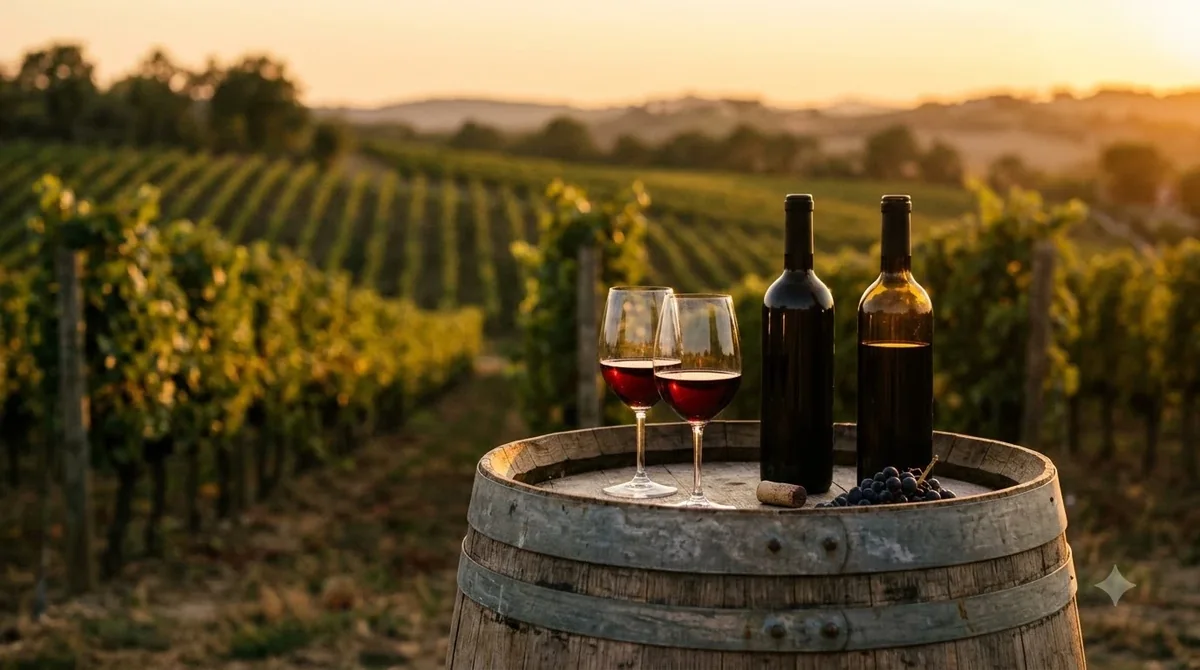
Elevation matters because the appellation largely follows the fog line. The boundary reaches down to about 800 feet on the eastern slope toward the Bay and about 400 feet on the western slope toward the ocean. Along the ridge crest it sits at roughly 3,000 feet or higher. Many slope vineyards sit above the fog, which gives them more sun while cool air drains into the valleys below.
The soils are just as distinctive. The region is underlain by Franciscan shale, and the residual soils are typically thin, stony, and well drained. Sources describe them as impoverished, which makes vines work harder and can concentrate the fruit. That contrasts with the more fertile alluvial soils of surrounding valleys. Rainfall figures in published sources disagree, so check current viticultural materials from the region before planning around any specific number.
Signature Grapes: Pinot Noir, Chardonnay, and More
The region grows about 1,500 acres of wine grapes spread across more than 200 small vineyards. Pinot Noir, Cabernet Sauvignon, and Chardonnay each account for roughly a quarter of that acreage, and the remaining quarter is planted to other varieties, especially Merlot and Zinfandel.
| Variety | Share of planted acreage | What to look for in the glass |
|---|---|---|
| Pinot Noir | About one quarter | Red fruit, silky texture, and a clear sense of site and vintage |
| Cabernet Sauvignon | About one quarter | Firmer structure and tannin, with the concentration the stony soils can produce |
| Chardonnay | About one quarter | Ranges from crisp and lean to richer, depending on winemaking |
| Other varieties | About one quarter | Merlot and Zinfandel are the most notable examples |
Pinot Noir is a strong fit for cool, foggy sites because it ripens slowly and keeps acidity. Many growers in the region treat it as the signature red. Cabernet Sauvignon also does well on the mountain slopes, and a 1971 Ridge Vineyards Monte Bello Cabernet from the region ranked fifth in the 1976 Judgment of Paris tasting, according to the Wikipedia entry.
Chardonnay offers the most range. Cooler sites can keep the wine lively, while the winemaker decides how much oak and richness to add. When you taste, ask the pourer how the vineyard and the winemaking shaped the bottle in front of you.
Top Santa Cruz Mountains Wineries to Visit
Instead of a single ranked list, the most useful approach is to choose a sub-region and a style you like. The Viticulture Association of the Santa Cruz Mountains divides the area into Skyline, Saratoga and Los Gatos, Summit, the Coastal Foothills, Ben Lomond Mountain, and Corralitos and Pleasant Valley. Those names give you a practical way to plan routes.
Some of the oldest wineries in California are in this region, and several have long histories. Historic figures such as Paul Masson, Martin Ray, and Charles Le Franc are often tied to its early growth. Check each winery’s own website for current hours, tasting fees, and reservation policies, since those details change often.
Smaller estate wineries often run limited tastings, so they may need advance booking. Larger properties may offer more open hours. Mixing one or two well-known producers with a few small family vineyards gives you a fuller picture of the region.
Planning a Santa Cruz Mountains Winery Tour
A good tour is planned by sub-region, not by random driving. Mountain roads are winding, and distances that look short on a map can take longer than expected. Group your stops geographically and leave time between visits.

- Pick one or two sub-regions from the Viticulture Association list, such as Skyline or Saratoga and Los Gatos.
- Check each winery’s website for hours and whether tastings require a reservation.
- Plan no more than three or four stops in a day so you can taste slowly and drive safely.
- Arrange a designated driver or a car service before you leave, and eat something substantial during the day.
Responsible drinking matters on a tasting day. Spit when it is offered, pace your glasses, and remember that a tasting pour adds up quickly. Ask staff about snacks or food pairings, since many tasting rooms serve small bites or allow outside food.
How Santa Cruz Mountains Compares to Other Wine Regions
Compared with the warmer valleys of California, the mountain appellation is cooler, higher, and set on thin soils. That combination separates its wines from those grown on valley floors. The table below uses figures from the 1999 federal record, where growers compared their vineyards with the Livermore area.
| Feature | Santa Cruz Mountains | Warmer valley comparison |
|---|---|---|
| Terrain | Mountain slopes and ridges, often above the fog | Valley floor with flatter ground |
| Heat measure cited in 1999 record | 2,140 to 2,880 degree-days | 3,400 degree-days for Livermore |
| Soils | Thin, stony Franciscan shale | More fertile alluvial soils |
| Vineyard character | Over 200 small vineyards | Typically larger vineyard blocks |
If you also plan to visit Sonoma County, the russian river valley wineries guide covers a different set of cooler and warmer sites that many visitors compare with the mountains. For a region farther from California, the okanagan wineries guide shows how a northern climate can produce very different styles.
Buying and Storing Santa Cruz Mountains Wines
Buying directly from the producer is often the best way to find small-lot bottles that do not reach many stores. Tasting rooms can also tell you which vintages are still available and which are close to selling out. Ask about the vineyard site when you buy, since the mountain sites differ widely.
Check the label for the appellation statement. Federal rules allow an approved AVA name to appear on wine labels, so the words Santa Cruz Mountains on a label tell you where the grapes were grown. Read the back label as well for the grape variety and vintage.
Store bottles in a cool, dark place away from heat and light, and keep them lying on their side if they have corks. Follow any storage guidance printed by the producer, since age-worthiness varies by wine and style.
Frequently Asked Questions
Where is the Santa Cruz Mountains AVA located?
The AVA spans parts of Santa Clara, Santa Cruz, and San Mateo counties in California. Its boundaries follow mountain ridges and the fog line, so it is not the same as the whole of Santa Cruz County.
What grapes grow in the Santa Cruz Mountains?
Pinot Noir, Cabernet Sauvignon, and Chardonnay are the main plantings, with roughly a quarter of the acreage each. Merlot and Zinfandel are among the other varieties grown in the region.
Do I need reservations for winery visits?
Many wineries, especially smaller estates, recommend or require reservations. Check each winery’s website for current hours and booking rules, because policies change often and vary from property to property.
How is the region different from Santa Cruz County?
The AVA is a defined grape-growing area based on mountain terrain and elevation. Not every vineyard or winery in the county sits inside those boundaries, so check the address and the appellation on the label.
Santa Cruz Mountains wineries reward visitors who plan by sub-region and taste with a clear idea of the grapes. Start with one or two areas, book ahead where needed, and read labels closely when you buy. For a wider view of how regions differ, explore the Wine Regions section.
More in Wine Regions
 Willcox Wine Trail: Discover Arizona’s High-Elevation Wine CountryUpdated Nov 20, 2026
 Yakima Valley Wine Region: Find the Best Styles to TryUpdated Nov 20, 2026
 Vosne Romanee Wine Tasting: Identify Aromas and Choose Better PairingsUpdated Nov 20, 2026
 Yakima Valley Wine Festival: Find the Best Seasonal Wine EventsUpdated Nov 20, 2026
 Wales Vineyards: Discover Cool-Climate Wines and Where to VisitUpdated Nov 20, 2026
 Yountville Wine Festival: Discover Napa Wines and Local FoodUpdated Nov 20, 2026