

We may earn a commission when you buy through links on this page, at no extra cost to you. Learn more.
Gruet wine is a collection of traditional-method sparkling wines produced primarily in Albuquerque, New Mexico, by a family with roots in Champagne, France. Founded in 1984 by Gilbert Gruet and his children Laurent and Nathalie, the winery crafts Chardonnay and Pinot Noir bottlings using the same secondary-bottle fermentation process required in Champagne. Most core releases sit at around 12 percent ABV and undergo at least 18 months of lees aging before disgorgement.
For American wine drinkers accustomed to thinking of domestic bubbles as strictly a California or Oregon affair, New Mexico can sound like an unlikely origin story. Yet over more than three decades, Gruet Winery has grown from an experimental desert planting into New Mexico’s largest wine producer, earning national recognition on restaurant lists and retail shelves across 49 states.
Who Makes Gruet Wine
Gruet Winery was established in 1984 by French Champagne producer Gilbert Gruet alongside his children, Laurent and Nathalie, bringing traditional French sparkling winemaking to the American Southwest. Today, the Albuquerque winery operates under Precept Wine, which acquired the brand in 2015 while maintaining its New Mexico winemaking identity and French technical heritage.
The family story began in Bethon, a village in the Champagne region of France, where Gilbert Gruet planted his first vines in 1952 and founded the Champagne house Gruet et Fils in 1967. Looking to expand abroad in the early 1980s, Gilbert toured American wine regions and visited New Mexico in 1983, where he met European vintners already experimenting with vinifera grapes. Convinced by the high-elevation climate, he purchased vineyard land near Truth or Consequences, and in 1984 Laurent and Nathalie relocated to New Mexico to plant Chardonnay and Pinot Noir.
The winery released its inaugural 1987 vintage Brut and Blanc de Noirs in 1989 and opened its permanent Albuquerque winemaking facility in 1993. According to VinePair’s profile of Gruet Winery, the house continued leaning on French technical expertise even after scaling up, sending samples for laboratory analysis to longtime family friend and Champagne oenologist Dominique Leboeuf. In 2024, the winery appointed Carrie Gurule as the first female head winemaker in its history, carrying forward the house’s Méthode Champenoise program.
High-Desert Terroir and Winemaking
Gruet crafts its sparkling wines using the traditional Méthode Champenoise, where secondary fermentation occurs inside each individual bottle, relying on high-elevation desert vineyards to preserve natural grape acidity. Unlike coastal sparkling regions cooled by ocean fog, New Mexico achieves crispness through altitude and dramatic day-to-night temperature swings.
Grapes sourced from New Mexico grow in sandy, well-drained soils at elevations exceeding 4,200 feet. Key sites include the historic Engle Vineyard near Elephant Butte Reservoir and Luna Rossa Vineyard in southern New Mexico, both sitting between 4,245 and 4,335 feet, as well as the Tamaya Vineyard near Albuquerque. Planted in 2014 at 5,110 feet in partnership with the Pueblo of Santa Ana, Tamaya is owned and farmed by the tribe to Gruet’s specifications. Hot, sunny days ripen the fruit, while chilly desert nights slow maturation and lock in bright acidity, and dry, breezy air naturally discourages mildew and rot.
Because annual production reaches roughly 275,000 cases, Gruet supplements its New Mexico harvests with fruit from Washington State and California. According to the producer, New Mexico vineyards contribute rich fruit character while Washington fruit adds vibrant natural acidity. Once the base wines are blended, yeast and sugar are added to trigger secondary fermentation in the bottle, followed by at least 18 months of aging sur lie—resting on spent yeast cells—before riddling and disgorgement.
The Core Gruet Wine Lineup
The core Gruet portfolio centers on non-vintage Méthode Champenoise sparkling wines made from Chardonnay and Pinot Noir, spanning bone-dry Sauvage styles to off-dry Demi-Sec bottlings. Alongside the non-vintage classics, the winery also produces vintage-dated reserves, barrel-aged cuvées, botanical spritzes, and small-lot still wines.
Each non-vintage bottling highlights a different balance of grape varieties, dosage sweetness, and aging regimen. The flagship Brut blends Chardonnay and Pinot Noir for an approachable, crowd-pleasing house style, whereas Blanc de Blancs relies on white grapes for citrus-driven precision and Blanc de Noirs leans on Pinot Noir for fuller body. For drinkers who prefer zero-sugar-style sharpness, the Sauvage line reduces residual sugar significantly compared with conventional sparkling wines.
| Bottling | Primary Grapes | Sweetness Style | Notable Winemaking Detail |
|---|---|---|---|
| Gruet Brut NV | 75% Chardonnay, 25% Pinot Noir | Brut (Dry) | Aged a minimum of 18 months on tirage at 12.0% ABV |
| Gruet Blanc de Noirs NV | Pinot Noir | Brut (Dry) | Warm amber hue from red grape skin contact; ranked on Wine Spectator’s Top 100 in 2011 |
| Gruet Blanc de Blancs NV | Chardonnay | Brut (Dry) | White-gold color with crisp citrus and mineral focus |
| Gruet Brut Rosé NV | 100% Pinot Noir | Brut (Dry) | Uses the saignée method, bleeding off 2% juice and blending it back for pale salmon color |
| Gruet Sauvage NV | Chardonnay | Bone Dry | Aged 24 months; formulated with 50% less sugar than average sparkling wine |
| Gruet Sweet Jolie NV | Chardonnay and Pinot Noir | Demi-Sec (Off-Dry) | Balanced sweetness aimed at fruit-forward palates and desserts |
Reviewers and everyday shoppers often compare accessible American wine brands by consistency across wide retail distribution, and Gruet’s non-vintage lineup is built specifically for year-to-year uniformity. If you normally gravitate toward soft, fruit-driven 14 Hands Hot to Trot wine blends for casual dinners, starting with Gruet’s Brut or Sweet Jolie offers an easy transition into traditional sparkling styles.
Taste Profile and Sensory Notes
Across the range, Gruet wines combine crisp orchard and citrus fruit flavors with a fine, persistent mousse and subtle bready notes developed during extended lees aging. Rather than tasting overly yeasty or heavy, the house style leans bright, clean, and refreshing.
According to Gruet Winery’s official tasting notes, the flagship Brut pours a pale straw shade with aromas of green apple, citrus, and a hint of brioche, finishing silky with just a touch of roundness to balance its 7.6 grams per liter of total acidity. The Blanc de Blancs shifts toward tangerine, pear, and wet-stone minerality, while the Blanc de Noirs displays a warm amber tint and layers white cherry, baked apple, and subtle walnut richness.
In the rosé category, the Brut Rosé shows a pale salmon or melon-mango hue with fresh strawberry, raspberry, and plum aromatics framed by brisk acidity. Meanwhile, the Sauvage cuvées strip away the softening effect of dosage, emphasizing lemon zest, green apple skin, and chalky tension for drinkers who prefer razor-sharp dryness.
How to Serve and Pair Gruet Wine
Serve Gruet sparkling wines well-chilled between 40°F and 50°F (4°C to 10°C) in a tulip glass or narrow flute to preserve carbonation and concentrate aromatics. Because these bottles are finished under high atmospheric pressure, chilling them thoroughly before opening also keeps the cork under control and prevents excessive foaming.
While narrow flutes showcase rising streams of bubbles visually, a tulip-shaped sparkling glass widens slightly at the bowl before tapering at the rim, giving the brioche and orchard-fruit aromatics room to open up. Pour slowly down the side of a tilted glass in two stages to retain the fine mousse, and avoid frosting the glasses beforehand, as ice crystals cause bubbles to dissipate rapidly.
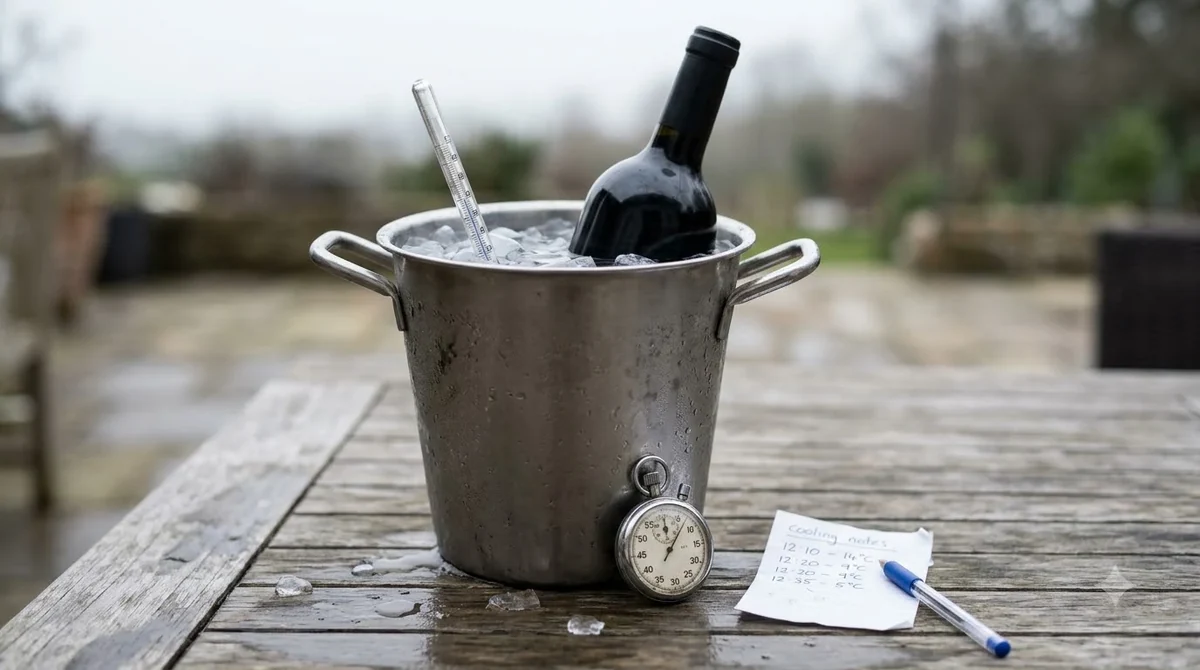
Tip: Chill standard 750-milliliter bottles in the refrigerator for at least three hours—or submerge them in a bucket filled with equal parts ice and cold water for 25 minutes—before untwisting the wire cage.
At the dining table, Gruet’s high natural acidity cuts cleanly through rich, salty, and fried foods. The Brut and Blanc de Blancs pair effortlessly with raw oysters, smoked salmon, crab cakes, sushi, and creamy mushroom risotto. Brut Rosé and Blanc de Noirs have enough Pinot Noir structure to stand up to roasted poultry, pork tenderloin, charcuterie boards, and soft-ripened cheeses like brie or chèvre. For spicy Southwestern dishes or fruit tarts, Sweet Jolie provides enough residual sweetness to tame chili heat without feeling syrupy. Readers who enjoy lighter, crisp whites such as Avaline white wine will find Gruet’s dry sparkling bottles equally adaptable at brunch or cocktail hour, while anyone seeking zero-alcohol options can compare traditional sparkling structure against dealcoholized labels like Ariel wine.
Who Gruet Wine Suits Best
Gruet wine suits sparkling wine drinkers who want authentic bottle-fermented texture and complexity for weeknight dinners, casual celebrations, and large gatherings without luxury Champagne pricing. Its wide availability across nearly every U.S. state makes it a reliable standby when shopping at neighborhood wine shops or grocery stores.
Drinkers who appreciate crisp, dry styles—such as Brut Champagne, Cava, or Crémant—typically gravitate toward Gruet Brut, Blanc de Blancs, or Sauvage. Conversely, if you usually find dry sparkling wine too tart, Sweet Jolie offers a gentler, floral entry point without crossing into dessert-wine territory. Because the portfolio spans six distinct sweetness and grape profiles, hosts can easily match a bottle to almost any guest list or menu.
Frequently Asked Questions
Is Gruet wine actually made in New Mexico?
Yes. Gruet Winery is headquartered in Albuquerque, New Mexico, where its sparkling wines are fermented, aged on the lees, riddled, and disgorged. While the winery grows and sources grapes from high-elevation New Mexico vineyards, it also brings in Chardonnay and Pinot Noir fruit from Washington State and California to meet national demand.
Is Gruet wine real Champagne?
Legally, only sparkling wine produced in the Champagne region of France can be labeled Champagne. However, Gruet was founded by a French Champagne-making family and uses the exact same Méthode Champenoise process—including secondary fermentation inside the bottle and extended yeast aging—with traditional Champagne grapes.
Which Gruet wine is the driest?
Gruet Sauvage and Sauvage Rosé are the driest bottlings in the core lineup. Aged for 24 months on the lees and finished with minimal dosage, Sauvage contains 50 percent less sugar than average sparkling wines, giving it a brisk, bone-dry profile.
How long does an opened bottle of Gruet wine stay fresh?
Sealed tightly with a hinged sparkling wine stopper and stored upright in the refrigerator, an opened bottle of Gruet stays bubbly and fresh for two to three days. Avoid using a standard still-wine cork or placing a metal spoon in the neck, as neither method holds back internal carbonation pressure.
From its French family origins in Bethon to its mile-high desert vineyards in New Mexico, Gruet wine bridges Old World sparkling technique with American accessibility. Whether you reach for the classic Brut, a Pinot Noir-driven rosé, or the bone-dry Sauvage, knowing the grape blend and sweetness level makes it simple to pick the right bottle for any table.
More in Wine Brands
 Underwood Wine Price: Compare Bottles, Cans, and Pack SizesUpdated Nov 21, 2026
 Zenato Wine Price: Compare Styles and Choose the Right BottleUpdated Nov 21, 2026
 Zuccardi Wine Price: Compare Bottles and Find the Right RangeUpdated Nov 21, 2026
 Yellow Tail Moscato Review: Taste, Sweetness and Serving TipsUpdated Nov 21, 2026
 Wolf Blass Yellow Label Review: Choose Your Best StyleUpdated Nov 21, 2026
 Wolffer Estate Rose Review: Choose the Right Bottle for Your TableUpdated Nov 21, 2026