

We may earn a commission when you buy through links on this page, at no extra cost to you. Learn more.
Tignanello wine is a red made by the Tuscan house Antinori, and it is one of the best-known Super Tuscan wines. It is named after the Tenuta di Tignanello estate in San Casciano in Val di Pesa, and its current blend is mostly Sangiovese with smaller parts of Cabernet Sauvignon and Cabernet Franc. Tignanello is aged in barriques, a type of barrel, and is listed at about 13.5 percent alcohol by volume.
If you have seen Tignanello on a wine list and wondered how it stands apart from a standard Chianti, this guide explains where the wine comes from, how its blend has changed, and what the bottle tastes like. It is written for people who want to understand the wine before they buy or order one.
Where Tignanello comes from
Tignanello takes its name from the Tenuta di Tignanello, a production area in San Casciano in Val di Pesa, in the heart of Tuscany. The Antinori family, whose company is registered in Florence, makes the wine. The location matters because it places the wine in the Chianti hills, where Sangiovese has been the region’s signature grape for generations.
Antinori’s own website is organized around the family, its estates, and its wines, and it lists addresses in San Casciano val di Pesa and Florence. That gives a clear sense of where the wine is made and where the company is run.
Why Tignanello is called a Super Tuscan
Super Tuscan is a loose term for high-quality Tuscan red wines that do not fit the traditional rules of their region. Tignanello is often cited as an early example. Its first vintage is usually dated to around 1970, when Piero Antinori made the wine, though sources give slightly different years. The wine’s reputation grew because it showed that a Tuscan red could be made with international grape varieties and still taste clearly Tuscan.
That history is the main reason the name comes up so often in discussions of Italian wine. A Super Tuscan can use Cabernet Sauvignon or Merlot next to Sangiovese, and the wine is usually labeled as a table wine rather than under a traditional Chianti classification. Tignanello is one of the wines that helped establish that category.
How the Tignanello blend has changed
The blend is the first thing to know when you compare Tignanello with other Tuscan reds. The current mix is listed as 80 percent Sangiovese, 15 percent Cabernet Sauvignon, and 5 percent Cabernet Franc. Earlier versions used different proportions. For a period in the early 2000s, the Sangiovese share rose to 85 percent and the Cabernet Sauvignon share fell to 10 percent.
Early vintages also included white grapes, which were removed after a trial in 1975. The change turned the wine into a red-only blend, which is how most people know it today. Blend shifts are normal for a long-running wine, so a bottle from one decade can taste a little different from one from another.
| Element | What the sources describe |
|---|---|
| Producer | Antinori, a Tuscan family wine house |
| Estate name | Tenuta di Tignanello, San Casciano in Val di Pesa |
| Current blend | About 80 percent Sangiovese, 15 percent Cabernet Sauvignon, 5 percent Cabernet Franc |
| Aging | Aged in barriques, a type of French oak barrel |
| Alcohol | Listed at about 13.5 percent alcohol by volume |
| Category | Super Tuscan red |
The table is a quick reference, but the blend numbers are the detail that matters most. Sangiovese gives the wine its acidity and cherry-led character, while the Cabernet parts add structure and a firmer finish. Because Sangiovese is the main grape, Tignanello tastes closer to a Tuscan red than to a Bordeaux-style blend, even with the international grapes in the mix.
What Tignanello tastes like
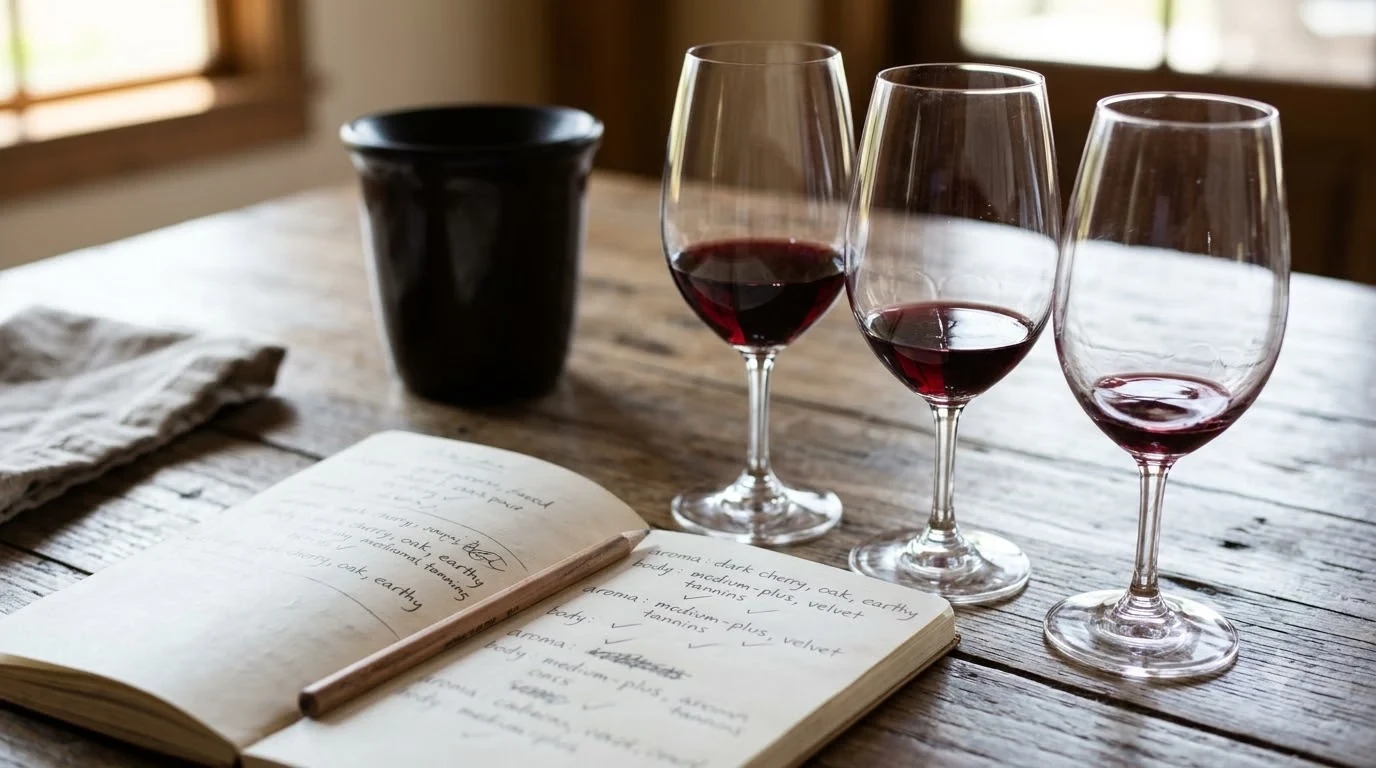
Because the wine is mostly Sangiovese, its character follows that grape closely. The Wine Folly guide to Sangiovese lists cherry, roasted tomato, sweet balsamic, oregano, and espresso as typical flavors. The grape is usually bone-dry, with medium-full body, medium-high tannins, and medium-high acidity. Those traits give a Tignanello bottle a savory edge and a structure that holds up to food.
The Cabernet parts can add darker fruit and a firmer grip on the palate, so the wine often feels more polished than a traditional Sangiovese from the Chianti area. If you enjoy the sour-cherry and herb character of Italian reds but want a richer bottle, Tignanello is a good place to start.

How to serve and pair Tignanello
Wine Folly’s guide to Sangiovese recommends serving the grape at a cool room temperature, roughly 60 to 68 degrees Fahrenheit, in a universal wine glass. It also suggests decanting for about 30 minutes to let the wine open. Those are guidelines for the grape rather than the blend, but they work well for Tignanello, which shares Sangiovese’s acidity and tannin structure.
Food pairing follows from the acidity. Sangiovese works well with tomato sauces, roast red peppers, grilled vegetables, and dishes with herbs such as oregano and rosemary. It is also a strong match for roast lamb, grilled sausage, and aged hard cheeses. Because the wine has more structure than a light red, it pairs better with savory mains than with delicate seafood or salads.
If you want to compare Tignanello with other red styles, our wine brands guide covers how producers approach different blends, and it is a useful reference when you are choosing between a Tuscan red and a New World option.
How to buy and store Tignanello
Tignanello is sold through wine shops, restaurants, and online retailers, and availability depends on the vintage and region. Check the label for the vintage year, since the blend and character can change from one year to the next. If you are buying for a dinner, a current release is usually the safest choice, while older vintages suit collectors and those who enjoy aged Italian reds.
When you read the label, look for the vintage year and the producer name first. Super Tuscan wines from different estates can use similar grapes but taste quite different, so the Antinori name tells you which house style to expect. If you want to compare a Super Tuscan with a more traditional Tuscan red, ask the server or the shop staff which Sangiovese-based bottle they would pair with the same meal. That side-by-side tasting is often the quickest way to see what sets Tignanello apart.
Store the bottle on its side in a cool, dark place with steady temperatures. The Sangiovese character suggests the wine can age for many years, and Wine Folly notes that Sangiovese can be cellared for 10 years or more. Tignanello is a wine to keep for a planned meal or celebration rather than a casual weeknight bottle.
Frequently Asked Questions
What grapes are in Tignanello?
The current blend is listed as about 80 percent Sangiovese, 15 percent Cabernet Sauvignon, and 5 percent Cabernet Franc. Earlier vintages had different proportions.
Is Tignanello a Chianti?
No. Tignanello is a Super Tuscan red, not a traditional Chianti. It uses international grapes alongside Sangiovese, which is why it falls into a separate category.
How much alcohol is in Tignanello?
The wine is listed at about 13.5 percent alcohol by volume, which is a moderate level for a full-bodied Italian red.
Should I decant Tignanello?
Decanting for about 30 minutes is a common suggestion for Sangiovese-based reds, and it can help the aromas open before you taste.
Tignanello is worth knowing if you enjoy Italian reds with structure and a clear sense of place. Start with a current vintage to learn the house style, then compare it with a straight Sangiovese or a lighter red from another region. Our barefoot wine guide is a useful contrast if you want to see how a much more widely available wine compares.
More in Wine Brands
 Underwood Wine Price: Compare Bottles, Cans, and Pack SizesUpdated Nov 21, 2026
 Zenato Wine Price: Compare Styles and Choose the Right BottleUpdated Nov 21, 2026
 Zuccardi Wine Price: Compare Bottles and Find the Right RangeUpdated Nov 21, 2026
 Yellow Tail Moscato Review: Taste, Sweetness and Serving TipsUpdated Nov 21, 2026
 Wolf Blass Yellow Label Review: Choose Your Best StyleUpdated Nov 21, 2026
 Wolffer Estate Rose Review: Choose the Right Bottle for Your TableUpdated Nov 21, 2026