
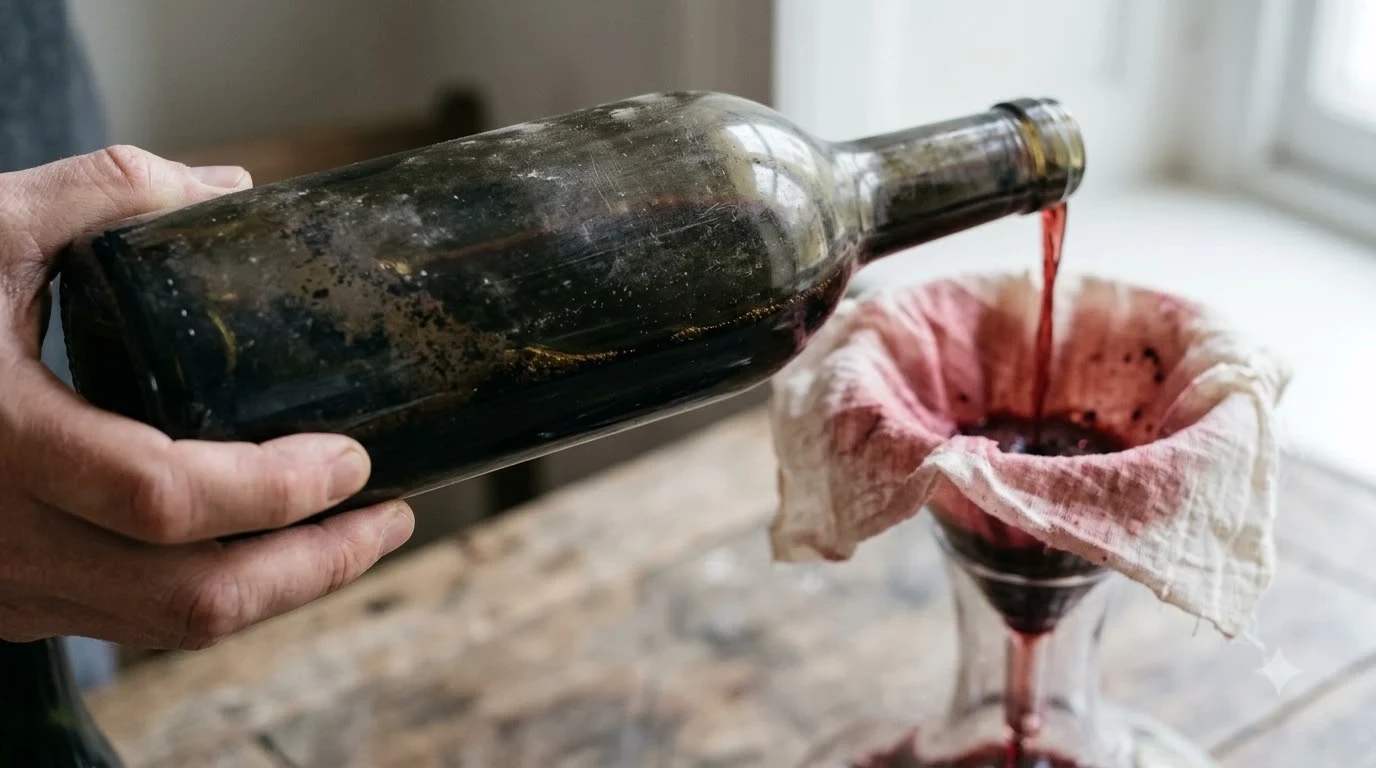

We may earn a commission when you buy through links on this page, at no extra cost to you. Learn more.
Learning how to clean a decanter starts with rinsing the vessel with warm water immediately after pouring the final glass so wine pigments and tannins never dry on the glass. For routine maintenance, swirling warm water without scented dish soap keeps crystal and glass clear, while stubborn purple rings or cloudy mineral buildup respond best to a white vinegar soak, coarse salt and crushed ice, or reusable stainless steel cleaning beads. Always invert the vessel on a drying rack to air-dry completely before storing it.
A gleaming wine vessel does more than look impressive on the dining table; it protects the aromatics and flavor purity of every bottle you open. If you are still deciding when aeration makes sense in the first place, reading up on what a decanter is for shows why preserving a neutral, odor-free interior matters just as much as the shape of the glass itself.
Why Immediate Rinsing Is the Most Important Step
The easiest way to keep glassware spotless is to rinse it with warm tap water within an hour or two of finishing your wine, before pigments and tannins bond to the interior wall. Once red wine dries in the wide belly of a vessel, simple water swirling will no longer lift the residue.
Wine contains natural anthocyanins, tannins, and tartrates that stay suspended in liquid while the vessel is in use. As soon as the wine is poured out, the thin film clinging to the interior begins to evaporate, concentrating those compounds against the microscopic pores of glass and crystal. Industry professionals interviewed by Wine Enthusiast emphasize that waiting until the next morning turns a thirty-second rinse into a multi-step scrubbing session.
Even if dinner runs late or guests linger at the table, you can prevent stains from setting without stopping the evening to wash dishes. Simply pour a few inches of warm tap water into the vessel and give it a gentle swirl so the interior walls stay wet and diluted until morning. Avoid boiling water during this step, because sudden thermal shock can crack delicate hand-blown crystal or thin-walled glass.
Everyday Cleaning Routine Without Dish Soap
For routine care after a single evening of use, warm water and gentle agitation are usually all you need, making scented dish soap unnecessary and often counterproductive. Standard liquid dish detergents leave behind microscopic surfactant films and synthetic fragrances that cling to narrow necks and ruin the bouquet of your next bottle.
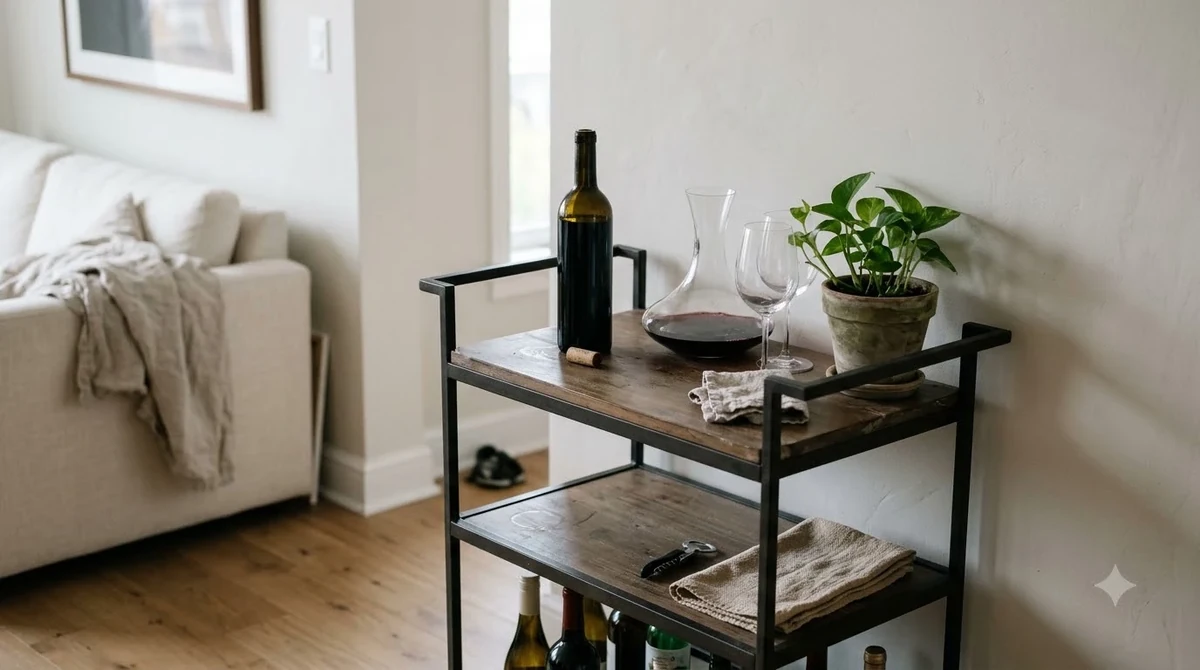
Start by emptying any remaining drops of wine and filling the vessel roughly one-third full with lukewarm or warm water. Hold the base firmly with one hand and the neck with the other, then swirl the water in smooth circular motions so it washes over the widest curve of the belly. Pour the water out, repeat the warm rinse two or three times, and inspect the glass under a bright kitchen light to confirm no faint purple hue remains.
If you occasionally want a deeper wash after serving a heavily sedimented older red, educators at Wine Folly note that using a tiny drop of hypoallergenic, fragrance-free soap is acceptable as long as you follow it with several thorough cold-water rinses inside to keep the glass from turning foggy. When washing the exterior to remove fingerprints, wipe the outside with a damp sponge and keep soap away from the mouth of the vessel whenever possible. The same gentle, fragrance-free approach applies when learning how to clean wine glasses so your entire stemware collection stays aroma-neutral.
Tip: Rinse the interior one final time with distilled or filtered water if your local tap water is hard, which prevents chalky calcium spots from forming as the glass dries.
How to Remove Stubborn Red Wine Stains and Cloudiness
When dried tannin rings or cloudy hard-water deposits already coat the bottom of your vessel, mild kitchen acids and gentle physical abrasives break down the buildup without scratching the surface. Choosing the right method depends on whether you are dealing with fresh purple pigment, crusty sediment, or dull mineral haze.
White vinegar is the most reliable solution for cloudy mineral film and stubborn discoloration. Pour enough distilled white vinegar into the vessel to cover the stained area, or mix equal parts white vinegar and warm water for a full-belly soak, and let it sit for at least thirty minutes to several hours. Swirl the liquid occasionally to refresh contact with the glass, then empty the vessel and flush it repeatedly with warm water until every trace of vinegar aroma disappears.
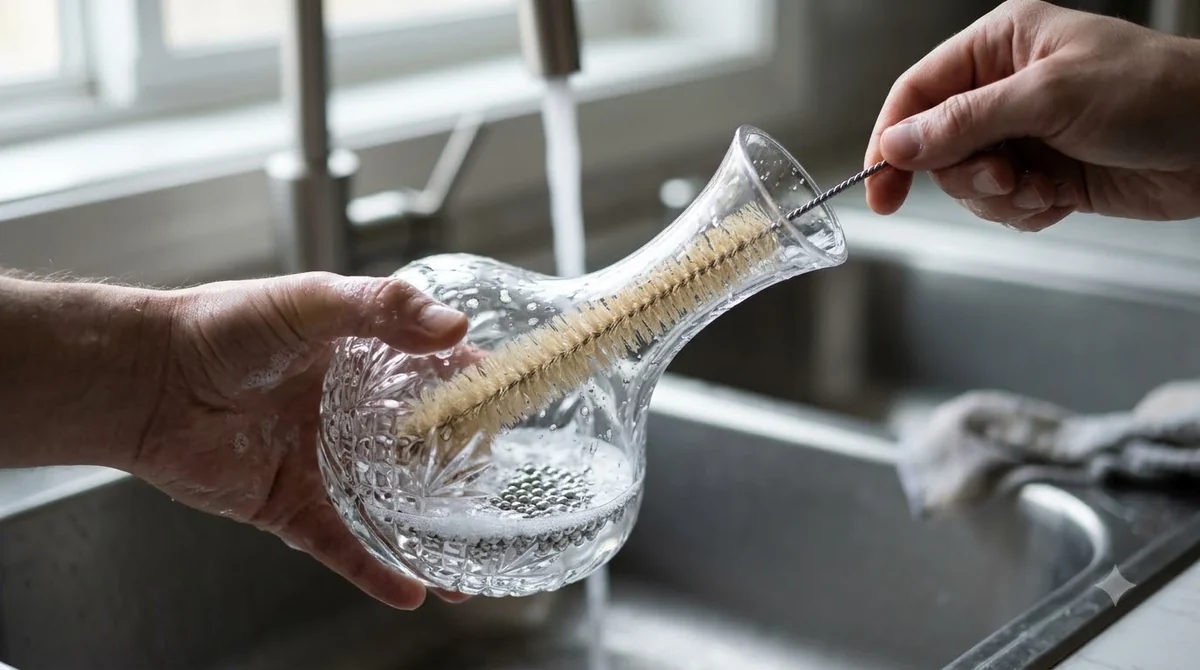
For physical scrubbing inside curved shapes where your hand cannot reach, crushed ice and coarse salt act like a gentle, water-soluble scour pad. Drop a handful of crushed ice and two tablespoons of coarse kosher or rock salt into the vessel, add a splash of water or white vinegar, and swirl steadily for one to two minutes so the crystals rub away stuck-on sediment before dissolving safely in the rinse water. Reusable stainless steel cleaning beads and flexible foam-tipped decanter brushes also work well for narrow necks, whereas uncooked rice is best reserved only for very light residue since it struggles against heavy, caked-on stains.
| Cleaning Method | Best Used For | Key Materials | Soak or Action Time |
|---|---|---|---|
| Warm Water Swirl | Immediate post-use maintenance | Warm tap water, distilled final rinse | 30 to 60 seconds |
| White Vinegar Soak | Cloudy mineral film and set stains | Distilled white vinegar and warm water | 30 minutes to overnight |
| Crushed Ice and Salt | Caked-on red wine sediment | Crushed ice, 2 tbsp coarse salt, water | 1 to 2 minutes of swirling |
| Stainless Steel Beads | Unusual curves and narrow necks | Reusable cleaning beads and warm water | 1 to 2 minutes of gentle rolling |
| Denture Cleanser Tablets | Heavy discoloration in hard-to-reach bases | Warm water and 1 to 2 fizzing tablets | 1 to 3 hours, followed by thorough rinsing |
Best Practices for Drying and Storing Crystal and Glass
Proper drying is just as critical as washing, because trapped moisture inside a narrow neck creates water spots, musty odors, and bacterial growth during storage. Never shove a standard kitchen towel or paper towel down the neck, as lint fibers easily snag on the rim and leave fuzz clinging to the interior walls.
After the final rinse, invert the vessel upside down at a slight angle on a dedicated drying stand or a clean, folded microfiber cloth so gravity drains the water while air circulates upward into the belly. Resting a narrow-necked vessel flat on a solid counter seals the opening and traps condensation inside for days. Depending on room humidity, complete air-drying usually takes several hours or overnight.
Once the interior is completely dry, polish the exterior with a lint-free microfiber cloth while supporting the base rather than twisting the fragile neck. Store the vessel upright in a dust-free cabinet away from strong-smelling spices, cleaning supplies, or scented candles, since crystal and fine glass can subtly absorb surrounding odors over time. Reviewing basic opening and serving habits alongside proper storage ensures your glassware is always ready when guests arrive.
What Never to Do When Cleaning a Decanter
Many well-intentioned shortcuts permanently cloud, scratch, or shatter fine wine vessels, especially delicate lead-free or traditional crystal designs. Knowing which household tools and appliances to avoid saves you from turning an heirloom centerpiece into cloudy, unusable glass.
First, keep hand-blown and crystal vessels out of the dishwasher unless the manufacturer explicitly states that the specific model is dishwasher-safe. High water pressure can rattle slender necks against racks, harsh dishwasher detergents etch crystal into a permanent milky haze, and trapped rinse aids leave lingering chemical flavors. Second, never pour boiling water into a cold vessel, as rapid expansion stresses thin glass and causes clean stress fractures around the base.
Third, stay away from chlorine bleach, abrasive scouring powders, and stiff-bristled bottle brushes. Bleach leaves persistent odors that are nearly impossible to flush out of a narrow opening, while hard nylon or wire bristles create microscopic scratches in softer crystal glass that trap future wine pigments even more tightly.
Frequently Asked Questions
Can you put a wine decanter in the dishwasher?
Most crystal and hand-blown decanters should never go in the dishwasher because high heat, harsh detergents, and water jets can etch, cloud, or crack the glass. Only place a thick, machine-made glass decanter in the dishwasher if the manufacturer explicitly labels it dishwasher-safe and you skip scented rinse aids.
How do you get cloudy white film out of a decanter?
Cloudy white film is usually caused by calcium and mineral deposits left behind by hard tap water. Fill the affected area with distilled white vinegar or a fifty-fifty mix of vinegar and warm water, let it soak for at least thirty minutes, and rinse thoroughly with distilled water.
Are denture tablets safe for cleaning a wine decanter?
Yes, unflavored denture cleanser tablets are a popular sommelier trick because their gentle effervescent baking soda and citric acid lift stubborn tannin stains without scrubbing. Drop one or two tablets into warm water inside the vessel, let them fizz until the stains dissolve, and rinse several times with fresh water.
Why should you avoid using regular dish soap inside a decanter?
Standard dish soaps contain perfumes, dyes, and wetting agents that cling to curved glass interiors and are difficult to rinse completely through a narrow neck. Even a trace of leftover soap residue will flatten wine bubbles, mute delicate aromas, and add a soapy taste to your next pour.
Consistent, gentle care keeps your glassware sparkling without harsh chemicals or tedious scrubbing. By rinsing promptly with warm water, treating occasional stains with vinegar or coarse salt, and letting the interior air-dry upside down, every bottle you decant will taste exactly as the winemaker intended.
More in Wine Basics
 Which Rose Is Best for Your Taste, Budget, and Food PairingsUpdated Nov 21, 2026
 Is Cheap Wine Bad? How to Find Bottles Worth DrinkingUpdated Nov 21, 2026
 What To Write On A Wine Gift Tag: Thoughtful Messages For Every OccasionUpdated Nov 21, 2026
 Which Wine Is Best For Weight Loss? Compare Lower-Calorie ChoicesUpdated Nov 21, 2026
 What Is The Best Wine For Mimosas? Choose Bubbly That Balances Orange JuiceUpdated Nov 20, 2026
 Which Prosecco Is Best for Your Taste and OccasionUpdated Nov 20, 2026