

We may earn a commission when you buy through links on this page, at no extra cost to you. Learn more.
If you are wondering where is red wine from, its ancient origins trace back roughly 8,000 years to the South Caucasus and Fertile Crescent (modern-day Georgia, Armenia, Iran, and Turkey), while modern commercial production comes primarily from France, Italy, Spain, the United States, Chile, Australia, South Africa, and Argentina. Those top four producing countries alone account for just over half of the world’s total wine output. Today, red wine grapes grow across two temperate climate belts between roughly 30 and 50 degrees latitude in both the Northern and Southern Hemispheres.
Because red wine is made from dark-skinned Vitis vinifera grapes rather than a single location, its geography spans thousands of years of agricultural trade and migration. Understanding both its archaeological birthplace and its modern global hubs helps explain why a bottle from Bordeaux tastes completely different from one grown in Mendoza or Napa Valley.
The Ancient Birthplace of Red Wine
Red wine originated in West Asia and the South Caucasus during the Neolithic period, thousands of years before grapevines reached Western Europe. Archaeological discoveries in Georgia and Armenia provide the earliest physical proof of intentional grape fermentation.

According to research highlighted by Wine Folly, chemical analysis of ancient pottery shards found in the South Caucasus region of Georgia dates winemaking to around 6,000 to 5,800 BC. Early vintners buried large clay vessels known as kvevri underground to ferment crushed grapes at steady temperatures, a traditional method still practiced in Georgia today. Just south in Armenia, archaeologists uncovered the Areni-1 cave winery dating to roughly 4100 BC, complete with a wine press, fermentation vats, and desiccated grape remains. Local Armenian winemakers still produce red wine from the indigenous Areni grape in that same region.
Genetic studies of wild and cultivated grapevines also point toward Southeastern Anatolia in modern-day Turkey as a primary domestication zone. As seafaring civilizations like the Phoenicians and ancient Greeks expanded trade routes across the Mediterranean, they carried grape cuttings to coastal colonies in Italy, Spain, and southern France. Each time vines adapted to new soils and microclimates, natural mutations produced distinct grape varieties—a process that eventually gave rise to the 1,368 identified wine grape cultivars cataloged by ampelographers today.
How Red Wine Spread Across the Globe
From the Mediterranean basin, Roman legions and later European explorers carried viticulture across Europe and eventually to the Americas, South Africa, and Australia. This historical timeline divides modern wine geography into “Old World” European origins and “New World” regions outside Europe.
During the Roman Empire, soldiers and settlers planted vineyards along major river valleys—including the Rhône, Rhine, Mosel, and Bordeaux waterways—to ensure reliable local supplies. After the fall of Rome, Catholic monastic orders preserved and refined vineyard mapping across France, Germany, and Italy, meticulously recording which hillside plots produced superior red wines. Centuries of selective propagation in regions like Burgundy and Bordeaux established the benchmark grape varieties that dominate international wine lists today.
The next major geographic leap occurred between the 1500s and 1800s as European colonizers and merchants planted vines across the Southern Hemisphere and North America. Spanish missionaries and conquistadors introduced grapevines to Chile and Argentina in the 1500s, while Dutch East India Company settlers established vineyards in South Africa in the 1600s. By the late eighteenth and nineteenth centuries, commercial plantings had taken root in California and Australia, creating the global distribution network of Wine by Type available to drinkers today.
Top Red Wine Producing Countries Today
Modern red wine production is concentrated in a handful of powerhouse nations across Europe, North America, South America, and Oceania. According to global production rankings compiled by Wine Folly, France, Italy, Spain, and the United States lead worldwide volume, followed closely by major Southern Hemisphere exporters.
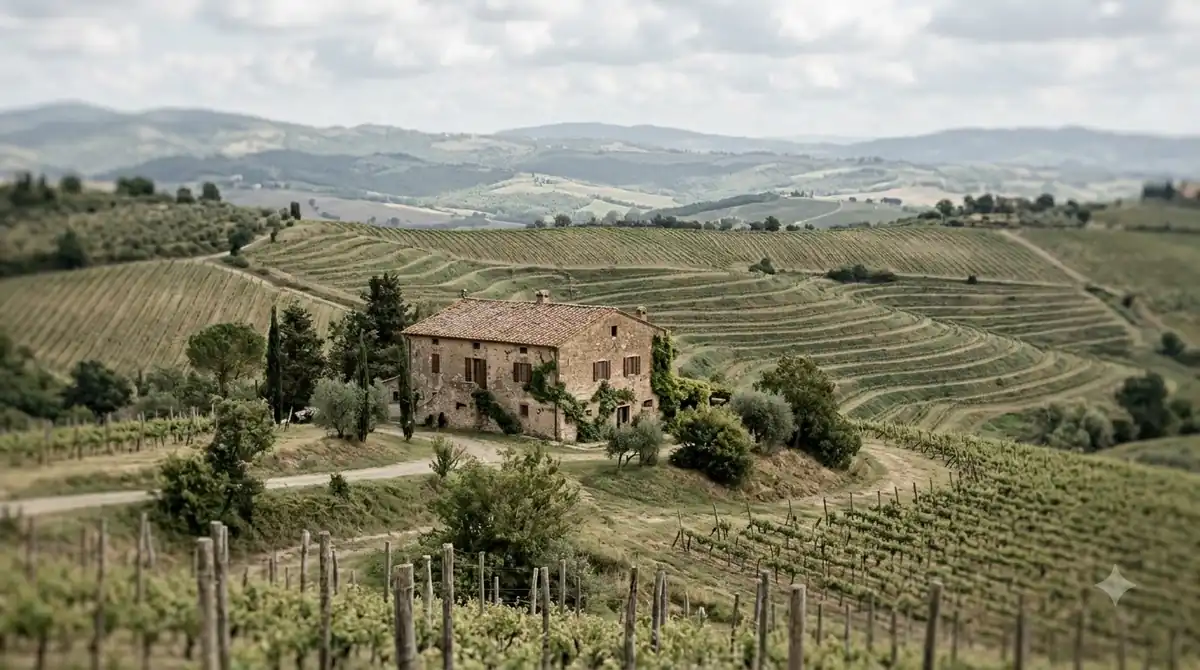
France and Italy consistently trade the top two spots globally, anchored by centuries-old appellation laws and hundreds of regional red varieties. Bordeaux sets the international standard for structured Cabernet Sauvignon and Merlot blends, while Burgundy defines cool-climate Pinot Noir, and the Rhône Valley champions Syrah and Grenache. Italy counters with remarkable regional diversity across 20 wine regions, led by Sangiovese in Tuscany and Nebbiolo in Piedmont. Spain holds the largest total vineyard acreage on earth, though lower yields place it third in overall volume, with Tempranillo and Garnacha serving as its flagship red grapes.
Outside Europe, the United States ranks fourth globally, with roughly 90 percent of American wine produced in California—led by Napa Valley, Sonoma, and the Central Coast—alongside acclaimed Pinot Noir from Oregon and bold reds from Washington State. In the Southern Hemisphere, Chile has surged into the fifth spot worldwide with Cabernet Sauvignon and Carménère, while Australia leads with rich Shiraz from Barossa Valley, South Africa excels with Cabernet Sauvignon and Pinotage in Stellenbosch, and Argentina dominates high-altitude Malbec production in Mendoza.
| Country | Signature Red Regions | Primary Red Grapes | Typical Flavor Profile |
|---|---|---|---|
| France | Bordeaux, Burgundy, Rhône Valley | Cabernet Sauvignon, Merlot, Pinot Noir, Syrah | Earthy, structured, balanced acidity, subtle oak |
| Italy | Tuscany, Piedmont, Veneto | Sangiovese, Nebbiolo, Montepulciano, Barbera | Bright acidity, savory herbs, red cherry, firm tannins |
| Spain | Rioja, Ribera del Duero, Priorat | Tempranillo, Garnacha, Monastrell | Dried fig, leather, dill, vanilla oak, ripe dark fruit |
| United States | Napa Valley, Sonoma, Willamette Valley | Cabernet Sauvignon, Pinot Noir, Zinfandel, Merlot | Lush dark berries, plush tannins, ripe fruit-forwardness |
| Argentina | Mendoza, Salta | Malbec, Cabernet Sauvignon, Bonarda | Plush blackberry, violet, cocoa, velvety finish |
| Chile | Maipo Valley, Colchagua Valley | Cabernet Sauvignon, Carménère, Merlot | Ripe plum, roasted bell pepper, graphite, medium-full body |
| Australia | Barossa Valley, McLaren Vale, Coonawarra | Shiraz (Syrah), Cabernet Sauvignon | Bold blackberry, black pepper, chocolate, full body |
| South Africa | Stellenbosch, Swartland | Cabernet Sauvignon, Syrah, Pinotage | Dark fruit, smoky earth, savory spice, firm structure |
Where Classic Red Grape Varieties Come From
While red wine is bottled on six continents, most internationally famous red grapes trace their genetic roots back to specific European homelands. Knowing a grape’s ancestral home explains where it ripens best and why winemakers elsewhere mimic those regional styles.
France serves as the ancestral nursery for many of the world’s most widely planted red cultivars. Cabernet Sauvignon originated in southwestern France as a natural cross between Cabernet Franc and Sauvignon Blanc, eventually pairing with its Bordeaux neighbor—covered in our guide on where is merlot from—to form the classic Bordeaux blend. Further east, Pinot Noir emerged in Burgundy’s limestone hills, while northern Rhône vineyards gave rise to Syrah, whose journey from France to Australia is detailed in our breakdown of where is syrah from.
Other historic European regions nurtured equally iconic grapes that prefer warmer Mediterranean sunshine. Spain’s Ebro River basin is the native home of Tempranillo, a thick-skinned grape whose name derives from the Spanish word for “early” because it ripens weeks ahead of Garnacha. In northern Portugal’s steep Douro Valley, native varieties like Touriga Nacional and Touriga Franca form the backbone of both dry red table wines and fortified styles explored in where is port from.
Tip: When browsing a wine shop, look at the back label for the specific sub-region or appellation—like Rioja Alta or Sonoma Coast—rather than just the country, as microclimate dictates whether a red tastes bright and tart or rich and jammy.
How Climate and Geography Shape Red Wine Styles
The exact latitude, elevation, and proximity to water where red grapes grow directly control their sugar levels, acidity, and tannin structure. Virtually all commercial red wine vineyards sit inside two global latitude bands between 30 and 50 degrees north and south of the equator.
Cooler regions near the poleward edges of these belts—such as Burgundy, Oregon’s Willamette Valley, and New Zealand’s Central Otago—experience shorter growing seasons and gentler sunlight. Red wines from these areas typically feature lighter color, higher natural acidity, lower alcohol levels, and bright red fruit notes like cranberry, raspberry, and tart cherry. Thinner-skinned grapes like Pinot Noir and Gamay thrive here because they do not require intense heat to reach full phenolic ripeness.
Warmer, sun-drenched regions closer to 30 degrees latitude—including Napa Valley, Barossa Valley, and Spain’s Priorat—accumulate far more heat units during summer. Grapes grown in these climates develop thicker skins and higher sugar concentrations, yielding fuller-bodied red wines with higher alcohol, softer acidity, and concentrated flavors of blackberry, plum, and mocha. High-elevation regions like Argentina’s Mendoza break the latitude rule by using mountain altitude to provide cool nighttime temperatures that preserve freshness despite intense daytime sun.
Frequently Asked Questions
Which country was the very first to make red wine?
Archaeological evidence points to the South Caucasus nation of Georgia as the oldest known site of grape winemaking, with chemical residue on clay vessels dating to around 6,000 to 5,800 BC. Neighboring Armenia also houses the oldest intact winery facility ever discovered, a cave complex dating to roughly 4100 BC.
What is the difference between Old World and New World red wine?
Old World red wine comes from traditional European wine countries like France, Italy, Spain, and Portugal, where wines are typically labeled by region and emphasize earthiness, minerality, and higher acidity. New World red wine comes from regions outside Europe—such as the United States, Argentina, Chile, Australia, and South Africa—where bottles are usually labeled by grape variety and highlight riper fruit flavors and fuller bodies.
Why can’t red wine grapes grow near the equator or near the poles?
Near the equator, year-round tropical heat prevents grapevines from entering a necessary winter dormancy period and causes grapes to overripen before developing complex flavors. Near the poles, freezing winters kill the vines and summers are too short and cool for red grapes to accumulate enough sugar to ferment properly.
Which country produces the most red wine in the world?
France and Italy alternate year to year as the world’s largest overall wine producers, with Spain ranking third and the United States ranking fourth. Together, those four countries produce slightly more than half of all wine made globally.
Tracing where red wine is from reveals a continuous geographic thread connecting ancient clay fermentation jars in the Caucasus to modern hillside vineyards across six continents. Whether you reach for an earthy European classic or a sun-ripened bottle from the Southern Hemisphere, every glass reflects the latitude, soil, and winemaking heritage of its specific home.
More in Wine Types & Grapes
 Zinfandel Sugar Content: Dry Red vs. White Zinfandel GramsUpdated Nov 21, 2026
 Best Zinfandel Substitute Options for Sipping and CookingUpdated Nov 21, 2026
 Zweigelt Food Pairing: Best Dishes, Cheeses, and Serving TipsUpdated Nov 21, 2026
 Zinfandel Tannins Explained: How Structure Shapes Every BottleUpdated Nov 21, 2026
 Zinfandel Sweetness Level: Dry Red vs. Sweet White Zin ExplainedUpdated Nov 21, 2026
 Xinomavro Food Pairing: Best Dishes, Styles, and Serving TipsUpdated Nov 21, 2026