

We may earn a commission when you buy through links on this page, at no extra cost to you. Learn more.
If you are wondering where is muscadet from, this crisp, bone-dry white wine originates in the Pays Nantais sub-region at the western edge of France’s Loire Valley. Centered around the port city of Nantes where the Loire River meets the Atlantic Ocean, the region produces single-varietal wines made exclusively from the Melon de Bourgogne grape. Most bottles imported to the United States come from the Muscadet Sèvre et Maine appellation, a maritime zone prized for its refreshing acidity and distinct saline minerality.
Unlike many European wine names that refer directly to a grape variety or a single village, Muscadet is a geographic designation tied to a cool, ocean-influenced corner of western France. Understanding its coastal geography, historical roots, and winemaking traditions explains why this bottle tastes so brisk and pairs effortlessly with fresh seafood.
What Muscadet Is
Muscadet is a light-bodied, bone-dry white wine crafted solely from Melon de Bourgogne, a cold-hardy white grape native to Burgundy that found its true home along the French Atlantic coast. Despite the phonetic similarity, Muscadet has no genetic or stylistic connection to sweet, aromatic Muscat or Moscato wines.
The grape arrived in western France during the seventeenth century, largely driven by Dutch merchants operating out of the busy port of Nantes who needed large volumes of neutral white wine for distillation. After a devastating winter freeze in 1709 wiped out most of the region’s existing vineyards, local growers replanted extensively with Melon de Bourgogne because the variety could withstand harsh Atlantic cold. Over the following centuries, vintners shifted focus from bulk distillation to dry table wines tailored to regional coastal cuisine.
According to Wine Folly’s guide to Muscadet, the wine stands apart as an ideal choice for drinkers who prefer savory, mineral-driven whites over fruit-forward styles. Typical bottlings feature modest alcohol levels around 11 to 12 percent ABV, high natural acidity, and a clean, refreshing finish. Rather than relying on oak barrels for flavor, winemakers preserve the grape’s brisk freshness through stainless steel or glass-lined concrete fermentation tanks.
Where It Grows
The Muscadet wine region sits at the far western mouth of the Loire Valley in northwestern France, fanning out south, east, and northeast of Nantes toward the Bay of Biscay. Spanning roughly 8,500 hectares of vineyards, the landscape is shaped by cool maritime winds, frequent coastal rain, and ancient metamorphic bedrock.
Proximity to the Atlantic Ocean moderates summer temperatures and keeps humidity high, preventing Melon de Bourgogne from over-ripening and losing its signature snap. Beneath the rolling hills and river valleys lies a complex patchwork of granite, schist, gneiss, and gabbro soils. These hard, stony formations force vine roots to dig deep for nutrients, imparting a stony, damp-slate character that wine lovers often describe as crushed oyster shell or sea spray.
While the Loire Valley stretches 600 miles inland and includes famous regions for Sauvignon Blanc and Cabernet Franc, the Pays Nantais remains completely dedicated to Melon de Bourgogne. Outside of France, experimental plantings exist in cool maritime pockets of the Pacific Northwest, including the Puget Sound AVA in Washington and Oregon’s Willamette Valley. Even so, the French Atlantic coast remains the global benchmark for classic, site-expressive bottlings.
Key Appellations and Sub-Regions
Muscadet is organized into four distinct Appellation d’Origine Contrôlée (AOC) zones, led by the flagship Muscadet Sèvre et Maine appellation which accounts for roughly 80 percent of the region’s total production. Each appellation reflects subtle differences in river proximity, soil composition, and microclimate.
Located immediately southeast of Nantes, Muscadet Sèvre et Maine takes its name from the two tributary rivers—the Sèvre Nantaise and the Petite Maine—that wind through its granite and schist hillsides. Because of its scale and concentration of top estates, this is the designation you will encounter most frequently on American wine shop shelves. Within Sèvre et Maine, ten designated communal crus such as Clisson, Gorges, and Le Pallet enforce stricter aging requirements and lower yields to highlight individual terroirs.
Surrounding the larger zone are three smaller appellations that offer distinct regional expressions. Muscadet Côtes de Grandlieu sits southwest of Nantes around the shallow, marshy Lac de Grand-Lieu, where lake breezes moderate frost risk and yield supple, aromatic whites. Muscadet Coteaux de la Loire covers steeper slopes east and northeast of the city along the main Loire River, while the broader regional Muscadet AOC encompasses vineyards across the entire Pays Nantais.
| Appellation | Location Relative to Nantes | Primary Soil & Climate Influence | Typical Wine Style |
|---|---|---|---|
| Muscadet Sèvre et Maine AOC | Southeast, between the Sèvre and Maine rivers | Granite, schist, and gneiss; cool maritime rivers | Crisp, intensely mineral, structured, often sur lie |
| Muscadet Côtes de Grandlieu AOC | Southwest, bordering Lac de Grand-Lieu | Sandy soils over granite; lake and ocean breezes | Light, floral, delicate citrus and saline notes |
| Muscadet Coteaux de la Loire AOC | East and northeast along the Loire River | Schist and clay slopes; slightly drier inland air | Firm acidity, stone fruit hints, focused minerality |
| Muscadet AOC (Regional) | Across the wider Pays Nantais area | Mixed sand, clay, and weathered rock | Fresh, straightforward, easy-drinking everyday white |
Flavor Profile and the Sur Lie Tradition
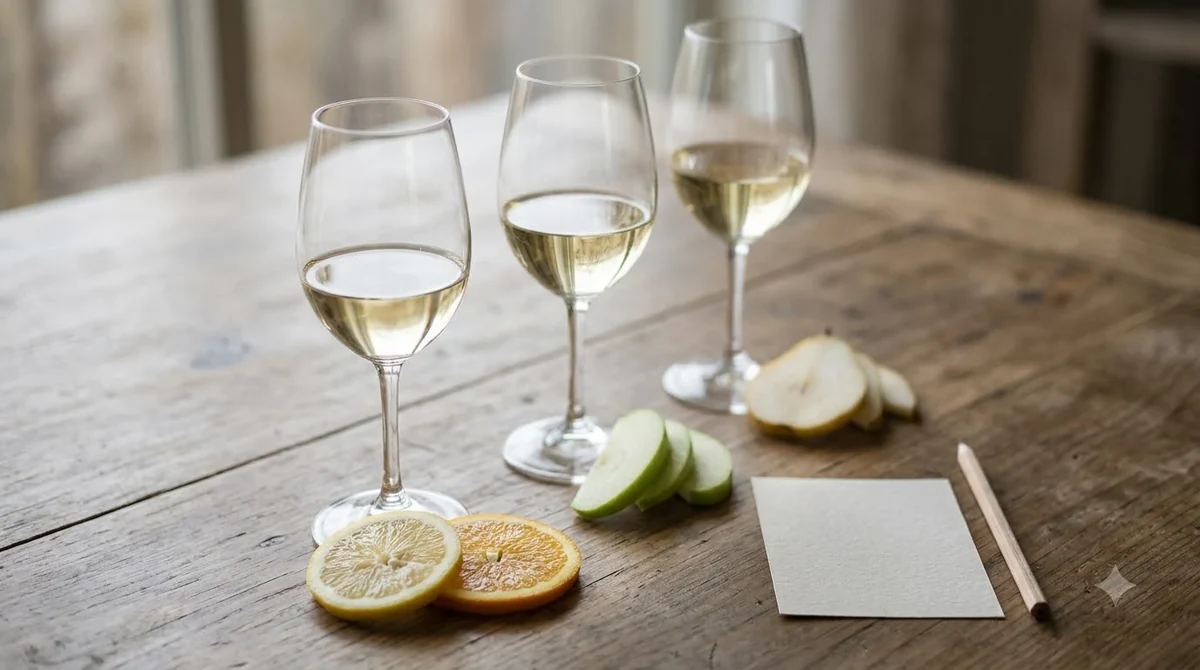
On the palate, Muscadet delivers razor-sharp citrus notes of lemon zest and green apple layered over wet stone, white flowers, and a subtle briny tang. When bottled using the traditional sur lie method, the wine gains a creamy mid-palate texture, subtle brioche aromas, and a faint prickle of trapped carbon dioxide.
Because Melon de Bourgogne is naturally a delicate, understated grape, winemakers rely heavily on sur lie aging to build depth and mouthfeel. In French, sur lie literally means “on the lees,” referring to the spent yeast cells that settle to the bottom of the tank after fermentation concludes. Under French appellation law, wines labeled Muscadet Sur Lie must rest undisturbed on their fine lees without racking or filtering until at least March following the autumn harvest, and they are bottled directly from the lees.
As Wine Enthusiast notes in its overview of Loire Muscadet, extended lees aging—sometimes lasting two to three years in top crus—transforms simple citrus flavors into rich layers of almond, toasted bread, and preserved lemon. If you enjoy exploring crisp, unoaked white wine styles like Chablis or Pinot Blanc, sur lie Muscadet offers similar textural complexity at a fraction of the weight.
How to Serve and Pair Muscadet
Serve Muscadet well chilled between 38°F and 45°F (3°C to 7°C) in a standard white wine glass to highlight its electric acidity and coastal minerality. Its briny, citrus-driven profile makes it the classic regional match for raw oysters, steamed mussels, and delicate shellfish.
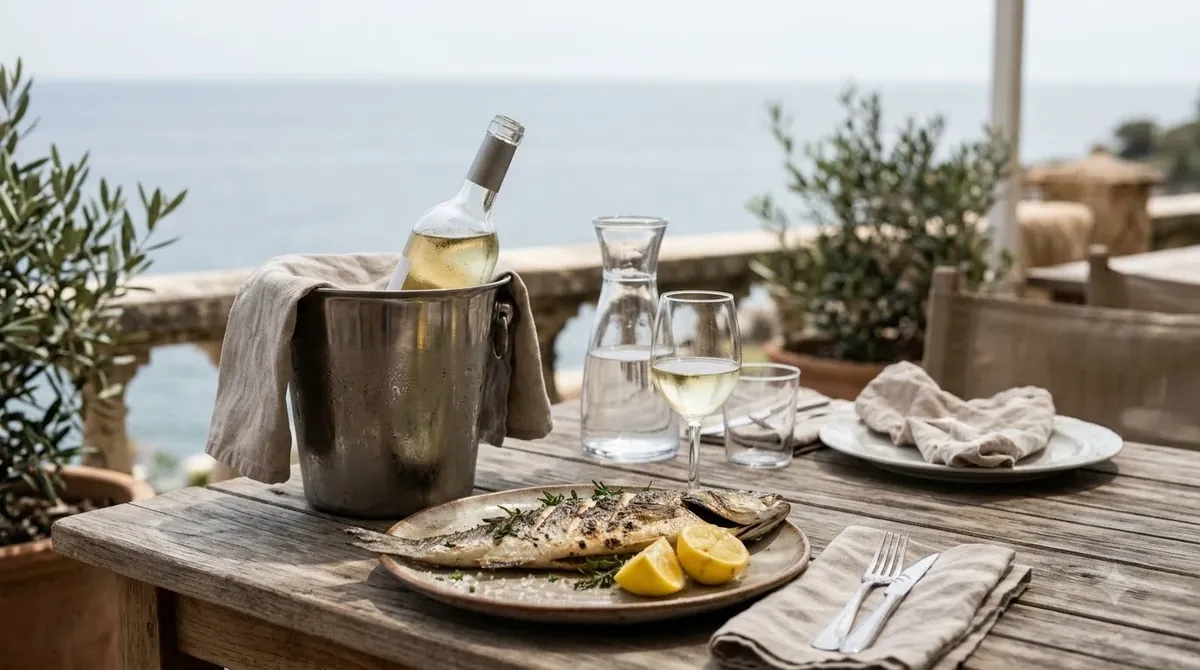
Chilling the bottle thoroughly keeps the wine’s brisk structure sharp, though letting an aged cru warm slightly toward 48°F (9°C) allows its yeasty, nutty complexity to open up in the glass. Keep an ice bucket nearby during warm-weather meals so the wine never turns warm or flat. Most entry-level bottles are meant to be enjoyed young within one to three years of vintage, while serious cru bottlings can develop gracefully in a cool cellar for five to ten years.
At the dining table, Muscadet shines alongside anything pulled from cold ocean water. In Nantes, locals pair it with moules frites—mussels steamed in white wine, shallots, and herbs—or freshly shucked oysters with a squeeze of lemon. Beyond seafood, the wine’s high acidity cuts right through rich French butter sauces like beurre blanc, roasted chicken, goat cheese, and crispy fried dishes such as fish and chips.
Tip: Look for the words “Sur Lie” printed directly on the front label—this guarantees the wine spent months aging on its yeast lees for extra creaminess and a subtle, refreshing spritz.
How to Choose a Great Bottle
To find the best expression on retail shelves, look for Muscadet Sèvre et Maine Sur Lie from reputable estate producers rather than generic regional blends. Checking the back label for specific vineyard sites, old-vine designations, or named crus will lead you to bottles with greater concentration and character.
Reviewers at Wine Enthusiast and Decanter consistently highlight benchmark estates such as Domaine de la Pépière, Bonnet-Huteau, Sauvion, and Domaine de la Foliette for their clean, site-driven winemaking. Many top growers farm organically or biodynamically, harvesting older vines—often 40 to 70 years old—that naturally restrict yields and amplify granite and schist minerality.
When browsing a shop, decide first on the occasion. A recent vintage of basic Muscadet Sèvre et Maine Sur Lie delivers vibrant green apple and sea-salt freshness ideal for weeknight dinners or casual oyster bars. If you want something richer for roasted poultry or creamy cheeses, seek out a named cru like Clisson, Gorges, or Le Pallet with extra bottle age. Just as learning where Merlot originates or where Syrah is grown clarifies red wine labels, recognizing these Loire appellations helps you pick the right white every time.
Frequently Asked Questions
Is Muscadet a sweet wine like Moscato?
No, Muscadet is completely bone-dry with crisp acidity and virtually zero residual sugar. Although the name sounds similar to Muscat or Moscato, the two wines come from entirely unrelated grape varieties and wine regions.
What grape is used to make Muscadet?
All authentic Muscadet is made 100 percent from Melon de Bourgogne, a white grape variety originally brought from Burgundy to the western Loire Valley centuries ago. Appellation rules prohibit blending other grapes into the wine.
What does Sur Lie mean on a Muscadet label?
Sur lie is a French winemaking term meaning “on the lees,” indicating that the wine rested on spent yeast cells after fermentation without being filtered or racked. This process adds a subtle creamy mouthfeel, faint brioche notes, and a gentle natural spritz.
How long can you age a bottle of Muscadet?
Standard Muscadet Sèvre et Maine is crafted for vibrant freshness and drinks best within one to three years of the harvest date. However, top single-cru bottlings aged extensively on their lees can evolve in a cool cellar for five to ten years, gaining nutty, honeyed depth.
Knowing that Muscadet hails from the Atlantic coast of France’s Loire Valley opens up one of the most food-friendly white wines in the world. Whether you reach for a youthful, zesty bottle to accompany freshly shucked oysters or an aged cru from Sèvre et Maine, this coastal classic brings effortless brightness to the table.
More in Wine Types & Grapes
 Zinfandel Sugar Content: Dry Red vs. White Zinfandel GramsUpdated Nov 21, 2026
 Best Zinfandel Substitute Options for Sipping and CookingUpdated Nov 21, 2026
 Zweigelt Food Pairing: Best Dishes, Cheeses, and Serving TipsUpdated Nov 21, 2026
 Zinfandel Tannins Explained: How Structure Shapes Every BottleUpdated Nov 21, 2026
 Zinfandel Sweetness Level: Dry Red vs. Sweet White Zin ExplainedUpdated Nov 21, 2026
 Xinomavro Food Pairing: Best Dishes, Styles, and Serving TipsUpdated Nov 21, 2026