

We may earn a commission when you buy through links on this page, at no extra cost to you. Learn more.
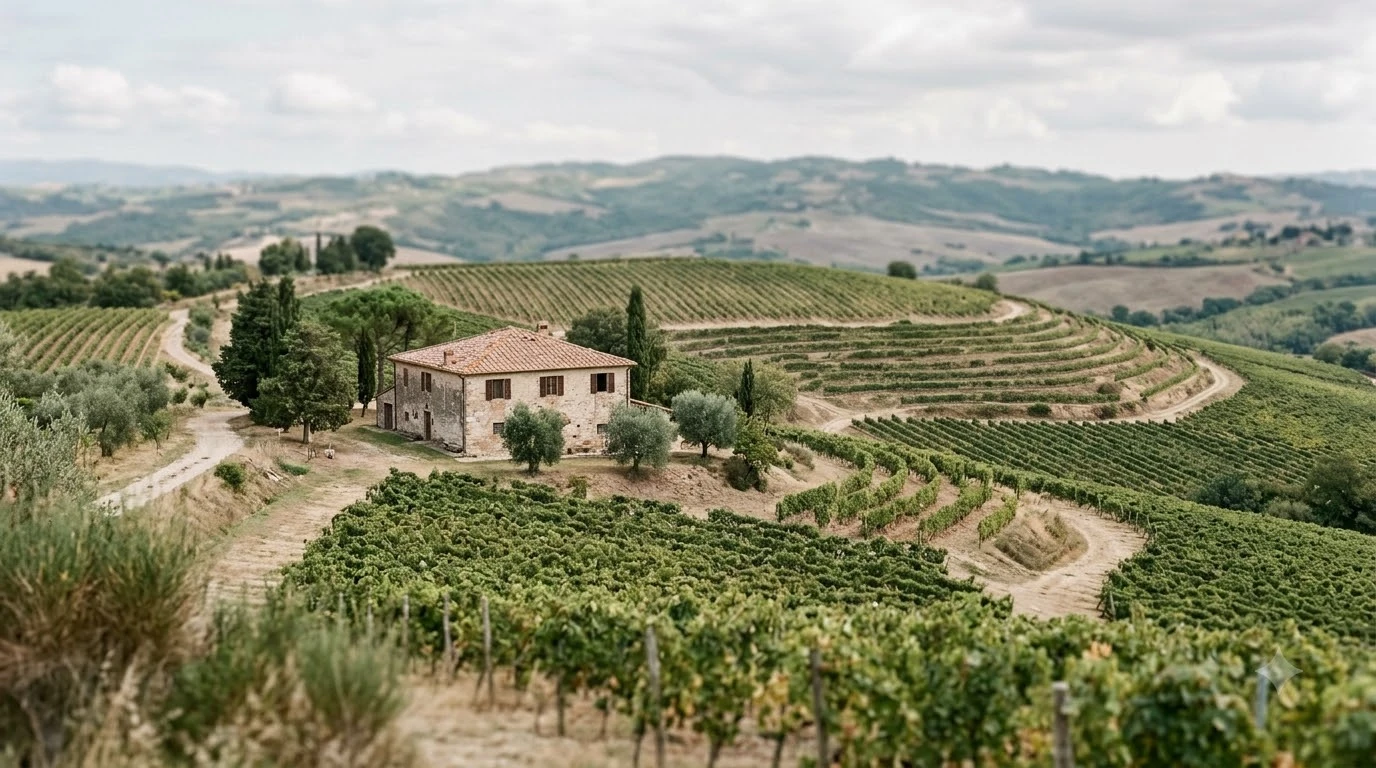
If you are wondering where is cabernet franc from, this classic red wine grape originated in southwestern France, most likely in the Basque Country near the western Pyrenees before spreading north into Bordeaux and the Loire Valley. Genetic research shows that it is a parent grape to Cabernet Sauvignon, Merlot, and Carménère, making it one of the most influential vines in winemaking history. Today, France still leads global production by a wide margin, while Italy, the United States, and Chile produce acclaimed single-varietal bottles and blends.
Often overshadowed by its famous offspring, Cabernet Franc offers bright acidity, floral aromatics, and savory herbal notes that set it apart from heavier reds. Whether bottled as a single-varietal wine in the Loire Valley or blended into prestigious Right Bank Bordeaux estates, its history and flavor profile reward closer attention.
What Is Cabernet Franc?
Cabernet Franc is an ancient black-skinned Vitis vinifera wine grape native to southwestern France that serves as a genetic parent to several of the world’s most planted red varieties. Ampelographers and wine historians trace its earliest roots to the Basque region bordering France and Spain, where it likely evolved from wild vines before migrating into Bordeaux’s Libournais district.
In the 17th century, Cardinal Richelieu transported cuttings of the vine from southwest France to the Loire Valley, planting them at the Abbey of Bourgueil under the care of an abbot named Breton. Because of that history, growers in the Loire Valley still refer to the grape locally as Breton, while winemakers on the Right Bank of Bordeaux traditionally call it Bouchet. Its ability to bud and ripen one to two weeks earlier than Cabernet Sauvignon helped it thrive in cooler northern vineyards long before modern viticulture existed.
For centuries, growers noticed strong visual and aromatic similarities between Cabernet Franc and Cabernet Sauvignon, though their exact family tree remained a mystery. In 1997, DNA profiling conducted by researchers at the University of California, Davis confirmed that Cabernet Franc crossed naturally with Sauvignon Blanc to create Cabernet Sauvignon. Subsequent genetic studies revealed that Cabernet Franc is also a parent of Merlot and Carménère, cementing its status as a foundational pillar of the Bordeaux grape family.
Flavor Profile and Regional Styles
Cabernet Franc produces dry, medium-bodied red wines defined by lively acidity, moderate tannins, and a signature interplay of red fruit, violets, and savory herbs. Depending on where it is grown and how much sunshine it receives, the grape shifts from crisp, leafy, and peppery in cool climates to plush, dark-fruited, and spicy in warmer regions.
According to Wine Folly’s comprehensive grape guide, the variety’s distinctive green bell pepper, jalapeño, and fresh herb aromas come from naturally occurring compounds called methoxypyrazines, specifically 3-isobutyl-2-methoxypyrazine (IBMP). Grape skins produce these compounds as a natural defense mechanism, and they remain prominent when the fruit ripens slowly in cooler temperatures. In warmer vineyards, sunlight breaks down methoxypyrazines more thoroughly, allowing ripe strawberry, raspberry compote, and red plum notes to take center stage.
Winemakers also shape the style through vessel selection and blending. In the Loire Valley, many producers ferment and age Cabernet Franc in stainless steel, concrete, or large neutral oak foudres to preserve its crushed-gravel minerality and crunchy red currant brightness. Conversely, producers in Tuscany, California, and Right Bank Bordeaux frequently age the wine in small French oak barrels, adding layers of cedar, cocoa, vanilla, and baking spice while softening its fine-grained tannins.
| Region | Climate | Dominant Flavors | Body and Tannin |
|---|---|---|---|
| Loire Valley, France | Cool continental | Sour cherry, raspberry, bell pepper, wet gravel, violets | Light-to-medium body, crisp acidity, low-to-moderate tannin |
| Right Bank Bordeaux, France | Moderate maritime | Red plum, blackberry, graphite, cedar, dried herbs | Medium-to-full body, structured fine tannins |
| Tuscany, Italy | Warm Mediterranean | Black cherry, mocha, cinnamon, sweet tobacco, oregano | Full body, medium-high acidity, firm oak-aged tannins |
| California and Chile | Warm, sun-drenched | Sweet strawberry, raspberry jam, mint, chocolate, spice | Medium-to-full body, plush fruit, supple tannins |
Where Cabernet Franc Grows Today
While France remains the undisputed heartland of Cabernet Franc, significant plantings flourish across Italy, the United States, Chile, Canada, and Argentina. Global vineyard area spans roughly 121,845 acres (49,309 hectares), with France accounting for nearly two-thirds of the world’s total acreage.
Within France, Cabernet Franc leads two distinct traditions. In the Loire Valley—specifically in appellations like Chinon, Bourgueil, Saumur-Champigny, and Anjou—it is bottled almost exclusively as a single-varietal red or a lightly sweet rosé known as Cabernets d’Anjou. Down south in Bordeaux, it plays a vital blending role; while Médoc estates on the Left Bank use small amounts for aromatic lift, Right Bank appellations like Saint-Émilion and Pomerol rely heavily on it alongside Merlot. The iconic Saint-Émilion estate Château Cheval Blanc routinely builds its flagship blend around a high proportion of old-vine Cabernet Franc.
Outside France, Italy holds the second-largest footprint with roughly 13,813 acres planted across northeastern Friuli-Venezia Giulia and coastal Tuscany. In Tuscan zones like Bolgheri and Suvereto, winemakers craft rich, age-worthy single-varietal bottlings and Super Tuscan blends. Across the Atlantic, the United States cultivates about 5,433 acres, ranging from opulent, sun-ripened bottlings in California’s Sierra Foothills to vibrant, aromatic expressions in New York’s Finger Lakes. Chile’s Colchagua and Maule Valleys also turn out concentrated, herb-laced versions cooled by Pacific breezes and Andean air.
How to Serve Cabernet Franc
Cabernet Franc performs best when served slightly below room temperature at 60 to 68 degrees Fahrenheit (15 to 20 degrees Celsius) in a standard or Bordeaux-style red wine glass. Keeping the bottle on the cooler side of that range preserves its bright acidity and floral aromatics while preventing alcohol warmth from muting delicate herbal notes.
For lighter, unoaked bottles from the Loire Valley or the Finger Lakes, a brief 20-minute chill in the refrigerator before opening brings out snappy red berry fruit and refreshing minerality. Fuller-bodied, oak-aged bottlings from Tuscany, Bordeaux, or California benefit from serving closer to 65 degrees Fahrenheit so their darker fruit and spice notes can open smoothly on the palate.
Younger bottles with lively acidity and herbal tension open up nicely after 30 minutes in a decanter, which allows volatile aromas to blow off and floral violet notes to emerge. While fresh, stainless-steel expressions are crafted for enjoyment within two to five years of vintage, structured, barrel-aged bottles from top estates can cellar gracefully for ten years or more, developing complex notes of leather, dried rose petals, and forest floor.
Tip: Put a bottle of Loire Valley Cabernet Franc in the fridge for 20 minutes before dinner—a slight chill sharpens its raspberry fruit and keeps the herbal notes refreshing rather than bitter.
Food Pairing with Cabernet Franc
Thanks to its mouthwatering acidity, moderate tannins, and savory herbal profile, Cabernet Franc is one of the most food-friendly red wines at the dinner table. Its natural bell pepper, thyme, and black peppercorn nuances bridge the gap between rich proteins and earth-driven vegetable dishes that overwhelm heavier reds.
Herb-crusted meats are a classic match. Roast leg of lamb studded with rosemary and garlic, pan-seared duck breast, or herb-roasted pork tenderloin mirror the wine’s savory undertones while the wine’s crisp acidity cuts cleanly through rich fat. Lighter, cooler-climate styles also pair well with charcuterie boards, grilled salmon, and mushroom risotto, where earthy umami flavors echo the wine’s graphite and forest-floor notes.
Unlike high-tannin Cabernet Sauvignon or Syrah, which can clash with bitter greens or bright acidity in food, Cabernet Franc handles vegetarian plates with ease. Roasted bell peppers, stuffed portobello mushrooms, ratatouille, and lentil stews all harmonize with the grape’s natural pyrazine character. Even tangy goat cheese—especially aged Crottin de Chavignol from the Loire Valley—creates an effortless regional pairing.
How to Choose a Bottle of Cabernet Franc
Choosing the right bottle of Cabernet Franc comes down to matching the wine’s regional climate and winemaking style to the texture and richness you want in your glass. Reading the label for appellation names, alcohol levels, and oak aging clues will tell you whether a bottle leans bright and savory or plush and full-bodied.
If you enjoy crisp, food-driven reds with bright red fruit and subtle herbal snap, look for single-varietal labels from Chinon, Bourgueil, or Saumur-Champigny in France, or cool-climate producers in New York’s Finger Lakes and Ontario. These bottles typically sit around 12.5% to 13.5% ABV and rely on stainless steel or neutral wood rather than heavy new oak. Reviewers at Wine Enthusiast’s Cabernet Franc guide note that warm-climate bottlings deliver riper, richer fruit and fuller bodies, so look toward Tuscany, California’s Sierra Foothills, or Chile’s Colchagua Valley—often labeled around 14% to 14.5% ABV—when you want bold plum, cocoa, and baking spice flavors.
You can also explore Cabernet Franc as part of classic blends if you prefer a softer, rounder entry. Checking the back label of Right Bank Bordeaux wines or exploring broader wine types across Old and New World producers will help you spot bottles where Cabernet Franc provides aromatic lift alongside Merlot or Cabernet Sauvignon.
Frequently Asked Questions
Is Cabernet Franc older than Cabernet Sauvignon?
Yes, Cabernet Franc is significantly older than Cabernet Sauvignon. Genetic testing in 1997 proved that Cabernet Franc crossed naturally with Sauvignon Blanc in southwestern France to produce Cabernet Sauvignon, making Cabernet Franc one of its biological parents.
Why does Cabernet Franc sometimes smell like green bell pepper?
The green bell pepper, jalapeño, and fresh herb aromas come from natural compounds in the grape skins called methoxypyrazines. Cooler growing climates preserve higher levels of these compounds during ripening, while warmer, sunnier regions break them down to emphasize sweeter red berry flavors.
Is Cabernet Franc sweet or dry?
Nearly all red Cabernet Franc wines are fermented completely dry, though their ripe raspberry and strawberry aromatics can give an impression of fruitiness on the nose. The main exception is Cabernets d’Anjou from the Loire Valley, a traditional rosé style made with a touch of residual sweetness.
What is the difference between Cabernet Franc and Cabernet Sauvignon?
Cabernet Franc is the parent grape of Cabernet Sauvignon and ripens one to two weeks earlier in the vineyard. In the glass, Cabernet Franc is typically lighter in color and tannin, higher in bright acidity, and more floral and herbal, whereas Cabernet Sauvignon is darker, fuller-bodied, and higher in firm tannins.
Tracing where Cabernet Franc comes from reveals a grape that shaped modern red winemaking from its quiet beginnings in southwestern France. Whether you pour a cool-climate Loire Valley bottle with roasted vegetables or a plush Tuscan expression alongside herb-crusted lamb, understanding its origins makes every glass easier to appreciate.
More in Wine Types & Grapes
 Zinfandel Sugar Content: Dry Red vs. White Zinfandel GramsUpdated Nov 21, 2026
 Best Zinfandel Substitute Options for Sipping and CookingUpdated Nov 21, 2026
 Zweigelt Food Pairing: Best Dishes, Cheeses, and Serving TipsUpdated Nov 21, 2026
 Zinfandel Tannins Explained: How Structure Shapes Every BottleUpdated Nov 21, 2026
 Zinfandel Sweetness Level: Dry Red vs. Sweet White Zin ExplainedUpdated Nov 21, 2026
 Xinomavro Food Pairing: Best Dishes, Styles, and Serving TipsUpdated Nov 21, 2026