

We may earn a commission when you buy through links on this page, at no extra cost to you. Learn more.
A wine poached pears recipe simmers firm, just-ripe pears in a sweetened red wine with warm spices until they turn tender and deeply colored, then serves them chilled or warm with some of the reduced syrup. The method is gentle and forgiving, so it suits both a weeknight dessert and a dinner party.
Poached pears are one of the classic wine desserts. The fruit holds its shape while it absorbs the wine, sugar, and spice, and the liquid reduces into a glossy syrup that tastes like a concentrated version of the wine itself. The process takes some patience but very little active work, which makes it a practical make-ahead dish. This guide explains how to choose the pears and wine, how to build the poaching liquid, and how to tell when the fruit is done.
Why poaching works for pears
Poaching is a moist-heat method. The food is cooked in a liquid kept below a rolling boil, which is gentle enough for delicate ingredients. The Wikipedia article on poaching describes the method as cooking food in a liquid such as water, milk, stock, or wine, and notes that fruit is often poached in red wine. The poaching entry is a useful reference for the technique.
For pears, that gentle heat matters. A hard boil breaks the fruit apart and turns the flesh mushy, while a low simmer lets the pear soften evenly from the outside in. The goal is a pear that yields when pressed with a spoon but still holds its shape when lifted from the pot.
Choosing the pears
Pick pears that are firm but not rock-hard. Bosc and Anjou are the most common choices in American markets because they hold their shape well through a long simmer. Bartlett pears soften faster and can collapse if cooked too long, so check them more often. Avoid very ripe fruit, which turns to mush, and avoid underripe fruit, which stays chalky and bitter.
Peel the pears neatly but leave the stem on if you want a dramatic presentation. Cut a small slice from the base so the pear stands upright in the pot and on the plate. Rub the peeled fruit with a little lemon juice to keep it from browning while you prepare the rest.
Choosing the wine
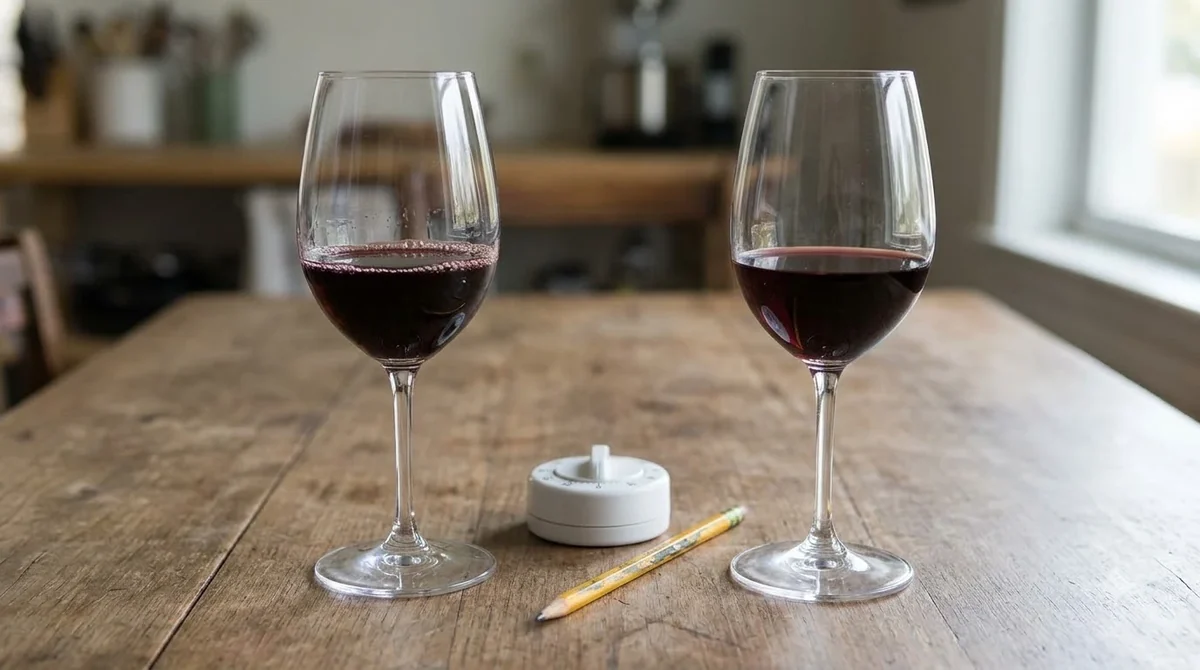
A medium-bodied red works best, such as a Pinot Noir or a fruit-forward Merlot. Pinot Noir brings red berry and cherry notes that suit pears, while a Merlot adds plum and softer tannins. Avoid very tannic or heavily oaked reds, which can taste bitter after reduction, and avoid cheap wines that taste thin, since reduction concentrates whatever is in the bottle.
A dry or lightly sweet wine is safest. You can add sugar to the pot to taste, which gives you control, rather than relying on a sweet wine that might become syrupy. White wine versions also exist and are lighter in color, though the classic look comes from red.
Building the poaching liquid
The liquid is the flavor of the dish. Combine the wine with sugar, a strip or two of lemon peel, and warm spices such as cinnamon stick, a few cloves, or a piece of star anise. Add the spices in modest amounts, since they become stronger as the liquid reduces. A splash of water or orange juice can thin the wine if it tastes too heavy.
Bring the mixture to a gentle simmer until the sugar dissolves, then lower the heat before adding the pears. The liquid should barely move, with small bubbles at the edges rather than a rolling boil.
| Element | Role in the dish | Practical choice |
|---|---|---|
| Pears | Hold shape while absorbing flavor | Firm Bosc or Anjou, peeled and stem on |
| Red wine | Provides color and most of the flavor | Medium-bodied, fruit-forward red |
| Sugar | Balances tannin and acidity | Add gradually and taste the liquid |
| Lemon peel | Brightens the syrup | Strips of peel without the bitter white pith |
| Warm spices | Adds depth in the background | Cinnamon, cloves, or star anise in small amounts |
How to poach the pears
Once the liquid is ready, the work is mostly waiting. Keep the heat low, turn the pears occasionally, and check for doneness with a thin knife or skewer. The fruit should feel tender at the center, not soft at the edges. Larger or riper pears need less time, so check them early.
- Stand the peeled pears upright in a pot just large enough to hold them, or lay them on their sides if they will not stay upright.
- Pour in enough of the warm wine liquid to cover the fruit, adding water if needed.
- Keep the liquid at a gentle simmer and turn the pears every few minutes so they color evenly.
- Test with a knife at the thickest part. Remove the pears when the knife slides in easily but the fruit still holds its shape.
- Lift the pears out and reduce the liquid over medium-low heat until it coats the back of a spoon.
- Pour the reduced syrup over the pears and let them cool in the liquid, which deepens the color and flavor.

Tip: Chill the pears in their syrup overnight for the richest color. Pull them out about 30 minutes before serving so the flavor is more open.
Serving and storage
Poached pears can be served warm or chilled. Warm pears suit a cold evening and pair well with vanilla ice cream or a spoonful of mascarpone. Chilled pears are cleaner and lighter, and they look striking on a white plate with a drizzle of the syrup. Spoon a little reduced liquid over each serving rather than drowning the fruit.
The dish keeps well in the refrigerator for several days if the pears stay submerged in their syrup. Keep them covered, and bring them back to room temperature before serving so the flavors open up. Freezing is not recommended, because the texture of the pear changes.
Pairing with wine and food
Poached pears work as a dessert course or as a light finish after a rich meal. A cheese plate with blue cheese, aged Gouda, or a sharp Cheddar is a natural partner. You can also serve the pears with a glass of the same red you used in the poaching liquid, which ties the dish together.
If you want a more savory course, the pears can accompany roasted meats, particularly duck or pork, where the sweet syrup balances the richness. For a broader guide to matching these flavors, the wine food pairing guide is a useful starting point.
Common mistakes to avoid
The most common error is boiling the pears. High heat breaks the fruit apart and turns the wine syrup bitter. Keep the simmer low and patient. The second mistake is reducing the syrup too far, which turns it sticky and hard once chilled, so stop when it coats a spoon.
Using a poor-quality wine is also a problem, because the flavor concentrates as the liquid reduces. Choose a wine you would be happy to drink, even if it is inexpensive. Finally, do not skip the lemon peel. It cuts through the sugar and keeps the dessert from tasting flat.
Frequently Asked Questions
What wine is best for wine poached pears?
A medium-bodied, fruit-forward red such as Pinot Noir or Merlot works well. Avoid very tannic or heavily oaked wines, which can taste bitter once reduced.
Can I make poached pears ahead of time?
Yes. They keep for several days in the refrigerator when stored submerged in their syrup. Bring them to room temperature before serving for the best flavor.
How do I know when poached pears are done?
A thin knife should slide into the thickest part with little resistance, while the fruit still holds its shape. Check early, since riper pears cook faster.
Can I use white wine instead of red?
You can. White wine gives a lighter color and a fresher taste. Choose a dry white with some body, and add sugar gradually to balance it.
Wine poached pears are a dependable dessert that rewards a little patience. Once you have the method, you can adapt it to the season and the wine you have on hand. For another wine-based recipe that uses similar bright flavors, see the wine margarita recipe, or serve the pears after a dinner built around a pinot noir with duck main course.
More in Food & Wine Pairing
 Risotto With White Wine Recipe: Make a Creamy Dinner at HomeUpdated Nov 20, 2026
 Wassail With Wine Recipe for a Festive Spiced Holiday DrinkUpdated Nov 20, 2026
 Spritz Veneziano Recipe: Make a Classic Venetian Aperitivo at HomeUpdated Nov 20, 2026
 Summer Wine Punch Recipe for Easy Homemade EntertainingUpdated Nov 20, 2026
 Bishop Recipe: How to Make a Bright, Citrus-Forward Red Wine CocktailUpdated Nov 20, 2026
 Wine Cupcakes Recipe: Bake Rich Chocolate Cupcakes at HomeUpdated Nov 20, 2026