

We may earn a commission when you buy through links on this page, at no extra cost to you. Learn more.
A wine margarita recipe swaps part of the usual tequila base for a dry white or sparkling wine, keeping lime juice and an orange note so the drink stays bright and easy to sip. It is a lighter, lower-proof take on the classic, and it works well over ice or as a long glass for a warm afternoon.
The classic margarita is built on tequila, an orange liqueur, and fresh lime juice. A wine margarita keeps the same shape but lets the wine take on some of the body and fruit that the spirit would normally carry. The result is softer and easier to pour in quantity, which is why it shows up at backyard parties and brunch tables. This guide explains the idea, how to balance it, and how to serve it at home.
What a wine margarita is
A wine margarita is a riff on the standard drink rather than a fixed recipe, so you will find many versions. The common thread is a wine base, usually a crisp white or a dry sparkling wine, combined with a smaller amount of tequila and a citrus element. The margarita itself has a long, debated history, and the Wikipedia entry on the margarita describes the standard formula as tequila, an orange liqueur, and fresh lime juice, served on the rocks, straight up, or frozen. Wine versions borrow that structure and adjust the strength.
Because wine is far lower in alcohol than tequila, the drink is gentler. That changes how you balance it: you need less sweetener to round out the lime, and you should taste as you go rather than measuring to a rigid formula.
Choosing the wine
Pick a wine that tastes good on its own, because its flavor will come through in the glass. Dry white wines with bright acidity, such as those made from Sauvignon Blanc or unoaked Chardonnay, keep the drink fresh. Dry sparkling wines add lift and a light bubble that suits a salt rim. Avoid heavy oaked whites and sweet dessert wines, which can make the drink cloying once the lime is added.
Red wine versions exist, but they change the color and taste considerably. If you try a red, choose a light-bodied style with soft tannins and taste it first, since a bold red can overpower the lime.
Balancing the flavors
The balance comes from three things: the wine’s dryness, the sharpness of the lime, and a touch of sweetness from an orange liqueur or simple syrup. Start with a small amount of each, taste, and adjust. Fresh lime juice is important because bottled juice often tastes flat and bitter next to the wine.
A little tequila adds backbone and a grassy agave note. Use a blanco or silver tequila if you want a clean profile, or a reposado if you want more warmth and vanilla. Keep the tequila portion modest so that the wine remains the main character.
| Component | What it does | Choice to consider |
|---|---|---|
| Wine base | Sets body, acidity, and most of the flavor | Dry white or dry sparkling |
| Tequila | Adds structure and agave character | Blanco for clean, reposado for warmth |
| Fresh lime juice | Brings the tart edge that ties it together | Always freshly squeezed |
| Orange liqueur or syrup | Rounds out the sourness | Use sparingly and taste as you go |
| Salt or sugar rim | Adds contrast and visual appeal | Optional |
How to make it at home
Build the drink by feel rather than by a single fixed measurement, since wines vary in sweetness and acidity. Work in small amounts and stop when the balance feels right. A shaker gives the most even mix, but you can also stir gently in a pitcher for a party batch.
- Chill the wine and the glasses first. A cold drink tastes crisper and dilutes more slowly.
- Rim the glass with salt or sugar if you want one, rubbing a lime wedge along the edge before dipping.
- Pour the wine, tequila, and lime juice into a shaker with ice. Add a small splash of orange liqueur or syrup only if the drink still tastes sharp.
- Shake briefly until the outside of the shaker is cold, then strain over fresh ice in the glass.
- Taste before serving and adjust with a little more lime or wine. Garnish with a lime wheel.
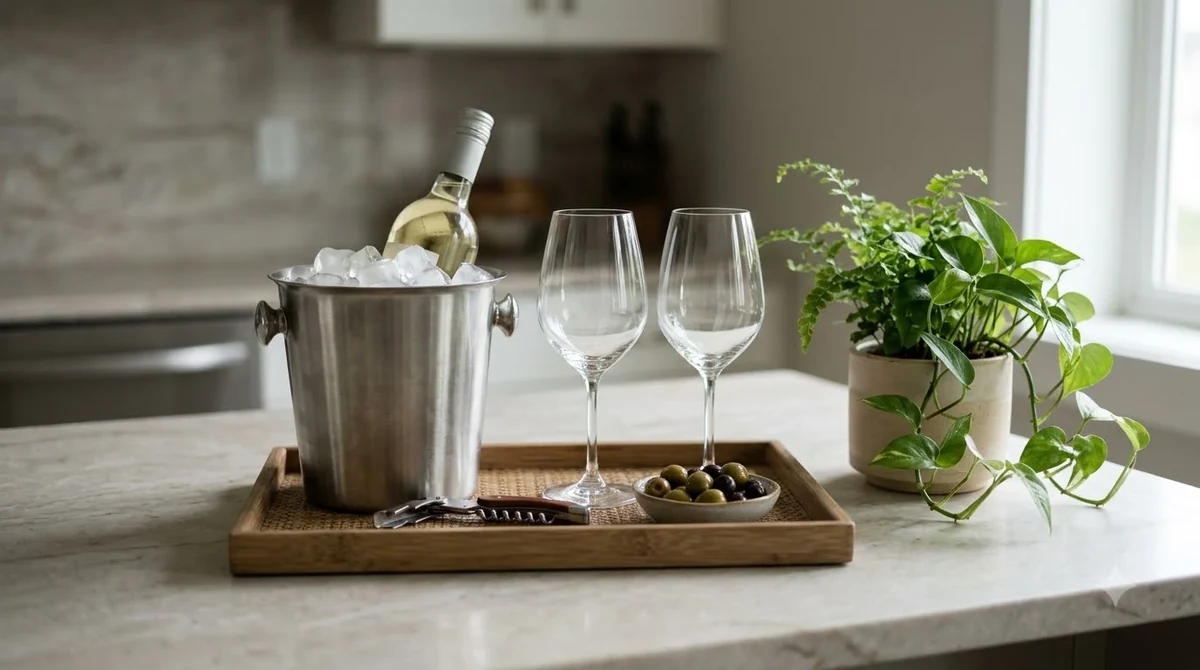
Tip: Make a batch in a pitcher without the ice, then pour over ice at the table. This keeps the drink from watering down while guests refill.
Serving and food pairing
A wine margarita suits light, salty, and fresh foods. Grilled shrimp, fish tacos, guacamole, and fresh salads all pair well because the lime and acidity cut through richness. It also works as an aperitif before a meal that leans toward Mexican or Mediterranean flavors.
Serve it chilled, and avoid letting it sit in the sun for long. Because the wine base is lighter than a spirit-based drink, it can warm up and lose its snap faster. If you are serving a crowd, keep the base cold and add ice just before pouring.
Common mistakes to avoid
The most common error is using a wine that is too sweet, which turns the drink into a sugary punch. Another is adding too much tequila, which hides the wine and makes the drink taste harsh. Bottled lime juice is the third frequent problem, and it is easy to fix by squeezing fresh fruit just before you mix.
Many people also ask about a frozen version. The standard margarita is often blended with ice for a slushy texture, and the same idea works with wine, but the drink needs more care. Wine freezes less solidly than a spirit-heavy mix, so blend it in short bursts and check the texture often. A slightly lower ratio of ice to liquid keeps the drink smooth rather than watery. Serve it right after blending, since a frozen wine drink separates quickly if it sits.
Ice quality also changes the result. Large, clear cubes melt more slowly than small cubes from a tray, so the drink stays balanced longer. If you serve on the rocks, use fresh ice for each glass, since old ice can pick up freezer flavors that cover the lime.
Over-shaking is also worth avoiding. A short, hard shake chills and combines the drink. A long shake dilutes it and softens the lime, leaving a flat finish.
Frequently Asked Questions
What wine is best for a wine margarita?
A dry white with bright acidity is the usual choice, such as a Sauvignon Blanc or an unoaked Chardonnay. A dry sparkling wine also works well and adds a light lift.
Can I make a wine margarita without tequila?
Yes. You can leave the tequila out and rely on the wine and lime alone, though the drink will be lighter and less structured. Taste it first to see whether you want the extra backbone.
Should I use a red wine?
You can, but choose a light-bodied red with soft tannins. A bold red tends to overpower the lime and changes the color noticeably.
How do I keep a wine margarita from tasting too sweet?
Use a dry wine, add orange liqueur or syrup only in small amounts, and always taste before serving. Fresh lime juice also keeps the balance sharp.
A wine margarita is an easy way to bring a classic flavor into a lighter drink. Once you have the balance, you can pair it with dishes from the food pairing guide, or serve it alongside a wine pairing with risotto for a relaxed dinner. For a more involved dessert, the wine poached pears recipe uses similar wine and citrus notes.
More in Food & Wine Pairing
 Risotto With White Wine Recipe: Make a Creamy Dinner at HomeUpdated Nov 20, 2026
 Wassail With Wine Recipe for a Festive Spiced Holiday DrinkUpdated Nov 20, 2026
 Spritz Veneziano Recipe: Make a Classic Venetian Aperitivo at HomeUpdated Nov 20, 2026
 Summer Wine Punch Recipe for Easy Homemade EntertainingUpdated Nov 20, 2026
 Bishop Recipe: How to Make a Bright, Citrus-Forward Red Wine CocktailUpdated Nov 20, 2026
 Wine Cupcakes Recipe: Bake Rich Chocolate Cupcakes at HomeUpdated Nov 20, 2026