

We may earn a commission when you buy through links on this page, at no extra cost to you. Learn more.
Roditis wine comes from the Roditis grape, a pink-skinned white variety from Greece that has been grown there for centuries and is valued for keeping its acidity in hot climates. Today it is mostly blended with Savatiano to make Retsina, although some producers bottle it on its own. Its history includes a sharp drop in plantings after phylloxera and powdery mildew in the twentieth century.
This guide explains what roditis wine is, where the grape grows, how its acidity and aroma shape the glass, and how to choose a bottle or a meal to go with it. It relies on the published overview of the grape and on general principles of white wine, and it does not claim to describe any particular producer’s wine.
What Roditis Wine Is
Roditis, sometimes spelled Rhoditis, is a Greek white wine grape. Its skin has a pink tint, which is why the grape is often described as pink-skinned, but it is classified as a white wine grape. The pink skin does not turn the wine pink in the way that Pinot noir can produce rosé. In most bottles the wine is pale, and the color is shaped more by winemaking choices than by the grape’s skin.
The grape has a long history in Greece. According to the Wikipedia entry on Roditis, it was highly valued in the Greek wine industry before phylloxera, the root louse that devastated European vineyards, reached the country. Its history since then has been shaped by disease, as the grape is susceptible to both phylloxera and powdery mildew.

Where Roditis Grows
The traditional home of Roditis is the Peloponnese region of southern Greece. The Wikipedia entry also places the grape in Volos and the wider Thessaly area of central Greece. It notes that the grape was once grown at Anchialos, a former Greek colony now the Bulgarian city of Pomorie on the Black Sea coast, which shows how far the variety once travelled in the region.
In Patras, a port city on the northern Peloponnese, Roditis is the main grape and produces wines that the entry describes as delicately perfumed. That description is a good starting point for understanding the wine. Roditis is not known for dramatic power. It tends to show a light, aromatic character and a clean finish that suits warm-climate white wine.
| Topic | What the grape is known for |
|---|---|
| Origin | Greece, with a long history in the Peloponnese |
| Skin and color | Pink-skinned grape, classified as a white variety |
| Ripening | Ripens late and keeps acidity in hot climates |
| Main use today | Blended with Savatiano for Retsina; some single-variety wines |
| Vulnerabilities | Susceptible to phylloxera and powdery mildew |
Acidity and Style of Roditis Wine
The grape’s most useful trait is acidity. The Wikipedia entry notes that Roditis was prized for ripening late and holding onto its acidity in hot places such as the Peloponnese and Thessaly. Acidity gives a white wine freshness and lift, and it helps the wine taste clean even when the climate is warm. A wine with good acid can taste bright and refreshing without feeling heavy.
Because the grape keeps acidity, Roditis lends itself to a crisp style, though the entry does not give a specific tasting profile. Winemakers choose whether to use oak, how long to keep the wine on its lees, and how cool to ferment it, and each decision changes the final taste. For that reason, the same grape can taste quite different from one producer to the next.
Retsina and the Blending Tradition
The largest modern role for Roditis is in blending. The grape is mostly blended with Savatiano, another Greek white variety, to make Retsina, the resinated wine that has a long tradition in Greece. Retsina is flavored with pine resin, which gives the wine a distinctive aroma that some drinkers love and others find unusual.
For a drinker who has not tried Retsina, the important point is that the style is about flavor and tradition as much as the grape. Roditis brings acid and a light aromatic base, and Savatiano adds body. If you want to explore Roditis without the resin, look for a single-variety white or a blend that does not list resin on the label.
How to Serve Roditis Wine
Serve Roditis chilled but not cold. A cooler temperature keeps the acidity crisp and the aromas lively. If the bottle is served too cold, the aroma can fade, so give it a few minutes out of the refrigerator before pouring. Use a white wine glass with a moderate bowl to let the aroma open without losing its freshness.
Young Roditis is usually meant to be drunk soon after release. Keep it in the refrigerator, reseal it after opening, and drink it within a few days. As with many white wines, the best bottles are those that show clear fruit and a clean finish when they are young.
Food Pairing With Roditis
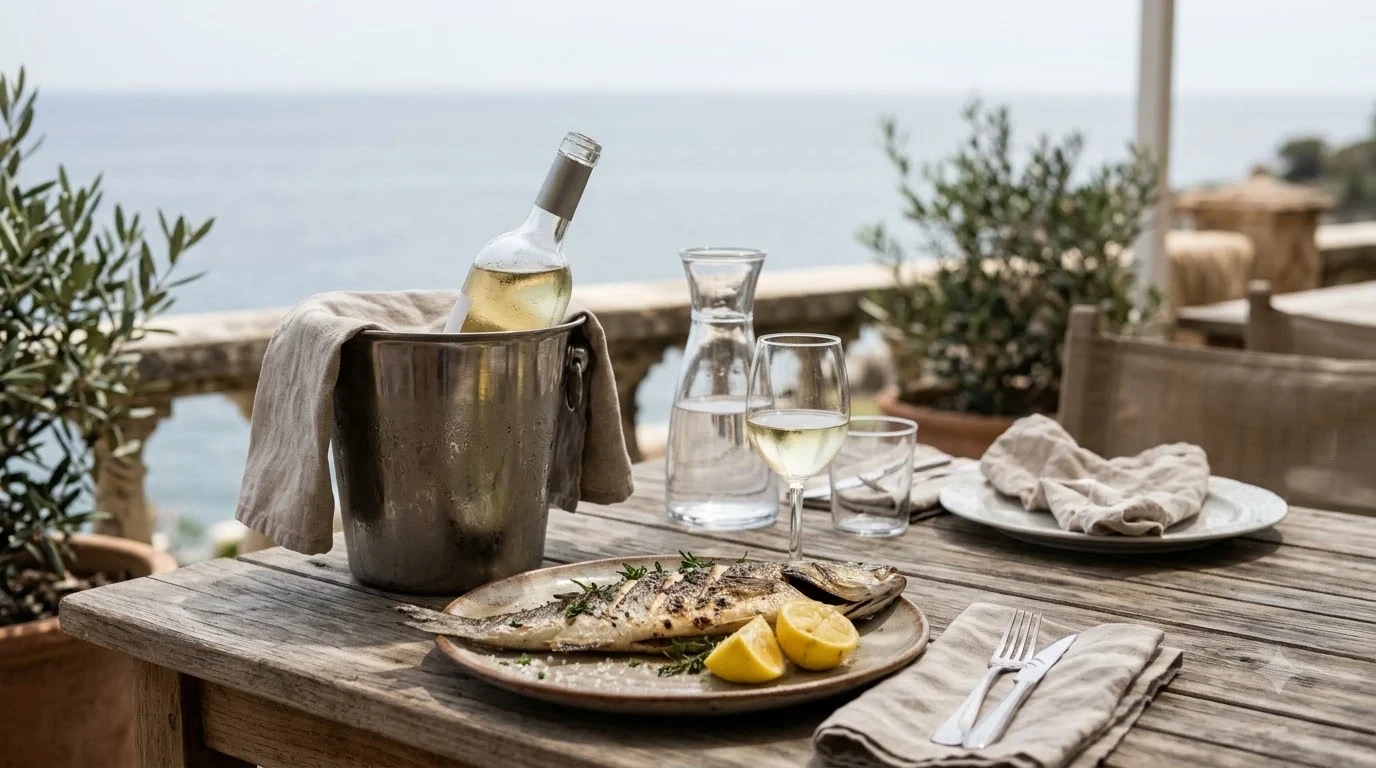
Acidity makes Roditis a practical partner for food. A crisp white can cut through oily fish, grilled seafood, and fresh salads, and it can refresh the palate between bites of richer dishes. Greek-style meals suit the wine well, such as grilled fish with lemon, olives, or a simple salad with feta.
Roditis can also work with lighter poultry dishes and vegetable-based meals. Because the aroma is gentle rather than bold, it does not overpower delicate food. For a broader view of how white wine styles compare, the Wine by Type hub is a useful place to start, and the albarino tasting notes page offers another crisp white to compare with a Greek style.
How to Choose a Roditis Wine
Look at the label for the grape name and the region. A bottle that names Roditis as the main variety, or that identifies a Greek region such as the Peloponnese, gives you a clearer idea of the style. If the label lists Savatiano as well, expect the blend to be shaped by that grape’s character, and check whether resin is mentioned.
When you are unsure, think about the meal. A crisp, aromatic white for seafood, salads, or a light lunch is the most straightforward use. If you want to compare it with a red, the alicante bouschet wine and baco noir wine guides cover other varieties that show how structure differs across the color spectrum.
Frequently Asked Questions
Is roditis wine red or white?
Roditis is a white wine grape, even though its skin has a pink tint. Most roditis wines are pale and clear, not pink. Rosé wines made from pink-skinned grapes are a separate category, so check the label if you are looking for a rosé.
What does roditis wine taste like?
The grape is known for its acidity and a light, perfumed character. Wikipedia describes wines from Patras as delicately perfumed. Exact flavors vary by producer, vintage, and winemaking, so read the producer’s tasting notes for specifics.
Is roditis the same as Retsina?
No. Retsina is a style of wine flavored with pine resin, and roditis is a grape. Roditis is one of the grapes used in some Retsina blends, mostly with Savatiano, but not every roditis wine is resinated.
Where can I find roditis wine?
Availability depends on the market. Roditis is more commonly found in Greece than in other countries, so specialty wine shops and importers that carry Greek wines are the most likely sources. Check the label for the grape name and region before buying.
Roditis is a Greek white with a long history and a useful acidity that suits warm climates and simple meals. Start with a crisp single-variety bottle or a Greek-style meal, and compare it with other white styles to see where it fits in your glass.
More in Wine Types & Grapes
 Zinfandel Sugar Content: Dry Red vs. White Zinfandel GramsUpdated Nov 21, 2026
 Best Zinfandel Substitute Options for Sipping and CookingUpdated Nov 21, 2026
 Zweigelt Food Pairing: Best Dishes, Cheeses, and Serving TipsUpdated Nov 21, 2026
 Zinfandel Tannins Explained: How Structure Shapes Every BottleUpdated Nov 21, 2026
 Zinfandel Sweetness Level: Dry Red vs. Sweet White Zin ExplainedUpdated Nov 21, 2026
 Xinomavro Food Pairing: Best Dishes, Styles, and Serving TipsUpdated Nov 21, 2026