

We may earn a commission when you buy through links on this page, at no extra cost to you. Learn more.
The best wine bottle thermometer for most people is a simple adhesive strip or a clip-on sleeve that reads the bottle’s surface, because it shows the serving temperature at a glance without any batteries or setup. Temperature changes how a wine tastes, so a quick check can help you decide whether a bottle needs more time in the fridge or a few minutes on the counter. This guide compares the main thermometer styles and explains what each one can and cannot tell you.
A bottle thermometer is a small tool that helps you judge the serving temperature of wine. Most people do not need a precise probe, but a rough reading is enough to avoid serving a full-bodied red too cold or a light white too warm. The right tool depends on how often you serve wine, how carefully you want to track temperature, and whether you keep bottles in a cellar, a fridge, or a bar cart.
Quick Comparison
Thermometer styles differ mainly in how they read the temperature and how easy they are to use. Adhesive strips stick to the bottle and change color. Digital probes give a numeric reading. Sleeve or clip-on designs wrap around the bottle and show a reading when you check them. Each has a different trade-off between speed, accuracy, and convenience.
| Style | How it reads temperature | Strength | Limit |
|---|---|---|---|
| Adhesive strip | Color change on the bottle surface | Always visible, no batteries | Shows a range, not an exact figure |
| Digital probe | Electronic sensor with a numeric display | Precise readings | Needs a battery and careful handling |
| Sleeve or clip-on | Reads when wrapped or clipped on | Easy to use in the fridge | Reflects the bottle surface, not the core |
| Simple reference chart | No device, a printed guide | Free and always available | Depends on your own sense of the bottle |
Best for Quick Checks Before Dinner
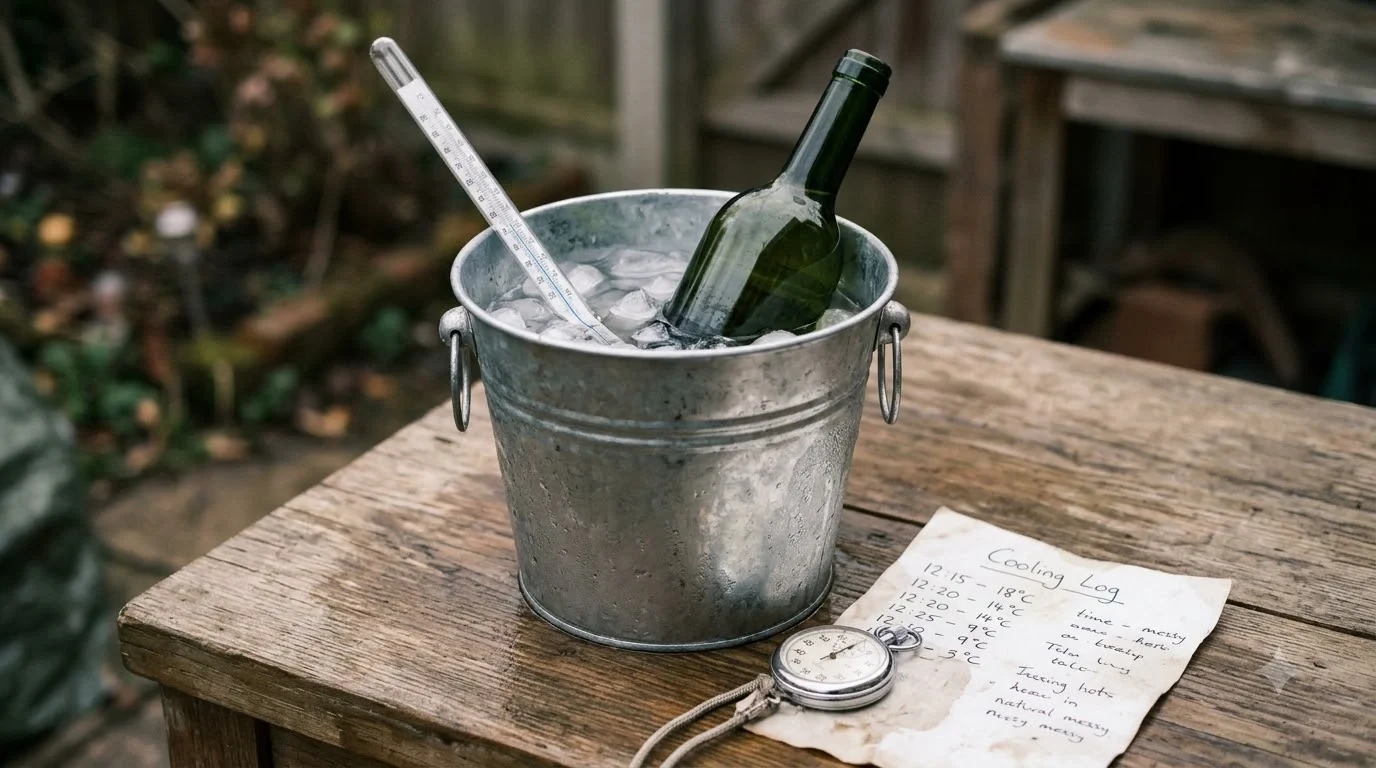
If you want a fast answer before a meal, an adhesive strip is the easiest option. You stick it to the bottle, wait a few moments, and read the color band. It sits on the bottle and stays visible, so you can check it while you cook without opening the fridge again and again.
The limit is that a strip shows the surface temperature, which rises quickly in a warm room. Use it as a guide rather than a precise measure. For a casual dinner, that rough reading is usually enough to decide whether a red needs another ten minutes out of the cold.
Best for Precise Serving Temperatures
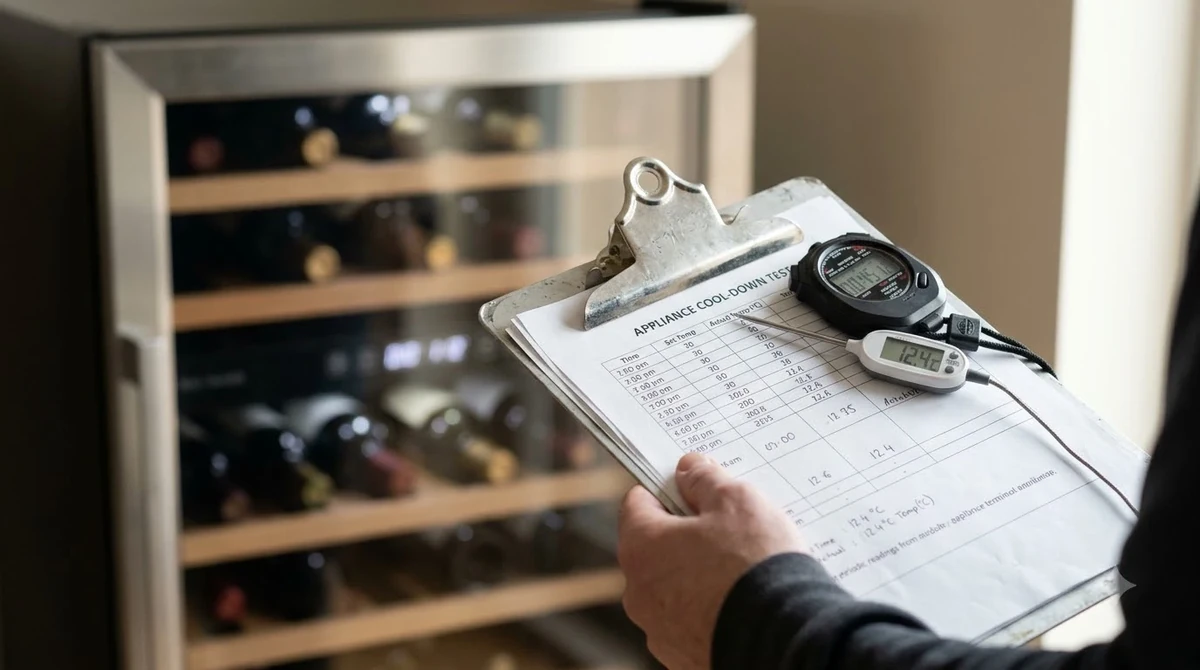
A digital probe gives a numeric reading, which suits someone who wants to match a wine to a specific temperature range. Sommeliers and enthusiasts often work from reference ranges, and a probe lets you check a bottle against them. The Wikipedia article on wine tasting gives reference ranges by style, including 10 to 12 °C for light-bodied reds, 14 to 17 °C for medium-bodied reds, and 15 to 18 °C for full-bodied reds. The same article notes that the figures vary between sources, so treat them as a starting point.
A probe needs a little care. Keep it clean, read it after the bottle has rested for a few minutes, and avoid touching it to the glass where your hand may warm the reading. For a serious tasting, a probe is a better tool than a strip, but for everyday dinners it can feel like more effort than the job needs.
Best for Keeping a Fridge Stocked
Sleeve and clip-on thermometers suit a household that keeps several bottles chilled. They wrap or clip around the bottle, and you can check the reading without taking the bottle out of the fridge. That makes them a handy way to track whether a white or rosé has reached its serving range.
Because the reading reflects the outside of the bottle, the wine inside lags slightly behind. Give the bottle a few minutes to settle after you move it from a cold shelf to the counter. A sleeve is especially useful if you store a range of styles together and want a quick check on each one.
Best for Bar Carts and Gifts
A thermometer on a bar cart adds a small touch of education to the display. Guests can see the serving range printed on the tool and understand why a red sits a few minutes out before it is poured. For a gift, choose a design that is simple to read and does not need setup, since the recipient will judge it in the first minute.
If you are building a bar cart, pair the thermometer with a few other serving aids. A clear bottle label or holder keeps each wine easy to find, and the wine bottle holder guide explains how to keep bottles stable on a cart without tipping.
Best for Tracking Multiple Bottles
When you serve several wines in one evening, a thermometer helps you keep track of which bottle is ready. Label each bottle clearly with its style and planned serving time, so the reading means something. The wine bottle labels guide covers simple ways to mark bottles, which makes it easier to match each reading to the right wine.
For a larger group, a short schedule works well. Chill the whites first, bring the reds out in the order they will be poured, and check each bottle as you go. A thermometer then becomes a timing aid rather than a guess.
How to Choose a Wine Bottle Thermometer
Start with how you serve wine. If you open a bottle for a quick dinner, a strip is enough. If you host tastings or care about precise temperatures, a probe makes more sense. If you keep many bottles in a fridge, a sleeve or clip-on design fits the routine best.
Tip: Calibrate or compare any new thermometer against a second reading before you rely on it. Put it in a glass of ice water for a minute and check that it reads close to zero degrees Celsius.
Also think about how often you will read the tool. A thermometer that sits in a drawer will not help at dinner. Choose a design you can glance at without fuss, and keep it on the bar cart or near the fridge where you open bottles. For wider guidance on accessories, the Accessories Library lists other tools that pair well with a thermometer.
Keep your expectations realistic. A bottle thermometer gives a useful guide, not a laboratory reading. The aim is to avoid serving wine far outside its range, and a simple tool does that well.
Storage matters as much as the reading. A bottle kept in a warm kitchen cabinet will climb past its ideal range faster than one stored in a cool, dark cellar. If you buy wine in bulk, keep the thermometer with the bottles it will check, so you read the same spot each time and build a feel for how quickly each style warms.
Keep a note of the readings you take for a few weeks. A short record of the bottle, the starting temperature, and the time it reached the serving range helps you plan the next evening more accurately. Over time, that record teaches you more about your own fridge and room than any chart can.
Frequently Asked Questions
What temperature should red wine be served at?
It depends on the style. Light-bodied reds are often served cooler than full-bodied ones. The Wikipedia article on wine tasting lists ranges of about 10 to 12 °C for light reds and 15 to 18 °C for full-bodied reds, and those ranges are a common starting point.
What temperature should white wine be served at?
Aromatic light whites are often served cooler, while full-bodied oaked whites can be served a little warmer. Reference ranges in the wine tasting article put aromatic light whites around 8 to 12 °C and full-bodied oaked whites around 12 to 16 °C.
Is a strip thermometer accurate enough?
For casual serving, yes. A strip shows a range and reflects the bottle surface, so it is best used as a guide. Choose a probe if you need a more exact reading for a formal tasting.
How long should a bottle sit out before serving?
It depends on the room and the wine. Many people move a red from a cool cellar or fridge to the counter for a short rest, then check the temperature before pouring. A thermometer makes that decision easier than guessing.
A wine bottle thermometer is a small tool with a simple purpose. Pick the style that matches how you serve, check the reading against a reference range, and let the wine rest long enough to reach the right temperature. That small habit often makes the biggest difference to what you taste.
More in Wine Accessories
 Coravin Vs Vacu Vin: Choose the Right Wine Saver for Your BottlesUpdated Nov 21, 2026
 Zwilling Wine Stopper Review: Preserve Open Bottles LongerUpdated Nov 21, 2026
 Wine Enthusiast Wine Preserver Review: Features, Benefits and LimitationsUpdated Nov 21, 2026
 Wine Enthusiast Wine Stopper: An Easier Way to Reseal Open BottlesUpdated Nov 21, 2026
 Vintorio Wine Opener: Two-Step Cork RemovalUpdated Nov 21, 2026
 Zwilling Wine Aerator Review: Aerate, Pour, and Seal With One ToolUpdated Nov 21, 2026