

We may earn a commission when you buy through links on this page, at no extra cost to you. Learn more.
The best sommelier knife for most people is a folding model with a stable arm, a comfortable grip, and a clean-cutting foil blade, because it opens bottles quickly and fits in a jacket pocket. The sommelier knife, also called a waiter’s friend or wine key, is a folding corkscrew that works like a small lever. Its value depends on how well the arm braces against the bottle lip and how smoothly the worm turns. Choose a knife you can operate with one hand and that feels stable when the cork starts to rise.
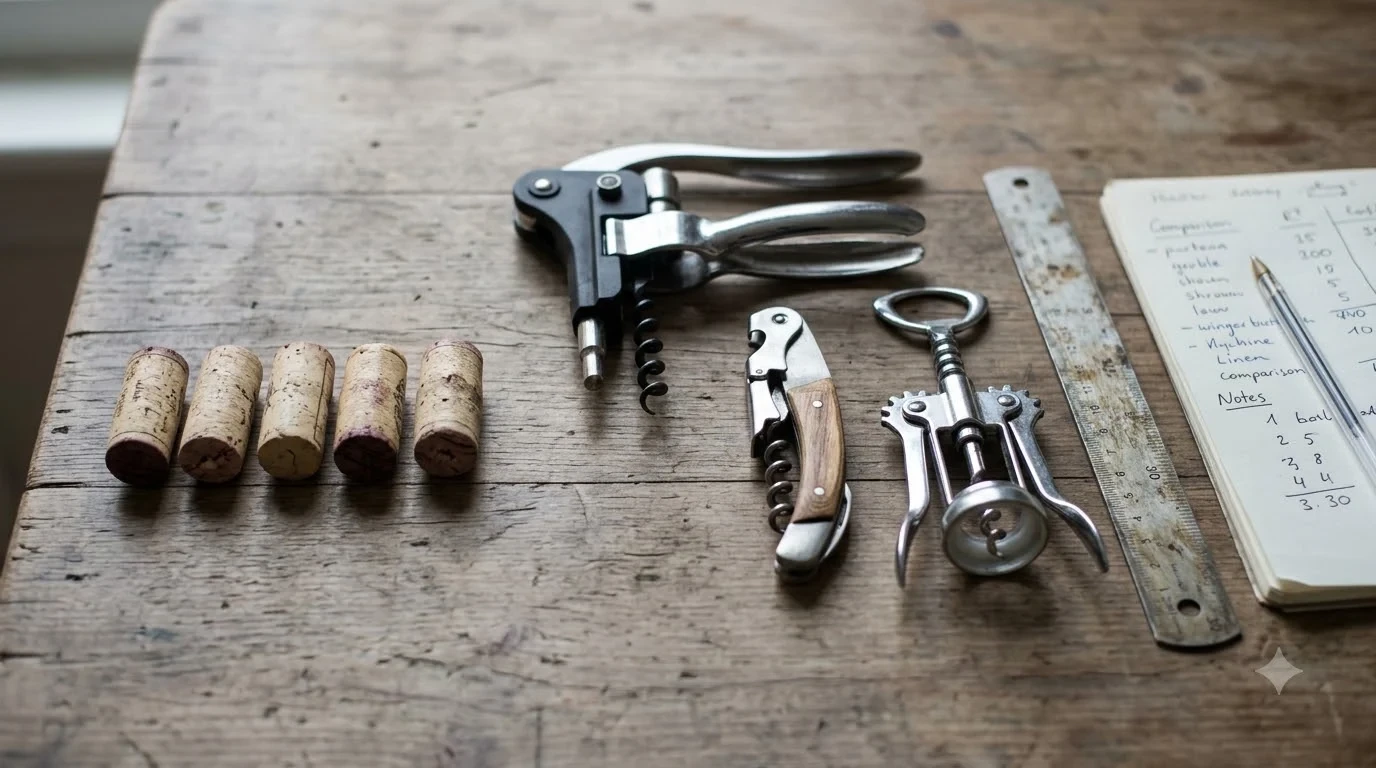
A sommelier knife is a folding corkscrew that looks like a pocket knife when closed. One arm braces against the lip of the bottle while the worm is turned into the cork, and then the cork is lifted out in stages. Wikipedia’s article on corkscrews describes the sommelier knife as a folding design with an arm that gives leverage, and notes that some versions include two steps, a bottle opener, or a small foil-cutting blade. That combination of speed and portability explains why the knife remains common with servers and wine professionals. The guide below groups the options by the kind of user and setting they fit best.
Quick Comparison
Sommelier knives differ mainly in their hinge design, their added tools, and how much practice they need. The table compares the common features across the traits people notice first.
| Feature | Simple single-step | Two-step or lever-assisted |
|---|---|---|
| Opening motion | Lift the arm in one pass after setting the worm | Lift in two stages for a longer cork |
| Extra tools | Often a bottle opener only | May add a foil blade or a second opener |
| Learning curve | Moderate; the arm position takes practice | Slightly more to learn, easier on long corks |
| Best setting | Pocket carry and casual use | Frequent opening and service |
Best for Servers and Frequent Opening
A sommelier knife with a sturdy arm and a two-step lift suits people who open bottles several times a shift or at every dinner.
The two-step design lifts the cork in stages, which helps when the stopper is long or tight. Wikipedia’s article describes this knife as one that can be used more quickly than a winged-type corkscrew, and that speed is the main reason professionals carry it. Set the worm at the center of the cork, brace the arm on the bottle lip, and lift in steady, even movements. A knife with a solid hinge and a firm arm makes each step predictable.
When you open many bottles in a row, check how the knife feels after repeated use. A grip that is too small or too slippery can tire the hand, so test the knife with a few bottles before relying on it for service.
Best for Carrying in a Jacket or Bag
When space is limited, a folding knife is one of the smallest reliable ways to carry a corkscrew.
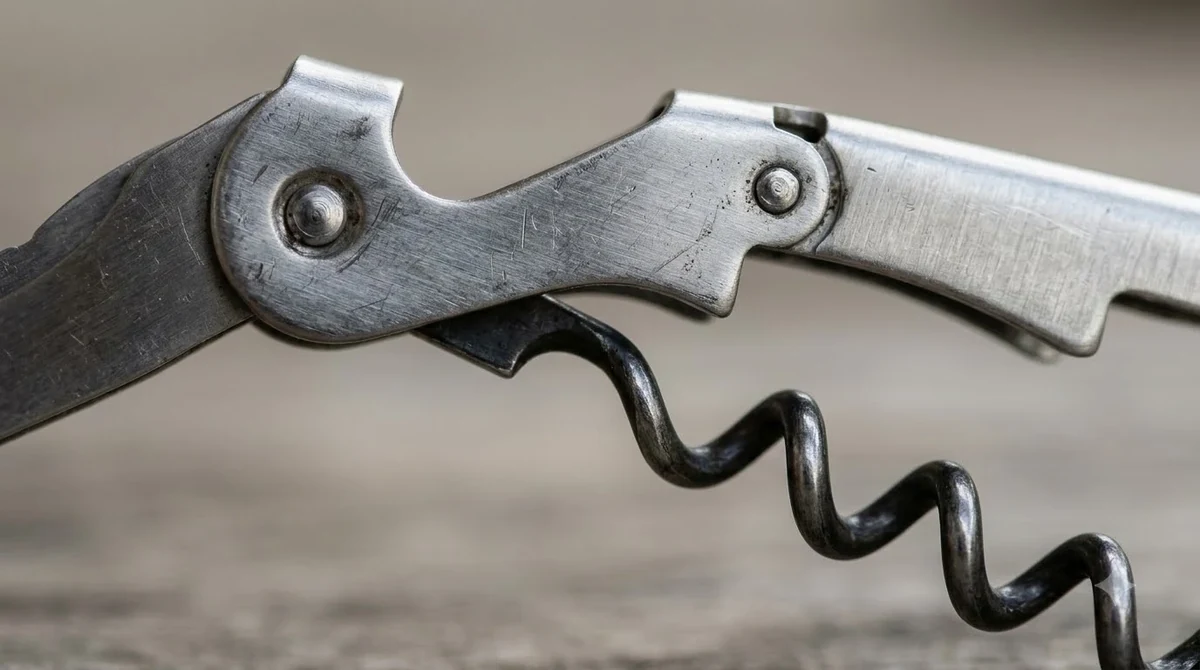
The knife folds into a shape close to a pocket tool, which makes it easy to carry to a restaurant, a picnic, or a tasting. Its folded size is the main reason many people choose it over a lever-style design, which the Wikipedia article describes as much bulkier. Look for a knife whose hinge locks firmly when open, so the arm does not fold while you are pulling.
Keep the worm clean and dry before storing the knife in a pocket. Moisture or debris can dull the spiral and make it harder to turn into the cork, especially after a long day of use.
Best for Foil Cutting and All-in-One Use
Knives with a built-in foil blade or bottle opener handle the tasks that normally need a second tool.
Some sommelier knives include a small blade for cutting the foil capsule, and others add a bottle opener on the arm or handle. The Wikipedia article notes that these extras are common on the folding design, so a single tool can handle the full opening process. A foil blade is useful for a clean edge before the cork is removed, and a bottle opener helps when you are serving beer or sparkling drinks as well.
Test the foil blade on a spare capsule before using it at the table. A blade that is too sharp can slip, and one that is too dull will tear rather than cut. Keep the blade folded when the knife is not in use.
Best for Beginners Learning the Motion
A simple, well-balanced knife is easier to learn than a multi-tool, and the basic technique transfers to more advanced designs.
The essential motion is to brace the arm against the lip, turn the worm into the cork until it is firmly embedded, then lift the cork out with steady leverage. Beginners often lean the arm too far or start the worm off-center, which can split the cork. Practicing on a spare bottle at home helps the motion become natural before a dinner or a guest is waiting.
Look for a knife with clear markings or a simple layout so you can see where the worm and arm sit when you are unfolding it. A straightforward model with fewer parts is less likely to confuse someone who only opens a bottle now and then.
Best for Older or Delicate Corks
When a cork is dry or crumbling, a sommelier knife needs a careful technique rather than speed.
Older bottles often have corks that tear under strong pulling. The sommelier knife can still work, but the worm should be centered and started straight, and the lift should be slow. The Wikipedia article’s description of the two-step design suggests that splitting the lift into smaller moves can reduce the risk of tearing. If the cork is very fragile, a twin-prong puller is usually a gentler choice, since it removes the stopper without threading the worm into it.
Stop if you feel the worm slipping or the cork starting to crumble. Pushing the cork back into the bottle is far harder than pulling it out cleanly, so patience pays off with older wine.
Best for Gift Sets and Wine Kits
A sommelier knife often comes in a kit with a foil cutter, a pourer, and a storage case, which suits gift-giving and home bar setups.
Kits bundle the knife with related tools, so the set covers the main steps of opening and serving a bottle. A storage case keeps the knife dry and protects the worm from wear, and a pourer or stopper can be useful once a bottle is open. For a gift, a set with a clear case feels more complete than a loose tool.
Check that the kit contents match how you open wine. A set with extra tools you will never use adds bulk. For a fuller look at tool bundles, see the sommelier kit guide, which covers how the pieces fit together.
How to Choose
A good sommelier knife depends on how you open bottles, how often you carry the tool, and whether you want extras such as a foil blade. The table below lists the criteria to compare.
| Criterion | What to check | Why it matters |
|---|---|---|
| Hinge and arm | Firm lock when open, stable arm against the lip | Keeps the knife steady while you lift |
| Worm | Smooth spiral, centered and sharp at the tip | Enters the cork cleanly and reduces tearing |
| Grip | Comfortable size and a non-slip handle | Helps with repeated use |
| Extras | Foil blade or bottle opener, if you need them | Reduces the number of tools you carry |
| Size | Folded length and weight | Determines whether it fits your pocket or bag |
Tip: Practice the arm position on a spare bottle before a dinner, so the first pull feels routine.
Frequently Asked Questions
What is a sommelier knife used for?
A sommelier knife is a folding corkscrew used to open wine bottles. Its arm braces against the bottle lip and gives leverage as the worm lifts the cork. Many versions also include a foil cutter or bottle opener.
Is a sommelier knife the same as a waiter’s friend?
Yes. The sommelier knife is also called a waiter’s friend or wine key. The names refer to the same folding corkscrew design, which is common in restaurants and at home.
Is a sommelier knife faster than a winged corkscrew?
Wikipedia’s article on corkscrews says the sommelier knife can be used more quickly than a winged-type corkscrew. Speed depends on practice, so the first few bottles may feel slower than the ones after.
Can a sommelier knife open an old cork?
It can, but older corks are more likely to tear. Center the worm, start it straight, and lift slowly. For very fragile stoppers, a twin-prong puller is usually a gentler option.
The best sommelier knife is the one you can use confidently with one hand. Compare the hinge, the worm, the grip, and any extras such as a foil blade, and match the knife to how often you open wine. For a complete setup, the sommelier knife guide covers the basics, and the accessories library lists other tools for serving wine at home.
More in Wine Accessories
 Coravin Vs Vacu Vin: Choose the Right Wine Saver for Your BottlesUpdated Nov 21, 2026
 Zwilling Wine Stopper Review: Preserve Open Bottles LongerUpdated Nov 21, 2026
 Wine Enthusiast Wine Preserver Review: Features, Benefits and LimitationsUpdated Nov 21, 2026
 Wine Enthusiast Wine Stopper: An Easier Way to Reseal Open BottlesUpdated Nov 21, 2026
 Vintorio Wine Opener: Two-Step Cork RemovalUpdated Nov 21, 2026
 Zwilling Wine Aerator Review: Aerate, Pour, and Seal With One ToolUpdated Nov 21, 2026