


We may earn a commission when you buy through links on this page, at no extra cost to you. Learn more.
The best wine glass markers are erasable liquid chalk or glass-safe pens that write clearly on smooth glass and wipe off cleanly, so guests can label their drinks without leaving marks behind. Choose erasable markers for parties and everyday use, and permanent glass pens only for glasses you plan to keep labeled for a long time. Check that the ink is listed as safe for glass and dishwashers before you write on anything you will wash often.
Wine glass markers are small writing tools for labeling glasses with a guest name, a wine type, or a simple mark. They are a practical alternative to charms when the glasses are plain, or when you want a label that can change from one event to the next. This guide groups the main marker types by use, so you can pick one that matches your setting and your washing routine.
Quick Comparison of Marker Types
The table below compares the common marker styles by how they write, how they erase, and where they work best. Use it to decide on a type before you compare specific brands.
| Marker type | How it writes | How it erases | Works best for |
|---|---|---|---|
| Erasable liquid chalk marker | Bold, smooth line on glass | Wipes off with a damp cloth | Parties and rentals |
| Permanent glass pen | Fine line that resists water | Does not wipe off easily | Glasses kept in one household |
| Wax or grease pencil | Soft, light line | Wipes off with a dry or damp cloth | Quick labels on a few glasses |
| Adhesive glass tag | Pre-printed or blank label | Peels off without residue when done well | Large events with a fixed guest list |
Best for Parties with Many Guests
For a party, the best marker is one that writes quickly and wipes off completely between uses. Erasable liquid chalk markers suit this because the line is easy to read across the table and can be cleaned off after the event. Pick a marker that dries fast, since a smudged label is hard to read and can get on a guest’s hands.
Test the marker on one glass before the party starts. Write a name, let it dry, and wipe it off with a damp cloth. If the line lifts cleanly, the marker is a good choice for the whole set.
Keep the marker capped and stored upright between uses, and check the tip before each event. A dried or clogged tip makes a thin, broken line that is hard to read, and it is better to replace a tired marker than to label the whole table with uneven writing.
Best for Glasses You Wash Often
If the same glasses go through the dishwasher every week, the label must survive washing without fading or peeling. A permanent glass pen or a dishwasher-safe marker is the usual choice here, but only if the manufacturer says so on the label. Writing on glass that is not made for it can leave a residue that is hard to remove.
Keep the label small and near the rim or base, where it is less likely to rub against other glasses. A small mark on the stem or foot is easy to read and does not interfere with the bowl.
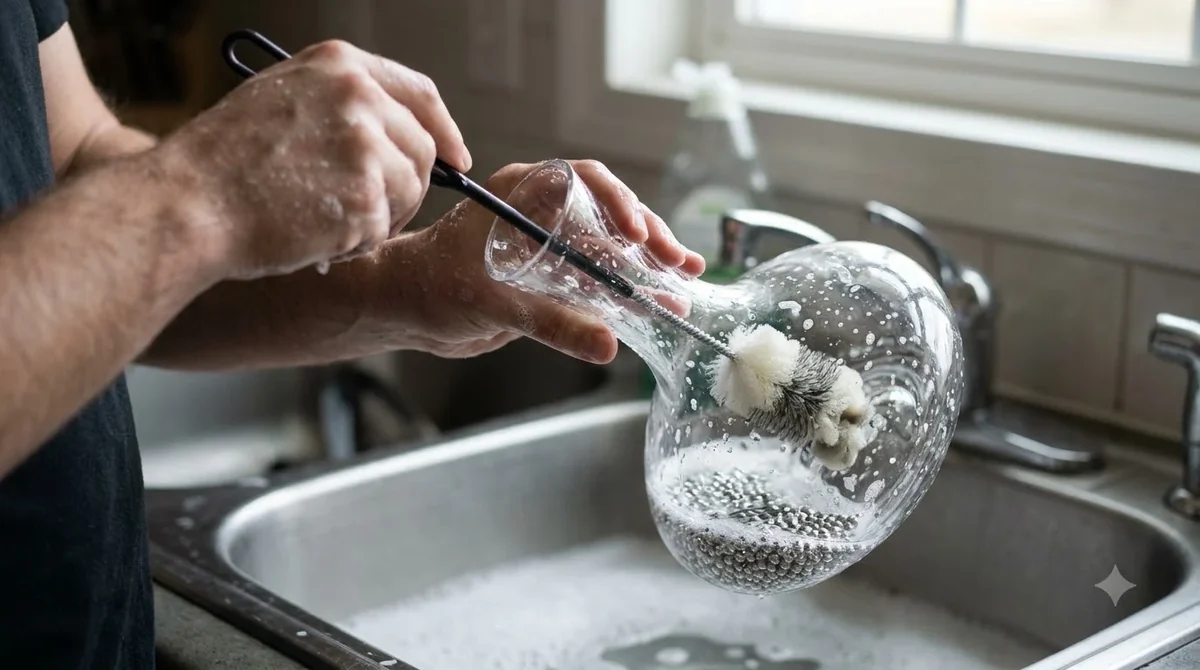
Plan a cleaning routine for marked glasses. Rinse off loose ink as soon as the glasses are used, then wash them as usual. Leaving a marking to sit through a full dishwasher cycle, then trying to remove it later, makes it harder to clean and can dull the surface.
Best for Long-Lasting Labels
Some hosts want a label that lasts through many events, such as a set of family glasses or a bar kept at home. A permanent glass pen gives the most lasting mark, and it is worth testing on one glass to make sure the ink holds through several washes. Write lightly and let the ink cure fully before the first wash, following the maker’s instructions.
Longer-lasting marks are harder to remove, so use them only where you want the label to stay. For rotating guests, an erasable marker is the more flexible option.
Best for Stemless Glasses
Stemless glasses are wider and sit low on the table, which makes a label on the outside of the bowl easy to see. The surface is often smooth and uniform, so a fine liquid marker writes evenly. Place the label near the rim on one side, so the guest can see it when the glass is picked up.
Because stemless glasses are often set down directly on the table, a label that is too low can rub off on the tablecloth or on other glasses. Keep the mark high on the bowl where it stays clear of the surface. The Stemware on this kind of glass has a clear bowl, stem, and foot, so a label placed on the bowl leaves the rest of the glass free.
Before the guests sit down, take a moment to check that every label reads clearly under the room lighting. Dim dinner lighting can make a thin line hard to see, so a bolder mark or a bigger letter helps guests spot their glass without picking up each one.
Best for a Bar or Tasting Setup
A bar or tasting table needs labels that show the wine type quickly, not just a guest name. Short, bold words such as red, white, or sparkling are easier to read than a long note. Use a marker that writes clearly over a wide area and wipes off between tastings.
Think about the order of the tasting too. If the glasses are used in sequence, number them or mark each with a letter, so the flight stays in the right order from start to finish.
If the tasting includes several wines, keep a short written key near the table, so the labels match the order on the menu. Guests then do not need to ask which glass is which, and the staff can refill the right glass without checking.
How to Choose the Right Marker
Three factors decide most choices: how long the label must last, how often the glasses are washed, and how many guests you expect. A marker that fits all three will be easy to use and clean up.
Tip: Always test a new marker on one glass before writing on the whole set. Let the ink dry fully, then wash the glass the way you normally would and check the result.
- Decide on duration: Use erasable markers for one-time events and permanent pens only for long-term labels.
- Check the washing method: Confirm the marker is rated for dishwashers or hand washing, depending on how you clean.
- Consider the surface: Smooth glass takes most markers well, while textured or frosted glass may need a bolder tool.
- Plan the placement: Keep labels high on the bowl or near the base, where they stay clear of other glasses.
If you are planning how much wine to pour, the guide to glasses per bottle gives a useful estimate, and the accessories library lists other tools that help with serving and organizing the table.
Frequently Asked Questions
Are wine glass markers dishwasher safe?
It depends on the product. Some glass pens and markers are rated for dishwashers, while erasable liquid markers are usually wiped off by hand. Check the label before you wash a marked glass in the machine.
How do I remove a marker from a wine glass?
Most erasable markers come off with a damp cloth or a little warm water. Permanent glass pens can be harder to remove, so test a small area first and follow the maker’s cleaning instructions.
Can I write on frosted or textured glass?
Frosted or textured glass can make lines look uneven. A bolder marker works better on these surfaces, and it is wise to test on one piece before marking the whole set.
What is the easiest way to label many glasses?
An erasable liquid marker is the simplest choice for a large group. Write a short name or word on each glass, let it dry, and wipe it clean after the event.
Wine glass markers are a simple way to keep track of drinks at a party or a tasting. Choose erasable markers for events, use permanent pens only where you want a lasting label, and always test before writing on the full set. For matching ideas that work alongside markers, the wine glass charms guide covers decorative options that do not wipe off.
More in Wine Accessories
 Coravin Vs Vacu Vin: Choose the Right Wine Saver for Your BottlesUpdated Nov 21, 2026
 Zwilling Wine Stopper Review: Preserve Open Bottles LongerUpdated Nov 21, 2026
 Wine Enthusiast Wine Preserver Review: Features, Benefits and LimitationsUpdated Nov 21, 2026
 Wine Enthusiast Wine Stopper: An Easier Way to Reseal Open BottlesUpdated Nov 21, 2026
 Vintorio Wine Opener: Two-Step Cork RemovalUpdated Nov 21, 2026
 Zwilling Wine Aerator Review: Aerate, Pour, and Seal With One ToolUpdated Nov 21, 2026