

We may earn a commission when you buy through links on this page, at no extra cost to you. Learn more.
The best wine bottle holder depends on where the bottle will sit: a weighted tabletop cradle suits dinner service, a wall-mounted holder frees up counter space, and a freestanding wooden stand works best for a shelf display. Each style solves a different problem, so match the shape, weight, and footprint to the room before you buy. A holder that angles the bottle slightly makes pouring easier, while an upright stand keeps a label readable.
A wine bottle holder looks like a minor accessory, but it changes how easily a bottle pours, how steady it stays on a table, and how much room it takes up in a kitchen, dining room, or bar cart. Holders range from simple metal cradles to hand-finished wooden stands and wall brackets. The sections below compare the main styles, explain what each does well, and list the points to check before buying, so you can pick a holder that fits the way you actually serve and store wine.
Quick Comparison
The five styles below cover most home needs. They differ mainly in how much space they take, whether they hold the bottle at an angle or upright, and whether they are meant for one bottle or several.
| Holder type | Best use | Space needed | Bottle position |
|---|---|---|---|
| Tabletop cradle | Dinner service and pouring | Small, one bottle | Angled for pouring |
| Wall-mounted holder | Kitchen counter or bar wall | Wall only, no counter space | Upright or angled |
| Freestanding wooden stand | Shelf or sideboard display | Medium, one or two bottles | Upright, label visible |
| Tiered rack | Storing several bottles at once | Larger, stacked | Horizontal or angled |
| Bottle and glass combo stand | Bar cart or entertaining | Medium, bottle plus glasses | Angled, glasses nearby |
Best for Everyday Dinner Service
A tabletop cradle is the simplest choice for dinner service. It holds the bottle at a slight angle so the wine settles toward the neck and pours without much tilting of the wrist, and most models have a flat base that resists sliding across the cloth.
Look for a base wide enough that a full bottle cannot tip when you lift a glass nearby. Weighted bases feel more stable than hollow ones, and a cradle with a shallow lip keeps drips from running down the label. The main drawback is that a tabletop cradle takes up space that could hold dishes, so it suits smaller, serving-focused meals better than crowded tables.
Serving temperature matters as much as the holder. According to VinePair’s serving temperature guide, white and rosé wines are generally served cold at 45 to 55 degrees Fahrenheit, while medium to full-bodied reds sit cooler than room temperature at 60 to 65 degrees. A holder keeps the bottle steady, but it does not hold temperature, so a bottle set out for a long meal will warm gradually.
Best for Small Kitchens and Counter Tops
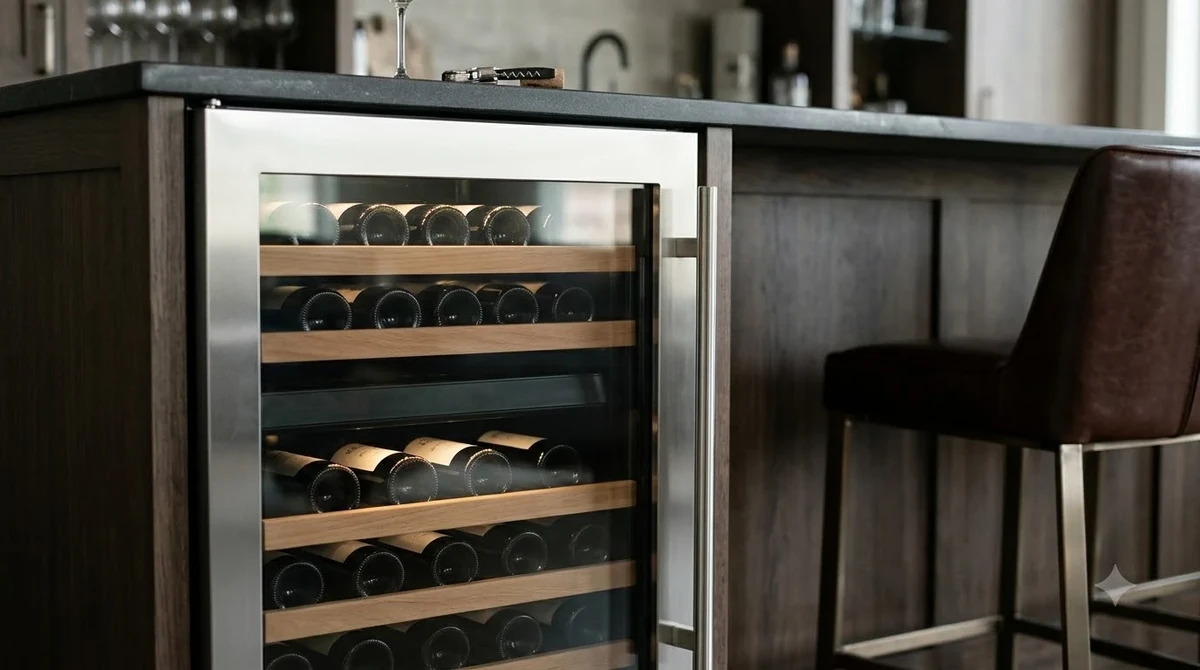
A wall-mounted holder keeps the bottle off the counter entirely. These brackets usually attach to a backsplash or a spare wall with screws, and they hold one bottle at an angle or upright, depending on the design.
Before mounting, check the wall type and the bracket’s load rating, since a full bottle is heavy. Position the holder where the bottle’s center of gravity sits over the mount and not beyond its edge. Wall holders suit kitchens where counter space is limited, and they keep bottles visible, which can help with rotating stock.
The trade-off is permanence. Renters may prefer an adhesive or freestanding option, and a wall mount in a busy area can be bumped while cooking. Choose a finish that suits the surrounding hardware so the holder reads as part of the room, not an afterthought.
Best for Display Shelves and Sideboards
Freestanding wooden stands show a bottle upright and keep the label facing the room. They work well on a sideboard, bookshelf, or a corner shelf where the bottle is part of the decor as much as a serving item.
Solid wood holds up better than thin veneer over time, and a stand with a deep base resists tipping. Check that the cradle fits the bottle shape you actually buy, because wide-shouldered bottles from some regions do not sit well in narrow cradles. A stand that holds one or two bottles keeps the display uncluttered.
Best for Storing Several Bottles
A tiered or multi-bottle rack is the right choice when you keep more than a couple of bottles on hand. Each level holds bottles horizontally or at a slight angle, which keeps the corks moist and the wine stable for a short period.
When comparing racks, count the bottles you need to hold and allow a little extra space so bottles can be removed without knocking others. Metal frames with open sides let air circulate. Racks with solid bottoms reduce rattling. Avoid putting a rack in direct sunlight or next to a heat source, since warmth speeds up aging and can harm bottles that are not meant to age.
For longer-term storage, a cellar rack designed for stacking or a dedicated cellar setup usually works better than a decorative holder. A decorative rack is best kept for bottles you plan to open within a few weeks.
Best for Bar Carts and Entertaining
Combination stands that hold a bottle and a few glasses are built for entertaining. They keep the bottle angled for pouring and put glasses within reach, which helps when guests are moving around a room.
These stands tend to take more room, so measure the cart or table before buying. Check whether the glass holders fit your stemware, since a stem that is too wide or too narrow will rattle or fall. A combo stand works best for two or three guests, and for larger gatherings a bottle holder paired with an ice bucket or cooler sleeve is often more practical.
Best for Travel and Transporting Bottles
A portable holder or carrying cradle keeps a bottle secure during transport. These are usually padded, with a strap or handle, and they reduce the chance that a bottle shifts or breaks in a bag or car.
Look for padding on all sides, a closure that holds the bottle snugly, and a size that matches the bottle you bring. Transport holders do not replace a proper protective case for long trips or air travel, and it is worth checking airline rules for liquids and glass before you pack.
How to Choose a Wine Bottle Holder
Start with the room. The footprint and whether you have counter, wall, or shelf space will rule out several styles right away. Next, decide whether you need to pour from the holder, display the bottle, or store several bottles at once. Those three uses point to different designs.
Tip: measure the widest part of the bottles you own before buying a cradle or wall bracket. Wide-shouldered and tall bottles do not fit every holder, and a returned item costs more time than a quick measurement.
Also check the material and finish. Metal holders are sturdy and easy to clean, wood adds warmth but needs dry storage, and plastic is the lightest but often the least stable. Finally, consider how often you open bottles. If you open wine daily, a holder you can reach easily matters more than a decorative piece.
Frequently Asked Questions
Does a wine bottle holder keep wine cold?
No. A holder keeps the bottle steady and at a comfortable angle, but it does not control temperature. Chill the bottle in a refrigerator or ice bucket first, then use the holder for serving.
Is a wall-mounted holder safe for a full bottle?
It can be, if the bracket’s load rating is higher than the weight of a full bottle and it is fixed into a stud or a suitable wall anchor. Check the manufacturer’s instructions and install the holder away from high-traffic areas.
Should wine be stored upright or lying down in a holder?
For bottles you plan to open within a few weeks, either position works. For longer storage, VinePair’s aging guide recommends storing wine on a horizontal rack, and the article does not explain the reasoning in detail, so check the rack’s design and your storage plans.
How do I keep an opened bottle fresh once it is in a holder?
Reseal it and refrigerate it. According to VinePair, transferring leftover wine into a half bottle with a seal, or replacing the cork, reduces the air exposure that degrades wine over time. Reds and whites both benefit from refrigeration after opening.
A good holder should fit the way you pour, display, or store your wine, and it should be easy to use every day. Start with the space you have, then choose the style that matches your serving habits. For more on how many glasses one bottle yields, see the guide to glasses per bottle, and for compact pieces designed for stemware, browse the wine glass holder options. The accessories library lists more gear for the same job.
More in Wine Accessories
 Coravin Vs Vacu Vin: Choose the Right Wine Saver for Your BottlesUpdated Nov 21, 2026
 Zwilling Wine Stopper Review: Preserve Open Bottles LongerUpdated Nov 21, 2026
 Wine Enthusiast Wine Preserver Review: Features, Benefits and LimitationsUpdated Nov 21, 2026
 Wine Enthusiast Wine Stopper: An Easier Way to Reseal Open BottlesUpdated Nov 21, 2026
 Vintorio Wine Opener: Two-Step Cork RemovalUpdated Nov 21, 2026
 Zwilling Wine Aerator Review: Aerate, Pour, and Seal With One ToolUpdated Nov 21, 2026